

Egor Baklykov’s journey into the world of 3D art began with a simple realisation: graphic design wasn’t his true calling. From humble beginnings in a small marketing agency to working on high-profile projects like AMD Radeon’s SIGGRAPH conference showcase, Egor has carved out a space for himself as a passionate and driven 3D Generalist. Based in Poznań, Poland, he balances his work at Light Origin studio with running his creative venture, Do Some 3D.
In this exclusive Member Spotlight, Egor shares his journey from graphic design to 3D mastery, his thoughts on the future of creativity, and why becoming a better version of himself keeps him inspired every day.
How did you first get into the industry?
I found my first job in a small marketing agency as a graphic designer and occasionally did some small 3D tasks. But then I quickly realised that graphic design is completely not my thing and started to dig into the 3D.

Where are you based now and who do you work for?
I live in Poznań, Poland and work as a 3D Animator/Generalist in Light Origin studio and for my own one man studio, Do Some 3D.
If you weren’t in your current industry, what would you be doing?
Photography or handmade, like woodworking and ceramics. I have liked to create things since I was a child, and every now and then I try to participate in different ceramic workshops or do some small wooden stuff at home.
How would you describe your style?
Photorealism. I don’t like different stylisations, trying to be as photorealistic as I can.

Which individuals do you gain inspiration from? Do you have any heroes in the industry?
Can’t name the exact artists. Just people with skills higher than mine.
What tips would you give to aspiring creatives looking for work?
Descent portfolio and maximum exposure. If you don’t have any projects in the portfolio yet, just make a fictional project for yourself.

What kind of tools/kit/software could you not do without?
- Blender,
- Cycles,
- 3DS Max,
- tyFlow,
- Autodesk Fusion.
- Blender is number one for me now.
It is so lightweight and quick in comparison with Max, for example. And gives so many possibilities. Now I’m learning Geometry Nodes - a very promising and powerful tool.

What’s your secret to staying inspired and motivated?
Becoming the better version of myself on a daily basis. Meaning to be able to do more interesting and complex projects, to collaborate with people and not to be inside myself.

What’s the work achievement you’re most proud of?
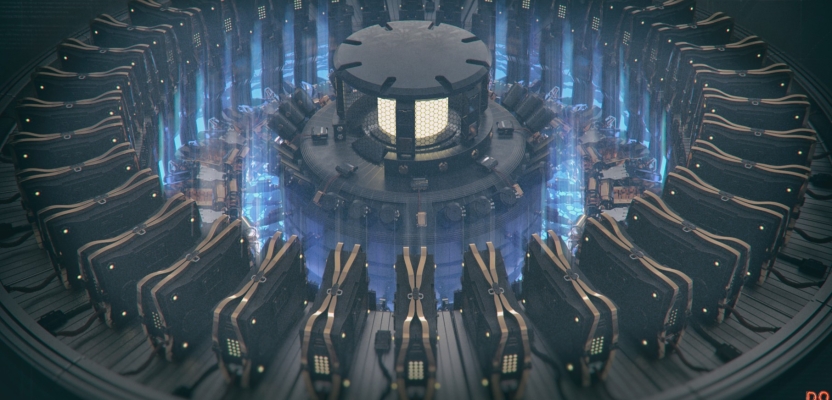
Working for the AMD Radeon project for one of the SIGGRAPH conferences.
As someone with experience in the industry, what trends do you foresee shaping the future of creativity?
As for now, the main trend is AI. It is not a replacement for us, but a tool that is helping us make stuff more effectively.
What do you think sets apart truly exceptional creatives from the rest of the pack?
For me, it is a style. I am still looking for my own and hope will find it sooner or later.

How do you think technology has influenced the creative industries and how have you adapted to these changes?
I am very happy that these days, you can just be an artist to make art. You don’t have to be partly a programmer, partly a physicist, partly a mathematician, etc, to be able to make a decent graphical product.
Automatisation and AI are making the production process faster and more creative. Very interesting to see where it will lead us.
Any websites, books or resources you would recommend?
I do recommend reading about composition and the theory of color if you haven’t done it yet.