

From music videos to commercials and narrative projects, Jeremi Durand has built a reputation for creating emotionally resonant, visually striking work that spans genres, mediums, and borders. Recognized for a signature aesthetic that blends social surrealism with cinematic storytelling, they have directed projects that range from high-concept campaigns like Chinese Man, We’ve Been Here Before, to technically ambitious music videos, all while balancing client needs, budgets, and creative ambition.
In this exclusive Q&A, Jeremi Durand shares insights into maintaining a distinct visual voice across formats, collaborating with artists and clients, mentoring emerging talent, and experimenting with immersive technologies like VR, AR, and AI-assisted production. They also reveal how awards inspire innovation, the emotional approach behind storytelling, and his vision for pushing boundaries in the next 5 - 10 years across new media and global markets.
What made you decide to enter The Annual?
I decided to enter The Annual Awards because it’s one of the few platforms that truly celebrates creativity across disciplines, not just execution, but intent, craft, and emotion. It felt like the right space to share work that sits between commercial and cinematic worlds, and that pushes for a more meaningful visual language.
Beyond recognition, it’s also about dialogue; being part of a community that questions, experiments, and raises the creative bar each year. Entering felt like a way to both contribute to and learn from that collective energy.
What role do you think awards play in motivating creativity and innovation within the industry?
I believe awards play a vital role in driving creatives to push boundaries and innovate further. Our industry thrives on open competition, and recognition is essential for marking milestones and motivating progress. We need that spirit of acknowledgement and inspiration now more than ever.
You operate between music videos, commercial, narrative, with a distinct aesthetic. How do you maintain your signature visual voice while adapting to client, genre, budget demands?
Clients, whether agencies or labels, usually approach me with an understanding of my previous work, which becomes our foundation. When I pitch, I always begin by explaining that my response to the brief will come from experience, instinct, and full emotional investment. Once that vision is shared and discussed, I see my role as steering the ship, guided by our collective decisions but always aiming for what serves the project best.
My background in product design, music, and art direction naturally shapes how I think and create today. It’s given me a sensibility I’d describe as social surrealism: stories told through metaphorical imagery and layered meaning. Ultimately, it all comes down to staying true to yourself and creating from instinct of course.
Projects like Chinese Man – We’ve Been Here Before (and others) span campaign, cinematic and music video. How do you coordinate narrative, pacing and cinematic rhythm across project types?
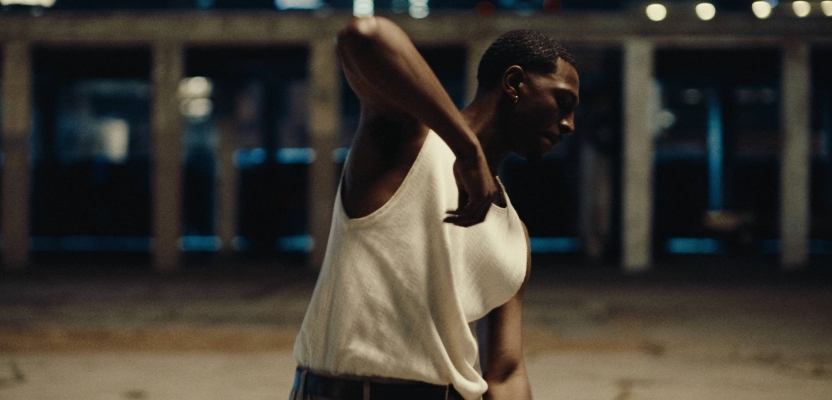
Projects like Chinese Man: We’ve Been Here Before sit at the intersection of film, campaign, and music video, which is exactly where I love to work. For me, it all starts with understanding the emotional core of the idea, what I want people to feel. Once that’s clear, I can build a rhythm that serves that emotion through strong metaphorical images, whether it’s expressed through a cinematic structure, a brand message, or musical timing.
I approach pacing almost like composing music; moments of intensity need contrast, silence, or stillness to resonate. Across any format, I try to maintain a consistent narrative pulse, something that gives coherence even when the medium shifts. It’s about translating emotion into rhythm, and then rhythm into storytelling.
When directing artists, clients, agencies together, how do you manage those relationships, influence story, maintain vision, and negotiate tensions?
Directing is as much about human dynamics as it is about images. Every project is a constellation of perspectives: artists, clients, agencies, each with their own truth. My job is to align those truths into one shared vision without losing the creative spark that made the idea worth pursuing in the first place.
I try to build trust early by being transparent about intent; why we’re making certain choices, what emotion we’re chasing. Once people feel heard, they’re more open to being guided. When tensions arise, I lean on clarity and instinct: defending what’s essential for the story, while staying fluid enough to adapt when collaboration makes it stronger.
Ultimately, maintaining vision isn’t about control, it’s about direction. You hold the compass, not the map.
In campaigns with both commercial and artistic aims, how do you balance brand messaging and emotional/artistic ambition?
For me, there’s no real separation between the commercial and the artistic, both should serve emotion and clarity. A brand message becomes powerful when it’s felt rather than stated. So I start by finding the emotional truth behind the brand’s intent: what it wants people to believe in, not just buy into, and build the storytelling from there.
The artistic ambition is what gives that message form, texture, and humanity. It’s not about decorating the brand; it’s about translating its essence into something cinematic, something alive. The balance happens when the viewer forgets they’re watching a campaign and simply experiences a story that moves them, and only later realize the brand was part of that emotion all along.
Which technical or conceptual challenge (VFX, camera, lighting, narrative) in your recent work pushed you hardest and how did you solve it?
Apart from shooting two music videos in one day for Nina Chuba (haha), my recent biggest challenge was on Chinese Man actually: find the perfect balance between surrealism and down-to-earth narrative, whilst never falling into burlesque. The track has a very specific tone to it: it’s a waltz with hip hop on top. Matching that uniqueness was the biggest challenge.
I imagined every scene as 1 bold impactful metaphorical image, and what that image could bring to the narrative and to the original idea.
Production happened over 2 half-days/half-nights in Paris. Each scene being crucial to make it stick together, another challenge quickly surfaced: not mess one up. It was a strong team effort to push on every scene, with care and imagination brought to every detail.
Almost everything is in-camera. VFX were mainly used to clean, help with one multi-pass, or enhance a few bits here and there. The main portrait shot with the rider set on fire for example, the one with the flames circling around her eyes, is 100% in-camera (shot with a Phantom camera).
How do you scout, mentor or develop new directorial voices (assistants, collaborators) under your banner?
I see mentorship as an exchange rather than a hierarchy. When I bring assistants or collaborators onto a project, I want them to feel part of my creative pulse, not just executing tasks, but contributing ideas, instincts, and perspectives. I try to give them space to experiment within the process, to take ownership of moments and see how their decisions shape the outcome.
Scouting new voices is about curiosity. I’m drawn to people who have a point of view, even if it’s raw, and who see the world through a distinct emotional or visual lens. Technique can be taught; vision can’t. My goal is to help them sharpen that vision without smoothing out what makes it unique.
Luckily now I’m getting more often than not swamped in messages from creatives who’d like to work with me. It’s hard to answer to them all, but I do take it to heart to get back to the ones who took the time to do this properly and who have something different and interesting to offer, be it editors, DPs, stylists etc.
Ultimately, helping to develop new voices in each department isn’t about replicating a method, it’s about nurturing individuality, and helping them build the confidence to trust their own eye.
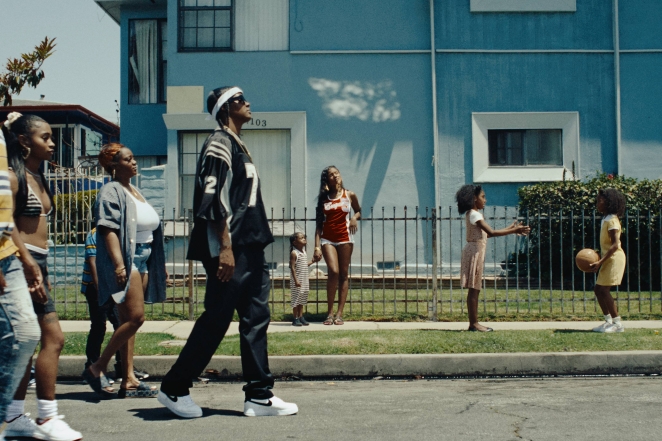
Your creative identity is international (Paris, London, cross-border). How do you manage cross-cultural visual language, audience expectations and client brief across markets?
I’m half French, half British, and I split my time between the UK and France. I left home at 18, studied and worked abroad, and have lived in four different countries since, so that multicultural perspective is naturally built in.
It definitely helps when navigating the nuances and expectations of different markets. The main territories (Europe, the UK, and the US) are deeply interconnected yet fundamentally distinct, and understanding those contrasts from the inside makes a real difference in how you approach storytelling and collaboration.
Additionally, I’d say that I love to play with blurring the lines. It’s always interesting to bring some frenchness into a purely US based job for example, that helps to shake the status quo a little.
In ex-post review, how do you examine “what worked / didn’t” (particularly in terms of audience, media, brand impact) so you improve your next work?
After a project is out in the world, I like to take a step back and look at it from three angles: audience, craft, and brand. Audience tells me about emotion; did people feel what we wanted them to feel? Craft is about execution; did the form serve the message? And brand impact reveals whether we created something that truly shifted perception, even subtly.
I try not to get lost in vanity metrics; I’m more interested in emotional data: how people talk about it, what lingers, what gets shared for the right reasons. I’ll also revisit the edit with distance, to see what rhythm or moment could have breathed differently.
Each project becomes a small lab; the goal isn’t perfection, but evolution. You learn where truth and impact meet, and you carry that awareness quietly into the next one.
How are you adapting your craft to new media (immersive video, VR, interactive, real-time, AR) and what experiments are you doing now?
I see new media not as a separate discipline, but as another set of tools to tell stories and shape experiences. Immersive video, VR, AR, AI, and real-time platforms allow you to rethink presence, scale, and viewer agency, to move from watching a story to living it. For me, the question isn’t technology for technology’s sake, but how it can amplify emotion, rhythm, and our narrative.
Right now, I’m experimenting with real-time engines to explore dynamic storytelling, and testing immersive spatial layouts that respond to movement and gaze. It’s about creating environments where audience intuition drives discovery, but the emotional pulse of the story remains central. Essentially, I’m using these new formats to challenge linear thinking, while staying grounded in cinematic principles of composition, pacing, and metaphor, with craft and taste always at the center of everything decision I make.
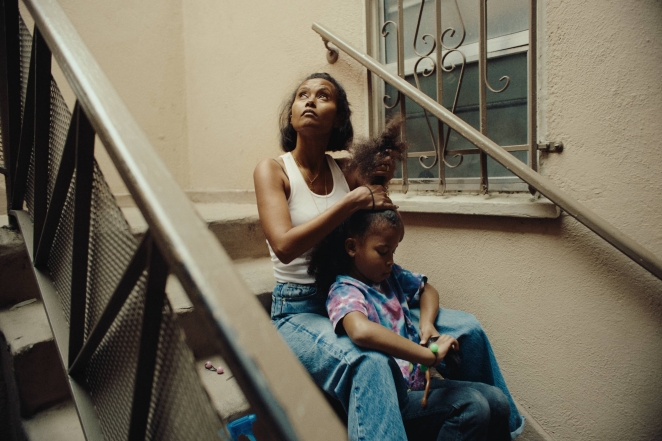
Looking ahead: what kinds of stories, formats, visual languages, or platforms do you want to stretch into over the next 5–10 years and how are you preparing for them?
Looking ahead, I want to continue pushing across formats and mediums: from feature films to episodic series, from photography to immersive experiences. I’m drawn to stories that blur reality and imagination, that explore human emotion through striking visual languages, and that allow audiences to inhabit a world rather than just observe it.
Over the next 5-10 years, I want to stretch into long-form narratives, experiment with episodic storytelling, and explore photography as a parallel language to moving images. I’m also curious about interactive and immersive formats, where narrative and space converge. Preparing for this means constantly creating (writing, shooting, editing, experimenting with new tools) while keeping a focus on the emotional core that connects all my work, regardless of medium.
Do you have any particularly exciting projects in the pipeline that might be contenders for the awards in 2026?
Yes, though I’ll stay discreet for now.
All I can say is that I’m thinking of a rather challenging commercial I recently completed, my 1st ever $1M campaign.
I’m currently editing the director’s cut, for example…
And more is coming so we’ll see ;)
What advice would you give to individuals looking to take home their own accolade next year?
I’d say the first step is to stay relentlessly curious and true to your own voice. Awards follow when work is fearless, specific, and emotionally resonant, not when it’s trying to please everyone. Take risks, push your instincts, and don’t be afraid of projects that challenge you technically or conceptually.
Equally important is collaboration: surround yourself with people with taste and who elevate your ideas, who challenge and inspire you.