


Founded in 2021 by Creative Director Tony Phillips and Operations Director Nicola Phillips, Canvass is a London-based creative studio blending strategy, design, and technology to craft authentic brand experiences. Born out of the reflections and opportunities that arose during the COVID-19 lockdowns, Canvass was founded on one clear mission — to bring clarity, curiosity, and creativity together in equal measure. With clients across the UK and US, the studio has quickly built a reputation for delivering design that connects meaningfully with people and businesses alike.
At its heart, Canvass believes that great design begins with understanding. By focusing on words before visuals, and strategy before aesthetics, Tony and his team ensure every project is grounded in purpose. From redefining digital experiences to transforming brands in the retail and leisure sectors, Canvass has carved a niche as a thoughtful, strategically led creative partner that values collaboration, curiosity, and simplicity in everything it does.
How was your company born and where are you based?
Canvass was founded in 2021 by myself and my wife Nicola Phillips. We’re based in London and have clients in both the UK and the US. The covid lockdowns were a catalyst for us to rethink our careers and combine our creative industry experience – my background as a Creative Director at The Partners and Imagination with Nicola’s as Operations Director at Household and Project Director at Peldon Rose. It felt like the perfect moment to build something new, so we ran as a proof of concept for about a year, refining our approach and identifying opportunities to partner with companies who share our vision.
What was the biggest challenge to the growth of your company?
Similar to most new studios, our biggest challenge was building momentum from a standing start. It’s that initial push to build trust, secure your first clients, and establish a consistent rhythm of work. This is why we decided to loosely try everything for the first year.
It’s required patience, persistence, and a clear belief in the value we offer. We’ve needed to apply our own strategic approach to our business and explore our offer to hone a message that aligns with what we stand for and our prospective clients’ needs. Momentum is still our biggest challenge.
Which was the first huge success that you can remember?
Our first success was sending out invoice number one. For a small business, that moment is monumental. It’s the validation that your idea has value, that a client trusts your vision, and that you’ve officially moved from concept to company. It’s that archetypal ‘first dollar’ moment that was the proof we needed in our idea to create and run our own studio.
What’s the biggest opportunity for you and your company in the next year?
Our biggest opportunity is to continue the momentum we’ve built over the last 12 months. We’ve been steadily taking on bigger and broader projects, and we see that trend continuing. There’s an area of opportunity for us is in the leisure and retail space, where we are having some interesting conversations right now.
Can you explain your team’s creative process? What makes it unique?
Being strategically led we start with words. Actually as a creative team, we probably spend more time than is typical on the logical aspects of our approach – research, enquiry, discussion, and defining the core idea.
We resist the temptation to dive straight into visuals, as we believe clear communication is the priority. This strategy-first, holistic mindset ensures that whether we’re crafting a full brand or a social strategy, it’s built on a solid foundation of understanding.
We have a toolkit of techniques that we’re continually updating to develop creative ideas. This helps us create solutions that are both strategically sound and creatively ambitious.
How does your team remain inspired and motivated?
Art plays a huge role in our creative inspiration. Being based in London, we have the luxury of some of the world’s best collections on our doorstep, and we make a real effort to look in different directions for our references. We spend a lot of time considering the perspectives of our clients’ audiences, looking to the real world and how people behave to find authentic ideas that have genuine resonance.
We also spend a lot of time playing and compiling things we find intriguing. We pull everything together in a newsletter called ‘The One About’ which we share for inspiration.
How has COVID-19 affected your company?
COVID-19 was the catalyst for Canvass. From our immediate perspective the lockdowns had a profound impact on the industry. They changed how we work and also how we perceive work. It forced us to reappraise everything we were doing and then react in a way which would suit our careers.
For example, we now have clients in the US who we’ve exclusively worked with using remote tools like Zoom. For a small creative studio that probably would have been harder to achieve prior to COVID-19 to convince them that a collaborative long-distance relationship would not only work but be valuable to their business.
Which agencies do you gain inspiration from? Do you have any heroes in the industry?
We’re inspired more by an agency's approach and ethos than by a specific aesthetic or output. We admire studios that have the confidence to be focused on what they do best, without being swayed by trends. Agencies like Graphic Thought Facility, North, and Uncommon are great examples. They have a clarity of purpose and a commitment to intelligent, authentic work that we find really inspiring. It’s the integrity and strategic focus we admire.
What is one tip that you would give to other agencies looking to grow?
We believe growth should be a steady, deliberate process, built on a foundation of excellent work and authentic relationships. Being small is a strategic advantage. We regularly collaborate when working on larger projects to ensure we avoid the ‘growing pain’ of scaling too quickly.
Embrace your size. When you’re small, you can be nimble, take creative risks, and build close partnerships with your clients. Focus on being resourceful and adding value with what you have, rather than comparing yourself to larger agencies.
When you work at large agencies you immediately notice that successful cultures are lots of small teams bolted together. Those teams build their own client relationships and remain focused. The scale simply allows them to work on more projects simultaneously.
How do you go about finding new clients/business? (Pitching, work with retainers, etc.)
Our approach is a blend of proactive outreach and reputation building. We market ourselves online, share our point of view on platforms like LinkedIn, and pursue PR opportunities to tell our story. Our narrative is focused on our core expertise; a blend of creativity and technology.
We also directly approach prospective clients who we feel are aligned with our values and have potential for creative partnerships. For existing clients, we often work on retainer to help advise them on their brand presence and all aspects of their communication.
What’s your one big hope for the future of the industry?
Our one big hope is for a shift in perspective. It feels like the industry is in a transition, seemingly adopting a trend to maximise profit at the expense of everything else, often using technology purely for efficiency. We believe this approach ultimately risks devaluing creative services. Our hope is that the industry recognises this and doesn’t lose sight of the fact that it is ultimately people who power progress.
Can you share a defining moment in your company's journey that shaped its identity or direction?
We had an away day last year to stand back from the business and take stock. It proved to be pivotal as it reminded us to turn the mirror on ourselves. To explore who we are as a brand, consider what we want to do and how we want to tell that story. We’ve been fortunate to work with a couple of mentors and they reminded us of the need to be ourselves. As creatives so much of our personality is put into our work it seems a shame to neutralise it in our comms. So now we have an image of egg on toast in the shape of the letter P on our website… amongst other things.
How do you foster a culture of innovation and experimentation within your team?
We’re experimenters at heart. We’r always trying new things, picking them up and dropping them quickly if we feel there’s a better alternative. Whether its software, services, techniques or processes, we're lovers of simple technology. The design industry can often self-sabotage and create a perception that things need to be difficult in order for them to be good. We’re always trying to bypass that notion and be resourceful and make things as simple as possible.
What measures do you take to ensure diversity and inclusion are prioritised within your company?
As a small studio, our approach to diversity and inclusion is intrinsic to how we operate. Our experience in the creative industry has always been diverse, so we actively collaborate with anybody who aligns with our values. We both have experience of working around the globe and you meet people from all backgrounds with different abilities which completely influences your perspective.
Can you describe a project that challenged your team creatively and how you overcame any obstacles?
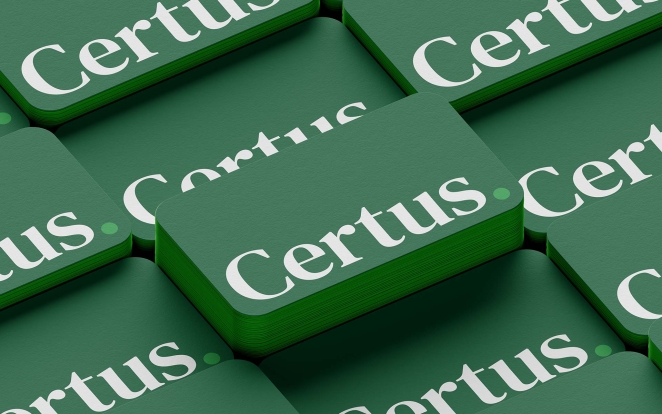
We’re currently working with a company called Certus. They’re an insolvency practice which makes them kind of company you could suggest isn’t the easiest to promote. Working on their brand positioning and related comms has been a real challenge. The usual approach of teasing out virtues and benefits needed to be enhanced. We spent time with them questioning their client approach and trying to understand the state-of-mind of their audience at the point of need. This really helped us shift perspective and develop ideas for the brand that will align with their ambitions.
How do you balance maintaining your company's unique creative voice while meeting the diverse needs of clients?
Interesting question. If we’re working in true partnership with the right clients this is more of a fusion than a balancing act. Our creative voice is ultimately championing ideas that will resonate with the client’s audience. It’s not always easy and there’s not always agreement though our strategic approach is based upon reason as a foundation for our creative ideas. Our work is always a true reflection of our client's authentic story, rather than our own.
What strategies do you employ to adapt to changes and trends in the industry while staying true to your company's values?
Trends come and go, but the need for clear communication and authentic connection is constant. We stay true to our values by focusing on fundamental human and business needs.
We adapt to new technologies and behavioural changes by viewing them positively as new tools to solve enduring problems. Our core idea and values are our anchor; they guide our strategic thinking and ensure that no matter the medium, our solutions are always authentic and effective.
Can you share a memorable client success story that exemplifies your company's approach and impact?
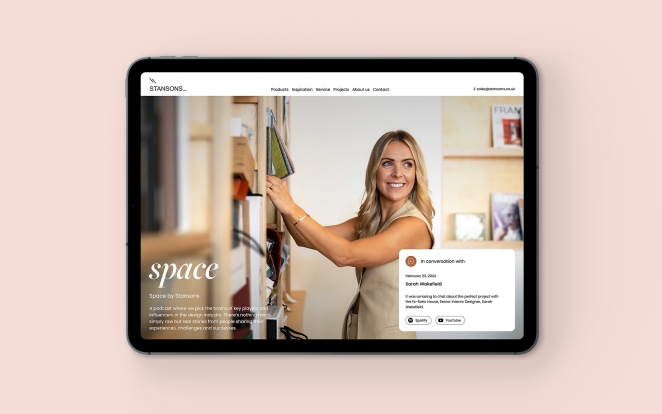
A recent success that exemplifies our approach was with our client, Stansons. They have a really varied marketing output including a podcast and magazine but needed to unify these communications into a single online community hub. With Nicola’s background in the workplace industry, we deeply understood their audience. Through research and her unique insight we were able to define the challenge and craft a solution that resonated.
Transforming this knowledge into a practical solution, we designed and built an effective digital experience from the ground up. We started with a new site structure, redesigning the product database to create clearer relationships between product groups. We then developed a new digital identity, extending Stansons’ existing visual approach with an updated colour palette for improved contrast, alongside new typography and UI elements.
The result is a hub full of practical tools. Easy access to specs, swatches, and a filterable product and project galleries now sit alongside downloads of their ‘Space’ magazine and product specs, making the site both functional and engaging.
In what ways do you invest in the professional development and growth of your team members?
We foster a culture of shared learning where team members are encouraged to present new findings, technologies, or sources of inspiration. We’re pretty relaxed in our approach and understand that our best work often happens away from our desks. That environment really helps everyone feel like they’re empowered to make their own decisions which has a positive impact on their career development.
How do you approach sustainability and ethical practices within your company's operations and projects?
As a studio focused on partnering with 'improvers', these practices are central to our operation. We operate as a remote-first studio to minimise our carbon footprint and prioritise digital-first delivery. We are selective about the clients we work with, choosing to partner with organisations that are making a positive impact. We believe our greatest contribution is amplifying the messages of companies that are actively working to make things better.
Can you discuss a time when your company had to pivot or innovate in response to unforeseen challenges, and what lessons did you learn from that experience?
Recent innovations for us have come from operational challenges. Like any small studio, having a team member out of action for a long period can have a huge impact. This forced us to tighten up our operations and look for ways technology could make us more resilient.
We implemented a CRM system to track conversations and automated parts of our messaging and social media scheduling. This has helped give everybody access to key information and keep things moving when people are away.
Do you have any websites, books or resources that you would recommend?
We’re big fans of thinkers who challenge conventional wisdom. Anything by Paul Arden, like ‘It’s Not How Good You Are, It’s How Good You Want to Be,’ is fantastic for its creative clarity.
We also like Rory Sutherland’s perspectives on behaviour. His book ‘Alchemy’ is a good read. His ideas on the power of looking at problems from different perspectives are a big influence on our strategic approach.
Also, with a slight bias, you need a copy of ‘Smile in the Mind’ on your shelf. I was lucky enough to help in the compilation of the second edition and it was really inspiring to see the passion and effort that went into finding the examples that made the final cut.