

The best motion designers know that great work is built long before the first animation begins. For Milan-based Senior Motion Designer and Video Editor Marco Klimciuk, creativity starts with careful planning, thoughtful storytelling, and a commitment to authenticity rather than chasing the latest visual trend. Nearly two decades into his career, he has built a reputation for creating impactful motion graphics, explainer videos, and video content that balance technical precision with emotional depth.
From covering international sporting events and travelling across Australia to running a successful freelance business for more than 12 years, Marco's journey reflects the value of curiosity, resilience, and continuous learning. In this interview, he shares how his creative process has evolved, why minimalism remains central to his work, and why developing a distinctive creative voice is the key to long-term success in an industry shaped by constant technological change.
How did you first get into the industry?
 My journey began nearly 18 years ago in a TV studio in Milan, which is where I took my first steps into this magnificent and magical world. Working in television allowed me to dive into various sectors of the industry; I was fortunate enough to travel and cover major sporting events like the Pharaons Rally, as well as live concerts and massive productions right from the backstage and OB truck.
After three years, I felt the urge to chase new vibes, so I packed my bags and headed to the exact opposite side of the world: Australia. I lived there for nearly two years, which was an incredible opportunity not only to learn English but also to start collaborating with international clients as a Video Editor and Motion Designer.
When I returned to Italy, that global experience opened doors for me at a Milanese advertising agency. I spent a couple of years there sharpening my skills and, most importantly, I fell in love with a video format that was taking the industry by storm at the time: explainer videos. I absolutely loved being able to own the entire creative pipeline—from crafting the moodboards and storyboards to the final animation. That growing passion is ultimately what pushed me to take the leap into freelancing. Fun fact: my very first freelance client wasn’t in Italy but actually a studio based in Japan, for whom I created explainer videos!
Where are you based now and who do you work for?
I'm currently based in Milan, Italy, and I have been successfully running my own creative path as a freelance professional for the past 12 years.
What is your personal background and what role did it play in your career?
 I believe a few key moments shaped who I am today, but two in particular stand out as the most personal and defining. The first is my grandfather's paintings, which I used to look at with pure fascination and awe as a young kid; they instilled in me a romantic ideal of what it means to be an artist. The second is Windows 3.1, which my father used for his work. That was my very first playground for digital tools, and I spent countless hours lost in Paintbrush.
Ultimately, these two worlds merged, turning me into an active creator rather than just a passive consumer of technology. Instead of simply watching a great film, a video, or an amazing piece of motion graphics, I knew I wanted to be the one behind the screen making it happen.
If you weren’t in your current industry, what would you be doing?
I’d probably be a digital nomad, somewhere halfway through a journey to travel the entire world. But hey, who knows? I might still give it a shot in the future, lol.
Can you explain your creative process? What makes it unique?
 I don't know if my creative process is entirely unique, but for me, an in-depth pre-production phase is absolutely non-negotiable—right after a great alignment chat with the client. We are talking style research, moodboards, storyboards, and animatics.
Unfortunately, in the local market, these steps are too often undervalued and dismissed as a waste of time. In reality, they are exactly what allows you to refine the product. By locking in these foundational steps, you can take the initial concept and, step by step, elevate it into something incredibly powerful and engaging for the final audience.
How would you describe your style?
In one word: Minimal. But for me, minimalism isn't just an aesthetic choice; it’s a narrative filter. I love it when simple lines and colors are forced to do the heavy lifting, or when a sequence of clips, paced to the exact millisecond, evokes a deep, emotional response.
When it comes to video editing, I lean toward a purist approach. In an era where visual over-complication and flashy transitions are often used to mask a lack of substance, I find immense power in the hard cut. I want the footage to speak for itself, relying on solid direction, lighting, and internal rhythm to convey the message. In illustration and motion design, I’m always eager to experiment and chase that 'WOW' factor—as long as it serves the core concept and doesn't just become background noise.
Which individuals do you gain inspiration from? Do you have any heroes in the industry?
 There are so many incredibly talented people in the motion design and video editing space that I’ve been following with huge respect and admiration for years—honestly, listing them all would take a lifetime! haha.
But if I had to pinpoint one defining figure, it would be Emanuele Colombo. In a twist of fate, I actually succeeded him at the Milanese creative agency I mentioned earlier, taking over his role when he decided to go freelance. That transition allowed me to connect with him personally, observe his workflow, and understand his overall design and work philosophy. Most importantly, he was the first to introduce me to the world of explainer videos, and he truly helped me find my footing during my early years as a freelancer.
Looking at global legends who inspire my visual storytelling, I can't leave out directors like Federico Fellini—gotta add a touch of Italian patriotism here, lol!—as well as master creators and filmmakers like Stanley Kubrick, Steven Spielberg, Pedro Almodóvar, Hayao Miyazaki, and even Hideo Kojima for his groundbreaking cinematic vision.
What tips would you give to aspiring creatives looking for work?
First of all, never give up. Even if you send out dozens of resumes and hear nothing back, you have to persist in your dreams and ambitions. Keep up with current trends, and focus on building a killer showreel that tells the world who you are and what you can do in just 30-60 seconds.
On a highly personal note: don't let flashy brand names fool you. A big logo can't always hide a lack of experience or flaws in execution. If you are ever torn between showcasing a high-quality project for a smaller client or a mediocre piece for a massive brand, always choose quality.
I also want to share a piece of advice that is perhaps a bit less romantic and a bit more practical: none of us are in this industry purely for the glory. We do this to pay the bills, put food on the table, and live comfortably. It’s crucial to put yourself in the client’s shoes. Even when their requested changes feel like pure heresy—like something that completely destroys the soul of your work—sometimes you just have to adapt.
I’m definitely not saying you should erase your creative or personal identity—far from it. But it is vital to build a healthy, productive dialogue rather than hiding behind your own ideas. Finding compromises and exploring new avenues to meet the client halfway can often lead to unexpected, brilliant results that you wouldn't have even considered because you were too locked into your own vision. Of course, there are exceptions. I’ve been there myself, having to disown certain projects because the feeling with the client just wasn't there. Fortunately, those have been isolated cases. Most of the time, I can confidently say I’ve been proud of the middle ground we found to bring the project across the finish line.
What tips would you give to other professionals to get more clients?
 Even when you are fully booked, make it a golden rule to dedicate a few hours every month to outreach and pitching to new clients. In this business, you can never predict when a dry spell might hit, so keeping the pipeline warm is essential.
Leverage platforms like Creativepool, Behance, Dribbble, or even Instagram to stay relevant, network, and get your work noticed—though I have to admit, I sometimes drop the ball on this myself! And, of course, double down on the fundamentals I mentioned in my previous answer: always prioritize quality. More often than not, when you deliver an outstanding product, word of mouth will kick in and do the heavy lifting for you.
Can you share a memorable experience from your career journey that shaped your approach to creativity?
 I wouldn’t necessarily say it shifted my creative approach, but it was hands down one of the most formative experiences of my life. As I mentioned earlier, during my first few years in the industry, I was fortunate enough to cover the Pharaons Rally—a grueling, week-long motorsport event in the Egyptian desert, very much like the Dakar Rally. Our technical crew acted as the video service provider for major national and international networks, moving from bivouac to bivouac, following the caravan of bikes, quads, and cars.
My specific task was to produce a daily 30-minute broadcast segment, working side-by-side with a sports journalist from Sky Sport. Picture this: I was just a kid fresh out of university, thrown into this massive, multi-ethnic, international environment. It was absolutely exhilarating, but it also came with immense pressure. I had the daily responsibility of hitting a hard broadcast deadline—missing it was not an option. For seven straight days, I had to deliver top-tier, high-quality content that met Sky’s rigorous broadcasting standards, while collaborating with the journalist to make his piece shine. I had to figure out how to elevate the storytelling using music tracks, high-adrenaline clips, raw emotion, and breathtaking desert landscapes.
Every night, after finishing the edits, we would pack up and move to the next location. We traveled through the pitch-black desert in a beat-up old van driven by a local guy named Amir. The starry sky above was absolutely insane, and the silence of the desert was like nothing else on earth. Even though I was literally exhausted and running on fumes from the intense workday, those two-to-three-hour night drives were pure magic. They forged an incredible bond between my colleagues and me, all of us packed into this little van, completely 'lost in the middle of nowhere.'
Ultimately, I think it was exactly that chaos of sensations, adrenaline, and raw emotion—mixed with those quiet, magical moments—that made me fall head over heels for the industry, especially for projects that broke away from local boundaries and embraced a much broader, international scope.
What kind of tools/kit/software could you not do without?
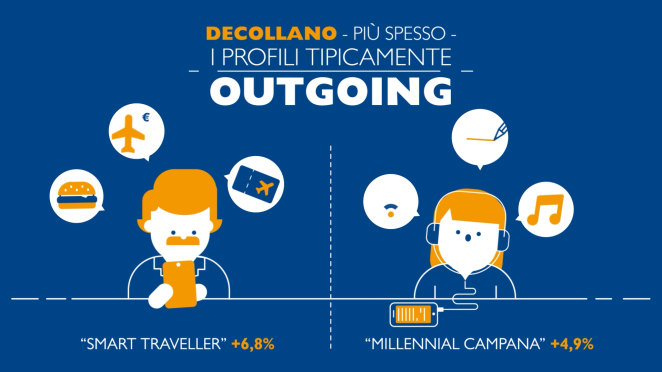 My absolute lifesavers are the Adobe powerhouse trio: Illustrator, After Effects, and Premiere Pro. They form the core spine of my daily production pipeline. That being said, Figma has definitely entered in the workflow; it’s become an essential tool for streamlining my workflow, organizing assets, and bridging the gap between static design and motion.
What’s your secret to staying inspired and motivated?
Every single morning, paired with my cup of tea, I dedicate about an hour to scouting platforms like Instagram, Behance, Dribbble, Pinterest, and, of course, right here on Creativepool. It’s my daily ritual to stay in the loop, keep my eyes trained, and discover fresh, innovative styles to draw inspiration from. For me, staying inspired isn't something you look for only when a project starts; it's a daily habit of feeding your curiosity.
What’s the work achievement you’re most proud of?
 On one hand, I have to mention collaborating on a workshop event with Google and UNICEF; it was an incredibly unique, educational, and deeply rewarding experience.
On the other hand, I hold a project incredibly close to my heart that probably only a handful of people have ever seen. It was a documentary about Italian female partisans from World War II—who were grandmothers by the time we filmed—sharing their tragic yet, in a way, deeply romantic stories. I was in my early years as a freelancer, and I had the rare privilege of sitting in the room and watching their live reactions as they viewed my work. Seeing how moved they were was profoundly emotional and completely electrifying. It gave me a massive surge of energy and clarity, reassuring me that I was on the exact right career path.
As someone with experience in the industry, what trends do you foresee shaping the future of creativity?
Over the years, we’ve seen endless trends and stylistic waves come and go. Some build a lasting aesthetic legacy, while others are nothing more than short-lived flashes in the pan. To be completely honest, I wish I had a crystal ball to predict what will permanently shape the creative landscape and what will just fade away, but the truth is, the lifecycle of trends is accelerating at a breakneck pace. Trying to chase every single visual wave is a losing battle.
If we look at creativity in its most abstract and truest sense, the real future isn't about adapting to a specific modern format—it’s about authenticity. My honest advice is to focus on developing a creative voice that truly resonates with who you are, rather than constantly stressing over whether your style is perfectly aligned with the current minute's trend. The tools and the visual wrappers will keep changing faster and faster, but a strong, distinct creative identity never expires. Sometimes, choosing to stay out of the chorus is exactly what pays off in the long run.
What do you think sets apart truly exceptional creatives from the rest of the pack?
 As I touched upon earlier, it all comes down to authenticity and emotional impact—the unique ability to evoke a genuine response through your work. Truly exceptional creatives have managed to break free from the obsession of constantly chasing the latest fleeting trend on Instagram or TikTok. Instead of trying to blend in with the noise of the algorithm, they focus on what makes their voice distinct. It’s that raw, emotional connection that ultimately elevates a piece of work from being just visually pleasing to being absolutely unforgettable.
How do you think technology has influenced the creative industries and how have you adapted to these changes?
Technology has always influenced human existence—you only have to look back at the dawn of our history to see it. As is often mentioned in books and sci-fi films, any sufficiently advanced technology can easily seem like magic, to the point of even being terrifying.
But the question I like to flip back is this: do you want to be the magicians, or just passive spectators watching someone else's incredible magic tricks? For me, the answer is simple. As long as I am able, I want to be up on that stage. I want to keep studying and mastering whatever technology the future brings, constantly finding ways to integrate it into my production pipeline—without ever compromising my core identity as a designer, of course.
What is the one thing that you would change about the industry?
 To be completely honest, just like any other industry, there are always pros and cons. But if there’s one thing that really frustrates me, it’s when certain clients treat our industry like a literal fish market. They base their hiring decisions solely on the lowest price tag rather than on actual skill, vision, or quality.
This race to the bottom inevitably floods the market with terrible, soul-less products that frankly feel like an insult to our entire profession. Creativity requires time, expertise, and dedication; when you reduce it to a mere commodity, you lose the very essence of what makes design impactful.
Any websites, books or resources you would recommend?
For motion design, recommending The Animator's Survival Kit is admittedly the ultimate industry cliché but it’s a cliché for a reason. Even today, it remains the definitive Holy Grail because it teache you the mechanics of motion, not just software keyframes.
For video editors, however, I strongly advocate against looking for a magic textbook. Instead, look at cinema, TV series, anime and industrial design. Dive into the monographs of your favorite directors, look at historic advertising campaigns, and study a bit of set design. As editors, our job isn't just to slice footage; it's to build space and time. Cultivating a visual culture outside of the Premiere Pro timeline is the only way to ensure your cuts are driven by narrative purpose rather than just technical convenience.