

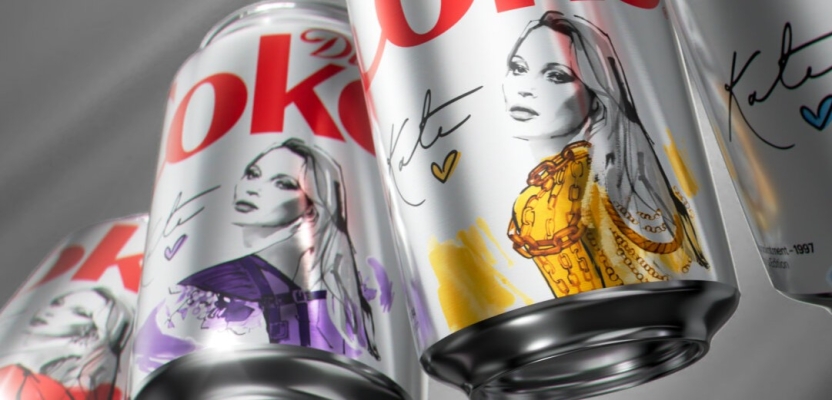

Epoch has spent more than three decades building brands around a simple but powerful belief: people connect with brands when brands understand people. Founded in Bristol in 1992, the creative agency has grown into the largest creative agency in the South West, working with major FMCG brands across more than 100 countries. Its approach puts consumer understanding, strategic thinking and meaningful brand connections at the heart of its work.
As technology, AI and automation continue to reshape the creative industry, Epoch is taking a deliberately human-led approach. From its distinctive brand strategy and creative process to its investment in people, cultural immersion, innovation and emerging talent, the agency is focused on what technology cannot easily replicate: connection, intuition, empathy, judgement and craft. In this interview, Epoch shares its story, creative philosophy, approach to growth and vision for the future of the creative industry.
How was your company born and where are you based?
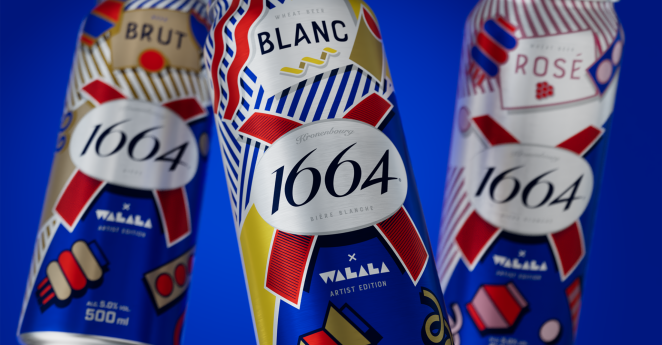 Epoch was founded in 1992 by best mates Ant Lucas and Mark Wildgoose.
Founded on friendship, the pair brought together a unique combination of creative conviction, playful personality and big business brains.
The pair chose Queen Square, a Georgian square in the heart of Bristol, as the company’s home. This situated the business squarely at the centre of the South West’s creative scene. We’re still here today and are fortunate enough to count creative companies like Aardman Animations, Channel 4 and Dyson as our neighbours.
What was the biggest challenge to the growth of your company?
For 30 years, we have been single-minded about bringing the brands we build, together with the consumers we serve and forming a more meaningful connection between the two. But in the process of doing this we’ve been guilty of not talking too much about ourselves. And despite staying out of the limelight, we’ve grown to be the biggest creative agency in the South West.
So, I guess the answer to the question is… ourselves!
However, over the last few years, we’ve made the conscious decision to step out from behind the curtain. We’re early in our journey of building our profile but are already seeing the benefits of doing just that.
What’s the biggest opportunity for you and your company in the next year?
For almost two decades, our industry has been buffeted by waves of technological disruption. Data, digital, smartphones, social media, the internet and AI. As this has happened, we’ve observed plenty of our peers focussing on a future of efficiently creating a large quantity of content. We believe, however, that these executional workstreams are the ones that will be most at risk of commoditisation and, ultimately, automation. So, whilst we employ technology as a tool, we’ve decided to move in a different direction.
Doubling down on what we do best and not getting caught up in the messiness of chasing automation means we can stay laser focussed on being experts in our field.
Can you explain your team’s creative process? What makes it unique?
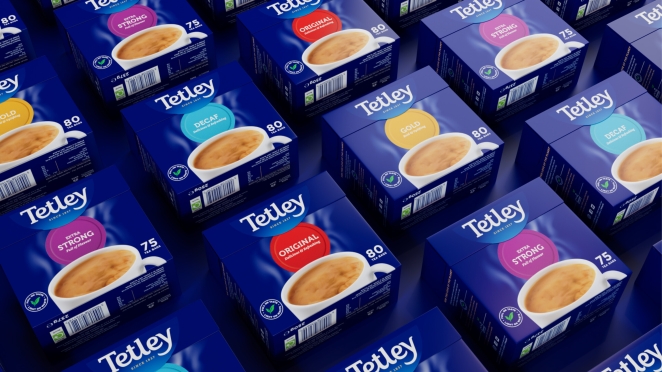
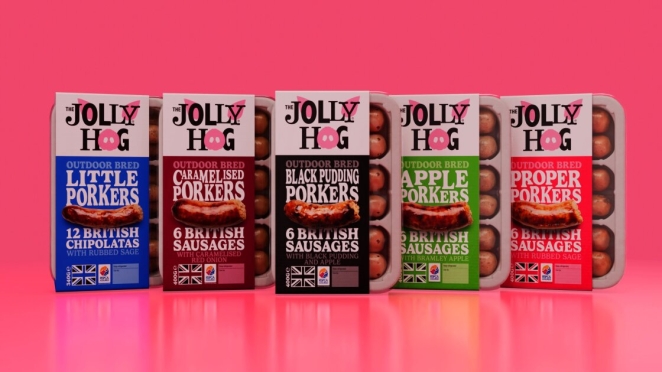
Epoch’s experience lies in working with the big FMCG brands. The kind of brands you find in supermarkets, drug stores, convenience stores and traditional trade. The types of brands stocked in fridges and freezers, kitchen cupboards and bathroom cabinets. These are iconic brands. Household names – but there is a truth about them. They’re low involvement, low risk, low dwell time purchases. And because of this, Epoch was built on a founding belief. That most people ignore brands because most brands ignore people. We believe in doing the opposite. We put people first.
By listening closely, observing carefully and understanding the motivations behind behaviour, we uncover the truths that others often miss. We turn insight into inspiration, shaping brand identities and the carefully crafted details that help brands reconnect with people in meaningful ways. The subtle shifts. The thoughtful adaptations. The moments that spark recognition, connection and response.
When human understanding sits at the heart of the work, people don’t just see it. They feel seen by it.
How does your team remain inspired and motivated?
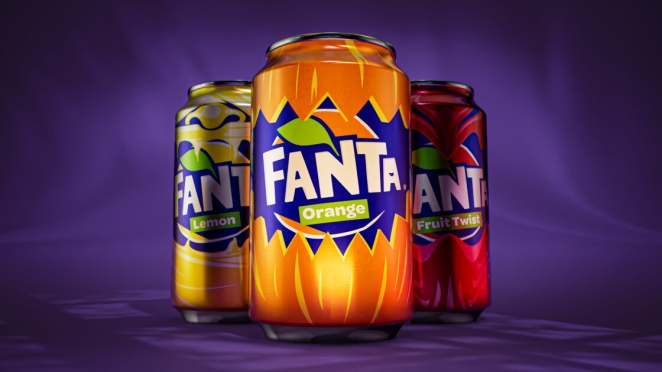 Our work has gone live in over 100 countries. But you can’t connect brands with consumers from behind a desk. That’s why our team jumps at the opportunity to travel. To meet consumers and experience their culture. To listen and to learn. In the last 12 months we’ve had feet on the ground in five continents. We’ve visited the US, Brazil, Colombia, the Ivory Coast, Nigeria, Kazakhstan, Switzerland and many, many more. All of these wonderful experiences help inform our work, sure. But perhaps more importantly they help broaden the horizons of those who make the work. They inspire, excite and motivate.
Which agencies do you gain inspiration from? Do you have any heroes in the industry?
Of course, there are the big branding agencies like JKR and Design Bridge who develop iconic, distinctive design for brilliant brands across the globe. But we also take a huge amount of inspiration from the younger, fresher, slightly smaller challenger agencies like Ragged Edge in brand identity or Uncommon in brand communications. They may not be the industry’s big behemoths (yet), but they produce work that is of the highest standard. They are built on cultural insight, creative conviction, a respect for the power of an idea and a deep value for expert craft and execution. And all of this is delivered with a charisma and passion that is magnetic. The industry needs more of this.
What is one tip that you would give to other agencies looking to grow?
To grow, we’ve kept it really, really simple. We invest heavily on improving our product. We invest heavily in developing our people. And we invest heavily in maximising our presence. We have a culture that is super proud of where we are, and what we do, but we also have a restless energy and a deep desire to constantly be better. And to do this we strive to constantly cultivate these three areas of focus. If we had to give one tip to other agencies, it would be to find a similarly simple, laser-sharp focus. Time and money are always limited. So you have to find the few areas that matter most to you, your business and your future. And once you’ve found them, you should concentrate your resources on doing them as brilliantly as you possibly can.
How do you go about finding new clients/business? (Pitching, work with retainers, etc.)
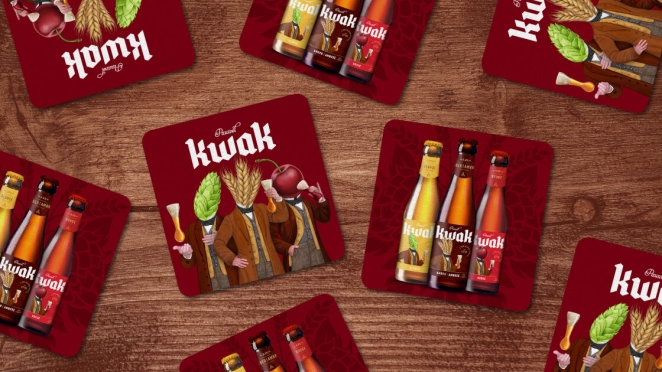 By focussing on our product, our people and our presence, new work finds us as much, if not more, than we find it. We strive to do outstanding work that changes the fortunes of the brands we work with. And we strive to do it with people who love doing what they do and who they do it with. The result is that clients tend to remember us. And when they change roles, they tend to bring us with them. This is how it’s always worked for us, and why we’ve not historically had to shout about ourselves. In fact, almost all of our current rostered positions can be traced back to a single client contact that we won around 1995. Again, it’s simple. Do good work with good people and good work and good people will find you.
What’s your one big hope for the future of the industry?
We hope that automation results in brand agencies’ core competencies becoming more focussed on what only humans can do best. Connection, conviction, craft. Initiative, intuition, integrity, instinct, influence. Taste, judgement, empathy, wisdom, holistic thinking, the list goes on and on. AI will not automate what agencies do. It will automate the more procedural, repeatable, tactical parts of it. And the result, we hope, will be that our industry becomes more human, not less.
A challenge for all of us will be how we ensure younger talent have a clear path into this future. That’s why we’ve ring-fenced resources for the Epoch Academy. Since 2022, almost 100 students from across the UK have attended our Academy workshop, which brings tomorrow’s talent together with our experienced team for a full day of brand building. The workshop allows us to identify the best upcoming talent, and to nurture those who are under-represented in our industry. We hope this commitment means we can build a future that works for us and for future generations.
Can you share a defining moment in your company's journey that shaped its identity or direction?
In early 2025, we introduced a new epoch for Epoch. We began by developing our new positioning and personality and then translated this into our refreshed identity. To better reflect our new emphasis on connection, we wanted every element of our brand identity to communicate closeness, warmth and real, raw, human emotion – the highs, the lows, and everything in between. From our photography to our colour palette to our redacted logo
(yep, we redacted our logo as we believe it’s not about us!), wherever people encounter us, we want them to genuinely feel something. More than recognition, we want resonance. Then, with the support of local agency Fiasco, we created a new website that brings all of this to life. Creatively single-minded, deeply distinctive, and centred on emotional connection. We practice what we preach.
How do you foster a culture of innovation and experimentation within your team?
 Epoch has always recognised when its people have a passion and curiosity for a certain topic. Whether it’s a designer who adopted AI early on, a strategist who’s fascinated by semiotics, or a motion designer with an interest in sonic branding. And when we spot these proactive people, we always try to get behind them. To make time for them to explore and experiment. To try the thing they’re enthusiastic about and then to share that enthusiasm with others across our agency. As a leadership team, this means fuelling the interests that already exist while also removing the barriers that stop people from having the space and time to pursue them properly.
What measures do you take to ensure diversity and inclusion are prioritised within your company?
In November 2023, we became a B Corp certified company, with a B impact Assessment score of 84.9 – considerably higher than the median score of 50.9! B Corps are a new kind of business that consider the impact of our decisions on the people we work with, as well as the planet we live on. A central pillar of the B Corp process involved assessing how Epoch prioritises justice, equity, diversity and inclusion. Alongside tangible activities (such as our Epoch Academy Workshop which helps under-represented people enter the industry), this framework informs how we build diverse teams, cultivate leaders and make business a force for good. Our LGBTQIA+ representation stands proudly above the national average at 11%. Female representation in leadership roles exceeds the industry average by 10%. And since 2016, our ethnic minority representation has grown from 2% to 10%.
How do you balance maintaining your company's unique creative voice while meeting the diverse needs of clients?
We focus on what we do best. This has been helped by our singular vision to build brands that build bonds. This vision applies to all projects, translates across all clients, remains relevant across all countries and all cultures. And when the work, the project or the approach doesn’t align to our expertise, we aren’t afraid to politely turn it down. We want to be the best at what we do. We want to create work that means everything to someone, not something to everyone. And achieving that means that sometimes, we have to be selective.
What strategies do you employ to adapt to changes and trends in the industry while staying true to your company's values?
The great creative figurehead Bill Bernbach once said, “Human nature hasn’t changed for a million years. It won’t even change in the next million years. Only the superficial things have changed. It is fashionable to talk about the changing man. A communicator must be concerned with the unchanging man with his obsessive drive to survive, to be admired, to succeed, to love, to take care of his own.” Too often, our industry forgets this truth. Sure, the channels in which our products are distributed have evolved. And media upon which our messages are delivered have changed.
And the technology that enables creative to be produced has been reinvented. But whilst everything has changed, nothing has. Today’s best business minds use this insight to their advantage. They don’t fetishise technology. They don’t hop from one trend to another. They don’t fixate on the futuristic but focus on the fundamentals.
What do people need? How can we serve them? What is our point of differentiation and how do we do it distinctively?
 For us the trick is simple, but difficult. We must ignore the fads and fashions, embrace the bigger strategic shifts, and always ground ourselves in the brilliant basics of how we create emotional connections between consumer and the brands we build.
Can you share a memorable client success story that exemplifies your company's approach and impact?
Sometimes what a client asks for isn’t what they actually need…
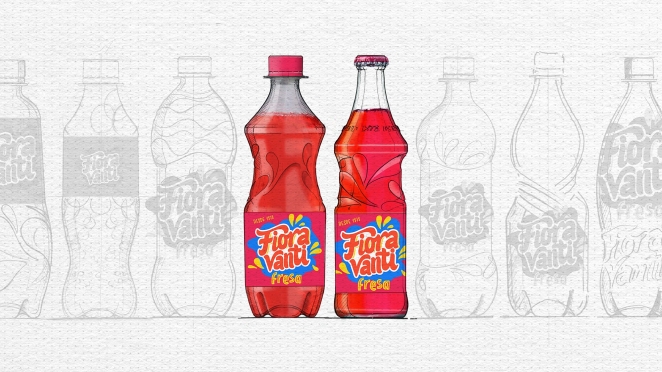
A drinks client came to us wanting a neck-collar promotion to arrest declining sales.
But the real problem ran much deeper. When they couldn’t summarise what their brand stood for in a sentence, it was clear they didn’t need another activation - they needed stronger brand foundations.
So, we brought them together with consumers and uncovered a platform that gave the brand a clear role in people’s lives. One with the longevity to put the fizz back into a brand (and a category) that had gone flat.
The outcome? A distinctive brand strategy, a refreshed visual identity and a disruptive communications platform.
The neck collar never happened. The brand revival did.
In what ways do you invest in the professional development and growth of your team members?
Outside of individual training plans, we believe professional development and growth come from a combination of understanding our consumers and clients.
We’ve already talked about how much importance we put on travel and cultural immersion, which we believe, when married with quality on-the-job time, are the key ingredients for development.
We don’t gatekeep internally and we do our best to share all jobs across all people, to give everyone a fair chance.
How do you approach sustainability and ethical practices within your company's operations and projects?
In line with our B Corp accreditation, our offices (and all of our work from home environments) run on 100% clean energy and, thanks to a partnership with Ecologi, are also carbon neutral. Which is why independent auditors Ecovadis gave us a rating of 71% in 2025 (an increase from 66% in 2024), placing us in the 90th percentile of all businesses.
Can you discuss a time when your company had to pivot or innovate in response to unforeseen challenges, and what lessons did you learn from that experience?
 Whilst the sprint workshop format itself was not new to us, our use of it was.
We recognised a gap in our output and the opportunity to build brands further upstream in the process.
In the last 5 years, we’ve run 57 sprints across 16 countries. Bringing clients, consumers and creatives into the heart of our process, this process allows us to work faster, achieve greater alignment and generate more enthusiasm amongst everyone involved.
Do you have any websites, books or resources that you would recommend?
We have a library full of amazing and inspiring books here at Epoch HQ, all available for our people to borrow and learn from. Here are a few of our favourites:
- How Brands Grow
- Anatomy of Humbug
- How Not to Plan
- Eat Your Greens
- The Choice Factory
- Decoded
- Building Distinctive Brand Assets
- Alchemy
- The Long and the Short of it