
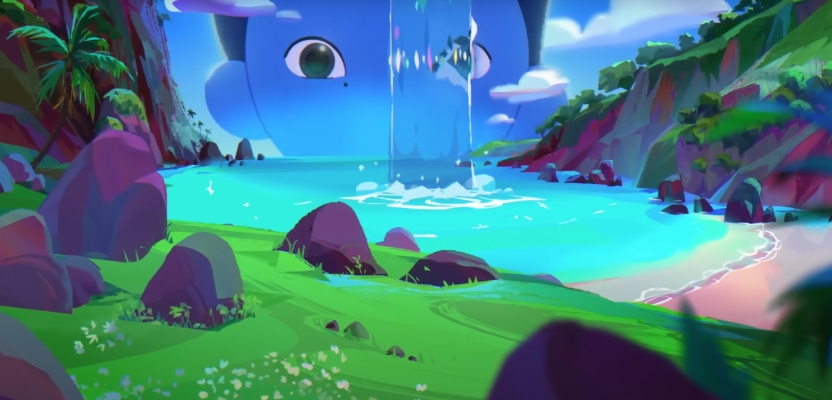

In a year defined by global uncertainty and creative constraint, five student directors—Magali Dunyach, Chien-Ju Hung, Jimin Jung, Vajra Pancharia, and Léa Pietrzyk—came together to cook up something unexpectedly profound. Blue Curry began, fittingly, in the kitchen during the early days of lockdown. What started as casual conversations over shared meals turned into a deeply collaborative project that has resonated far beyond the walls of their school, Gobelins, l’école de l’image.
Rich in metaphor, animation, and meaning, Blue Curry is more than a student short film. It’s a sensory exploration of cultural identity, imagination, and the quiet wisdom passed from parent to child over a shared dish. We sat down with the team to hear the story behind the story—and how their poetic take on diversity was stirred together during one of the most challenging moments in recent memory.
What was the original brief?
The greatest life lessons are often learned through the simplest experiences. When your kitchen becomes your classroom, and your mother serves you a plate of wisdom.
That quiet, evocative premise became the starting point for Blue Curry. From the outset, the directors were drawn to storytelling that feels both personal and universal—one that gently invites viewers to look inward while connecting across cultures.
How did the idea first take shape?
The initial spark for Blue Curry came during lockdown. Three of the directors were quarantined together and, like many of us, found themselves gathering daily around the dinner table. Those conversations naturally turned into creative exchanges.
“At first, we only had fragments—phrases inspired by Indian mythology,” they explain. “We didn’t have a full story. Just ideas and feelings.”
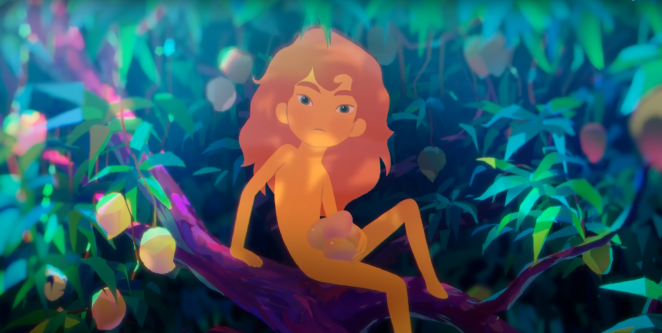
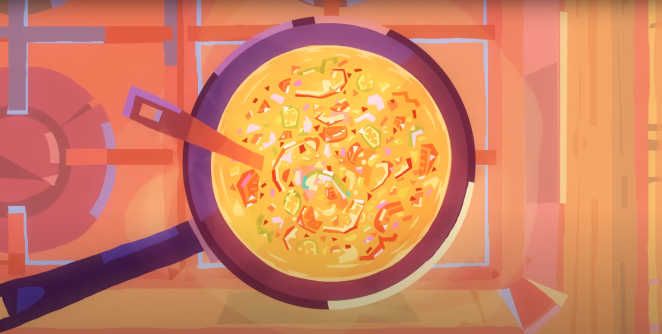
One myth in particular stood out: a story where the child god Krishna eats mud, and when his mother asks him to spit it out, she sees the entire universe inside his mouth. That image—simple yet profound—anchored the emotional and visual tone they were searching for. The team began experimenting with structure, eventually landing on the idea of using a cooking process as the metaphorical spine of the story.
What was the production process like?
The team spent nearly a year on the project from conception to completion, with half of that dedicated solely to pre-production. This included everything from storyboarding to character design to scripting emotional color palettes for different narrative beats.
In contrast to live-action filmmaking, animation demands precision. “Once animation begins, everything has to be locked in,” they say. “Revisions are incredibly time-consuming, so we had to be very intentional early on.”
Each discipline influenced the others—color scripting inspired storyboard decisions, and environment designs shaped character proportions. This tight feedback loop allowed for a highly integrated visual and emotional language that runs through every frame.
What was the biggest challenge?
Like so many student creators in 2020 and 2021, the team was forced to adapt to remote collaboration under pandemic restrictions.
“Creating an animated film as co-directors is already a challenge,” they recall. “Doing it while isolated made it even harder.”
Fortunately, their school granted them limited access to in-person collaboration sessions. “Those moments together kept us going. They reminded us why we were doing this.
What makes Blue Curry stand out?
The answer isn’t flashy effects or market-tested hooks. Instead, it’s sincerity. The team never set out to be trendy or disruptive—they simply wanted to tell a story that felt true to them.
Their decision to use food as the central metaphor is key. “Food transcends language and culture,” they explain. “It’s a shared human experience, and it helped us tell a story about empathy and diversity in a way that felt natural.”
That authenticity, paired with an imaginative visual journey, helped Blue Curry find a distinct voice.
Talk to us about the visual world you created
The film follows Neel, a young boy caught between the real world and his own vivid imagination. The team made a deliberate choice to adjust the visual language depending on Neel’s mental and emotional state.
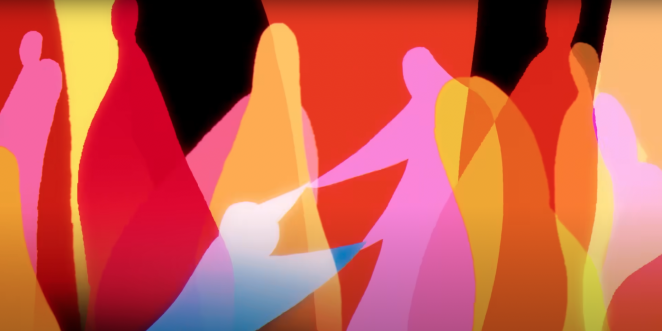
In the “real” world, environments are more structured and grounded—but still stylized, matching the paper-cut aesthetics of Neel’s Earth-themed school play costume. As Neel’s imagination takes over, the visuals grow more abstract and richly textured. The world becomes sensory, emotional, and fluid.
“When he’s in the spice carnival—this explosion of flavor and feeling—everything around him is stripped down to raw emotion and color,” they say. “That’s when he truly starts to understand what his mother is teaching him.”
A unique collaboration with real impact
One of the film’s most serendipitous moments came from casting. Originally, Monika Sharma and her son Aarush Chowdhery were brought in to voice temporary animatic tracks. But their natural chemistry was so strong, the team kept them for the final cut.
“They weren’t actors, but their bond was undeniable. It changed the emotional tone of the entire film,” the directors say.
This collaboration didn’t just enhance the film’s heart—it directly influenced how scenes were animated, paced, and edited.
What’s the message behind the metaphor?
At its heart, Blue Curry is a story about how we can live with difference—not by erasing it, but by embracing it. “We wanted to move beyond the idea that ‘we’re all the same.’ The truth is, our differences matter. They’re what make our communities richer.”
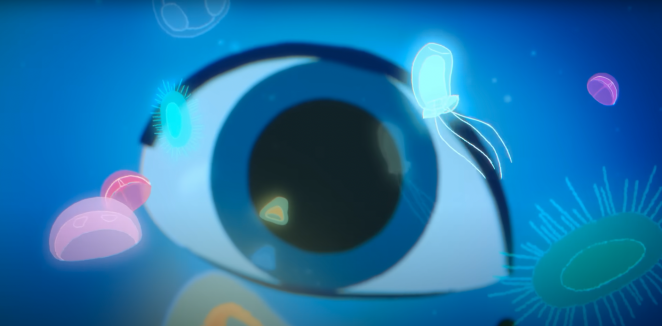
In a time when polarization is on the rise, that’s a message that couldn’t be more timely.
Final thoughts?
“We hope the film sparks conversations between parents and kids,” they say. “That it makes people think, feel, and see the beauty in a diverse world—even if it starts with something as simple as sharing a meal.”
The Team Behind Blue Curry
Directors: Magali Dunyach, Chien-Ju Hung, Jimin Jung, Vajra Pancharia, Léa Pietrzyk
Music: Antoine Duchene
Sound Mix: Benjamin Cabaj
Foley: Marie Maziere
Voices: Monika Sharma & Aarush Chowdhery
Distribution: MIYU
Sound Design: Laurent Jimenez
Sound Engineer: Laurent Chassaigne
Color Grading: David Chantoiseau
Production: GOBELINS l'école de l'image – Charlotte Baly, Louise Cardenas & Rebecca De Queiroz
With support from: Denisse Aguilar, Jorge Aguilar Rojo, Rishabh Arora, Alessandra De Stefano, Joshua Fisher, Matthieu Gerat, Odelia Laine, Azelie Michoux, Alejandra Anguita Corostola, Masha Moran, Saurabh Vashistha, Eun Yu, Kaye Kang, Jaeseon Seo, Nuli Ahn, Chia-Yu Liu, Wei Lee
Tools used: TVPaint, Blender, After Effects, Premiere