

With a career that spans advertising, gaming, and film, Creative Director Matt Lord brings a fresh, human-led perspective to creativity, always aiming to engage, amuse, and inspire. As a seasoned freelancer and former adam&eve stalwart, his ability to cut through the noise and craft memorable campaigns is what makes him a standout talent on Creativepool. Today, we take a deeper dive into the mind behind the magic.
How did you first get into the industry?
A golden triangle of lovely chaps called Stephen Beasley, Leon McComish and Haydn Kerr took a punt on an overdressed fella fresh from writing games manuals, who interviewed for a Digital Copywriter gig at DraftFCB (as it was back in the day, when its HQ was a shiny glass palace in London Victoria).
Where are you based now and who do you work for?
I’m a gun for hire back on the freelance trail after nearly 6 years as a permie at adam&eve and a few other London agencies as a freelancer since.

But I’m open to the right perm role too. So if you have a creative problem, if no one else can help, and if you know where to find me, I'll make that problem disappear...
What is your personal background and what role did it play in your career?
Like quite a few folk in adland, I fell into advertising. Or washed up in it. In a previous life, I was a failed actor, an assistant director in film & TV, and a games manual writer for a global gaming brand. So I think having a bit of experience of life gave me something to work with when it came to life as a copywriter. That, and a sense of humour.
If you weren’t in your current industry, what would you be doing?
I’d like to think I’d be treading the boards as a successful actor. Or still in the film industry. Maybe as a scriptwriter or director. Failing that, life as an international flaneur appeals.
Can you explain your creative process? What makes it unique?
Pretty much sitting motionless and staring at my keyboard. It’s not exactly unique. It may look as if I’m not working, but that’s our prerogative as Creatives. And it sure as hell annoys people who aren’t. I approach any creative brief from the perspective of a punter. What interests me about the product or service? Can I get our message across using humour?
I’ve found that if you can engender a giggle from an audience, you can pretty much get away with anything. Unless you’re in healthcare. Or fintech. They don’t seem to like a laugh. And importantly, people remember funny stuff. But also appreciating the brand’s tone of voice and the kind of audience they want to engage, the stuff they’re into, the way they speak and knowing where they go online and offline is obviously essential to engage them successfully – which affects your creative execution of the message.
And a brand needs permission to be in that space with that audience – or any creative work will fail with the unmistakable stench of ‘tryhard’. So, challenging the media plan to see if it’s appropriate for the audience and the creative idea is a good move.
And for me, a great campaign idea is one that has the legs to run across all kinds of media – the core idea doesn’t change, but the way it shows itself in different spaces might not be the same. And if you can get the client (and your agency chums) to buy into your idea early, you’ll have a much better chance of successfully dodging a good idea’s death by a thousand cuts.
How would you describe your style?
Initially solitary, becoming more collaborative. Developing humorous warm front. Moderate or good, occasionally poor.
Which individuals do you gain inspiration from? Do you have any heroes in the industry?
No surprises here really. Coming from a copywriting background, it’s the legendary Davids Ogilvy and Abbott. Leo Burnett too – particularly for quotes like “At the end of the day, we are just people talking to people.” Phyllis Robinson for being badass. Rory Sutherland and the genius oddballs Dave Trott and Mark Denton too.
Jane Evans and my mate Julie Seal for fighting the good fight against discrimination. Jamie Kolkot at spoof fossil fuel Atmospheric Agency is holding power to account and being funny with it. There are plenty of other quiet, unheralded geniuses in this weird industry of ours, and I’ve had the joy and luck of working with a few of them.
What tips would you give to aspiring creatives looking for work?
Work LinkedIn hard (like everyone else seems to be doing). Get on recruiters’ radars and check in with them (or their posts) regularly. Make a nuisance of yourself (in a nice way) with people who may be able to help. If you’ve got good ideas to sell, someone will buy them eventually. Don’t ignore client-side openings either.
If you’ve not much experience, pick some brands and write some ads for their product or service for your portfolio, to demonstrate your thinking. Get a creative partner you click with. (Check out Rachel Gott’s Art and Copy Team-Up LinkedIn group.) Act keen, turn up on time, but have boundaries. Be nice. Don’t be a dick. Advertising is a people business, and it’s a small industry with a long memory.
What tips would you give to other professionals to get more clients?
The usual stuff really: tailor your cover letters to the prospective role/client/sector. Highlight any relevant campaigns you’ve done in the client’s sector. Maybe write a punchy case study around the brief, your creative response and the results.
Use recruiters, but approach clients you’d like to work with directly. Maybe branch out from your core skill to be able to offer more services. That kinda thing.
Can you share a memorable experience from your career journey that shaped your approach to creativity?
I mentioned unheralded geniuses. Earlier in my career, a creative director possessed a gift for decluttered simplicity – he just had this unerring ability to instantly identify the important assets of an ad and how they should work together on a page. If an asset had no clear role, it was in the bin.
A master of information hierarchy, really. That less-is-more, Occam’s Razor approach to advertising can be applied to a print layout or social post as it can to a creative idea, and it taught me a valuable lesson in effective communication that’s stayed with me.
What kind of tools/kit/software could you not do without?
Give me a proper old skool pencil and paper and I’m happy. Or MS Word. Mind you, I can’t draw for toffee, so when I need to visualise an idea, AI image generation can cobble up something much better than I ever could – you really don’t want me to get the crayons out.
What’s your secret to staying inspired and motivated?
The thought that the gas and electricity could be turned off if I don’t.
What’s the work achievement you’re most proud of?
Maybe it was researching and writing Drake’s Trail – an online game based around Google Maps to promote the launch of SONY’S first Uncharted game. Then again, I’ve written a lot of silly radio ads with my buddy Russ Fisher that I’m proud of – clients seem to give you more leeway to be silly on the radio – it’s a medium I love.
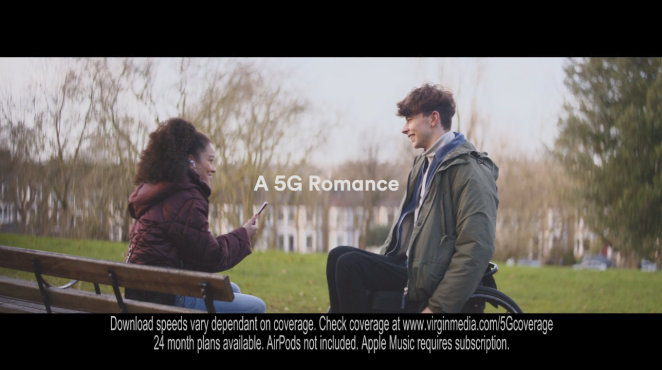
But more prosaically, it could be convincing a sceptical Virgin Media client that instead of devoting the majority of their budget on a few shiny brand TV ads every year, they chucked some decent money at their hardworking trading campaigns.

It enabled Russ and I at adam&eve to give as much love to these hardworking ads as the brand ads, and sure enough, it enhanced the client’s brand image in these previously unloved customer touchpoints, increased the client’s bottom line, and we garnered the highest client feedback scores they’d ever given an agency.
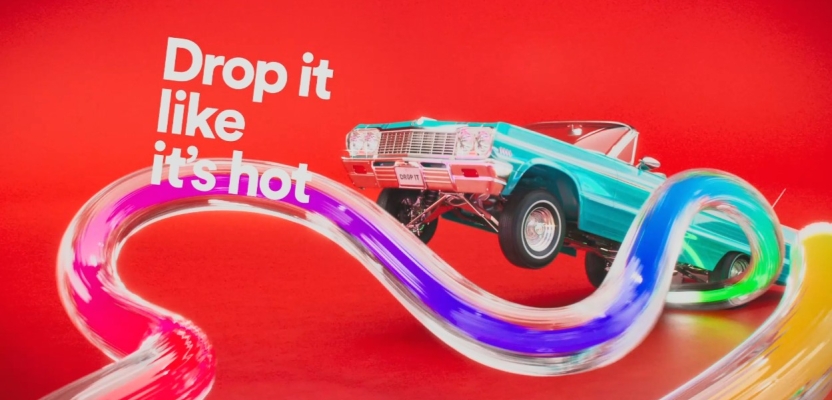
Which led on to us to making their first ever TV ad collab with apple. And we were the first Creatives to be allowed to use Snoop Dogg’s ‘Drop It Like It’s Hot' as a soundtrack to one of the ads. Boom!
As someone with experience in the industry, what trends do you foresee shaping the future of creativity?
For better or worse, influencer marketing is only going to grow and become another deliverable for Creatives to take into account – and even specialise in. Data-led marketing is evolving and here to stay, some agencies seem to have become too enthralled with it and use it as a USP, but for me it works when it provides useful insights that act as a springboard for human-led creativity.
And yes, the tentacles of AI will continue to wind their way into the business of creativity. I just hope it becomes another clever tool in the box – but not too clever that it dispenses with its user.
What do you think sets apart truly exceptional creatives from the rest of the pack?
Crazy hair. Failing that, I don’t think there’s one magic ingredient that’s commonly found in exceptional Creatives, really. It may just be an ability to coin a perfect turn of phrase, or a brilliant visual that helps nail the brief. A bit of simple genius.
I do envy Creatives who have an unerring ability to bring dissociated thoughts or things together to come up with a creative answer in a way that I would just never think of. And if that can be done with wit and panache that credits the audience’s intelligence, then that’s gold.
How do you think technology has influenced the creative industries and how have you adapted to these changes?
Technology has enabled a shift towards data taking a more central role in creative strategy – which is a double-edged sword. Let it dictate a narrow creative approach, and left unchallenged, it’s the cart that leads the horse; but use it as a means to inform a creative response, and it’s useful. Data didn’t make the iconic ads of the last 50 years, and data won’t make the iconic ads of the next 50. I’m hoping that creative humans will. But AI just might. Who knows.

Fundamentally we’re humans persuading other humans – until AI removes the annoying human trait of needing to be persuaded. And if data, metrics and AI can help us do that more effectively, then yeah, stick ‘em in the toolbox and use the right tool at the right time. But as a creative industry, I’d like to think we’ll always think more creatively and be more surprising and engaging than whatever data or AI recommends.
What is the one thing that you would change about the industry?
As a Creative, I could say ‘our industry’s over-reliance on metrics and data’ but I won’t. I’ll happily rant about the elephant in the boardroom that is ageism – and its closely inbred cousin, sexism. Stick them both right in the bin. Like a demented magpie, this industry continues to be inexplicably enthralled by the shiny and new.
No other business – not even acting – is so besotted. Which industry would effectively ignore a female audience over a certain age which holds over 50% of the purchasing power? It’s insane. It’s fine and fun to sell trainers to Gen Z, but seriously, take off the blinkers. Maybe there’s too many man-boys in top jobs, and this C-suite imbalance is a Mad Men legacy that our industry, so forward-thinking in many ways, is still so backwards in addressing. Same issue with creative talent.
Why is it that Creatives in their 40s, 50s and even 60s who know what good work looks like, who’ve valuable life experience, who who’ve seen so much societal change and embraced so many technological advances, who are best placed to mentor young Creatives are effectively cold-shouldered by our industry? And again, when many other business sectors embrace all that they have to offer. It’s self-defeating, it’s weird, and it’s wrong. Rant over.
(Well… I could bang on about my belief that anyone put in a managerial role should undergo mandatory training. Especially Creatives. You may be great at what you do, but you may be a terrible people manager. When other Creatives’ careers are in your hands, it’s scandalous that agencies don’t enforce this. It’s a great way to make talent leave the building. Again (again!) which other industries would be so laissez-faire about something so important to the business?
Any websites, books or resources you would recommend?
So for books (remember them?) on advertising generally, there’s loads of wise words written, but I like:
Hey Whipple, Squeeze This! by Luke Sullivan
The Advertising Concept Book by Pete Barry
Creative Mischief by Dave Trott

Copywriting-specific:
The Copywriter's Handbook by Robert W Bly and Henry Holt
Persuasive Online Copywriting by Bryan and Jeffrey Eisenberg
As for websites, I’m really enjoying Steve Hudson’s thoughts on advertising over a long and lauded career: https://thepowerofadvertising.com