

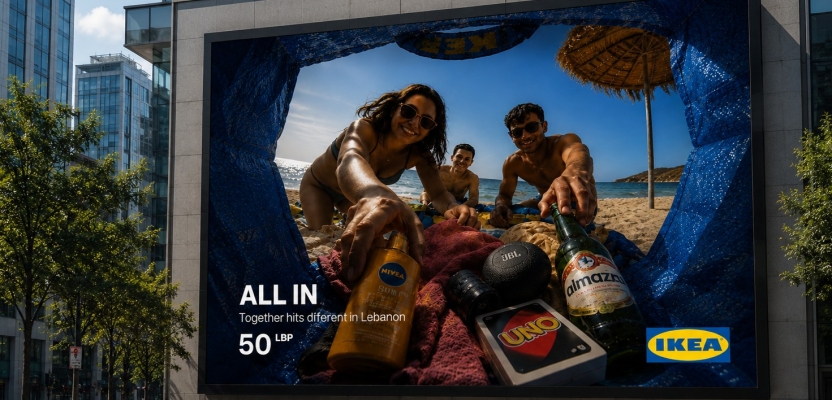

For creative designer and brand consultant Joe Obeid, the strongest brand stories are built not around products, but around human emotions and shared experiences. In this self-initiated speculative campaign inspired by IKEA Sweden’s iconic communication style, Obeid reimagines the brand through the lens of Lebanese summer culture — celebrating moments of family gatherings, late-night conversations, and the comforting rituals of returning home.
Rooted in his ongoing DBA research into visual communication, emotional branding, and consumer psychology, the project explores the connection between cultural identity and audience engagement. Through cinematic visual storytelling, thoughtful art direction, and a hybrid creative process combining traditional design methods with AI-assisted experimentation, Obeid demonstrates how global brands can create deeper local resonance while preserving their core identity.
What was the brief?
This self-initiated conceptual campaign was inspired by IKEA Sweden’s communication approach and reimagined for the Lebanese market through localized cultural storytelling and emotional branding.
The project explored how a globally recognized visual language could emotionally resonate within a different cultural context while maintaining the essence of the original brand identity.
Developed as both a creative and research-driven exploration, the campaign also reflects my ongoing DBA research interests in visual communication, emotional branding, and consumer psychology.
How did the initial pitch/brainstorming phase go?
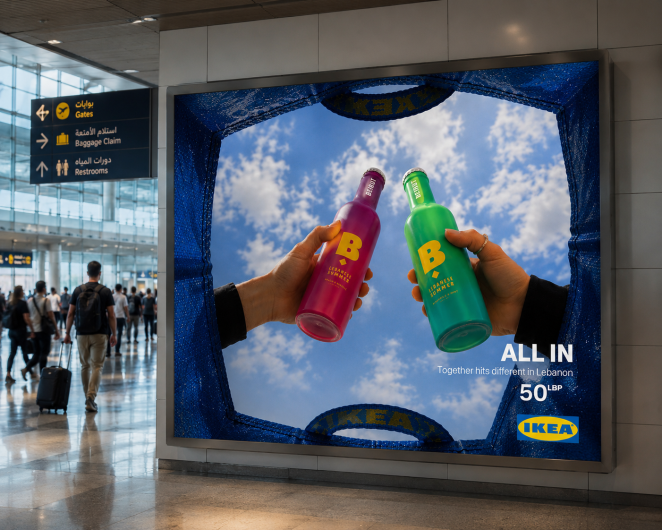 The brainstorming phase started with a simple observation: almost every Lebanese person living abroad has an emotional connection to “coming back home” during summer. Instead of focusing on products, I wanted to focus on emotions, memories, and familiar cultural moments. I explored how IKEA’s visual language could naturally exist within Lebanese summer experiences without feeling forced. The idea evolved into creating a campaign that feels authentic, cinematic, and emotionally relatable while still visually aligned with IKEA’s global communication style.
What was the process behind ideating the concept?
The ideation process was also influenced by my DBA studies in Visual Communication & Brand Psychology, particularly the relationship between emotional memory, cultural identity, and consumer engagement.
Rather than simply translating a global campaign visually, the objective was to reinterpret the emotional experience behind it for Lebanese audiences through recognizable social rituals, nostalgia, and culturally familiar moments.
What was the production process like?
The production process combined concept development, art direction, visual storytelling, compositing, and campaign application design. Since this was a self-initiated project, I handled the full creative process independently — from moodboarding and visual direction to layout execution and mockup applications. The visuals were carefully designed to feel cinematic and emotionally warm while maintaining the simplicity and cleanliness associated with IKEA campaigns.
What was the biggest challenge during production? How did you overcome it?
The biggest challenge was balancing IKEA’s recognizable global aesthetic with authentic Lebanese culture without making the campaign feel cliché or overly commercial. I wanted the visuals to feel emotionally real rather than artificially “localized.” I overcame this by focusing on subtle storytelling, realistic social interactions, natural lighting, and everyday Lebanese moments that audiences immediately recognize emotionally.
What kit/tools/software were used to create the project?
Adobe Photoshop, Illustrator, Lightroom, and AI-assisted image generation tools were used throughout the creative process. AI tools supported visual experimentation and mockup exploration, while all final creative direction, storytelling, layout composition, and campaign execution were art directed and refined manually.
What is one funny or notable thing that happened during production?
One interesting realization during the process was noticing how quickly Lebanese audiences emotionally connected with the visuals even before reading any text. People immediately recognized the “Lebanese summer feeling” through the atmosphere, colors, and scenes alone, which confirmed that emotional storytelling can sometimes communicate more powerfully than copywriting.
What’s the main message of this project and why does it matter?
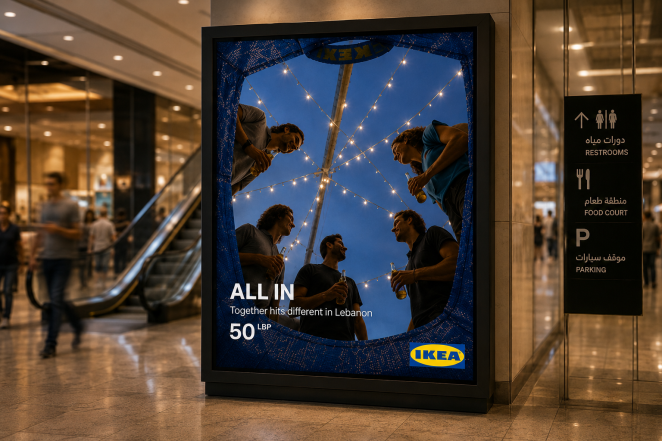 The main message is that branding becomes more powerful when it emotionally connects with people’s cultural memories and identity. The campaign explores how global brands can become more human and relatable when they genuinely understand local emotional experiences rather than simply translating visuals or language.
How long did it take from inception to delivery?
The project took several weeks from concept exploration to final execution, including research, visual development, art direction, storytelling refinement, and campaign applications.
Can you describe the creative spark or inspiration behind the initial concept? Was there a specific moment or insight that ignited the idea?
The creative spark came from observing how Lebanese people returning home during summer instantly reconnect with small emotional rituals — gathering around food, sitting outdoors late at night, sharing drinks, and reconnecting with family and friends.
I started imagining how IKEA’s iconic visual language could become part of these moments in a way that feels natural and emotionally resonant. The insight was that people often remember feelings more than products.
How did you ensure that the concept aligned with the brand's values, goals, and target audience?
The project focused on preserving IKEA Sweden’s recognizable communication style while adapting its emotional storytelling to fit Lebanese cultural behaviors and audience psychology.
This balance between global brand consistency and local emotional relevance became one of the core conceptual foundations of the campaign.
Were there any alternative concepts or ideas considered during the ideation phase? If so, what led to the selection of the final concept?
Several concepts were initially explored, including more product-focused storytelling and interior lifestyle setups. However, the final direction felt stronger because it focused on emotional experiences rather than furniture or objects themselves.
The selected concept created a more human and culturally driven narrative, which aligned better with the emotional tone I wanted the campaign to communicate.
Can you discuss any collaborative or interdisciplinary aspects of the ideation process, such as working with other departments or external partners?
Although this was a self-initiated project developed independently, the ideation process itself combined multiple disciplines including branding, visual communication, emotional psychology, cultural storytelling, and advertising strategy.
The project was also influenced by research and observations from global advertising campaigns, consumer behavior studies, and luxury brand communication approaches explored throughout my DBA journey.
What role did consumer research or market analysis play in shaping the concept and its execution?
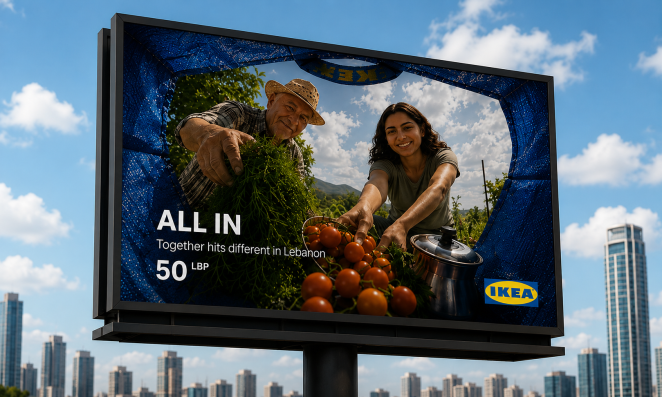 The campaign was heavily influenced by behavioral observation and emotional branding principles explored through my DBA studies, particularly how nostalgia, familiarity, and cultural identity shape audience perception and emotional attachment toward brands.
The Lebanese summer experience became a strong emotional trigger that naturally aligned with IKEA’s lifestyle-oriented storytelling approach.
Can you discuss any unique or unconventional production techniques or approaches used to bring the idea to life?
The campaign used a hybrid creative workflow combining traditional art direction principles with AI-assisted visual experimentation and digital compositing techniques.
Rather than using AI to generate final outcomes directly, it was used as a supporting creative exploration tool to test compositions, environments, and storytelling possibilities before refining the final visual direction manually.
How did you ensure that the concept remained innovative and stood out in a crowded marketplace?
The project stood out because it avoided traditional advertising formulas and focused instead on emotional cultural storytelling. Rather than centering the campaign around products, promotions, or commercial messaging, it focused on atmosphere, identity, nostalgia, and emotional memory.
This created a more cinematic and emotionally engaging campaign experience while still maintaining the recognizable essence of the IKEA brand.
What do you hope it achieves for the brand?
I hope the project demonstrates how global brands can create stronger emotional relevance by adapting their storytelling to local culture and emotional behaviors rather than relying only on direct product communication.
The campaign explores how authenticity, nostalgia, and emotional familiarity can strengthen audience connection and create more meaningful brand experiences.
Credit list for the work?
Creative Direction: Joe Obeid
Art Direction: Joe Obeid
Concept Development: Joe Obeid
Visual Design & Campaign Development: Joe Obeid
Project Type: Self-Initiated Speculative Campaign Inspired by IKEA Brand Communication
Note: This project was independently created and is not officially commissioned, affiliated with, or endorsed by IKEA.