

In this Creativepool Member Spotlight, we sit down with Victoria von Knorring, a London-based Creative Director and multidisciplinary artist whose career is a captivating journey through music videos, visual storytelling, and digital artistry.
From her early days directing for major labels to her current explorations in AI-generated art and virtual worlds, Victoria’s work embodies a dynamic fusion of Nordic roots, avant-garde inspirations, and a deep connection to storytelling. Join us as we uncover her creative process, career insights, and her vision for the future of the arts.
How did you first get into the industry?
After completing my film course at NYU's Tisch School of the Arts. I was fortunate to direct a music video for Ninja Sarasalo, a talented singer and former model known for being one of Jean Paul Gaultier’s muses and the face of his iconic perfume. Her vibe reminded me of Björk’s eclectic style, and we immediately connected creatively, resulting in an inspiring brainstorming session filled with ideas and a satisfying collaboration.
This opportunity opened doors to directing music videos for major labels such as Sony BMG, Universal Music, and Warner Music, as well as working on a few advertisements. During this time, I immersed myself in learning about editing, post-production, and videography, relishing the freedom to shoot, style, and direct - also for emerging independent talent.
Although my primary focus has been on visual creativity, I've always maintained a strong connection to the music industry, a passion that continues to influence my work today.
Where are you based now and who do you work for?
I’m currently based in London, where I work as an Independent Creative. At the moment, I'm developing two virtual artists in their own digital world in collaboration with a talented music producer, and I’m also focusing on my new multimedia art collection.
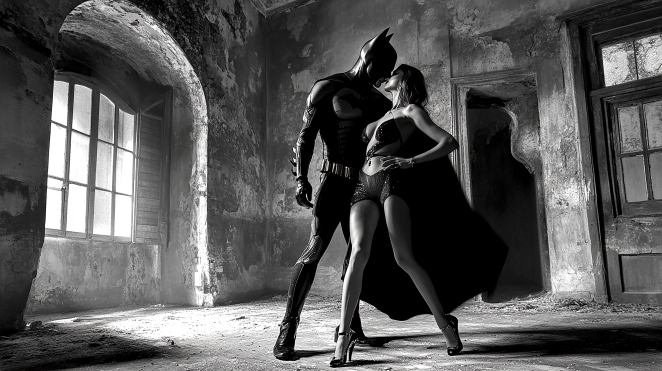
My recent projects include AI-generated music videos like 'Be the Love You Are' for WGR, produced by Tommy Vicari and creative work for the film 'Can You Hear Me,' produced by Primary Wave and International Productions, featuring Peter Facinelli from 'The Twilight Saga' and Charlotte Radford.
What is your personal background and what role did it play in your career?
My Nordic roots have played a big role in shaping my creative journey and the way I see the world. Growing up in a culturally rich environment, I was surrounded by different artistic influences from a young age. Studying architecture and filmmaking gave me a solid mix of design skills and storytelling techniques that I now bring into my projects.
At Kingston University, I learned how space, form, and function all work together, while my time at NYU Tisch School of the Arts helped me understand the power of visual storytelling and the emotions that film can create. The art courses I took in Paris at l’Ecole des Beaux-Arts opened my eyes to the city's vibrant art scene and the magic of blending different mediums, sparking my passion for creativity even more.
If you weren’t in your current industry, what would you be doing?
My current industry is multidisciplinary, so I’d still remain firmly rooted in the creative industries, it’s simply where my heart belongs. I might explore different facets, like venturing deeper into film directing, fashion design, or immersive storytelling. The idea of crafting powerful narratives that blend visuals, sound, style, and emotion in innovative ways excites me, and I’d love to push the boundaries of how we experience stories.
Can you explain your creative process? What makes it unique?
Probably the interdisciplinary approach, where I weave together various influences and disciplines to create multi-layered experiences. By prioritising storytelling and emotional connection, I aim to engage audiences in a way that allows them to experience my work not just visually, but also on a sensory and emotional level.
How would you describe your style?
As a Creative Director, I have the freedom to dive into worlds of vintage, retro, futurism, or any blend of styles, it all depends on the concept and how bold and adventurous you're willing to be. There are no fixed rules, only limitless possibilities.
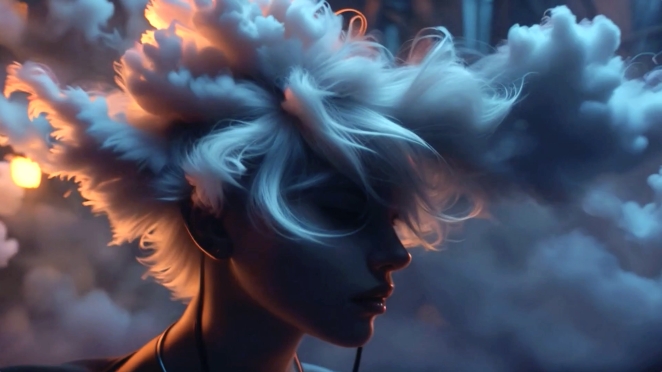
As a Multidisciplinary Artist, my style oscillates between abstract and figurative art, utilising diverse media to hopefully challenge perceptions and evoke a sense of wonder.
Which individuals do you gain inspiration from? Do you have any heroes in the industry?
I draw inspiration from a mix of creative visionaries across various fields. For example: Zaha Hadid, Banksy, Pharrel Williams, David Hockney, Yayoi Kusama and SIA.
What tips would you give to aspiring creatives looking for work?
Stay Curious and Have Fun. Creativity thrives on curiosity. Keep exploring, playing, and having fun with your ideas. The more you enjoy the process, the more your work will resonate with others.
What tips would you give to other professionals to get more clients?
Make Your Work Distinctive and Build a Strong Online Presence. Maintain an updated and visually appealing website and utilise social media platforms like Instagram and LinkedIn to showcase your work, share insights, and engage with your audience.
Can you share a memorable experience from your career journey that shaped your approach to creativity?
My creative journey started during my childhood, when I was lucky enough to be surrounded by exhibitions and a creative vibe. One of the highlights was our annual trips to the Venice Biennale in Italy with my family, it really opened my eyes to the endless possibilities of art.
Growing up, my parents had a lively social circle full of artists and cultural influencers, which made our home feel like an inspiring hub for creativity. As a teenager, I took summer art courses in France, where I sharpened my skills and discovered my love for the magic of creating.
Everything shifted when an architect from Los Angeles visited our house, saw my artwork, and suggested that I study architecture. Until then, I was only thinking about art, film, or fashion design. But his words pushed me to give architecture a try, with the idea that I’d eventually move into filmmaking. That turned out to be a game-changer—it set me on a path where I could keep exploring my passion for art while blending it into different creative fields.
What kind of tools/kit/software could you not do without?
A Good Sketchbook and Quality Pens. I can’t live without my sketchbook for brainstorming and sketching ideas. The tactile experience of drawing helps me connect with my creativity.
Paint, brushes and screen printing equipment to get into the action.
Creative Suite programs like Photoshop, Illustrator, and After Effects are essential for bringing my visions to life, offering the flexibility I need to transform concepts into reality.
Procreate is my top choice for digital illustration, its intuitive interface and extensive brush library make it perfect for sketching and creating detailed artwork on the iPad.
Midjourney and Runway are essential for exploring innovative design concepts and generating creative ideas quickly, allowing me to explore and play with my thoughts, dream I guess.
These days, my camera of choice is the Sony A7S III, it’s pure magic.
And lastly, my drawing board is indispensable for pinning up ideas and creating drawings and collages, keeping my creative process tactile and hands-on.
What’s your secret to staying inspired and motivated?
Staying inspired and motivated for me is all about staying curious, exploring new things, and connecting with people. Just walking through London or being on a train, basically, any kind of movement helps clear my mind and see things more clearly. I love diving into new ideas, materials, and technologies, that's what really fuels my creativity.
The vibe of my workspace is also super important. I like to keep it stimulating and creative, which helps me stay focused on my vision. Traveling, spending time in nature, or just observing everyday life with fresh eyes sparks a lot of ideas, too. And sharing those ideas with family and like-minded people always keeps me motivated, they bring fresh perspectives that really fuel my creativity.
What’s the work achievement you’re most proud of?
I value each piece I create for its individuality and the journey it represents in my creative evolution. However, I’m especially proud of my art collections, 'Dopamine' and 'Saint.' Each artwork is a unique exploration of cosmopolitan spirituality, blending abstract and figurative elements to inspire a deep sense of cosmic awareness
As someone with experience in the industry, what trends do you foresee shaping the future of creativity?
Obviously, AI and tech are shaking things up in the creative world. Sometimes it’s a co-pilot and a best friend and other times a wild horse and a crazy college buddy!
Then there’s AR and VR, with all the possibilities that they will offer creators.
Inclusivity is calling for narratives that reflect diverse perspectives and it looks like sustainability may also gain in importance, with artists focusing on eco-friendly materials and practices that make a real difference.
And of course the creator economy is booming, with platforms like Patreon and TikTok beginning to give artists a chance to turn their passions into careers.
Exciting times ahead! These trends are opening up opportunities for artists to innovate and create work that truly resonates with people.
What do you think sets apart truly exceptional creatives from the rest of the pack?
Vision and Originality. Great creatives have a unique vision and the knack for thinking outside the box. This allows them to create work that really challenges the usual norms. Their originality often sparks innovative ideas that grab attention and inspire others.
Emotional Intelligence. Top-notch creatives are in tune with their own emotions and those of others. They know how to connect with audiences on a personal level, using storytelling and empathy to craft experiences that leave an impact.
How do you think technology has influenced the creative industries and how have you adapted to these changes?
Technology has profoundly influenced the creative industries by transforming how we create, collaborate, and distribute our work. The rise of digital tools and platforms has made it easier for artists and designers to experiment and bring their ideas to life, while also democratising access to creative resources.
For instance, software like Adobe Creative Suite and Procreate has enabled me to explore new techniques and mediums in my art, while AI tools like Midjourney and Runway have opened up innovative possibilities for generating ideas and enhancing my projects. These technologies allow me to streamline my workflow and push the boundaries of my creativity, but do not
Social media has flipped how we promote our work, too. Platforms like Instagram and TikTok let artists connect with audiences all over the globe and build communities around their art, but with all these opportunities, there’s also the challenge of over saturation and the pressure to keep up with everything. We’ve got to be careful not to lose our unique voices in the rush to create.
What is the one thing that you would change about the industry?
Promote Diversity and Inclusion. We need to ramp up efforts to showcase diverse voices and perspectives in the creative world. This includes supporting underrepresented artists and creating platforms that amplify their stories. It’s crucial to maintain the quality of curation and gatekeeping in the industry.
I really enjoy art fairs like Frieze, Art Basel, and the Venice Biennale, as well as the year-end summer exhibition at the Royal Academy of Arts, events that highlight emerging talent and bring a fresh energy that’s invigorating.
However, while I have immense respect for the masters like Matisse and David Hockney, I find it exhausting to see their work repeatedly at places like the Tate Modern and Pompidou Centre. I guess I’m a bit of a futurist. I love being in tune with today’s creative pulse, while occasionally glancing back at the past. But I don’t want to dwell in that space like it’s a religion.
There’s so much incredible young talent out there, but we also need to be cautious of the “Naked Emperor” phenomenon, where we might overlook the obvious in our quest for what’s trendy.
Any websites, books or resources you would recommend?
Books:
Everything that is solid melts into air by Marshall Berman
Learning from Las Vegas by Denice Scott Brown
Ways of seeing by John Berger
The power of now by Eckhart Tolle
Making Ideas Happen by Scott Belsky
Suchet November 5th, 2024, in the afternoon
Bravo - beautiful interview. Love the artwork, and thoughts behind the amazing work.