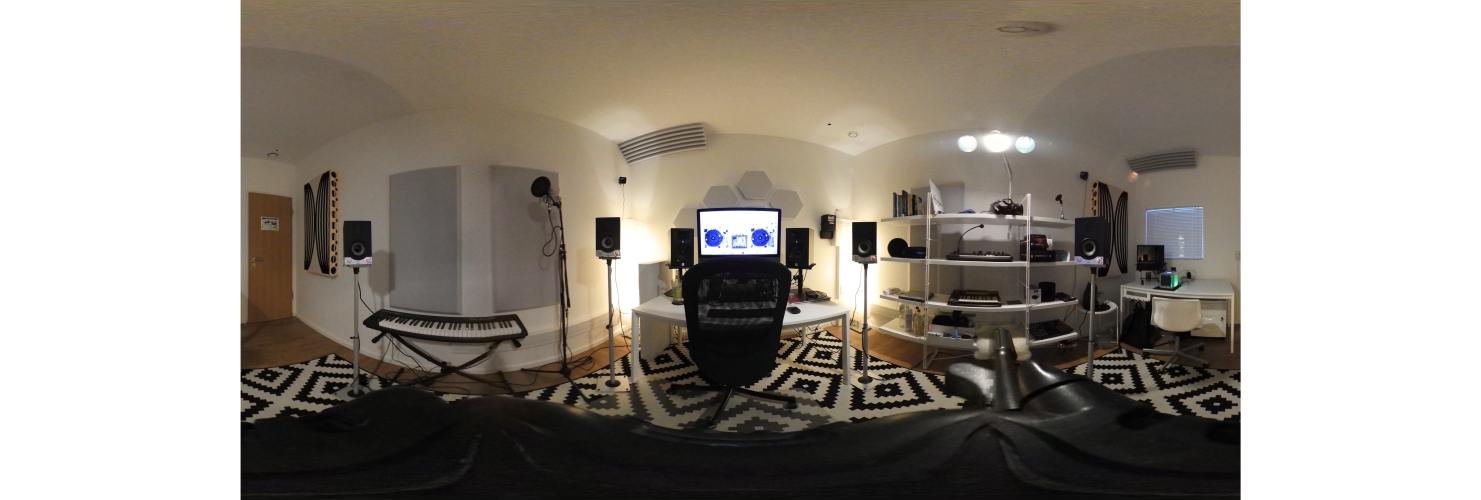


The audio landscape is rapidly evolving. Here's your quick guide to staying ahead.
The New Audio Frontier
The world of audio has undergone a huge shift.
Technologies once confined to research labs and high-end studios have now become accessible to creators at all levels.
If you're an enthusiast or working with sound in any capacity, whether as a producer, designer, or developer, understanding these emerging technologies isn't just beneficial; it's essential.
Let me share what's happening at the cutting edge, drawing from my extensive experience in spatial audio design and AI music production, to help you navigate this rapidly evolving landscape.
Spatial Audio: Beyond Surround Sound
Spatial audio has transcended its niche status to become a fundamental aspect of modern content creation. This isn't just about adding an extra dimension to your sound—it's about creating truly immersive experiences that respond dynamically to user interaction.
Key Developments in Spatial Audio:
-
Ambisonic Revolution: New algorithms like AudioDome are pushing the boundaries of virtual soundscape realism, creating audio environments that adapt in real-time to listener movement and interaction. These systems can now render hundreds of audio sources simultaneously with unprecedented accuracy.
-
Consumer Adoption Acceleration: With platforms like Apple Spatial Audio, Dolby Atmos, and Sony 360 Reality Audio now standard on mainstream devices, spatial audio has reached the tipping point of mass consumer adoption. This isn't just for specialists anymore—it's becoming the expected listening experience.
-
6DoF Audio Manipulation: Six Degrees of Freedom (6DoF) audio object manipulation is transforming how we interact with sound in augmented reality. This technology allows users to physically move audio elements in three-dimensional space using natural gestures, creating intuitive sound design experiences.
-
Cross-Platform Standards: The industry is finally converging on unified standards for spatial audio, making it easier to create once and deploy across multiple platforms and devices. This standardization is removing one of the biggest barriers to widespread implementation.
The implications are profound: content creators who don't adapt to spatial thinking will increasingly find themselves creating experiences that feel flat and outdated to audiences who are rapidly becoming accustomed to fully immersive audio.
AI Audio: The Creative (Controversial?) Revolution
While music platforms are increasingly using AI to generate royalty-free background tracks and build massive catalogs for additional revenue streams, our focus here isn't on these commercial applications but rather on how these technologies are empowering individual creators.
The integration of artificial intelligence into audio production has accelerated dramatically, moving from experimental toys to professional-grade tools that are reshaping creative workflows.
Breakthrough AI Audio Technologies:
-
Text-to-Audio Generation: Advanced diffusion models can now generate remarkably realistic soundscapes, music, and effects from simple text prompts. NVIDIA's Audio-SDS and Stability AI's latest models represent a quantum leap in quality and control, with unprecedented coherence and emotional resonance.
-
Real-Time Adaptive Audio: AI systems can now analyze environments, user biometrics, and contextual cues to dynamically generate or modify audio in real-time. This enables truly responsive soundscapes that adapt to physical spaces, emotional states, and user activities.
-
Voice Cloning and Translation: New AI systems can clone voices with just seconds of sample audio and translate speech in real-time while preserving the original speaker's vocal characteristics and emotional inflections, all with 3D spatial positioning.
-
On-Device Generation: The latest models have been optimized to run efficiently on smartphones and standalone headsets, removing latency issues and privacy concerns associated with cloud-based audio processing.
These technologies aren't replacing human creativity—they're augmenting it, handling technical tasks that previously required extensive expertise and freeing creators to focus on higher-level creative decisions.
Audio for Mental Health and Performance
One of the most promising frontiers in audio technology is its application for mental wellbeing and cognitive performance enhancement—an area where my work with LAIFE has been focused.
Emerging Applications:
-
Personalized Functional Music: AI systems can now generate music tailored to individual neurological responses, creating personalized soundscapes that demonstrably reduce anxiety, improve focus, or enhance sleep quality based on real-time biofeedback.
-
Context-Aware Audio Therapy: Advanced algorithms can detect emotional states through voice analysis, biometric data, and behavioral patterns, then deliver appropriate audio interventions that adapt as the user's state changes.
-
Immersive Therapeutic Environments: The combination of spatial audio and VR/AR creates powerful therapeutic tools for treating conditions ranging from PTSD to chronic pain, with studies showing efficacy comparable to pharmaceutical interventions for certain conditions.
-
Cognitive Performance Enhancement: Precisely calibrated audio stimulation has been shown to enhance specific cognitive functions, from improving memory retention to boosting creative problem-solving abilities.
This isn't pseudoscience—it's backed by rigorous research showing that the right audio, delivered at the right time and in the right way, can have profound physiological and psychological effects.
Essential Skills for the Modern Audio Professional
To thrive in this rapidly evolving landscape, audio professionals need to develop expertise beyond traditional production skills.
Skills to Cultivate:
-
Audio Programming: Proficiency in C++, Python, and DSP (Digital Signal Processing) is becoming essential for developing custom audio solutions and working with cutting-edge tools. Even basic programming literacy can dramatically expand your capabilities.
-
AI/ML Frameworks: Understanding how to work with machine learning models like TensorFlow and PyTorch, particularly for audio applications, will soon be as fundamental as knowing how to use a DAW.
-
Spatial Audio Design: The ability to think and create in three dimensions is becoming non-negotiable. This means understanding not just technical implementation but the perceptual and psychological aspects of spatial sound design.
-
Cross-Disciplinary Collaboration: The most innovative audio work happens at the intersection of different fields—gaming, healthcare, education, and more. Building collaborative skills and domain knowledge in adjacent fields creates unique opportunities.
The good news is that learning resources have never been more accessible, with specialized courses, open-source tools, and active communities supporting skills development in all these areas.
Looking Ahead: The Audio Horizon
Where is all this headed? Based on current trajectories and emerging research, several developments seem likely in the near future:
-
Neural Interfaces: Direct brain-computer interfaces will enable thought-controlled audio manipulation and potentially allow for entirely new forms of audio experience that bypass traditional sensory pathways.
-
Autonomous Audio Agents: AI systems that function as creative collaborators rather than just tools, capable of engaging in meaningful dialogue about creative decisions and executing complex audio tasks with minimal guidance.
-
Holistic Sensory Design: The integration of audio with other sensory modalities (haptics, visuals, even scent) in coherent, synesthetic experiences that engage multiple senses in harmonious ways.
-
Democratized Creation: Tools that make sophisticated audio creation accessible to non-specialists, similar to how smartphone cameras democratized photography.
These developments will create both challenges and opportunities for audio professionals, requiring adaptability but also opening new creative and career possibilities.
Taking Action: Next Steps
If you're looking to stay ahead of these trends, here are concrete steps you can take:
-
Experiment with Spatial Audio: Start working with accessible spatial audio tools like Apple's Logic Pro with Dolby Atmos, or Unity's audio spatializer. Even basic experimentation will help you develop the spatial thinking that will be essential going forward.
-
Explore AI Audio Tools: Platforms like NVIDIA Audio-SDS, Stability AI's audio generation tools, and even consumer-facing apps like Mubert provide accessible entry points to understanding AI's capabilities in audio.
-
Learn Basic Programming: Courses specifically focused on audio programming through platforms like Kadenze or Music Hackspace provide tailored learning paths for audio professionals.
-
Join Specialized Communities: Groups like the Spatial Audio Designer Collective, Audio Developer Conference community, or AI Music Generation forums provide valuable connections and learning opportunities.
Wrapping Up
The audio landscape of 2025 offers unprecedented creative possibilities for those willing to embrace new technologies and approaches. By developing a diverse skill set and maintaining an experimental mindset, you can position yourself at the forefront of this exciting frontier.
I'd love to hear your thoughts on these developments. Which emerging audio technologies are you most excited about? What challenges are you facing in adapting to these new paradigms? Share your experiences in the comments.
Best wishes,
Billy.