

In the most definitive creative review of the year, 2025 stands out as a period of radical transformation, where experimentation became essential and boundaries dissolved across disciplines.
For creatives worldwide, it was a year driven as much by technological momentum as it was by deep human questioning. As AI tools proliferated and new platforms emerged, many sought creative inspiration not in the tools themselves, but in how they were used — with purpose, personality, and daring.
So, what will creatives remember most about 2025? This retrospective explores the key moments, movements, and mindsets that shaped the year, drawing on voices from across advertising, branding, design, and digital craft to understand what truly influenced creative work in 2025.
What Influenced Creative Work in 2025?
2025 will be remembered as a transformative year for the creative industries. From advertising and branding to digital design and media, nearly every aspect of creative work was upended or elevated in 2025. New technologies broke down old barriers, and the very way creatives approach their craft fundamentally shifted.
"The creative playpens we once built for ourselves have been broken down"
It was a year in which process and experimentation took center stage, often becoming part of the final product itself.
As Nick Scarcella, Senior Designer at FutureDeluxe, reflects:
“If 2025 taught us anything, it’s that the process is the product. It was the year of object tracking paths and bounding boxes, where the viewports of all our software became part of the finished piece. We've stretched the meaning of 'multidisciplinary' beyond recognition. The technical barriers that once separated motion design from VFX, coding from illustration, film from realtime – they've all but dissolved. The only limitation now is your willingness to learn, experiment, and dive in. The creative playpens we once built for ourselves have been broken down. With new tools, that even just last year we couldn't even dream of, the constraints are starting to vanish. As we look back at 2025, it’s clear: creatively, absolutely anything is now on the table.” – Nick Scarcella, Senior Designer, FutureDeluxe
Scarcella’s words capture the essence of 2025. This was a year when creative process became a spectacle and a selling point, not just a means to an end. Designers and artists increasingly left the “object tracking paths and bounding boxes” visible in their final visuals, embracing a meta aesthetic that blurred work-in-progress with polished product. In many ways, the creative journey itself became part of the story, a trend that spoke to audiences fascinated by how things are made.
At the same time, we saw silos between creative disciplines crumble as technology enabled unprecedented crossover. Below, we delve into the major themes that defined the creative landscape of 2025 – from the AI revolution and authenticity backlash, to content overload and the breaking of every last constraint – through the voices of industry leaders and the standout examples that made 2025 a year for the history books.
The Process Becomes the Product
Zara Picken
One of the defining creative trends of 2025 was a newfound emphasis on process as part of the product. In previous years, creatives often hid their rough sketches, editing timelines, and interface elements from the final output.
In 2025, that flipped. We saw motion designers including snippets of software viewports and timeline scrolls in music videos and ads, and graphic designers sharing versions of work that intentionally showcased the creation process – almost like blueprint overlays on the finished art. This aesthetic of “creative transparency” turned the making-of into an integral piece of content.
"Showing your work was celebrated as a mark of authenticity and ingenuity"
Why this shift? Partly, it’s the influence of a social media generation raised on behind-the-scenes footage and speedpaints. But it also reflects the blurring line between experiment and execution. As Scarcella noted, “the viewports of all our software became part of the finished piece”, signaling that the traditional polish of final outputs gave way to a raw, honest style that highlights creative exploration. In 2025, showing your work was celebrated as a mark of authenticity and ingenuity.
This ethos was evident in fields like motion design and digital art, where creatives published pieces that deliberately kept the guide lines, grids, and tracking markers visible. It sent a message: the journey is as beautiful as the result. Audiences responded positively, finding inspiration in seeing how the magic is made. By integrating process into product, creatives also paid homage to the multidisciplinary, software-driven nature of modern creation – a theme that echoed across the industry.
Multidisciplinary to the Core: No More Silos
Selman Hosgor
If one phrase could sum up creative work in 2025, it might be “multidisciplinary beyond recognition.” This year saw the final breakdown of walls between formerly separate creative domains. The skill sets of designers, developers, filmmakers, animators, and marketers overlapped more than ever. Studios and agencies increasingly assembled hybrid teams, and individuals expanded their repertoires in ways that would have seemed improbable just a few years ago.
The technical barriers that used to keep disciplines apart essentially dissolved in 2025. Advancements in software and tools meant that a solo creator could do what once required a whole team of specialists. For example, a single artist might combine 3D animation, coding, video editing, and sound design in one project – and tools empowered them to do it well.
Real-world projects illustrated this convergence. In branding and advertising, campaigns mashed up culture and mediums in fresh ways. For instance, the award-winning “London, It’s Our House” campaign by agency Till Dawn and cultural studio Iconic blurred the lines between football and fashion in its creative execution, demonstrating how once-disparate cultural spheres can unite in a single concept. In experiential design, artists combined physical installation art with augmented reality overlays, requiring knowledge of spatial design and app development side by side.
If one phrase could sum up creative work in 2025, it might be multidisciplinary beyond recognition
This fusion of disciplines was enabled largely by technology. Game engines like Unreal were used for film-like storytelling; graphic designers dabbled in coding with the help of no-code platforms; and agencies sought talent who could wear multiple hats. Indeed, in 2025 companies stopped looking for specialists in a single craft and started looking for creative Swiss Army knives. The old silos – motion vs. static, digital vs. print, art vs. copy – simply didn’t apply when projects demanded a bit of everything.
Crucially, this wasn’t just about asking individuals to do more work for the same pay; it was a genuine broadening of creative horizons. Creatives found that learning an adjacent skill (like a motion designer learning a bit of code, or an illustrator learning 3D) opened new possibilities for expression. Collaboration across formerly separate departments became more fluid too – everyone spoke a bit more of each other’s language.
By the end of 2025, the creative industry’s vocabulary had changed: people talked less about “departments” and more about “project teams”, less about “roles” and more about “skills”. In a very real sense, 2025 completed the merge – making the term “multidisciplinary” almost redundant, since being multidisciplinary was simply required.
The AI Creative Revolution Accelerates
Luciano Koenig Dupont
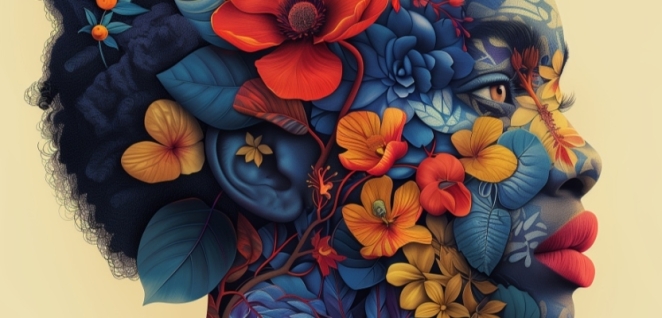
If 2024 was the year generative AI burst onto the scene, 2025 was the year it became fully embedded in creative work. Across advertising, design, and digital media, AI tools evolved from novelties to everyday co-creators.
By late 2025, a staggering 75% of marketers reported using AI tools for content creation, saving on average 2.5 hours of work per day, and 83% said AI-generated content produced results on par with or better than human-only content. Likewise, Adobe noted that 73% of creatives had integrated AI into their workflows by 2025. These numbers speak to a remarkable adoption curve: in just a couple of years, AI went from experimental to nearly ubiquitous in creative departments.
What were all these AIs doing? In short, taking over the grunt work and supercharging the output. Copywriters leaned on AI to draft copy variants and social posts (with Jasper and ChatGPT becoming as common as Word). Designers used generative image models like Midjourney and DALL-E to conjure concept art or moodboard visuals in minutes.
Video editors let AI platforms auto-assemble rough cuts and suggest transitions, cutting editing time by up to 90% for routine tasks. Even coders used AI assistants to generate front-end designs or animations, blurring the line between design and development. The technical barriers to executing ideas dropped dramatically – what once demanded specialized training could often be achieved by anyone with a clear vision and the right prompt.
This democratization of execution meant that creative focus shifted to ideation, taste, and strategy. The competitive advantage in 2025 wasn’t having the largest production team or the most hardened technical skills; it was having the best ideas and the sharpest judgement. In other words, taste became the new creative currency. The most successful campaigns weren’t necessarily those with the flashiest AI tricks, but those with insight, relevance, and emotional resonance – AI simply helped make them faster or at larger scale.
83% of creatives said AI-generated content produced results on par with or better than human-only content
We saw AI reach into every corner of creativity. In advertising, AI was used to tailor ads to individuals, generate countless ad variants, and even create fully AI-generated campaigns. In fact, one of the top-performing holiday ads of 2025 – Coca-Cola’s “Holidays Are Coming” Christmas ad – was AI-generated, yet it achieved one of the highest emotional engagement scores of any campaign. This demonstrated that when a brand uses technology to tell a great story and forge an emotional connection, audiences care about the feeling, not the technique.
In design and branding, AI-enabled tools meant instant mockups and endless variations were at every designer’s fingertips. Need to see your logo design in 100 different styles? An AI could do that in seconds. Want to generate a product render in an environment that hasn’t been built?
Type a description and watch an AI visualize it. This freed human designers to be directors and curators of outcomes rather than pixel pushers. It also encouraged more experimentation – when trying a wild idea only costs a bit of AI compute time, why not give it a shot? Many creatives in 2025 described their AI tools as a creative collaborator or an “ideation partner” – useful for iterating quickly and exploring territory they might not have attempted solo.
However, this widespread AI infusion wasn’t without challenges, as we’ll explore next. The key takeaway for the year is that AI augmented creatives rather than replacing them. It took over mundane production tasks and even generated first drafts, but the role of the human creative became even more focused on guiding the vision. This dynamic was summed up by the notion that judgment outranks skill in the AI era.
Everyone had access to powerful tools, so what set great creatives apart was knowing which ideas to pursue, which AI outputs to curate, and how to weave them into a compelling narrative. In 2025, technology truly leveled the playing field – unleashing a wave of creativity from a broader range of voices than ever before.
Authenticity Strikes Back: The Human Touch Matters More Than Ever
With AI-generated content flooding feeds and brands cranking out more automated creatives, a counter-trend gained momentum through 2025: authenticity and human craft became paramount. By mid-year, some audiences and marketers alike began voicing a kind of “AI fatigue”. The novelty of synthetic content wore off quickly, and what remained was a heightened sensitivity to anything that felt cheap, soulless, or insincere. In other words, consumers weren’t rejecting AI outright – they were rejecting mediocrity.
This realization led to a rallying cry among creative leaders: put the human touch back in. Craft, creativity, and originality became the antidote to a landscape diluted by cookie-cutter AI content. A particularly resonant quote came from the team at Billion Dollar Boy, highlighting the new reality: “In a landscape flooded with noise, craft becomes the differentiator. Brands and creators who apply AI to amplify creativity, not automate it, will win both performance and trust... Consumers aren’t rejecting AI – they’re rejecting mediocrity.”
This sentiment – that you should use AI as a creative amplifier, not a crutch – echoed across the industry. The best work of 2025 often did involve AI, but the AI was guided by a strong creative vision and high standards, resulting in content that still felt fresh and authentic.
We saw brands explicitly emphasize human authenticity in their campaigns as a selling point. Many marketers in 2025 recommended dialing back the over-automation in social media, favoring manual community engagement and genuine storytelling.
In practice, some brands started labeling content as “made by humans” or highlighting the artist/creator behind a piece, turning transparency into a trust-builder. Influencers and content creators, too, leaned into more unfiltered, less algorithmically optimized posts to reconnect with their audiences on a human level.
"Consumers aren’t rejecting AI – they’re rejecting mediocrity"
This return to authenticity manifested in creative styles as well. After a period where hyper-polished digital art and obviously AI-generated visuals were everywhere, rougher, hand-made aesthetics made a comeback.
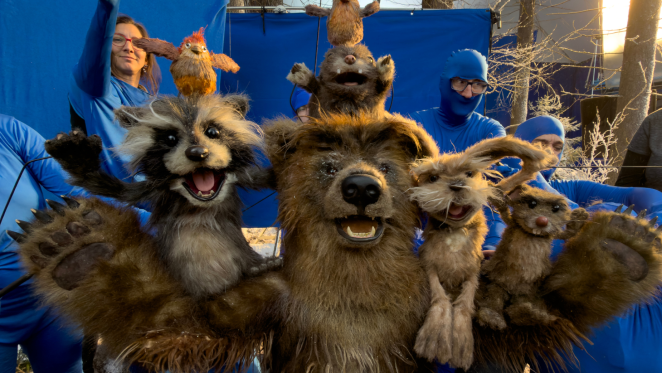
For example, during the end-of-year holiday season, most Christmas ads [in 2025] leaned into either heavy emotion or visible AI. Apple did neither – it chose a physical, handmade style instead. Apple’s holiday ad eschewed both AI gimmicks and the formulaic tearjerker approach, opting for a crafted, analog feel (reportedly using stop-motion and real sets). The result stood out amid a sea of digitally enhanced or AI-driven ads, proving that authentic craft can be a differentiator even for one of the world’s biggest tech companies.
Another area where authenticity reigned was in purpose-driven storytelling. Brands discovered that purpose and authenticity go hand in hand – you can’t effectively champion social causes or brand values with auto-generated content that rings hollow. Accordingly, many of 2025’s most acclaimed campaigns were those that amplified themes of inclusivity, sustainability, and social justice in genuine ways. Whether it was a climate action campaign using real activist voices, or a diversity-focused brand film that felt truly lived-in, audiences responded to creative work that had a human heartbeat and sincere narrative.
In summary, 2025 taught creatives a balancing act: embrace the new tools, but keep creativity human. The year’s successes showed that AI is best used with intention – to amplify great ideas rather than churn out content for content’s sake. The only way to stand out from the flood of automated output was through originality, quality, and a clear point of view. As we head into 2026, that lesson will likely endure: authenticity is the ultimate competitive advantage in an era of infinite content.
Content at Scale Meets Creative Burnout
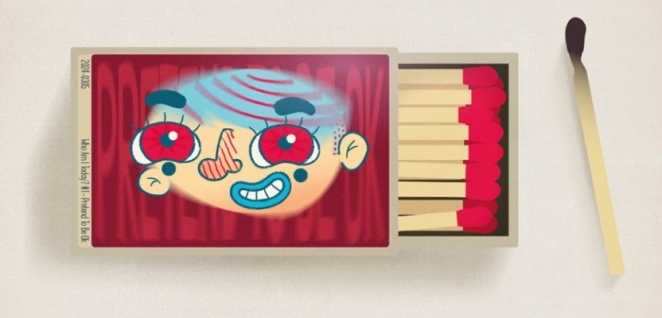
The year 2025 will also be remembered for its relentless pace of content production – and the toll that took on creative professionals. Marketers have been proclaiming “content is king” for years, but in 2025 it felt like content was an insatiable beast that needed constant feeding across countless digital channels. Brands ramped up content output to fill TikTok feeds, Instagram stories, YouTube channels, metaverse platforms, and more. This “volume up” mentality – always publishing, always updating – pushed creatives to their limits.
By late 2025, “an undercurrent of burnout and exhaustion permeated the industry dialogue.” The very people creating all this content were starting to crack under the pressure.
It’s not hard to see why. Many creative teams were asked to do more with less – to turn around social media posts in an hour, ten variations of an ad in a day, personalized content for dozens of audience segments, and to be “always on” reacting to trends in real time. The integration of AI did help automate some production, but often it simply raised the expectations for output further (now that AI can make 100 versions, why not do 100 versions?). By 2025, the industry began confronting the reality that scaling content indefinitely is not sustainable without scaling support for the humans behind it.
Concrete data emerged to illustrate the burnout crisis. Research by creative agency Billion Dollar Boy revealed that over half (52%) of content creators have experienced burnout as a direct result of their career, and alarmingly 37% have even considered quitting the industry altogether. These numbers, based on a survey of creators and marketers in 2025, paint a stark picture: the very engines of the creator economy – the people – are at risk of stalling out.
As BDB’s CMO, Becky Owen, noted, “burnout [has] now reach[ed] a level where it’s actively shaping the decisions creators make about their careers and their content.” In other words, talented individuals are declining projects, changing jobs, or leaving creative fields because the pace has become too punishing. When nearly 2 in 5 creators eye the exit door, it’s a flashing warning sign for the industry at large.
The burnout issue wasn’t limited to solo “influencers” or content creators on social media – it was mirrored in agency and in-house creative teams as well. Throughout 2025, creative directors and team leads reported employees struggling with mental health, exhaustion, and disillusionment.
“Burnout reached a level where it’s actively shaping the decisions creators make about their careers and their content”
Creative burnout became a frequent topic at industry conferences and in op-eds, with leaders calling for a reevaluation of workloads and priorities. The conversation started shifting: is the answer really just to produce more and more content, or to produce better content that cuts through the noise? Some advocated for brands to ditch the “always-on” content treadmill in favor of more strategic, impactful campaigns that respect creative boundaries.
Moreover, the burnout dialogue fed back into the authenticity trend. Creators argued that constantly churning out content not only burns them out, but also leads to cookie-cutter work that audiences ultimately find less engaging. It’s a lose-lose situation. Thus, a movement began to prioritize creative quality and well-being over sheer quantity.
Forward-thinking agencies experimented with solutions: four-day work weeks to give teams breathing room, mental health days, and pushing back on client demands for endless adaptations. Some brands scaled back their social posting frequency, focusing on making each piece of content count more. These were small ripples in 2025, but they signal an industry grappling with how to sustain creativity for the long haul.
In summary, 2025’s content boom came with a cost. Creatives proved incredibly adaptable – meeting insane content calendars head-on – but not without feeling the strain. By year’s end, it was clear that the industry must address burnout to maintain its creative spark.
If the theme of early 2025 was “Volume Up,” the lesson by 2026 might be “Balance is key.” As we look ahead, the hope is that companies will apply the same creativity to supporting their talent as they do to reaching their audiences. The long-term health of the creative industries depends on it.
Breaking Constraints: A World of Limitless Creative Possibility
Amid the technological leaps and the industry soul-searching of 2025, one overarching outcome stands out: the constraints that once limited creative expression have started to vanish. This year showed us a glimpse of a creative world where truly anything is possible. The sentiment might sound grandiose, but consider what we witnessed in 2025:
- Boundaries between mediums evaporated: We saw film-quality animation rendered in real-time game engines, live theater performances enhanced with interactive digital art, and branding projects that spanned physical products, virtual experiences, and community-driven content in one. Creatives no longer asked “can we do this?” but rather “how will we mix and match mediums to do this?”
- New tools unlocked new frontiers: Only a year or two ago, ideas like generating photorealistic images from text or creating immersive AR worlds easily were just dreams. By 2025, creators were wielding tools that “even just last year we couldn’t dream of,” as Nick Scarcella noted. Need to visualize a complex concept? There’s an AI for that. Want to prototype an interactive environment? New XR (extended reality) tools made it drag-and-drop. The result was a feeling that imagination is now the main limit – the toolset has expanded to cover nearly anything a creative can conceive.
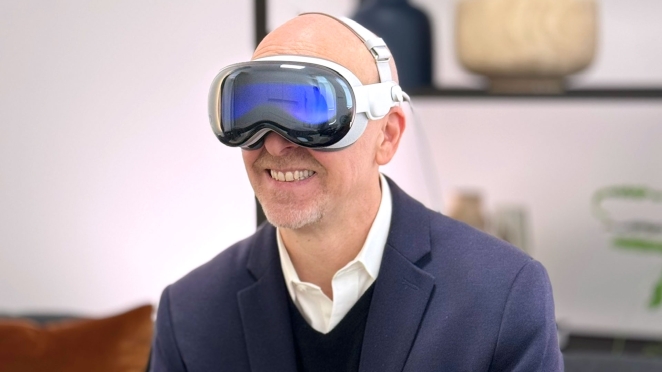
- Emerging platforms and spaces: 2025 continued the expansion of creative canvases. The rise of spatial computing (bolstered by devices like Apple’s Vision Pro headset) hinted at a future where the digital and physical blend seamlessly – and creatives eagerly started experimenting in this space. We also saw more mainstream adoption of immersive experiences (though some in the art world called them “overplayed” by now, they nonetheless became a standard part of the creative toolkit). From 3D billboards that make characters leap out at passersby, to VR experiences used in advertising, the message was that the audience can be reached anywhere and anyhow – in the real world, virtual worlds, or somewhere in between.
- Global collaboration and diversity of voices: The dissolving of barriers wasn’t just technical; it was also cultural. In 2025, collaborations happened across continents via remote-working tech perfected during the pandemic years. Creative teams became more globally and culturally diverse, bringing in voices that had been underrepresented. This only fueled the sense of limitless possibility: more perspectives meant more original ideas and the blending of creative influences from different cultures. It’s telling that some of the year’s most lauded creative studios and teams were distributed, multicultural ensembles. As creative director Victoria Ruston of Ruston Smith noted: "The industry increasingly recognized that great ideas can come from anywhere, and now we have the connectivity to integrate them."
By the end of 2025, there was a pervasive feeling of creative empowerment. A senior creative might have decades of experience in a specific craft, but now could easily explore new mediums with a few tutorials and AI helpers. A newcomer with bold ideas could bring them to life without massive budgets or teams, thanks to accessible technology. The playing field leveled in many respects, and the spirit of experimentation flourished.
Nick Scarcella’s retrospective observation rings true: “the only limitation now is your willingness to learn, experiment, and dive in... creatively, absolutely anything is now on the table.” The year’s legacy is exactly that – a liberation from many past constraints. Of course, this freedom comes with its own challenge: with endless possibilities, choosing a direction and staying true to a vision becomes ever more important (and is exactly where human creativity and leadership will shine).
2025’s Legacy and the Road Ahead
Edward Filkin
Looking back at 2025, creatives across advertising, branding, digital design and beyond will remember it as a year that redefined the industry’s boundaries. It was a year of breathtaking innovation – AI and automation gave us speed and power we’d never had before – but also a year that reaffirmed timeless truths – that authentic stories, human connections, and daring ideas are what really make an impact.
In advertising, we saw brands push the envelope with campaigns that were as technologically ingenious as they were emotionally resonant. In branding, companies learned that having a purpose and a personality matters more than churning out endless content. In digital and design fields, the convergence of disciplines opened new avenues to delight audiences, from immersive experiences to personalized interactions at scale. Across the creative industries, 2025 will be remembered as the year we stepped into a new era: one where creativity and technology dance together seamlessly.
Crucially, 2025 taught us balance. It taught us to balance automation with human touch, to use new tools but not lose our creative soul. It forced us to balance quantity with quality, realizing that more content isn’t always better content, and that our creative workforce’s well-being is a prerequisite for great work. It encouraged balancing experimentation with curation – with infinite possibilities, our discernment and taste become more important than ever in choosing what to pursue.
How will creatives remember 2025? As the year all the walls came down
As we move forward, the voices of 2025’s creative leaders will continue to guide us. They remind us that technology’s greatest gift to creativity is the freedom to focus on what really matters: the ideas, the storytelling, the craft. They urge us not to fear the new, but also not to abandon the values that make creative work meaningful.
How will creatives remember 2025? As a watershed moment – the year the process became as celebrated as the product. The year all the walls came down. The year we had to confront burnout and find a more sustainable path. And ultimately, the year that set the stage for a future where creatives are limited only by the scope of their imagination and willingness to keep learning. In the grand retrospective of the industry, 2025 stands out as a year that shouted, in no uncertain terms, that absolutely anything is now on the table.
As we take those lessons into 2026 and beyond, one thing is clear: it’s a thrilling time to be a creative. The playpens have been broken down, the horizons have widened, and it’s up to us to build what comes next – with all the curiosity, courage, and craft we can muster.
What will Creatives Remember Most About 2025?
2025 will be remembered not just for the tools we embraced, but for the creative inspiration we redefined. This was a year when creators reasserted their voice amidst technological noise, proving that emotion, storytelling, and conviction still lead the way.
One insight stands clear above all others: while automation may change how we make things, it’s still our intent — our uniquely human ideas — that determine why we make them. And in the year ahead, those who hold onto that truth will continue shaping culture, building brands, and pushing creativity forward.