
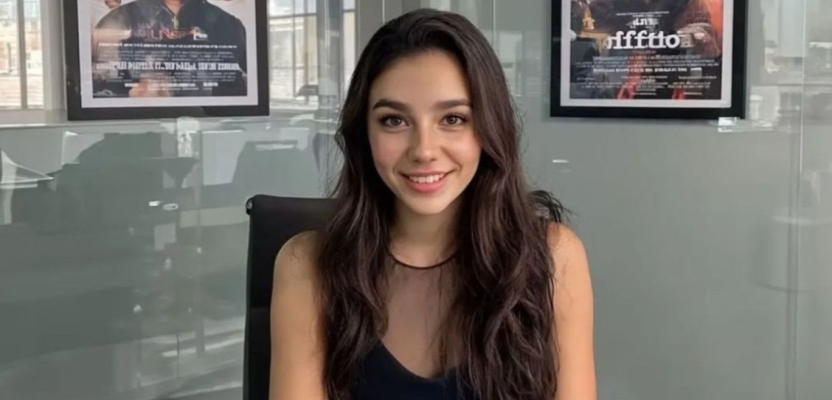

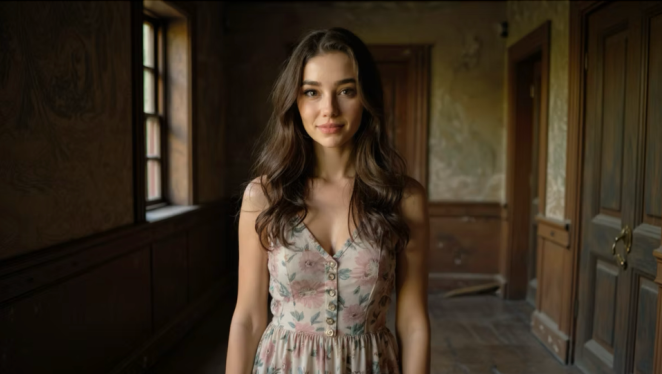
There are few things guaranteed to rile up the creative industries quite like the sudden arrival of a shiny new “talent” that doesn’t sweat, doesn’t eat, and doesn’t ask for a day rate. Enter Tilly Norwood: the world’s first AI “actor,” conjured up by London tech outfit Particle6 and unveiled with the kind of pomp normally reserved for Bond girls or Marvel superheroes.
Billed as the “next Scarlett Johansson,” she arrived not with a bang but with a low-level hum of existential panic. The promise? A digital performer who can front films, ads and campaigns without ever needing a trailer or a union rep. The reality? A carefully constructed avatar trained on the work of thousands of real actors without their consent or compensation.
And therein lies the problem.
A New Kind of Casting Call
The pitch from Particle6 was simple enough: Tilly could be your leading lady, your brand spokesperson, even your late-night talk-show guest. She can smile on cue, deliver lines in multiple languages, and never complain about the catering. In an industry driven by deadlines and margins, she’s a dream.
But if Hollywood has taught us anything, it’s that dreams often come with an unpleasant sting in the tail. Within hours of her debut, actors, unions and agencies were queuing up to pour cold water on the idea. SAG-AFTRA called her “a computer program trained on countless professional performers without permission” and insisted “creativity must remain human-centered”. Equity in the UK was blunter still: “Generative AI must be a tool, not a replacement. The Wild West must end”.
From Melissa Barrera to Natasha Lyonne, actors lined up to condemn the move. Emily Blunt called it “really, really scary,” Whoopi Goldberg warned that AI performers had “an unfair advantage,” and Simu Liu summed up the mood with a heavy dose of sarcasm: “Movies are great, but you know what would be better? If the characters weren’t played by actual humans, but AI replicas”.
Suddenly, Tilly Norwood wasn’t just a demo. She was a lightning rod.
Déjà Vu All Over Again
This isn’t the first time technology has sent shivers down creative spines. Think back to the advent of CGI in the ’90s, when entire VFX teams replaced armies of extras. Or motion capture, when Andy Serkis’s Gollum blurred the line between actor and algorithm. Or even the “virtual idol” phenomenon in Japan, where holographic pop stars outsell their human counterparts.
Each of those innovations was greeted with panic but eventually found its place as a complement rather than a replacement. CGI didn’t kill actors, but it did change the economics of blockbuster filmmaking. Mocap didn’t wipe out performers, but it did create a new craft.
The difference with Tilly? She’s being pitched not as a tool but as a talent. Not an enhancement, but a replacement. And that’s why the industry is taking this one personally.
Dollars vs. Dignity
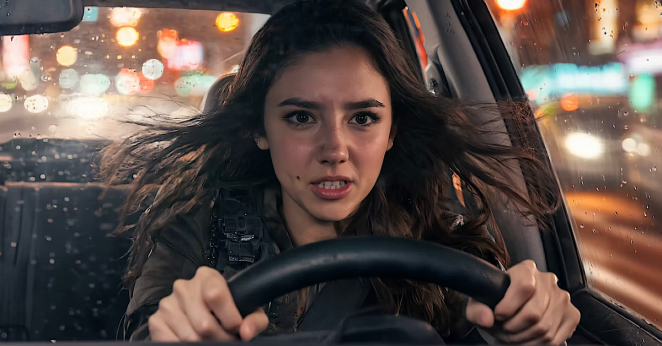
There’s no denying the economic temptation. An AI actor never ages, never gets sick, and never negotiates for back-end points. For studios burned by ballooning budgets and brands hunting for efficiencies, the maths is seductive.
We’re already seeing this logic at work in advertising. Agencies are experimenting with AI influencers who can pump out personalised TikTok ads in 30 minutes instead of three weeks. One deodorant campaign used a generated micro-creator and saw engagement soar. Why wait for a human influencer’s schedule when a machine can deliver content on demand, in any accent, for a fraction of the fee?
But the minute people become savvy to it, they could trust that brand a lot less. Authenticity is still the holy grail of marketing, and nothing screams “inauthentic” quite like a chatbot in a wig.
Beyond Hollywood: The Cross-Industry Ripple
Tilly Norwood might have been born on a soundstage, but her shadow looms over the entire creative spectrum.
- Advertising: Lo-fi, community-driven content dominates TikTok and Instagram. Do brands really want a plastic-perfect AI fronting campaigns when audiences are craving relatability? An AI brand ambassador risks coming across like Clippy with better hair.
- Gaming: Voice actors and motion-capture performers have already raised red flags. French dubbing stars warn their livelihoods are at risk. The German VDS union is petitioning for laws to guarantee consent. If Tilly is a “proof of concept,” games could soon be populated by AI voices trained on real actors who never signed up for the gig.
- Voiceover and audio: SAG-AFTRA recently cut a deal allowing actors to license AI replicas of their voices for ads. At least that ensures payment and permission. But what happens if clients decide they’d rather just hire “Tilly Norwood’s cousin” for free?
- Brand identity: The prospect of 24/7 AI spokespeople is appealing. But what happens when your AI mascot goes viral for the wrong reasons? Audiences are merciless, and the uncanny valley is a treacherous place to build brand equity.
The Consent Crisis
At the heart of the backlash is a simple question: who owns the raw material of creativity?
AI actors don’t spring from the ether. They’re built by training models on existing performances with every flicker of a smile, every crack in a voice and every lived experience distilled into data points. SAG-AFTRA has called this what it is: theft without permission. Equity warns that AI “does not appear from thin air” but is “digitally imitating real work made by real people”.
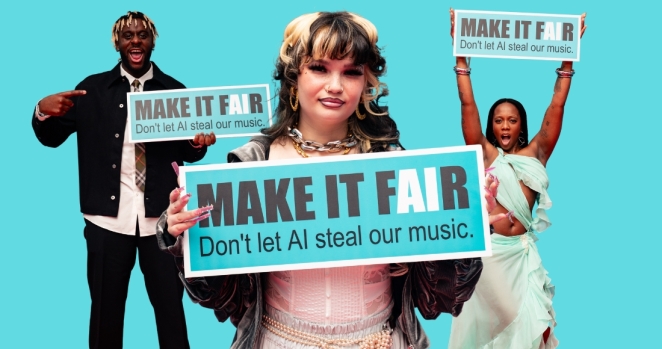
It’s not just actors. Writers, illustrators, musicians are all fighting similar battles. In the UK, the “Make It Fair” campaign launched this year, demanding that creators shouldn’t have to opt out of having their work scraped by AI. In the US, Congress is mulling the No FAKES Act to grant everyone rights over their voice and likeness.
Tilly Norwood has, unwittingly, become the face of this larger war.
How Creatives Are Fighting Back
Unions are sharpening their teeth. The 2023 Hollywood strikes already secured language requiring consent for AI replicas. European dubbing actors are lobbying Brussels for legislation. Freelancers are inserting “no AI” clauses into contracts.
Agencies, too, are adapting. Many now train staff in AI literacy, not just how to use the tools, but how to spot abuse. Some are even reframing AI as a marketing differentiator: “100% human-made” could soon be as powerful a label as “organic” or “sustainable.”
And yes, some creatives are experimenting. Writers use AI to draft, then rewrite. VFX teams let AI handle background noise while they focus on spectacle. Even Particle6 founder Eline Van der Velden insists she sees Norwood as “a new paintbrush, not a replacement”.
The keyword here is control. Who sets the terms? Who gets paid? Who decides when the paintbrush is wielded, and when it’s put back in the jar?
The Audience Factor
There’s one stakeholder tech companies often forget: the audience. And audiences are not stupid (mostly).
We know this from advertising research: lo-fi behind-the-scenes content consistently outperforms slick campaigns with younger audiences. We know it from cinema history: films that rely too heavily on CGI often flop, while those that use tech in service of story thrive.
As The Guardian noted after watching Norwood’s debut skit: if we collectively decide we’re happy to pay to be unsettled by a pretty face with glitchy teeth, then AI actors are here to stay. If not, she’ll be remembered alongside Smell-O-Vision as a bad idea that nobody asked for.
So, What Now?
Tilly Norwood is less an actress and more a provocation. A reminder that the guardrails around AI in the creative industries are still being built, often all too slowly.
For creatives, the challenge is twofold:
- Defend what makes us human. Intuition, empathy, lived experience, the messy imperfections that spark genuine connection.
- Learn the tools. Because if AI is the new paintbrush, we need to know how to wield it before someone else paints over our work.
The likely outcome? A messy hybrid. AI performers will find niches as background characters, fast-turnaround ads and maybe even animated films. But the leading roles, the brand-defining stories, the moments of cultural impact? Those will still require human souls, scars and all.
Unless, of course, we let the industry convince us otherwise.