
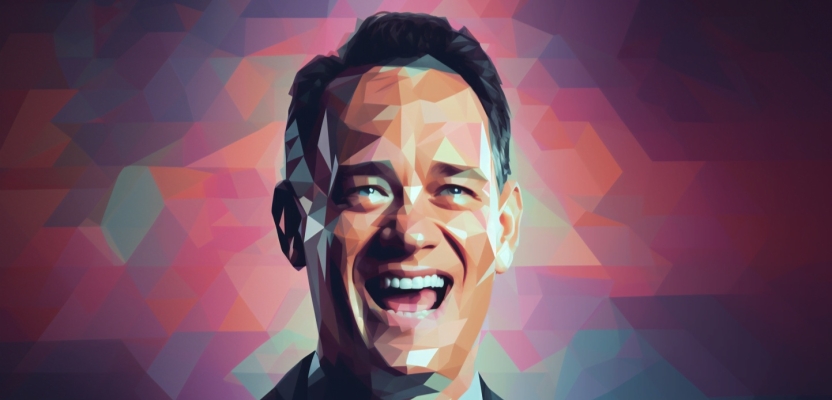

The year is 2023, and you might have seen it to believe it: Tom Hanks selling dental plans on social media – except Tom Hanks had nothing to do with it. The Oscar-winning actor recently warned fans about a deepfaked video promoting a dental plan that used an AI-generated version of him without permission.
Two years later and it’s only got worse. Welcome to the era of the AI digital twin, where a person’s face, voice, and persona can be cloned and deployed in advertising, entertainment, or social media at the click of a button. For brands and creative leaders, this technology opens thrilling new possibilities – and an ethical Pandora’s box.
What Are AI Digital Twins, and Why Do Brands Care?
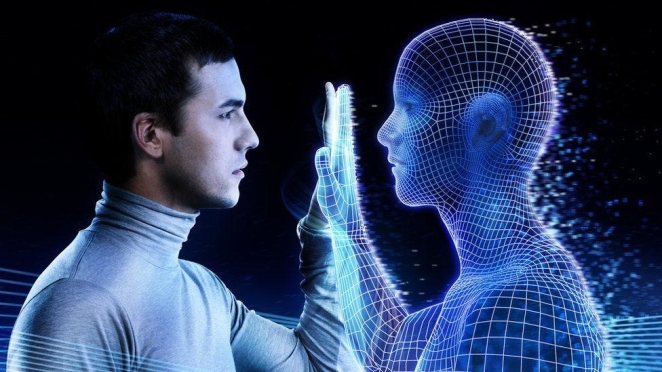
In simple terms, an AI-generated digital twin (or digital double) is a lifelike virtual replica of a real person. Advances in AI now allow companies to clone a person’s appearance and voice from existing recordings or scans, producing a synthetic avatar that can move, talk, and even interact with audiences. Brands are increasingly intrigued by this concept. Imagine a celebrity ambassador who can appear in many places at once, speak multiple languages, never age, never tire, and be controlled entirely by your marketing team – that’s the seductive promise of the digital doppelgänger.
Real-world examples are already here. Fast-fashion retailer H&M recently announced it had cloned 30 real-life models as digital twins to promote its clothing lines. These AI replicas, created via detailed 3D body scans and voice modelling, can model new outfits and even engage with customers in virtual showrooms. H&M isn’t alone; across the fashion and retail world, AI avatars are popping up as brands experiment with virtual influencers and models, hinting at a future where real photoshoots and casting calls could be optional.
Even deceased icons are making comebacks through AI. In a controversial campaign, Spanish beer brand Cruzcampo “resurrected” the late singer Lola Flores – who died in 1995 – as a deepfake to star in a new commercial. The ad used AI to recreate her face, voice, and charismatic presence from archival footage. The company pitched it as a tribute celebrating Spanish culture, with Flores’s own daughters involved in the project.
The result was an uncannily realistic Lola talking on screen in 2021 as if she were alive, delivering a message about the beauty of accents. Some viewers were wowed by the technical wizardry and sentimental appeal. Others, however, were quick to condemn the campaign for putting words in a dead woman’s mouth just to sell beer. This bold stunt encapsulates both the marketing potential of digital twins and the ethical peril: yes, you can make “virtual celebrities” endorse your brand – but should you?
From Hollywood to social media, the use cases keep growing. James Earl Jones, at 91, signed off on allowing Disney to create an AI version of his legendary voice so Darth Vader can live on in future Star Wars projects. An Ukrainian AI firm cloned Jones’s Vader vocals from old recordings, letting the villain speak new lines in the TV series Obi-Wan Kenobi. In music, the estates of artists have toyed with holograms and AI-generated songs by performers long gone.
And on the flip side, unauthorized clones of famous figures are appearing in scams and viral videos – from fake Elvis concerts to TikTok accounts of an AI “Tom Cruise” impersonator. The genie is out of the bottle: digital doppelgängers are now a tool in the brand toolkit. The question is how to use that tool responsibly without losing the trust of audiences or trampling over human talent.
Benefits vs. Backlash: A Double-Edged Sword
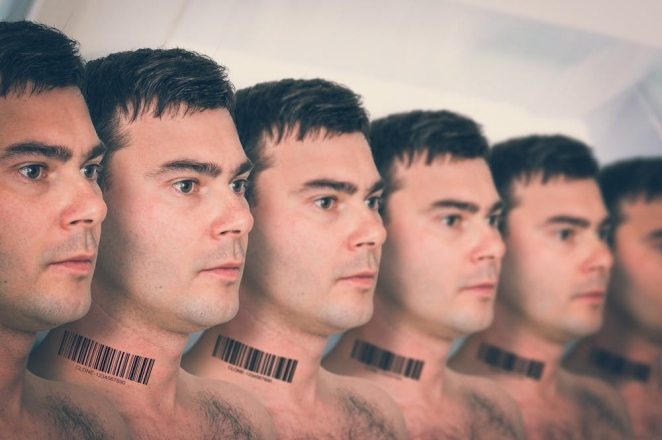
Brands see clear advantages to deploying AI-generated people. Efficiency and scale are major draws – a digital brand ambassador can appear in unlimited campaigns simultaneously and be tailored to different demographics. For example, a company could use an AI clone of a top influencer to personalize ads for each viewer or have a famous actor’s likeness instantly localised (different outfits, different languages) for global markets, all without scheduling a single photoshoot.
There’s also the lure of cost savings over time. After an initial development investment, a virtual model doesn’t need hair, makeup, travel, or a trailer. For fast-moving industries like fashion, these AI models can don endless outfits in a virtual studio, turning around imagery in minutes.
However, with these benefits comes significant backlash and risks. Consumer perception is one concern – many people feel uneasy when they discover a persona isn’t real or that a beloved figure’s appearance has been simulated. Even H&M acknowledged this when rolling out its AI models. The company expects “public opinion to be divided” on its use of digital twins, openly admitting the move will be controversial.
H&M’s response has been to involve the human models in the process; notably, the brand says those real models will receive ongoing compensation and retain some control over their digital likenesses. In other words, rather than creating “fake” models from thin air, they are partnering with actual models who effectively license their own digital doubles. This approach – bringing the humans along for the AI ride – could become a best practice for mitigating criticism.
When brands push forward without transparency or consent, the backlash can be fierce. We’ve already seen a rash of incidents where celebrities have had to refute or condemn AI-generated content using their image. Besides the fake Tom Hanks ad, there was the case of Stephen Fry, the British actor and writer, who was shocked to find out an AI cloned his voice to narrate a documentary without his knowledge.
Fry had famously read the Harry Potter audiobooks – and a clever AI company used those recordings to synthesize Fry’s narration for a film without any permission. “I said not one word of that – it was a machine,” Fry told an audience, warning that the AI could “have me read anything… from a call to storm Parliament to hard porn, all without my knowledge or permission.”. Fry’s agents, he noted, “went ballistic” when they discovered this breach. The public reaction was equally alarmed: if even Stephen Fry’s distinctive voice can be stolen for profit, who’s next?
Indeed, unauthorized deepfakes and voice clones are proliferating, and each example erodes trust. In late 2024, David Attenborough – renowned for his truthful narration of nature documentaries – learned that his voice had been AI-copied and used to deliver partisan political messages he never actually said. The 97-year-old naturalist was “profoundly disturbed” to hear “his” voice making statements entirely contrary to his beliefs.
“Having spent a lifetime trying to speak what I believe to be the truth,” Attenborough lamented, “I greatly object to others using [my voice] to say what they wish”. It’s hard to imagine a more visceral illustration of the reputational risks at hand: a brand that deploys a digital twin recklessly could not only face legal action, but also public moral outrage for deceit or exploitation.
Even when consent is obtained, reactions can be mixed. Fans and consumers often have a keen sense for authenticity, which is a big part of brand loyalty. When an audience senses they’re watching an outright fabrication – for instance, a dead singer hawking beer – it can trigger a sense of the uncanny or even betrayal. Authenticity is currency in branding, and AI can devalue it if used clumsily. A recent Wired piece pointed out that these digital performances can feel emotionally hollow or even “haunted.”
When Paul McCartney used AI to isolate John Lennon’s voice for a new Beatles song, some listeners found it eerie. In film, we’ve seen mixed reactions to digitally de-aged or resurrected actors: some applaud the realism, others feel it borders on disrespect. Brands must tread carefully: just because the technology can do something doesn’t always mean it aligns with audience values or a brand’s identity.
The New Rules of Engagement: Consent, Contracts and the Law
The rapid rise of AI clones has left laws and regulations scrambling to catch up. In many jurisdictions, people have a “right of publicity” – a legal right to control the commercial use of their name, image, and voice. In the U.S., for example, most states recognize that using someone’s likeness or voice in an advertisement without permission could violate their rights. On paper, that should deter brands from misappropriating identities.
But the devil is in the details: laws vary state by state, and not every AI usage neatly fits the old definitions. What if an AI twin appears not in a traditional ad, but in a satire, a video game, or a viral social media post? Some forms of digital cloning might claim protection as free speech or parody. As one legal scholar explained, “the government cannot prohibit speech merely because the speech is false; there must be some additional problem” beyond mere falsity.
That means a deepfake that isn’t outright commercial – say a fan-made video – might slip through, whereas using a clone to directly sell potato chips would clearly cross the line. The legal landscape is clearly murky, and brands venturing into these waters should seek expert counsel and err on the side of caution.
High-profile figures and unions are pushing to strengthen protections. In the wake of many voice-cloning scams and deepfake mischief, experts have warned that “privacy and copyright laws aren’t up to date” with this technology. Regulatory bodies are starting to pay attention. The UK parliament, for instance, convened a committee to look at the ethical use of AI in creative fields, even discussing the need for “the stick of government regulation” to deter abuses.
Lawsuits are also looming: if a brand uses an AI avatar of a person without consent, they could be sued for infringement of publicity rights, defamation (if the clone says something damaging), or other claims. Simply put, the legal risk of deploying a digital twin without a rock-solid agreement is enormous.
The good news is that the industry is beginning to self-correct and define new rules of engagement. Nowhere has this been more visible than in Hollywood. In 2023, the Screen Actors Guild (SAG-AFTRA) went on strike, with one of the flashpoint issues being the threat of AI “digital replicas” of actors. Studios had floated proposals to scan background actors (extras) once, pay them for a single day’s work, and then own the right to generate their likeness indefinitely in any scene.
In essence, a studio could crowd scenes with unlimited “virtual extras” without hiring those people again – a dystopian prospect for actors’ livelihoods. SAG-AFTRA fought back hard against this idea, calling it an existential threat: “we’re fighting for the survival of our profession,” said union leaders.
The resulting new contract (ratified in late 2023) established historic safeguards around AI. It introduced the concept of a “digital replica” and mandated that informed consent and fair compensation are required whenever a performer’s digital double is created or used.
For example, if a studio wants to create a CG version of an actor to insert into a movie scene, the actor must have given clear, prior consent (not some buried one-liner in a contract) and the usage must be for a specific, agreed purpose. Any use outside that scope – say the digital double showing up in a different film or a promo – triggers a need for a new deal or permission.
The contract even clarifies that such consent can’t just be a one-and-done tickbox; it’s tied to the project, and new uses require new bargaining. Moreover, if the AI performance is something that would have earned the actor residuals (like re-runs or streams), the digital appearance must earn residuals too for the human actor. These provisions ensure that actors get paid for their digital selves much as they would for their flesh-and-blood work.
This watershed labour agreement sends a strong message beyond Hollywood as well: if your brand wants to bottle someone’s charisma in AI form, you had better bring the lawyers and checkbooks and do it ethically. Consent isn’t just a formality; it must be an ongoing contract and conversation. And if you think you can sidestep that by using AI on someone not famous enough to have a big legal team – think again.
Experts caution that lesser-known creatives and even regular folks could be exploited if we’re not careful. An ambitious newcomer might unwittingly sign away rights to their face or voice in perpetuity, only to find themselves later “starring” in ads or content they find distasteful, with no legal recourse.
As law professor Johanna Gibson warns, power imbalances could lead to young talent being coerced into giving up control of their identity in exchange for a break. This is exactly the scenario we must prevent through enlightened brand practices and (hopefully) updated laws.
Ethics, Creativity, and the Human Element
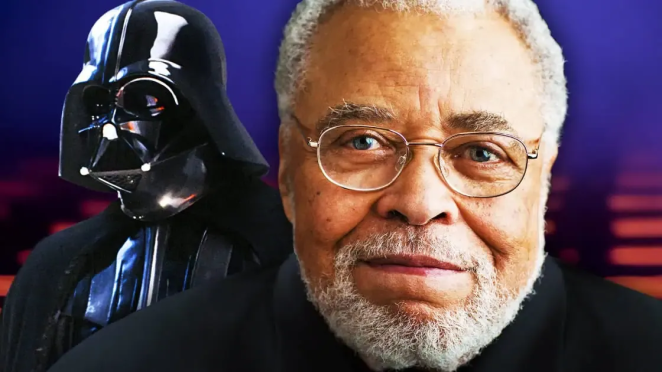
Beyond legality lies the ethical dimension. Brands have to ask not just “Can we do this?” but “Should we do this, and how will it be perceived?” One major ethical concern is respect for the individual behind a digital twin. This applies even if that individual is on board with being cloned. For instance, when a living legend like James Earl Jones grants permission for an AI version of his voice, it’s done with a certain understanding: preserving a cultural icon (Darth Vader) for the fans. But even then, there are creative and emotional considerations.
Will audiences embrace an AI-voiced Vader once Jones is gone, or will it feel hollow? As Wired noted, after Jones (who has since passed away at 93) gave Lucasfilm the green light to use his archived voice, it raised questions of whether fans will accept future Star Wars content featuring an AI approximation of him.
With a character as beloved as Vader, there may come a point of diminishing returns – a sense that, without the man himself, continuing to use his voice is crossing an invisible line of authenticity. This speaks to a broader principle: authenticity and audience goodwill are fragile assets. A brand that abuses a persona, even with consent, might find it backfires if the usage is seen as crass or purely profit-driven.
Then there’s the issue of posthumous digital doubles. The Lola Flores beer ad was one example, and we’ve seen others: CGI Audrey Hepburn selling chocolate in an ad decades after her death, a holographic Tupac Shakur performing at Coachella, etc. Each time, public opinion splits – some find it a wonderful homage or entertainment, others find it creepy or exploitative.
Brands should weigh these reactions carefully. Using a deceased celebrity’s twin in marketing can be risky emotional territory. Did the person explicitly allow for this in life (as in some cases they now can, via estate contracts or new laws)? Are the family or fans supportive? And is the context tasteful? “Just because you can, doesn’t mean you should” is a wise adage here.
From an economic and creative standpoint, one must consider the impact on human labour and talent. If digital clones become widespread, what happens to the photographers, makeup artists, lighting techs, and all the creatives who usually produce content with real models and actors? What about the models and actors themselves?
There’s a justifiable fear of job losses – why hire a new face or nurture new talent if you can just generate one? In the fashion world, some worry that only the top supermodels or influencers will benefit (by licensing their digital selves), while many up-and-coming models could be left behind, squeezed out by a marketplace flooded with “perfect” AI faces. Inequality could deepen, as those with established fame can cash in on being cloned, whereas strivers miss out on gigs that no longer exist.
This concern isn’t hypothetical: as mentioned, the actors’ union literally framed AI as a threat to their survival, and even voice actors in the video game industry have been striking for similar reasons. When an AI can perform 100 hours of audiobook narration in minutes using a mimicry of a human voice, it directly competes with human voiceover artists who make a living doing the same. The creative industries will need to find a new equilibrium where AI is a tool that augments human creativity, not replaces it.
On the flip side, some argue AI could free up human creatives for more interesting work by automating the repetitive or routine tasks. For example, if a brand can have an AI model quickly generate placeholder shots, the human creatives could spend more time on high-level creative direction and strategy.
Of course, there are scenarios where digital twins expand creative possibilities: think of a filmmaker who can cast a young version of an older actor to tell a story spanning generations, or a small brand that could never afford a top star’s appearance but might license their AI likeness for a limited campaign. There’s an element of democratization in theory – but only if governed well. Without governance, what we get is not democratization, but wild west.
Trust is paramount: consumers need to know that if they see a person in an ad, the usage is legitimate and respectful. Already, surveys indicate people are wary of AI-generated imagery in ads, sensing something “off” and worrying about deception. Transparency can help here. Some companies and advocacy groups have suggested that AI-generated media should be labelled or watermarked as such, so the audience isn’t duped. This kind of transparency could actually bolster a brand’s credibility: it shows you’re not trying to pull the wool over anyone’s eyes.
Finally, it’s worth touching on the creative value of the human touch. A digital twin can replicate a person’s past expressions, movements, or tone with stunning accuracy. But can it improvise? Can it create something truly new that the original human never did? Often, AI is bound by its training data – it can only remix what already exists.
Real human artists and performers bring spontaneity, unpredictability, and genuine emotion to the table, often creating moments of magic that no algorithm could have scripted. Brands that lean too heavily on digital clones might end up with content that feels formulaic or soulless. The best outcomes may come from human-AI collaboration: for instance, an AI twin is used for efficiency, but a human director or the real person supervises and adds nuance. In the end, consumers still connect to stories and authenticity, not just flawless pixels.
Governing the Doppelgänger: Best Practices for Brands
Given the above landscape – the opportunities and the minefields – how should brands govern their use of AI-generated digital twins? Here are some guiding principles for creative leaders, marketing professionals, and anyone considering these powerful tools:
1. Always Get Informed Consent (and Then Some)
The era of informal, one-time agreements is over. If you plan to create a digital double of a person, whether it’s a world-famous celebrity or a hired model, obtain explicit, written consent that covers the specific intended uses. Make sure the individual (or their estate) understands how the AI version will be used, for how long, and in what contexts. If later you want to use the digital twin in a new way, go back to the table and negotiate again.
In short, treat a digital performance the same as a live performance – requiring a contract for each “appearance.” This isn’t just a legal safeguard, but a sign of respect. As the new SAG-AFTRA rules indicate, a performer’s persona isn’t a one-time purchase. It’s more like a licensed partnership that needs to be renewed and approved continuously.
2. Compensate Fairly
Digital Labour Is Labour. If an AI model of a person is doing work that normally a person would be paid for, it stands to reason the real person should be paid. Brands should budget for talent fees associated with digital doubles, whether it’s royalties, residuals, or flat fees commensurate with usage. For instance, if you create an AI avatar of a spokesperson to appear in a year-long ad campaign, negotiate payment as if that person spent a year doing those ads – because effectively, their likeness did. Don’t view AI as a way to get “something for nothing.”
That might yield short-term savings, but it’s likely to backfire through legal challenges or negative publicity. Instead, do as some forward-thinking companies are doing: use AI to amplify talent while continuing to reward that talent. The H&M case is illustrative – they reportedly plan to pay the human models whose doubles are used, essentially treating the AI usage as another booking. This kind of model, where the human originators share in the benefits, will help avoid exploitation and resentment.
3. Establish Internal Ethics Guidelines
Brands venturing into AI personas should create their own governance frameworks – a set of ethics rules and review processes to evaluate potential projects. For example, a guideline might be “We will not create a digital replica of any individual without their active participation and approval.” Another might be about content: “Our AI-generated content will not put words into someone’s mouth that could damage their reputation or legacy.”
In practical terms, that could mean if you’re making a digital twin of a deceased figure, you ensure the script is something that figure might have agreed with – and you run it by stakeholders (family, historians, etc.). Think of it as brand risk management for a new era: you are protecting the brand from backlash and doing the right thing by the people represented. Some organizations are even forming review boards to oversee AI ethics, which isn’t a bad idea when your brand’s reputation is on the line every time a digital avatar speaks.
4. Transparency and Truth-Telling
Being upfront that “this is AI” can turn a potential negative (deception) into a positive (innovation). Rather than trying to pass off an AI creation as real, consider telling your audience about it. For instance, a brand might launch a campaign with a virtual influencer and label it as “the world’s first AI ambassador” – inviting consumers to engage with the concept. By owning the narrative, you remove the element of trickery. Transparency also extends to how you position the real person’s involvement. If an actor’s digital twin is being used with permission, it could be worth including a blurb like “Feat. a digital performance by X, based on X’s likeness, used with consent.”
This level of honesty can actually build trust and interest, turning a possible PR landmine into a story of creative innovation. It aligns with a broader push in the industry for disclosure; even the World Economic Forum has highlighted the importance of “more transparent practices” for digital twins, such as clearly defining usage rights and compensation.
5. Protect the Creative Spark
Don’t let your brand’s identity and creative expression get lost in synthetic perfection. Use digital twins to enhance creativity, not replace it. For example, you might use an AI-generated model to test out hundreds of poses or concepts, but still do a final shoot with a real model to capture that human magic. Or if you do fully deploy an AI twin in a campaign, make sure the campaign concept has heart and originality – perhaps the AI element is part of the story rather than the whole story.
A great question to ask in planning is: What value does using an AI double add for our audience? If the answer is merely “it was cheaper” or “it saved us time,” that’s an internal value, not an audience value. Audience value might be something like “it lets us bring you interactive experiences we couldn’t before” or “it preserves something classic you love.” If you can’t find a good audience-centric justification, rethink the approach.
6. Stay Educated and Engage in the Debate
The landscape of AI in media is evolving fast. Brands should keep abreast of new laws (they’re coming), industry standards, and public sentiment. Participate in industry forums or creative community discussions about these issues. By engaging with peers, you can share learnings and perhaps collectively establish norms.
Already, we see a dialogue emerging between technologists, creatives, and policymakers. For instance, union experts and academics are advising governments on how to update regulations for AI clones. It would be wise for brand leaders to pay attention and even lend their voices – after all, brands have a stake in ensuring this technology develops in a way that’s sustainable and accepted by society. No one wants a future of constant lawsuits and angry audiences; we all benefit from clear rules and mutual respect.
Final Thoughts
At the end of the day, governing the use of AI-generated digital twins boils down to respect – for talent, for audiences, and for the truth. It’s striking that even in the Wild West early days of this tech, some guiding lights are emerging. Perhaps the best way to summarize the ethos brands should adopt is in the words of Simon Manchipp, branding expert and Founder partner of SomeOne, who recently offered a blunt piece of advice. In discussing digital doppelgängers, he concluded with a rule that every brand should tattoo on their metaphorical forearm:
“You want my face, my voice, my wink… forever? Then pay me like I’m starring in the sequel and the spin-off. Consent isn’t a tick box. It’s an ongoing, negotiated contract. If brands want to bottle charisma and automate charm, they’d better be ready to sign legal frameworks fatter than a Zadie Smith paperback. The rule? No digital doppelgängers without real-world respect.”