

In May 2024, Google’s AI Overviews went live. For users it felt like magic but for anyone whose livelihood relies on clicks it felt like a slow strangulation. The arrival of AI-powered search has created a new dynamic: the theft of attention and original work without remuneration.
The reality, over a year later, is that AI‑generated answers assembled from human‑created content is a phenomenon that’s decimating traffic, forcing layoffs and threatening entire creative ecosystems.
AI Answers: A Zero‑Click Revolution

A 2025 analysis by The Guardian warned that news outlets risk a “devastating impact” because AI summaries give users the information they seek without clicking through, pushing links further down the page. The report found that a site ranked first in Google could lose up to 79% of its traffic if its link appears below an AI overview. AI Overviews are, in effect, the digital equivalent of a magazine with all the ads ripped out—a free ride built on the labour of others.
The numbers are startling. A Pew Research Centre study tracked 900 U.S. users and found that when a search results page contained an AI overview, the click‑through rate to external websites dropped by almost half, from 15% to 8%. Only 1% of AI overviews generated a click on one of the cited sources. Even worse, users were more likely to end their browsing session after reading the AI snippet. In other words, AI answers not only reduce exposure; they end curiosity.
A Self‑Feeding Loop
Contextualising this trend with data from analytics firm BrightEdge: while AI overviews have increased search impressions by 49%, click‑throughs have fallen 30%. Kevin Indig’s usability study observed that when AI overviews are absent, outbound click rates rise to 28% on desktop and 38% on mobile.
SEO firm Ahrefs likewise reported a 35% reduction in clicks when AI overviews are present. SimilarWeb data suggests search referrals to U.S. news and media sites have dropped 17% year‑on‑year, and AI search engine referrals only make up about 10% of traditional search referrals. In other words, AI answers are cannibalising search traffic and returning only a trickle.
Google’s response has been to argue that AI features create quality clicks and new opportunities to connect with websites. But independent analyses show a different reality. The same Pew study found that AI overviews appear on roughly one in five searches and on 60% of questions.
A TechCrunch investigation noted that AI summaries now appear in Google’s Discover feed—an important referral source for publishers—and that the number of news searches resulting in no click grew from 56% when AI overviews launched to nearly 69% by May 2025. Organic traffic has fallen from over 2.3 billion visits to fewer than 1.7 billion in the same period.
Collateral Damage: Layoffs, Closures and Consolidation

Laptop Mag: A Casualty of the Zero‑Click Web
In July 2025, Adweek reported that Future PLC would shutter Laptop Mag, a 34‑year‑old technology magazine, as part of a portfolio streamlining initiative. The decision reflected declining referral traffic, shifting ad markets and the rise of AI‑driven content.
Fewer than ten employees lost their jobs, but the symbolism was painful. Laptop Mag’s demise is widely believed to be connected to the same zero‑click dynamic: readers are getting gadget advice directly from AI answers without visiting the original journalism.
Business Insider: Cutting 21% of Staff
The carnage isn’t limited to niche tech magazines. On May 29 2025, Business Insider laid off 21% of its staff. In an internal memo obtained by Adweek, CEO Barbara Peng blamed declines in traffic as one of the primary reasons.
Around 70% of the publication’s business relied on online traffic, and the restructuring aims to help the company survive in an environment with fewer readers. Business Insider has since pivoted to AI‑powered products and live events—evidence that even large players are scrambling to escape dependence on search referrals.
Vox Sells Polygon, Mass Layoffs Follow
In May 2025, Vox Media sold the beloved gaming publication Polygon to content aggregator Valnet and laid off much of the site’s veteran staff, including co‑founder Chris Plante.
While Vox cited strategic realignment, industry observers point to a collapsed advertising market and plummeting search referrals as underlying causes. When digital audiences no longer click, the economics of specialised journalism collapse.
A Wave of Consolidation
These examples fit into a broader pattern. According to The Register, SimilarWeb’s data show that travel, finance, food and fashion sites are also seeing double‑digit declines in search-driven traffic.
Many digital publishers have responded by shuttering verticals, merging teams, or selling to larger aggregators. The Workers’ Guild of America East has condemned such consolidation, arguing that it erodes diversity and quality while handing more power to AI‑driven content farms.
Theft by Scraping: Why Creators Feel Robbed
AI systems rely on human-made text, images, video and audio to learn. What makes Google’s AI overviews and similar services so galling is that they not only use this training data; they also supplant the very outlets that produced it. Here’s why creators see it as theft:
- Uncompensated Use of IP – AI models are trained on copyrighted material without permission or payment. The generative answers they produce often summarise or even paraphrase proprietary reporting or creative work.
- Disintermediation – When AI summarises a web page, the user receives the information without any exposure to the original source. This strips the creator of advertising revenue, affiliate income and data from page visits.
- Loss of Context and Craft – AI summaries flatten nuance. They often miss the storytelling, voice and visual composition that give an article or illustration its value. For creative professionals, the craft itself is part of the message; AI glosses over it.
Voices from the Front Lines
The Freelance Photographer
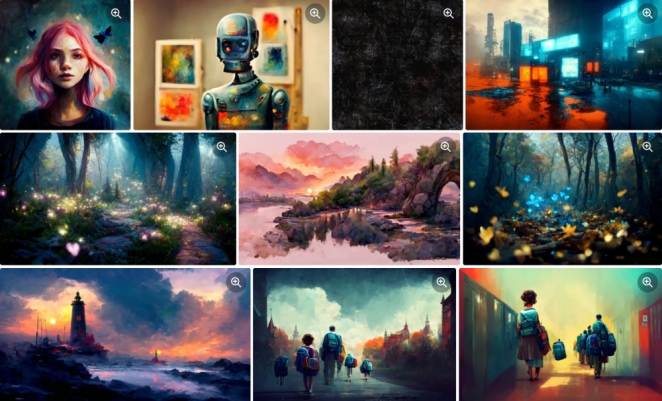
In The Guardian’s March 2025 feature on creative workers’ fears, photographer Oliver Fiegel lamented that AI-generated images were being sold as stock illustrations, undercutting bespoke photography. Clients told him they no longer needed his services because AI could generate the desired images instantly, causing him to lose contracts and consider leaving the profession. He described the experience as seeing his craft “undermined and erased.”
The Translator Turned Out of Business
German translator Karl Kerner told the same publication that he is “out of business” because AI translation tools have decimated demand. He now uses those tools for personal tasks but sees little future for his profession. While translation is not traditionally considered part of the creative industries, the principle is similar: AI services extract the value of human expertise without returning traffic or revenue to the expert.
The Illustrator Priced Out of Etsy
Freelance illustrator Jenny Turner used to sell hand‑drawn portraits for about £100 each. After AI‑generated images flooded marketplaces at prices under £10, she saw commissions dry up and was forced to remove her Etsy store. The loss of income wasn’t just about price competition; the AI images were trained on work like hers, meaning she was competing against derivatives of her own style.
Legal and Ethical Storm Clouds
The traffic drain and layoffs have coincided with a wave of lawsuits accusing AI companies of copyright infringement. Although details are beyond the scope of this piece, the underlying complaint is clear: generative AI appropriates original work.
The lawsuits filed by the New York Times, Getty Images and multiple authors’ groups hinge on the argument that training and summarising without permission undermines both moral and economic rights.
Beyond the courtroom, regulators are paying attention. A complaint filed with the UK’s competition watchdog argues that AI overviews prioritise Google-owned content like YouTube over independent outlets. Critics worry that if a handful of tech giants control both the AI models and the distribution channels, they become unregulated gatekeepers who can set terms for creators.
The Queen Mary University of London’s CREAATIF project calls for stronger regulation of AI firms, fair remuneration, inclusive governance and preservation of human originality. Without such measures, they warn, the UK’s creative economy could be profoundly damaged.
Escaping the Trap: Strategies for Creators and Publishers

Vicky Von Knorring
Diversify Beyond Search
If search traffic is collapsing, creatives must build alternative funnels. Newsletters, podcasts and direct social engagement reduce reliance on algorithms.
Publishers like The Guardian and Financial Times have invested heavily in newsletters to own their audiences. Independent artists can use Patreon or Substack to monetise loyal followers directly. These channels not only generate revenue but also provide data and community connections that AI platforms cannot siphon away.
Build Brand Affinity
AI answers commoditise information; they do not create emotional bonds. Brands that stand for something (whether that’s investigative rigour, social justice or distinctive visual style) are more likely to be sought out deliberately.
Creative directors, copywriters and designers should focus on crafting unique voices and experiences that can’t be replicated in a one‑paragraph summary. Research shows that roles requiring original vision, emotional intelligence and leadership (such as creative directors and choreographers) are among the least susceptible to automation. Building those qualities into your brand is a hedge against AI.
Embrace AI (on Your Terms)
AI can also be a tool. For example, some writers and designers are using AI assistants to handle repetitive tasks, freeing them to concentrate on strategy and storytelling. The key is to use AI to augment rather than replace human creativity.
When AI tools save time on production, reinvest that time in deeper reporting or more ambitious artistry.
Advocate for Fair Rules
The creative community must push for legislation and licensing regimes that ensure AI companies pay for the work they utilise. This could include data royalties, similar to how musicians collect royalties from radio play.
The CREAATIF project recommends mandatory AI impact assessments and inclusive governance to avoid automated monoculture. Creators should also support non‑profit open knowledge organisations like the Internet Archive, which aim to preserve access to cultural materials outside corporate walled gardens.
The Road Ahead
History shows that media ecosystems adapt to technological upheaval. Television threatened radio; streaming threatened cinema; the internet threatened print. In each case, new opportunities emerged for those who innovated.
However, AI search is not just another format shift. It is a shift in the value exchange between creator and distributor. When AI absorbs content and gives little back, the entire creative supply chain is at risk.
The bleak statistics (search clicks halved, double‑digit drops in traffic, mass layoffs) are warning signs. Yet they are not destiny. Creators can fight back by building direct relationships with audiences, differentiating their work, and demanding fair treatment.
Meanwhile, regulators and platforms must ensure that AI does not become a vacuum cleaner that sucks up human creativity and leaves empty shells where vibrant communities once thrived. As the CREAATIF project notes, the goal should be to amplify human originality rather than replace it.
In the coming years, the creative industries will need to balance embracing AI’s potential with protecting the human ingenuity that fuels it. The alternative, a future in which AI answers devour their own source material and starve creators, is both economically and culturally barren. Let’s not allow a search box to decide the fate of creativity.