

Let’s dispense with euphemisms and get straight to the bones of it. Things are looking pretty bleak for a lot of us out there in the creative industries right now and the latest forecast from global market research specialists Forrester doesn’t exactly sparkle with confidence.
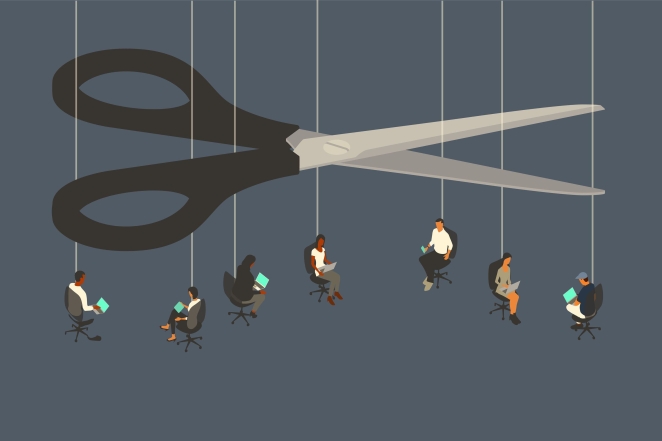
Indeed, the latest forecast is the kind of prediction that sounds like a cold alarm ringing in the dead of night. It posits that, in 2026, 15% of agency jobs worldwide are expected to vanish. Fifteen percent. And that’s after an already painful 8% reduction in 2025.
“Your agency might not get disrupted. It might just get swallowed”
It’s not just job cuts. It’s a paradigm shift. The era of agencies as disinterested client advocates (the agent-in-chief) is being replaced by something more tangled, riskier, and less romantic. Forrester predicts that agencies will resign their agency by turning into purveyors of marketing products, resellers of technology, and orchestrators of integrated platforms.
The question for creatives is: when your agency pivots, where do you land?
The Slow Undermining of the Traditional Agency
The ground has been shifting beneath agency feet for years. What’s new is how fast it’s picking up.
- Retainers are dying. Projects, one-off pieces, short bursts: that’s the norm now. Long-term stable contracts? Rare.
- In-house creative growth has siphoned off parts of agencies’ bread-and-butter work. Brands now believe they can do much of the work themselves.
- Procurement arms have invaded the marketing floor. The agency used to set terms; now buyers demand discounts, line-item rigor, and full transparency.
- Automation + AI are no longer background threats but pillars of industry being embedded into all operations. Tools like generative design, auto-editing, programmatic optimization reduce the need for junior troops on repetitive tasks.
Combine those and you get the perfect storm: an economic model built on billable hours becomes unstable. Forrester argues the result is that agencies must “diversify their offerings and roles – selling execution, managed services, proprietary products, and strategic partnerships” instead of pure creative labour.
Put simply: you can’t run a creative shop the same way with half the people, no guaranteed fees, and a client base demanding more for less.
Four Agency Futures: Reinvention or Ruin?
Forrester sees four archetypes emerging as the old model fractals and reshapes:
- Vendors: execution houses that optimize campaigns, deliver assets, and drive volume efficiency. Think: high output, low creative margin.
- Merchants: agencies that buy and resell media, data or software. They become resellers rather than advisers.
- Affiliates: modular specialists plugged into larger networks; a boutique doing one thing brilliantly inside many campaigns.
- Partners: agencies that remain close to the client, own IP or platforms, and increasingly outsource operational complexity through salesforce managed services rather than hiring full-time specialists for every function.
None of these models resemble the typical “creative first, margin secondary” agency of old. As Forrester states: “your agencies will no longer act solely as your agents but also as owners of products/solutions, resellers of technology partnerships and developers of emerging capabilities.”
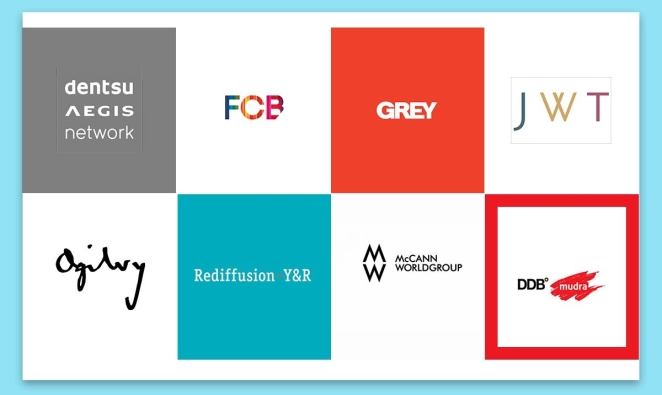
That means your agency may not be competing with the one down the street but with Salesforce, Amazon Advertising, or TikTok’s in-house creative division.
The 2026 Predictions That Hit the Hardest

Here are the Forrester predictions that creative teams should circle on their calendars (and perhaps panic about):
- 15% Job Losses in One Year: That’s not an attritional decline; it's a purge. It suggests agencies will turn leaner, with many mid-tier roles (especially roles with high automation potential) at risk.
- 10 Independents “Sunsetted” by Private Equity: PE is doubling down on ad shops. Forrester foresees major acquisitions of boutique creative firms being folded into larger networks in 2026. Independent creative identity may become a luxury, not a business model.
- Big Merger = Big Reviews: The Omnicom-IPG deal was only the beginning. Forrester predicts that another huge acquisition (for example, Dentsu + Havas, or WPP prepping a sale) will trigger wholesale account reviews by clients.
- Creator Marketing Moves Inward: Agencies are predicted to take control over influencer/creator marketing, shifting that control away from media agencies and blending creative functions with creator networks.
- Principal Media Becomes Mainstream: Reselling media (buying inventory and marking it up) will no longer be fringe behaviour. Forrester sees principal media making up one third of agency billings by 2026.
Taken together, these shifts suggest not incremental change but a reset. If agencies can’t retool fast, they risk becoming relics in a new ecosystem.
Does This Spell the End of Creativity? (Probably Not)
Yes, Forrester’s forecast is stark. But existential crisis implies hopelessness, and I don’t believe creatives are ever truly hopeless (it’s not in our nature). The question is whether we can adapt in time.
Yes, many roles face compression or obsolescence, especially those on the execution edge (layouts, adaptation, junior retouching). But the prediction also implicitly makes the creatives who survive more valuable. When everyone else is automating, the ability to deliver beautiful, emotionally distinctive work will shine like never before.
Some agency leaders already sense this. A boutique in New York pivoted last year from pure production to full service + technology partnerships. Another London shop now licenses its own campaign platform to clients, not just designs. Clients are willing to pay premium fees for creativity they can’t get elsewhere.
The smart creative shops will not try to fight the shift but lean into reinvention.
Reinvention Paths: How Creatives and Agencies Can Survive This Storm
Image by Space
Here’s where we get tactical. Below are ways agencies and individual creatives can stay alive (or better, thrive) in the new reality:
1. Price the Tech You Use
Stop giving away the lift created by AI, generative tools or automation. The future lies in hybrid billing models where you charge for human craft and for proprietary technology/automation layers. (Forrester hints at this by talking about agencies becoming “owners of products/solutions.”)
2. Own Your IP & Platforms
Don’t just build for clients, build with clients. Think of campaign platforms, creator marketplaces, or branded SaaS modules that can be licensed across accounts. That supplemental revenue gives you breathing room when creative fees get squeezed.
3. Specialise Deeply or Be Multi-Skilled
Either become the expert in a niche (e.g. XR narrative, sustainability branding, wellness storytelling) or learn boundary skills (creative + data + AI prompt-craft). The multidisciplinarian who speaks both “ideas” and “insights” becomes indispensable.
4. Embrace Creators, But Add Value
The creator economy isn’t a threat; it’s a frontier. Agencies that can act as orchestrators, guiding creators with brand logic, quality control, and strategic coherence, will be the ones client’s trust. Control over creator marketing is one of the predicted battlegrounds.
5. Restructure Small, Nimble, Cross-Functional Teams
Gone are the giant pyramids. Expect agencies to reorganize around lean pods that mix strategists, technologists, creatives and operations. If creativity is the core, structure should orbit it instead of burying it under layers of hierarchy.
6. Lead with Culture, Not Just Cost
In a world that can buy automation, culture becomes a differentiator. An agency that is ethically grounded, diverse, experimental, and trusted by clients has a moat that machines can’t replicate.
Creativity is Evolving
Forrester’s 2026 predictions are loud, chilling, and urgent. The status quo is being dismantled. But endings often birth new beginnings. Agencies that see the pressure not as doom but as an invitation will emerge stronger.
Yes, some roles will vanish. Maybe entire agencies will fold. But in their place, we’ll see new creative ecosystems: platforms, creator networks, hybrid talent models, smarter ROI-driven creative thinking.
In short, the era of the agency as pure middleman is ending. But the era of human imagination, strategic bravery and cultural relevance is not. It’s time to reassert why creativity has always been mission critical because in a sea of algorithmic sameness, it’s still what makes brands matter.
If 2026 is a turning point, it’s not the apocalypse, just a rewrite. And if you adapt, you might find it’s the start of the best chapter yet.
Alma André Castilho October 29th, 2025, late at night
Reading this piece felt like spotting tectonic plates shifting beneath the surface of creative business models. The argument that agencies will no longer be agents but rather “product-resellers, tech orchestrators and media merchants” nails precisely the kind of subtle seismic change many of us sense but struggle to name.As a storyteller, I sense three intertwined dimensions in this transformation:
1. Re-imagining partnership
The old dynamic—agency as ally, as extended team—is dissolving. Agencies become vendors of infrastructure as much as vision. That shift asks us to question what we really value in collaboration: Is it the shared emotional investment, or is it the tool, the metric, the transaction?
2. Creativity reclaimed
With workflows codified, commoditised, and automated, authentic creative leadership becomes the differentiator. When agencies pivot toward reselling tech/media, the ones who will stand out are those who still ask the messy, human questions: Why this story? For whom? With what risk? The machine can optimise, but it doesn’t dwell in the fissures where meaning happens.
3. Story-as-business evolves
This article speaks to agencies, but from where I sit, directing storytelling and identity work, I see the same pattern in our personal narratives: the point is not simply to buy and deploy “creative services,” but to shape a story architecture that aligns with values, voice, form, and experience. We don’t outsource our identity; we author it—even when we partner.
In sum, the agency model is shifting not just structurally, but existentially. For those of us committed to narrative, emotion, and craft, this is less a crisis and more an invitation: to deepen our creative currency, to refine our role in the ecosystem, and to choose not only how we tell stories—but why.