

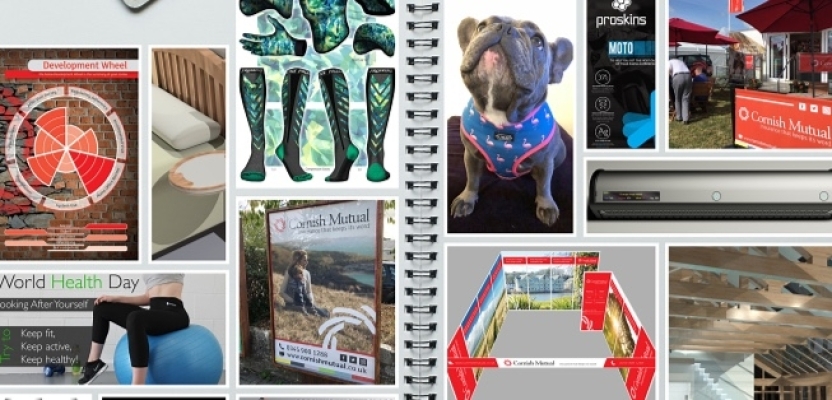

Let’s stop pretending this is a philosophical debate. In creative hiring, portfolio matters because it’s the one artefact that proves you can do the work you’re asking to be paid for. The portfolio vs cv argument persists largely because we keep treating both documents like they do the same job. They don’t. Your CV is the index; your creative job portfolio is the evidence folder. In 2026, when recruiters and creative leaders can cross‑check you in a few clicks, that evidence tends to win, especially once you’re past the first gate.
Is a portfolio more important than a cv?
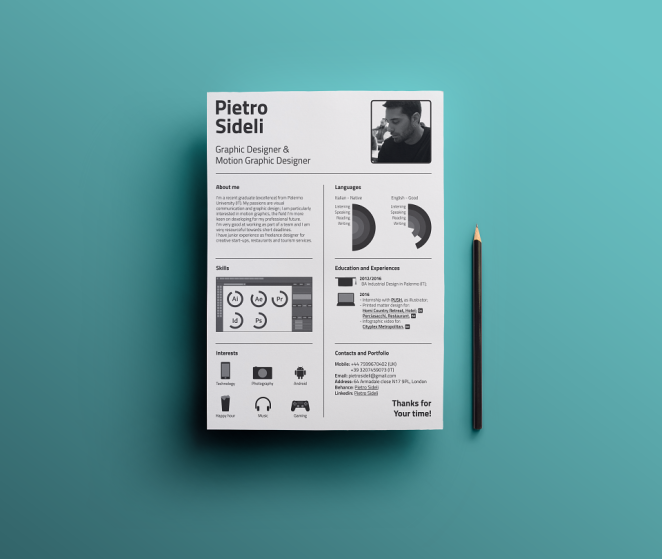
Pietro Sideli
For most creative roles, yes—if we’re talking about what ultimately tips the decision. A CV can say you “worked on the campaign.” A portfolio can show what you did, how you thought, and whether the work actually landed. And that distinction is not academic; it’s how hiring happens.
Portfolios are most commonly demanded when the job requires a visual or creative output, and a portfolio is often “just as important” as a professionally tailored resume and interview performance because it evidences skill, process, style and adaptability in a way a written summary can’t. Portfolios are essential for creative and design roles, with employers paying increasing attention to portfolios because they play a major part in the decision to proceed to interview.
A strong portfolio is the most important part of a designer’s application (second only to the interview itself). The reason is simple: the portfolio is where hiring managers learn how you think, what you shipped, and what impact you’ve had. However, it’s important to remember that the portfolio isn’t enough alone to procure a role.
Companies don’t hire portfolios, they hire people, after all. While your portfolio is the proof of craft and judgement; your interview (and the way your CV frames your story) is the proof you can apply that craft with other humans under real constraints.
So why do some candidates still feel their CV should start the conversation?
Because in many pipelines, the CV is the first door you have to get through—and doors are guarded by time, volume, and software. Recruiters don’t read. They triage. An eye‑tracking write‑up of resume research reported recruiters skimming an initial CV screen for an average of 7.4 seconds, with clear layouts, headings and scannable structure outperforming cluttered formats. That’s not “read time”. That’s “do I bother opening the next tab?” time.
This is why the portfolio‑first argument needs a correction: the portfolio is often the decider, but the CV is often the ticket. Getting hired is not one judgment. It’s a relay race of judgments, and different people carry the baton at different points.
Do designers need both a CV and portfolio?
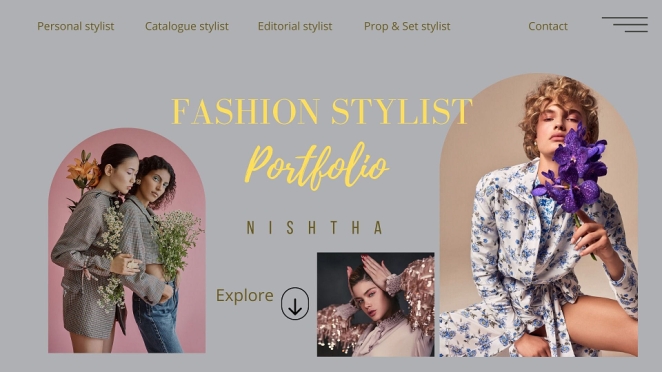
Nishtha
Most of the time, yes. Not because hiring is obsessed with paperwork, but because different parts of hiring use different tools.
A CV does three practical jobs that your portfolio rarely replaces.
First, it makes you searchable and comparable. Even in creative sectors, many organisations use applicant tracking systems (ATS) or keyword‑based screening for online applications. ATS tools identify keywords and phrases, score applications against job requirements, and then flag higher‑matching CVs for further review by humans.
Second, a CV provides the admin glue: employment dates, titles, locations, and responsibility patterns. This is the information hiring teams often need to verify quickly before they invest time in a deeper portfolio review.
Third, it signals professionalism under constraints. If a CV is sloppy (unclear chronology, inconsistent roles, avoidable typos) it undermines trust before anyone gives your work the benefit of the doubt.
But a portfolio does the work a CV can’t.
- It shows your creative judgement (not just your software list).
- It shows your taste (what you choose, and what you cut).
- It shows your thinking under pressure (constraints, compromises, iterations).
- It shows what you mean by “impact,” which is where many CVs drift into fog.
This is why the smartest advice isn’t “ditch the CV.” It’s “make them look like they belong to the same person.” And that brings us to an insight from Wendy Hardaker, Founder at RecCreate, that's worth printing and pinning above your desk:
"Your CV is very important as it's often your first impression. Busy hiring managers take circa 3 seconds to skim read. If your CV makes a good first impression, it entices the onlooker to read properly and look at your portfolio. I would highly recommend making sure that your CV is branded to the same personal branding used in your portfolio. Your personal brand encapsulates the reader. You're a creative, so this is your time to shine!
Your portfolio shows that you can practice what you preach. We're in 2026 and all digitally savvy, so get your portfolio online! It's easier to share among decision makers, and easier to navigate, so the onlooker can focus on what they want to see.
Make sure it has all of your best work in. Big brands sell, so if you've worked with global brands, sing and shout about it. Show your diversity as a designer. If you're a Graphic Designer, but also do illustration on the side, include your best illustrative work - it could just give you an edge over other candidates."
You don’t have to accept the “3 seconds” figure to accept the point. Eye‑tracking research still lands in the same moral territory: early screening is brutally fast, and first impressions are disproportionately driven by structure, clarity and coherence.
Two practical implications follow
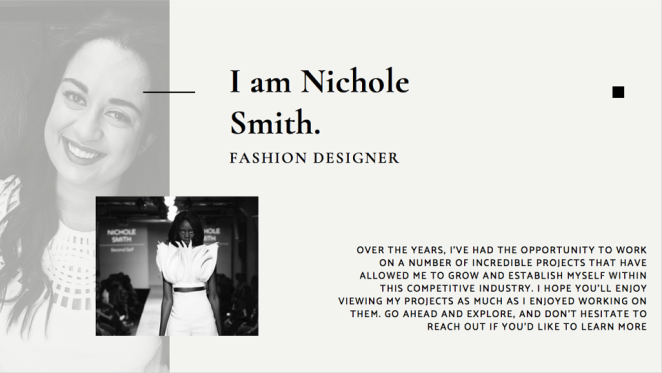
Nichole Smith
Consistency beats cleverness
If your portfolio is sleek but your CV looks like it was last updated in the last decade, you send a mixed signal about attention to detail. A neglected professional profile alongside a modern portfolio can confuse reviewers and recommends keeping key profile elements aligned across platforms.
Clarity scales
Your portfolio is rarely read by one person. It’s skimmed, forwarded internally, opened on a phone, and reviewed by at least one person with decision power but limited time. Portfolios may be reviewed by recruiters, hiring managers and executives who don’t work directly in your field, so you must explain context in plain language and avoid relying on insider jargon.
In short: you need both, because hiring is a multi‑stakeholder system and your work needs to survive contact with that system.
Why the portfolio wins when the room isn’t full of designers
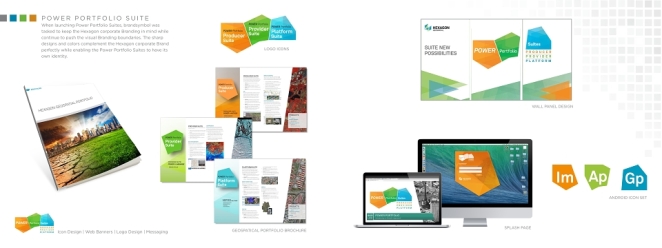
Thomas Wigley
Here’s the uncomfortable truth: in many organisations, the first eyes on your work aren’t expert eyes. Sometimes the first pass is a recruiter with a checklist. Sometimes it’s a HR partner who can’t tell kerning from kerosene but can tell “confident and cohesive” from “chaotic and unfinished.” Sometimes it’s a creative director who is very good but very busy.
The portfolio earns its keep because it compresses complexity into something legible
A great creative portfolio “must do more than simply show your best work”; it has to explain it, grab attention in seconds, clarify your role, and provide evidence of process and impact—because hiring managers want context‑rich clarity, not a scrapbook.
Research on scanning behaviour helps explain why “clarity” keeps appearing as the answer to every portfolio question. People don’t read web content linearly; they scan. Nielsen Norman Group synthesised eyetracking work into multiple reading patterns (including the F‑pattern), noting that readers tend to fixate towards the top of the page and the start of lines, and that headings, bullets and visually distinct “anchor” elements can improve effective scanning.
Translate that into portfolio reality and you get three non‑negotiables
Orientation in under a minute: What do you do? For whom? At what level? How should I contact you? Remove friction by clearly showing your name and contact details and treating the portfolio itself like a deliverable that guides the reader from introduction to conclusion with “zero guesswork.”
A story, not just a gallery: Multiple hiring‑manager sources flag portfolios that only show final output as a red flag, especially when they don’t explain the problem statement, process, team context and candidate role.
Evidence that survives scrutiny: Recruiters and hiring managers repeatedly ask for clear role definition, collaboration detail, and outcomes because hiring is a bet, and they’re trying to de‑risk it.
At this point it’s worth saying out loud: the portfolio isn’t a passive container. It is a design problem. If you treat it like a design problem (user needs, constraints, signposting, conversion) you immediately start building something that can survive a busy hiring funnel.
What hiring managers tend to look for in 2026
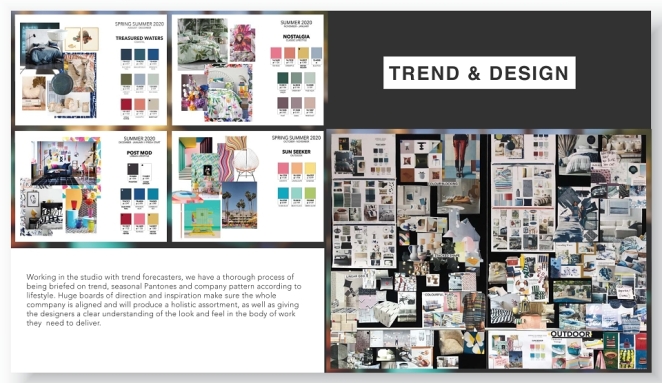
Kate Ogilvie
There’s a reason so many portfolio tips sound like UX advice. The reviewer is a user. They have a task. They have limited time. And your portfolio either reduces their effort or increases it.
Across Creativepool’s hiring‑focused guidance and broader design‑hiring research, a consistent pattern emerges.
They want to know what you actually did
Creativepool’s “talent hunter” advice calls out vague portfolios—visuals without context—as a common reason recruiters hesitate, recommending short summaries that specify objective, role and outcome so the story feels complete. In a role‑by‑role portfolio guide, a top UK creative recruitment firm similarly emphasises being “crystal clear” about your contribution, especially in collaborative work, to avoid awkward conversations later in the process.
They want to know whether you can make decisions in the real world
Include candidate solutions and explain the thinking behind chosen directions, specifically because it demonstrates you can navigate constraints rather than design in an idealised bubble. Most hiring managers prefer shipped work and treat the journey (the constraints, challenges and resolution) as the interesting part.
They want enough craft to trust you, and enough narrative to remember you
A portfolio can be visually perfect and still forgettable if it doesn’t connect the dots. Creativepool’s “How to Create the Perfect Portfolio” advice argues that “static snapshots” no longer suffice; effective portfolios are mini case studies that move from problem to process to solution, with reflections and results that make the work memorable and interpretable.
They want a portfolio that is easy to share, easy to skim, and hard to misunderstand
Creativepool’s side‑project advice recommends a tight “Problem → Approach → Outcome” structure specifically because it lets hiring managers scan in seconds while still understanding your thinking.
If you absorb all of this, the portfolio stops feeling like a vanity project and starts feeling like what it actually is: structured proof.
Another Opinion
Comment on behalf of Jenny McCarthy, Senior Candidate Manager at Live Recruitment
"In creative hiring, your portfolio often carries more weight than your CV because creativity is best judged by evidence, not claims. While a CV lists where you’ve worked and your job titles, a portfolio shows what you can actually do.
Creative roles, whether in design, writing, marketing, film, UX, or art are about problem-solving, originality, style, and execution. These qualities can’t be fully captured by degrees, years of experience, or job titles alone. A strong portfolio demonstrates your thinking process, your approach to challenges, and your ability to turn ideas into tangible outcomes. It answers the questions recruiters and hiring managers are really asking: Can this person do the work? Do they think in the way our team needs? Would their work resonate with our audience or brand?
Portfolios also reveal how you work. Case studies, drafts, iterations, and explanations showcase your approach to collaboration, feedback, and problem-solving insights a CV rarely provides. Creative careers aren’t always linear, and freelance projects, passion projects, or self-initiated work may not fit neatly on a CV. Yet these can be some of your strongest proof of skill and motivation. A portfolio gives them the space they deserve.
Moreover, a strong portfolio can level the playing field. It allows emerging creatives, career-changers, or self-taught professionals to compete on talent and ideas, rather than credentials or pedigree.
In short: your CV might get you noticed, but your portfolio gets you hired."
Creative portfolio tips you can apply immediately
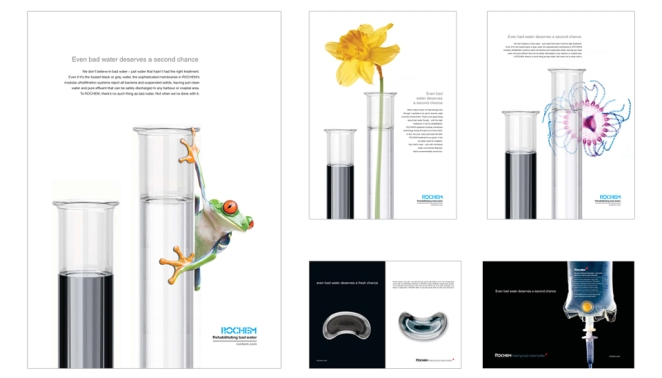
Simon Matthew Scoffin
Most portfolio advice fails because it’s either too generic (“show your best work”) or too aesthetic (“pick a nicer template”). Both are true, neither is useful.
So here’s a research‑grounded set of creative portfolio tips that map to how hiring actually works.
Curate like someone is paying for the page views
If you want a rule you can use without spiralling: fewer projects, deeper stories. Focus on one or two projects if you’re short on time, selecting cases where you had to incorporate a wide variety of skills, because depth often makes a bigger impact than breadth. Portfolios should be concise and impactful because employers are time‑poor and tend to make quick first‑pass decisions on what they will look at again.
Write the headline you want to be hired for
Before anyone reads a case study, they scan the top of the page. Use that. Lead each project with a punchy, one‑line role or project title—a headline that signals relevance in seconds. Combine that with ruthless clarity about contribution (especially in team projects), which removes ambiguity later in the process.
Use a repeatable case‑study scaffold
The scaffold that keeps coming up across credible sources is boring because it works: problem, approach, outcome. For side projects, it supports fast scanning while preserving meaning. Hiring managers ask for overviews that summarise problem statement, process, team makeup and candidate role, and describe it as a red flag when portfolios only show the final output.
Design for scanning, not reading
If you build your portfolio like a long essay, you force reviewers into “commitment mode” when they’re still deciding whether you deserve a second tab. Eyetracking research indicates headings, subheadings and visually distinct elements can shift scanning from the basic F‑pattern into more effective modes where users locate key information faster. Treat your portfolio like UI: hierarchy, signposting, progressive disclosure.
Show process, but don’t fetishise the process
Hiring managers want to see thinking and constraint navigation, not a wall of workshop photos. So, spend visual real estate on problems, challenges, collaboration, and why each artefact matters, rather than on empty chronology.
Add proof of impact without faking numbers
Not every project has neat metrics. But “no metrics” is not the same as “no impact”. Include measurable outcomes where possible, but also use clear articulation of change, decision rationale, and user feedback or research insight to demonstrate value. In practice, the hiring manager question to answer is: what changed because you were there?
Handle NDAs like a professional, not like a victim
Confidentiality is real. So is your responsibility to the work. We’d always recommend redacting or blurring identifying information or recreating designs with different branding so you can demonstrate layout and decision‑making without exposing confidential details. Respecting NDAs is also important, as is, if permission to show work is denied, describing projects in general terms (problem, approach and lessons learned) without naming clients or sharing sensitive material.
Make it frictionless to contact you
It sounds laughably basic, but it’s repeated because candidates still miss it. A simple footer or contact page means that anyone who likes what they see can act immediately. Hiring is busy. Don’t make someone hunt for your email like it’s an Easter egg hidden in your captions.
Put your portfolio where decision‑makers can share it
The “portfolio as link” is now the default submission mode for many creative roles. In most cases, you’ll be asked to submit digitally by sharing a link, and stresses following submission instructions and checking access and sharing settings in advance. In practical terms: host it somewhere stable, test it on mobile, and assume it will be opened on a device (and in a browser) you do not control.
Keep the thing alive
One reason portfolios go stale is that people only start “building a portfolio” when they urgently need one, usually at the exact moment they have the least time to do thoughtful writing. Putting off portfolio updates makes the task harder because old projects are often poorly documented and because human memory is limited and fallible.
The antidote is a regular self‑assessment: capture your deliverables and outcomes while they’re fresh (including the messy supporting evidence like sketches, whiteboards, iterations and research notes), so that when you do need to apply, you’re editing, not excavating.
Finally, remember that your CV and portfolio are not separate artefacts. They are a pair of interfaces into the same product: you and inconsistencies across CV, portfolio and professional profiles raise serious questions about accuracy and attention to detail.
The closing argument creatives keep skipping
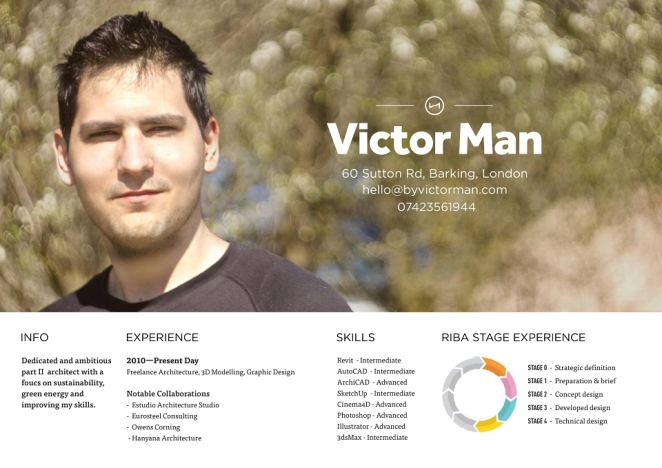
Victor Man
The useful conclusion is not “CVs are dead.” CVs aren’t going anywhere, and plenty of hiring funnels still start with them, especially where ATS screening or high application volumes are involved. The conclusion is more annoying, because it requires effort: build a CV that gets you through the first door, then build a portfolio that makes the second door irrelevant.
If you’re still treating your portfolio like homework, pause and reframe it: it’s the only part of the application process where you are allowed to show rather than tell. The job is not to impress someone with how busy you’ve been. The job is to make it obvious (fast)why you’re the safest creative bet in a risky market.
Build a CV that gets you through the first door, then build a portfolio that makes the second door irrelevant
So yes, in creative hiring, portfolio matters. Not because the CV is worthless, but because the portfolio vs cv debate ends the moment a hiring manager sees work that is clear, contextual, and undeniably yours. Build your creative job portfolio like you’d build any asset you care about: for a real user, with a real task, under real constraints—and with a clear next action.