

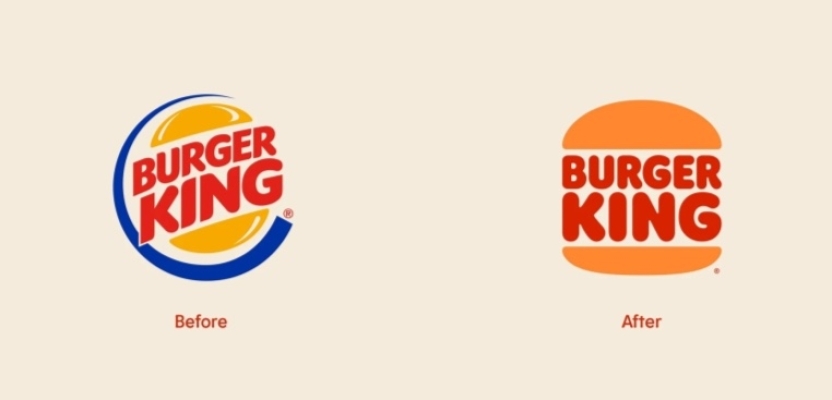

If there is one phrase that gets treated like a fire extinguisher in boardrooms and creative meetings across the globe, it’s brand repositioning. Growth dips? Reposition. Competitor gets loud? Reposition. New CEO arrives with a fresh haircut and a hunger for legacy? Reposition. And yes, sometimes it is the right move. But a brand repositioning strategy is more than a slogan hunt. It’s a business deciding, under pressure, how it wants to be chosen, and proving it can still deserve that choice.
I get why it happens. Repositioning sounds like action. It implies momentum. It implies a future. And, crucially, it implies he problem can be solved with words, pictures, and a big enough media plan. The awkward truth, however, is that repositioning is rarely a communications problem first. It’s a strategic problem that eventually shows up in comms and the moment a business must look at the market and admit the story it is telling itself about who it is no longer matches what customers experience, believe, or need.
So, let’s put the jargon in a cupboard for a moment and talk like adults. Repositioning a brand is deciding, clearly and deliberately, what category you’re playing in, who you’re aiming at, what you’re promising, them and what you can credibly own. It’s also deciding what you’re not going to be anymore. That second part is where most teams start really sweating.
I’m not going to leave this at “be authentic” and “know your audience”. Frankly, you can get that from a cereal box. I’m going to walk through why companies reposition their brand, the signals that repositioning is actually needed, the brand positioning framework elements that stop it becoming a vibes-based reinvention, and a few real brand positioning examples of how market leaders and challengers pull this off without accidentally torching the equity that made them valuable in the first place.
Repositioning is not change for change’s sake. It is clarity under pressure.
Why companies reposition their brand
Simon Manchipp
Let’s answer the blunt question upfront: Why do companies reposition their brand? Usually because the market moved, the business moved, or customers moved, and the “meaning” of the brand wasn’t able to keep up.
Sometimes the category changes underneath you. That can happen slowly, like a market commoditising over years, or quickly, like new behaviour rewriting expectations overnight. In those moments, you can stay where you are and slowly become irrelevant, or you can redefine what game you are playing. That is not theatre. That is survival.
Sometimes the audience changes, or you realise you’ve been chasing the wrong audience all along. This is painfully common. A brand wants to move upmarket but keeps talking like a mass brand or a brand wants loyalty but keeps acquiring the kind of customers who only buy when there is a discount code involved. Repositioning, done properly, is often a deliberate narrowing: fewer people, clearer value, stronger margins, less chaos.
And sometimes the brand has stretched so far that it’s lost its outline. Everything is “on brand” because nothing is. Every new product launch becomes a separate mini-universe. A customer who loved you for one reason now sees you trying to stand for five. In those moments, repositioning is usually subtraction. Cutting claims. Cutting noise and getting back to something you can actually own.
The one reason you should definitely not reposition is boredom disguised as strategy. If the brand is understood, trusted, growing, and still differentiated in a meaningful way, repositioning for novelty is just organisational vanity. It creates internal excitement and external confusion. It makes everyone feel busy. It also tends to make customers feel like they’ve walked into their favourite local watering hole and found a minimalist “concept space” with six types of beer that all tastes the same and no atmosphere.
Signs your brand needs repositioning

Katie Jaques
Now the other popular question: When should a company reposition its brand? Not when the team is tired of the current campaign line. Not when someone shows up with a new slide template and decides that means the business has “evolved”.
You reposition when the fundamentals are misaligned, and that misalignment has started getting expensive.
Here are the signals I look for, in plain terms:
Market reality
If a credible competitor has claimed your “difference”, faster, cheaper, more sustainable, more premium, and customers agree, you have a positioning problem. If the category definition has shifted and your promise feels dated, you have a positioning problem. If you are leaning harder on promotions just to maintain volume, you might have a positioning problem, or you might have a product and pricing problem you are about to try to solve with branding. Be careful.
Customer meaning
If people buy but cannot explain why, you are in dangerous territory. If you are being chosen for the wrong reason, “cheap” when you want “best”, “traditional” when you want “modern”, repositioning may be the bridge between what you sell and what you want to be valued for.
Performance drift
Customer acquisition cost rising. Conversion softening. Retention wobbling. Sales cycles lengthening because trust takes longer to earn. These are often early warnings that the brand promise no longer gives customers an easy reason to choose you.
Internal inconsistency
If you ask five people in the business to describe the brand and you get five different answers, the brand is already repositioning itself. It is just doing it messily, through inconsistent decisions. If your product roadmap does not match the promise, if your creative work is inconsistent because briefs are inconsistent, you do not have a creative problem. You have a clarity problem.
The permission test
This one is brutal and it saves money. If you want to move into a new space, premium, sustainable, tech-led, luxury, whatever, do customers actually believe you can own it? Do you have proof points? If you do not, repositioning becomes a glossy lie, and lies scale terribly.
If several of these are true at once, repositioning is not just an option. It is probably overdue.
(And yes, that answers another common one: What are signs a brand needs repositioning? They are rarely just “the logo feels old”.)
Brand repositioning vs rebranding: what’s the difference?

Paul Reynolds
This is where teams get tangled, so let’s be crisp.
Repositioning is changing how you want to be understood in the market, the promise, the associations, the “why you”, often without changing your name or visual identity.
Rebranding is changing the identity system, name, visual language, sometimes tone, sometimes architecture. They can happen together, but they are not the same thing.
If you change the look without changing the strategic truth, you are wearing a new outfit to the same old party. If you change the strategy without updating any signals, you may be asking customers to read your mind.
Most painful failures happen when a company does a “rebrand” because it is easier to brief, then acts surprised when the market does not magically re-rate the business.
The brand positioning framework I keep coming back to

Rob Pratt
Whenever repositioning gets messy, I drag it back to three questions. Call it a brand positioning framework if you want, but really it is a sanity check.
- What category are we in, really?
- What does the customer expect from any brand in this category?
- What can we credibly own that makes us the chosen one?
Category is the frame. Pick the wrong frame and everything that follows becomes confused. Customer expectations are the entry fee. Ignore them and you will not even be considered. The thing you can own, your difference, is what wins preference.
Most teams over-romanticise difference and under-invest in the entry fee. Market leaders get beaten all the time by brands that make the basics feel effortless.
So, before you obsess over the clever new “why”, ask yourself whether you have nailed the parity stuff. Are you as easy to buy as you need to be? As reliable? As clear? As consistent? As frictionless?
If you have not, your repositioning will be built on sand.
Market mapping: turning “we think” into a visible landscape

Nikki Bentley
When repositioning goes wrong, it is often because the team never properly looked at the board. They reposition based on internal beliefs, not market reality.
Market mapping forces the conversation out of opinions and into something you can point at.
Start with a perceptual map, but do not make the axes the ones you wish mattered. Make them the ones that drive choice. Plot competitors based on customer perception, not internal mythology. Then look for overcrowded territory and plausible whitespace.
A warning, whitespace is not automatically opportunity. Sometimes whitespace is empty because nobody wants it. You still have to validate demand and permission.
I also like jobs-to-be-done thinking as a practical way to avoid abstract repositioning. People do not buy products, they hire them to do a job. The same product can compete in multiple jobs. A car can be “freedom” or “status” or “practicality”. A software tool can be “speed” or “control” or “compliance”.
Repositioning often comes down to choosing which job you will own, then building everything around that job instead of trying to be vaguely relevant to every possible use case.
How to reposition a brand successfully, without dying in a workshop

Rob Pratt
I have nothing against workshops. I have something against workshops that produce a poster full of adjectives and then quietly disappear into a shared drive forever.
If you want exercises that actually lead to decisions:
The “we are not for…” list
Fastest route to clarity. Most leadership teams hate it because it forces trade-offs. We are not the cheapest. We are not for everyone. We are not trying to be the broadest. Each “not” creates focus. Each focus creates a stronger brief.
The claim ladder: Start with the customer outcome, then walk down to proof. “We help teams ship faster” is a claim. “We reduce handoffs and clarify accountability” is a benefit. “We integrate tools and automate reporting” is a feature. Proof is results, case studies, evidence. If you cannot build the ladder all the way down, your positioning is premature.
The parity audit
Not sexy. Necessary. List the expectations customers assume in your category. If you are weak on any of them, fix them before you shout about how different you are.
One sentence, one enemy
Not an enemy brand, an enemy idea. Complexity. Waste. Fake sustainability. Bureaucracy. Blandness. The best positioning usually fights something. Challenger brands do this instinctively. Market leaders can do it too, but they tend to get nervous about upsetting people. The irony is that trying not to upset anyone usually results in upsetting everyone through boredom.
Brand positioning examples: what successful brand repositioning looks like

Burberry
Another popular one: What are examples of successful brand repositioning? Here are a few brand positioning examples that show different flavours of change, and what actually made them work.
Burberry: re-centering, not reinventing
Luxury brands are especially exposed because aspiration is fragile and customers can smell desperation. Burberry’s recent focus on its heritage strengths, particularly outerwear and scarves, is a reminder that repositioning sometimes means going forward by going back, not into nostalgia, but into owned equity. Under CEO Joshua Schulman, the business has been widely reported as refocusing on hero categories and a more accessible British aesthetic, with signs of momentum. The lesson is simple: if your authority categories are clear, doubling down can be smarter than chasing whatever the category currently fetishises.
Domino’s: proof before poetry
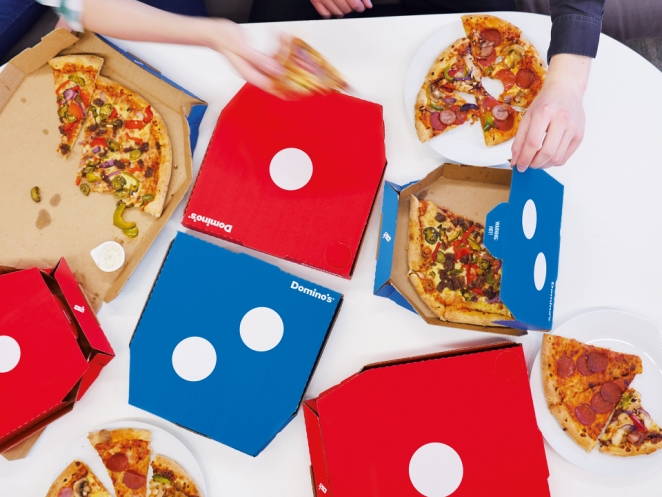
Domino’s “Pizza Turnaround” is still one of the cleanest examples of doing this in the right order: acknowledge the problem, change reality, then change perception. The brand publicly leaned into criticism, fixed the product, and then told the story with receipts. The strategic lesson is that “reason to believe” is not a paragraph. It is evidence, behaviour, and consistency.
Liquid Death: framing a commodity as culture
Water is a commodity. Liquid Death turned water into a cultural product, entertainment, identity, stance, and built a brand that behaves like lifestyle rather than FMCG. The lesson is not “be edgy”. The lesson is “pick a frame, commit to it, and make the reference point feel different.”
A repositioning roadmap that survives reality

Tasmin Otter-Lunn
If you want a simple roadmap that does not collapse the minute it meets internal politics, here is how I would run it.
1) Diagnose properly. Make sure you are not trying to solve a product or service failure with a brand story. Be honest about what is actually broken.
2) Map the market. Define who you compete against, what customers value, where the category is crowded, where opportunity might exist, and where you have permission to play.
3) Nail parity, then choose one primary difference. One. Not seven. If you try to be distinct in every dimension, you will end up distinct in none.
4) Write positioning for internal clarity, then stress test it. Audience, category, difference, reason to believe. Keep refining until everyone can say it without inventing their own version.
5) Translate it into a system. Positioning is not a sentence, it is rules that guide messaging, design, product decisions, partnerships, content, and behaviour.
6) Pilot and measure. If you can test the repositioning in a segment, a market, or a product line, do it. Track whether meaning is shifting: consideration, conversion, retention, price elasticity, associations. Then scale with confidence.
That is how to reposition a brand successfully, without turning it into an expensive internal hobby.
The mistakes I see again and again
The biggest mistake is confusing repositioning with a rebrand. A rebrand can support repositioning, but new visuals without a new strategic truth is just a costume change.
The second is trying to keep every audience. Repositioning demands choices. If you attempt to speak to everyone, you will speak clearly to no one.
The third is building the story before building the proof. Customers are not confused. They are sceptical. Give them evidence.
And the final one is treating repositioning like a campaign rather than a commitment. If it is a Q3 burst and then the organisation slides back into old habits, you have simply paid to confuse people.
Why this matters
Matt Parkes
Repositioning is one of the highest-leverage moments for creative work because it forces decisions creative teams usually have to reverse-engineer from fuzzy briefs. When a brand gets clear about who it is for and what it stands for, briefs sharpen. Creative improves. Targeting gets cheaper. The brand stops trying to win through noise and starts winning through meaning.
If a business is navigating change right now, category pressure, customer shifts, margin pressure, competitive noise, a disciplined brand repositioning strategy might be the strategic move that stops everything else feeling like firefighting. But it only works when it is built on truth, not theatre. And if the repositioning is real, it is not “just marketing” anymore. It is product, experience, pricing, and behaviour aligned into a promise people can actually believe.
That’s the point, really. Brand repositioning is not an exercise in sounding different. It is the discipline of becoming more chosen, and staying that way when the market refuses to sit still. And if you want a quick gut-check, return to your brand positioning framework, look at real brand positioning examples, and ask whether your current story still matches the lived experience you deliver.