



Digital advertising has never suffered from a shortage of formats. Banners, takeovers, pre-roll, paid social, search, programmatic, creator partnerships, AR, AI, gaming environments, shoppable media, branded utilities, live streams. The industry has spent more than two decades inventing new ways to put brands in front of people’s faces.
What it has not always done is give people a reason to care.
That’s what separates the best digital ads from the rest. They are not merely well-targeted or well-produced. They understand the behaviour of the audience, the conditions of the platform and the role a brand can credibly play within that space. They make the technology feel invisible. They make the idea feel inevitable.
The most effective digital ad campaign examples share a particular quality: they feel native to the moment in which they appear. They do not simply use digital media as a delivery system. They use it as part of the idea itself.
That distinction matters more than ever. Digital advertising has become so embedded in daily life that audiences are fluent in its tactics. They know when they are being followed around the internet. They know when a brand is borrowing a trend without understanding it. They know when an idea has been cut down from a TV spot and pushed into social feeds as an afterthought. The best digital advertising does not disguise the commercial intent, but it earns the right to be there.
The best digital ads reveal how creativity behaves when it has to respond to platforms, audiences, data and culture all at once.
Best Digital Ad Campaign Examples That Really Stand Out
Sleep With Rain
A strong digital campaign does not begin with placement. It begins with possibility. What can this medium unlock that another cannot? That question sits at the heart of Sleep with Rain for AT&T Business by Critical Mass. The campaign responded to a moment of low small-business confidence by doing something more imaginative than a conventional B2B reassurance message. It brought together familiar entertainment figures through the short film Sleep With Rain, using narrative and cultural recognition to speak to business audiences in a more human way.
What makes the work interesting is not celebrity alone, but the way digital entertainment becomes a route into business relevance. B2B advertising can too easily drift towards rational claims, service promises and forgettable product language. This campaign understands that business audiences are still people. They respond to charm, humour, narrative and emotional familiarity. Digital gives the work room to behave less like a brochure and more like a piece of culture.
That is a useful reminder for brands in any category. The best digital ads do not simply translate a sales message into a shorter format. They find the most compelling way for that message to live in the world.
Heinz’s AI Ketchup
A different kind of digital intelligence appears in Heinz’s AI Ketchup. When AI image generators were asked to produce ketchup, the results repeatedly resembled a Heinz bottle. The campaign worked because it intersected with a live cultural conversation and turned it into a brand argument. At a time when many brands were rushing to show that they were “using AI”, Heinz found a way to make the technology reinforce a long-standing brand truth: in the public imagination, ketchup looks like Heinz.
That is one of the defining qualities of the best digital advertising. The technology is not the point. The point is what the technology reveals.
The same principle applies to Talent, meet opportunity by AKQA for ai.io. The project is built around the idea that much of the world’s sporting talent remains unseen and underdeveloped, using AI-driven analysis and data to help democratise talent discovery.
This is digital advertising as infrastructure rather than interruption. The campaign does not present AI as an abstract capability or fashionable add-on. It grounds it in a tangible human outcome: connection. It suggests that technology has creative value when it helps a brand solve a recognisable problem, not simply when it looks sophisticated on a case study page.
The Uncensored Library
The Uncensored Library, created by Reporters Without Borders with partners including BlockWorks, is one of the best examples of digital advertising becoming inseparable from distribution strategy. Built inside Minecraft and launched in 2020, the project used the game as a loophole to make censored journalism available in countries where independent reporting was restricted. RSF describes it directly as a way to “bypass internet censorship”, which immediately shows how different this is from a conventional awareness campaign.
What makes it so impressive creatively is that the medium was not decorative. Minecraft was the message delivery system, the cultural context and the access point all at once. A less imaginative campaign might have built a website and called it innovation. This one understood that websites can be blocked, while game spaces sometimes remain open. That is the sort of lateral digital thinking brands and agencies talk about constantly but achieve far less often. Even though it sits slightly outside traditional commercial advertising, it is a powerful reminder that the best digital ideas often come from understanding not just where audiences are, but what those environments allow.
Money Never Felt Like Monzo
Monzo’s Money Never Felt Like Monzo offers another useful contrast. Rather than overwhelming audiences with product features, it built its digital messaging around emotional clarity. Money is rarely just functional. It carries anxiety, relief, control, embarrassment, optimism and habit. Monzo understood that the category opportunity was not simply to make banking easier, but to make it feel different.
That kind of restraint is often underrated in digital advertising. Not every campaign needs to shout. Some of the best digital ads work because they simplify a feeling and allow the audience to recognise themselves in it.
Hunter and Bear
Tipp-Ex’s Hunter and Bear remains instructive because it understood interactivity before interactivity became a default expectation. By allowing users to rewrite the story through YouTube’s interface, the campaign turned a correction product into an engine for play. The product benefit was embedded directly into the mechanic. The audience was not just watching an idea about correction. They were correcting the narrative themselves.
That is the kind of elegance digital advertising still strives for. The medium, message and product behaviour were all working together.
Burger King’s Whopper Detour
Burger King’s Whopper Detour remains one of the sharpest examples of mobile-first digital advertising because the technology was not bolted on after the fact. It was the joke. To unlock a one-cent Whopper, users had to open the Burger King app while physically near a McDonald’s. That turned geofencing into both a media tactic and a brand act of provocation. Rather than treating mobile as a simple coupon-delivery mechanism, the campaign made location itself part of the idea. That’s what makes it memorable. It understood that digital audiences do not just consume messages on phones. They move through space with them.
What makes the work especially instructive is how neatly the platform behaviour, the brand personality and the commercial objective aligned. Burger King wanted app downloads, but it pursued them through competitive theatre rather than bland utility messaging. The campaign drove more than 1.5 million app downloads in nine days, helped the app hit number one in both app stores and contributed to a 27:1 ROI. That is digital advertising at its best: transactional in outcome, but cultural in execution.
Red Bull's Stratos
Red Bull’s Stratos worked at an entirely different scale. The live-streamed space jump was not a conventional ad in any meaningful sense, but it was one of the clearest demonstrations of what digital brand building could become. It created a global shared moment, one that audiences actively chose to watch.
The significance of Stratos was not only the spectacle. It showed that a brand could behave like a broadcaster, an entertainment company and a cultural institution at once. It was a piece of content, but more importantly, it was an event.
KFC Summertime Stories

A more recent example, KFC Suppertime Stories by Ogilvy South Africa, extends this thinking into a more intimate setting. The campaign connected bespoke KFC bucket sleeves to a mobile app, unlocking original audio stories that used a phone’s speaker, flashlight and vibration functions. Placed face-down on the table, the phone helped bring illustrated sleeves to life through sound, light and projection.
IKEA Place
IKEA Place is another useful example because it shows how digital advertising can become more persuasive when it solves a practical problem rather than simply making a louder claim. When IKEA launched the app in 2017, it allowed people to virtually place furniture in their homes using AR before buying. That may sound familiar now, but at the time it marked a meaningful shift in how a retail brand could use digital experience as both service and selling tool. IKEA described it as a chance for customers to “try before you buy”, which gets to the heart of why the idea works.
From a creative point of view, the appeal is in how neatly the technology answers the category tension. Furniture shopping is full of uncertainty: Will it fit? Will it dominate the room? Will it look ridiculous next to everything else? IKEA Place turned those anxieties into a digital interaction. That is more than branded utility. It is a form of persuasion built through reduced friction. The best digital ads often do this quietly. They remove a barrier, and in doing so make the brand feel more useful, more contemporary and more confident in its own offer.
Fingerspelling
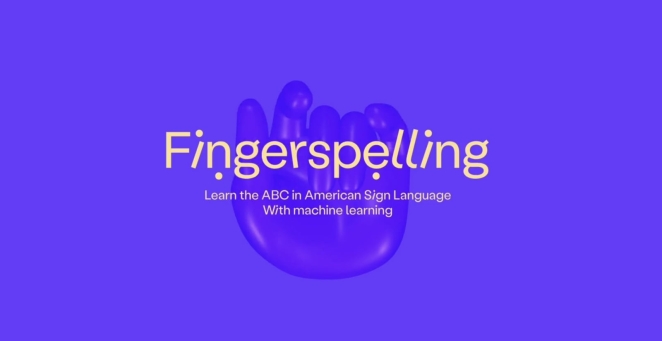
A pioneering approach to teaching the sign language alphabet by DEPT® for The American Society for Deaf Children. The browser-based app Fingerspelling.xyz uses a webcam and machine learning to analyse hand shapes, helping users learn the ASL alphabet correctly.
This is digital advertising as utility. The campaign earns attention by providing something genuinely useful, particularly for hearing parents of deaf or hard-of-hearing children. It does not ask audiences to admire the technology. It lets the technology do something meaningful.
That distinction is increasingly important. Digital experiences often fail when they begin with the technology and then search for a reason to exist. This work begins with a human need and finds the right technology to support it.
The Truth is Hard
The New York Times’ The Truth Is Hard showed another side of digital effectiveness. It used stark typography, rhythm and restraint to communicate the value of journalism at a time when public trust, misinformation and political pressure had become central cultural issues. The campaign did not chase a platform trend. It expressed institutional purpose with force and clarity.
That kind of work matters because digital advertising is often mistaken for speed. The assumption is that online audiences only respond to quick jokes, bright visuals or instant gratification. The Truth Is Hard proved that seriousness can travel when the idea is urgent enough.
Pain Museum

Then there is Pain Museum by Ketchum for Libresse. The campaign set out to challenge the silence around menstrual and intimate pain, creating space for experiences that are often dismissed, misunderstood or minimised.
Its strength lies in refusing to make discomfort more palatable. Digital becomes a platform for testimony, education and recognition. In a category where euphemism has often been the default, that directness is strategically necessary. The campaign does not simply tell people that the brand understands them. It creates a place where their experiences can be seen.
Worldwide Hide
Cadbury’s Worldwide Hide offers a lighter but equally instructive example. By allowing people to hide virtual Easter eggs for others using Google Maps, Cadbury turned a seasonal product moment into a digital act of generosity. The technology extended the ritual. It did not sit on top of it.
That is the real measure of strong digital craft. The platform should not decorate the idea. It should deepen it.
Pizza Hut Roblox
The best digital advertising today is not defined by a single channel or format. It is defined by how well a campaign understands context. Context includes the platform, certainly, but also the audience’s mood, the cultural moment, the category conventions and the level of attention being asked for. A six-second YouTube bumper, an interactive AR experience and a creator-led TikTok campaign are not variations of the same thing. They are different forms of communication with different rules. The best campaigns respect those rules without becoming trapped by them.
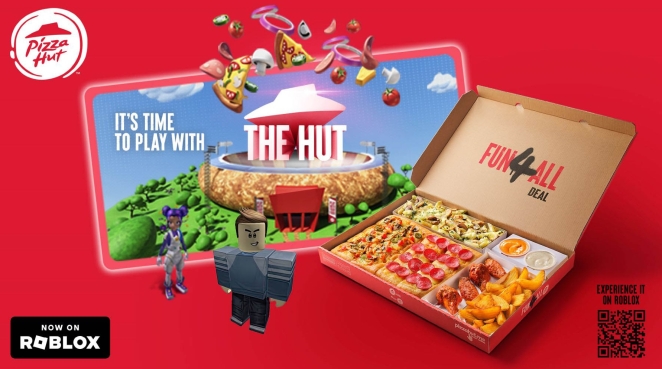
Pizza Hut Roblox by Iris is a strong example of platform-native thinking. Created to build relevance with younger audiences across 30 European markets, the project brought Pizza Hut into Roblox through an official game where players could explore a surreal pizza-themed world, complete obstacle courses, collect ingredients and collaboratively make pizzas.
That matters because Roblox is not simply media space. It is a social environment with its own behaviours, language and expectations. A brand entering that environment has to do more than appear. It has to contribute to the play. The campaign works because it builds within the world rather than advertising around it.
Exist to Create
Bang & Olufsen: Exist to Create by ManvsMachine shows the power of digital craft. The campaign used CG to honour the brand’s materials, product design and creative ethos, building 3D worlds inspired by each device’s mood and form.
In a feed environment dominated by speed, this kind of considered visual world-building can feel unusually distinctive. It reminds us that digital does not always have to mean disposable. It can deepen a premium brand’s sense of materiality, even when the work itself is entirely screen-based.
Love Your Healthy Hair
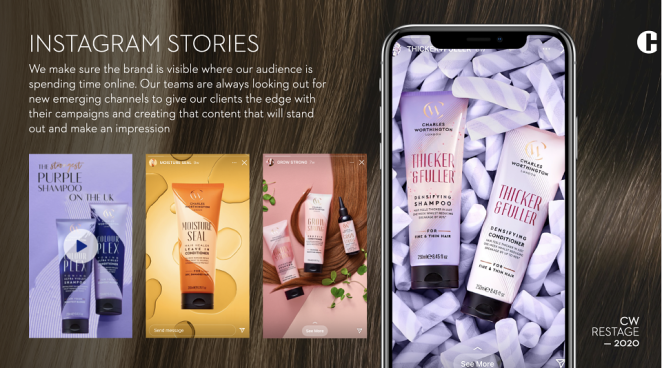
Charles Worthington: Love Your Healthy Hair by Ride Shotgun offers another perspective on what modern digital advertising requires. The work supported a major brand restage, delivering a large suite of mixed-media assets across multiple product ranges and channels.
That kind of production architecture is rarely glamorous, but it is essential. Digital campaigns are often encountered in fragments. A consumer might see one asset on Instagram, another in a retail environment, another through paid media and another on a brand site. Coherence across those fragments is what allows a campaign to hold together.
Nike’s Dream Crazy
Wieden+Kennedy’s campaign for Nike framed “crazy” ambition as a compliment, using a film that moved between elite athletes, emerging talent and broader social symbolism. What makes it relevant here is not simply that the film was famous. It is that the campaign was built to live amid reaction, debate and social distribution. The work was designed for a digital environment where meaning is not fixed by a single viewing, but amplified through commentary, reposting and argument.
That is a useful case study because not every successful digital campaign has to be interactive in a mechanical sense. Some become powerful because they create a strong enough point of view to travel through the culture under their own momentum. Dream Crazy did that by giving audiences something larger than product messaging to attach themselves to. It behaved like a brand statement built for networked circulation. In that sense, it helps bridge a gap in the article between utility-led digital work and emotionally charged digital brand building.
Some campaigns want a click. Some want a sale
The strongest digital campaigns are clear about what they want from the audience. Some campaigns want a click. Some want a sale. Some want a shift in perception. Some want participation. Some want to create memory structures that pay off months later. Problems arise when brands confuse these objectives, measuring brand work like performance marketing or judging performance work by vague awareness metrics.
This is why the strongest digital strategies define success before the work is made. The campaign’s creative shape should follow its intended effect.
Key Patterns Behind the Best Digital Ads
1. Behavioural Insight
Great digital campaigns tend to begin with something people already do. They search, compare, personalise, share, remix, watch together, save for later, send to friends, build routines, follow creators, argue in comments and turn data into identity.
The campaign’s job is not to invent behaviour from nothing. It is to find the right behaviour and give it sharper meaning.
The lesson is not just responsiveness but coherence. The campaign could react to live sporting moments while still holding a consistent Nike point of view. In a fragmented digital landscape, that is not a minor achievement. People encounter campaigns out of sequence and often without context. A strong idea has to survive that fragmentation.
2. Simplicity
This does not mean the work is simplistic. Often, the thinking behind a great campaign is highly sophisticated. But the audience-facing idea must be easy to grasp. Digital environments are unforgiving. If the idea requires too much explanation, it usually collapses before it has a chance to spread.
3. Participation
Participation does not always mean user-generated content. It can mean interaction, recognition, interpretation, contribution or collective viewing. What matters is that the audience understands its role.
4. Fluency
Digital culture has its own codes, and audiences can tell when a brand is borrowing them clumsily. The best campaigns do not simply mimic platform behaviour. They understand why that behaviour exists.
Finally, the best digital advertising tends to have a strong relationship between idea and medium. The campaign would not work as well anywhere else. That is usually the sign that digital has been treated as more than media space.
Why Some Digital Ad Campaigns Travel While Others Disappear
Plenty of campaigns have media spend. Far fewer have momentum.
The difference often comes down to whether people have a reason to carry the idea forward. A digital ad travels when sharing or engaging with it gives the audience something in return: status, usefulness, humour, identity, belonging, surprise or emotional recognition.
This is where many campaigns fail. They assume that because something is visible, it is valuable. But visibility is only the first condition. The audience still has to decide whether the work is worth any further attention.
A campaign can be perfectly produced and still disappear if it does not create a social or personal reason to engage. It can be technologically impressive and still feel empty if the idea is weak. It can be aggressively targeted and still fail if the message has no resonance.
In categories where visual sensation matters, craft is not cosmetic. It is part of persuasion. The audience may not consciously analyse the production technique, but they feel the difference between generic category imagery and work that has been built to create a distinct sensory impression.
The strongest work understands that attention is not just a media metric. It is a human decision.
How Brands Measure the Success of Digital Advertising Campaigns
McCann Bristol
Behind every great digital campaign is a production process most audiences never see — multiple drafts, stakeholder feedback, and rounds of revisions before the final cut goes live. Creative teams increasingly rely on video review software like Krock.io to manage that process, letting clients and collaborators leave frame-accurate comments and approve versions without endless email threads.
Measurement is one of digital advertising’s great strengths, but also one of its great traps.
The availability of data can create the illusion of clarity. Impressions, clicks, completion rates, dwell time, conversions, shares and sentiment all tell part of the story. None tells the whole story alone.
A performance campaign may rightly prioritise conversion and return on ad spend. A brand campaign may need to look at recall, favourability, search uplift or longer-term demand. An interactive campaign may need to measure depth of engagement. A creator-led campaign may need to consider trust, relevance and audience quality, not just reach.
The best brands avoid retrofitting success after the campaign has run. They decide what matters upfront.
That discipline changes the work. It forces teams to ask whether the creative idea, media strategy and measurement framework are all pointing in the same direction. When they are not, campaigns often end up with impressive-looking numbers and very little business meaning.
A useful way to think about measurement is in layers. The first layer is visibility: did the campaign reach the intended audience? The second is engagement: did people respond in a meaningful way? The third is interpretation: did they understand the idea as intended? The fourth is action: did they do what the campaign was designed to encourage? The fifth is memory: did the work leave behind a stronger association for the brand?
Not every campaign needs to excel at every layer. But every campaign needs to know which layers matter most.
What Trends Are Shaping Modern Digital Advertising?
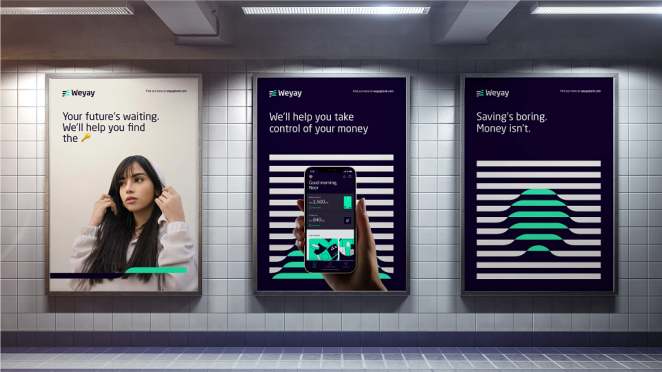
R/GA London
Several trends are reshaping digital advertising, but the most important ones are not purely technical.
AI is changing how campaigns are conceived, produced, personalised and optimised. Yet the strongest AI-led work still depends on human judgement. The technology can accelerate production and generate surprising outputs, but it cannot decide what a brand should stand for.
Gaming environments are becoming more important, particularly as brands look for ways to enter spaces where audiences already spend time. But gaming cannot be treated as a novelty placement. As Pizza Hut Roblox shows, brands need to understand the culture and mechanics of play. The question is not simply, “Can we appear there?” It is, “What can we contribute there?”
Creator partnerships are also becoming more central, particularly as audiences place greater trust in people than institutions. The most effective creator work is not a media buy disguised as authenticity. It gives creators enough strategic clarity and enough freedom to make the message feel native to their audience.
Short-form video continues to shape creative expectations, compressing storytelling and rewarding immediacy. But the rise of short-form does not mean every idea should be reduced to speed. It means brands must become more disciplined about entry points, rhythm and payoff.
Immersive formats such as AR, interactive tools and digital experiences are growing, but their success depends on usefulness. Novelty alone fades quickly. Utility, play and relevance endure.
The deeper trend is that digital advertising is becoming less like a message and more like an experience. The best work gives people something to do, feel, use, recognise or pass on.
How Digital Advertising Has Evolved Compared to Traditional Ads
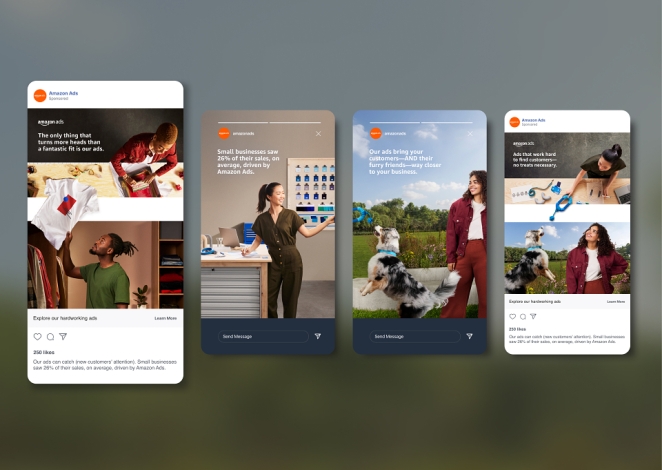
Code And Theory
Traditional advertising largely operated through interruption. A brand bought space around something the audience actually wanted: a programme, an article, a street, a journey, a song. The creative challenge was to make that interruption memorable enough to justify itself.
Digital advertising changed that contract. It introduced targeting, feedback, interactivity and real-time optimisation. It also gave audiences more control. They can skip, block, mute, scroll past, comment, parody, remix or ignore.
That has made weak advertising more vulnerable. A traditional campaign could sometimes survive through repetition and media weight. A weak digital campaign is exposed much faster. If the idea does not earn attention, the audience simply moves on.
But digital has also expanded what advertising can be. It can be a tool, a game, a service, a live event, a personalised story, a community prompt, a mobile experience or a cultural signal. That range is both opportunity and responsibility.
The best digital ads understand that the audience is not a captive recipient. They are an active participant in whether the campaign succeeds. They decide whether to watch, skip, share, search, click, comment, remix or remember.
That changes the creative standard. It places greater pressure on the idea, but also opens more interesting possibilities for how brands can behave.
What Makes a Digital Ad Memorable to Users?

Green Room
Memorability rarely comes from exposure alone. People remember digital ads when the work connects quickly and leaves behind a distinct impression.
That impression might be visual, as with Bang & Olufsen’s carefully built CG worlds. It might be behavioural, as with Tipp-Ex inviting the user to shape the story. It might be emotional, as with Pain Museum creating recognition around experiences that are too often dismissed. It might be useful, as with Fingerspelling.xyz turning a campaign into a learning tool.
The common factor is specificity. Generic ads vanish because there is nothing for memory to hold onto. The best digital ads give the audience a clear hook: a feeling, a gesture, a mechanic, an image, a line or an action.
They also understand that memorability is not the same as noise. A campaign can be loud, bizarre or controversial and still fail to build a meaningful brand association. The work needs to be distinctive, but it also needs to connect that distinctiveness back to the brand.
That is why Heinz AI Ketchup works. The joke, the technology and the brand truth are inseparable. Remove Heinz and the idea collapses. That is usually a sign of strong advertising.
Why Do Some Ad Campaigns Go Viral While Others Fail?
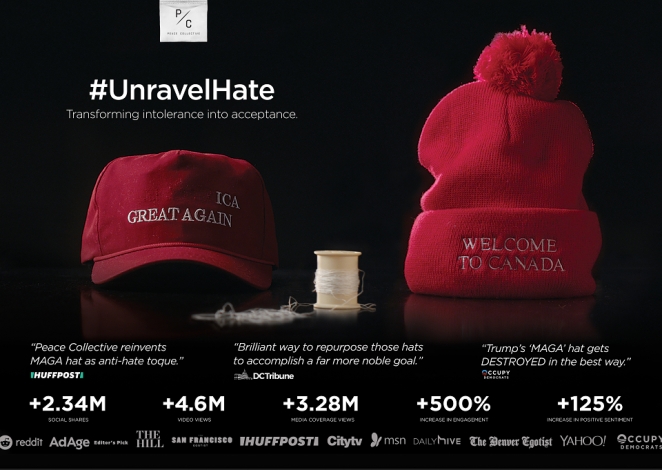
Zulu Alpha Kilo
Virality is often discussed as if it were a mysterious force, but most successful digital campaigns share a more practical foundation. They align the idea, the audience and the platform.
Some campaigns fail because they ask too much. The audience is expected to watch, click, register, share, tag, create content and somehow feel grateful for the privilege. Others fail because they ask too little. They simply place a film online and hope people will carry it forward.
The best digital campaigns make the audience’s role obvious. Hide an egg. Rewrite the story. Enter the game. Watch the jump. Learn the alphabet. Share the experience. Explore the world. The action does not have to be complicated, but it does have to be meaningful.
They also give people a reason to associate with the idea. People share things that say something about them: what they find funny, what they believe, what they value, what they know, what they are part of. A campaign travels when engagement with it offers some kind of social or personal return.
This is why chasing trends is so dangerous. A trend can provide a useful structure, but only when there is a natural fit. Without that fit, the brand becomes visible for the wrong reason: effort. Audiences are especially sensitive to visible effort in digital culture. Work that tries too hard often loses the casual fluency that made the trend attractive in the first place.
What Makes Good Digital Advertising Stand Out?

AKQA
Good digital advertising stands out when it has clarity of intent.
It knows whether it is trying to drive sales, build memory, change perception, create participation, educate an audience or establish cultural relevance. It does not try to do everything at once.
This focus shapes the work. A campaign designed to create participation needs a clear mechanic. A campaign designed to educate needs accessibility and utility. A campaign designed to build brand prestige needs craft and restraint. A campaign designed to drive conversion needs simplicity and momentum.
The mistake is assuming that all digital campaigns should behave the same way. They should not. Digital advertising is not a single discipline. It is an ecosystem of different behaviours, formats and expectations.
The best agencies and brands understand this. They use digital not as a place to put ideas, but as a way to shape them.
How Creativepool Can Help You Find the Right Digital Advertising Partner

The best digital ads rarely come from simply buying a new tool, chasing a format or deciding that a brand “needs something interactive”. As the strongest digital ad campaign examples show, the real advantage comes from knowing what the medium can do for the idea. Sometimes that means AR. Sometimes it means gaming. Sometimes it means AI, creator partnerships, mobile utility, short-form video, branded entertainment or a simple digital mechanic that gives people a reason to participate.
That kind of work usually needs more than a media plan. It needs the right creative partner.
That’s where Creativepool can be useful for brands, marketers and founders looking to turn digital ambition into something more coherent. Through Creativepool’s company directory, businesses can discover agencies, studios and specialist creative companies working across digital advertising, campaign strategy, social, experiential, content, motion, gaming, AR, UX, branding and production. That matters because digital advertising is no longer a single discipline. It’s an ecosystem of behaviours, formats and expectations.
A brand exploring an immersive campaign may need a studio that understands both technology and audience behaviour. A business considering a creator-led idea may need a partner with genuine social fluency rather than a bolt-on influencer list. A company trying to build a branded utility may need UX designers, developers, strategists and copywriters working together from the start. A premium brand investing in digital craft may need motion, CG or visual design specialists capable of making screen-based work feel as distinctive as any physical experience.
Creativepool can also help marketing teams avoid one of the biggest traps in digital advertising: starting with the format instead of the idea. Browsing agency case studies, portfolios and award-winning creative work can help brands see how different teams connect technology, platform behaviour and brand purpose. The useful question becomes less “should we do AI, AR or Roblox?” and more “what kind of digital experience would actually make sense for our audience?”
For businesses that don’t need a full agency relationship, Creativepool’s talent network can also help them find freelance or specialist support across digital design, copywriting, content production, creative technology, animation, strategy and campaign development. That can be especially useful for startups and SMEs that want sharper digital advertising without immediately building an entire in-house team.
For agencies and creative studios, meanwhile, Creativepool offers a place to showcase the work that proves digital capability. Strong case studies, campaign results, platform-native ideas and distinctive visual execution can all help brands understand what a team is actually good at. In a market full of vague claims about innovation, visible work matters.
The article argues that the best digital advertising doesn’t simply use digital media as a delivery system, but makes the medium part of the idea itself . Creativepool fits naturally into that argument because it helps brands find the people and companies capable of doing exactly that: turning platforms, technology and audience behaviour into work that feels useful, memorable and worth sharing.
Used properly, Creativepool isn’t just a place to find “digital suppliers”. It’s a way to find creative partners who understand why some digital campaigns travel while others disappear. Because the future of digital advertising won’t belong to the brands with the most tools. It’ll belong to the brands working with the people who know what those tools are actually for.
The Future of the Best Digital Ads
Nuttersons
The future of digital advertising will not be won by the brands that use the most tools. It will be won by the brands that use the right tools with the clearest intent.
As technology becomes more accessible, executional novelty will become harder to sustain. AI-generated visuals, immersive filters, interactive worlds and personalised content will become increasingly common. What will remain rare is judgement: knowing what to say, when to say it, where it belongs and why anyone should care.
That is why the best digital ads still rely on fundamentals. A strong idea. A clear audience role. A meaningful relationship between message and medium. A measurement framework that reflects the real objective.
The platforms will keep changing. The formats will keep multiplying. The behaviours will evolve.
But the work that lasts will still be the work that understands people first.