
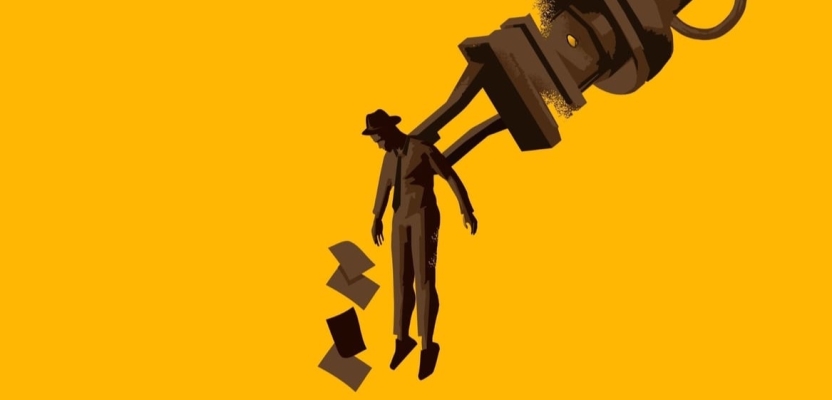

Generative AI is rapidly remaking the creative industries and this unprecedented boom in AI capability has unsettled agencies across the globe. Indeed, some insiders have reported executives openly asking how to cut creative headcounts and “replace the juniors doing the grunt work with AI”.
This isn’t scaremongering either. World‐leading research suggests these fears are well-founded. A World Economic Forum/Goldman Sachs study found that generative AI could automate about 26% of work tasks in arts, design, entertainment and media in the coming years. In other words, roughly one in four creative tasks may be done by AI within a few years.
This transformation is already reflected in economic data. In the US, staff‑level positions in advertising agencies are down over 10% since early 2022, even as more than two‐thirds of agency employees report using AI tools weekly. By 2030, Forrester and eMarketer forecast that roughly 11,000 out of 33,000 agency jobs (about one‐third) could be lost to AI nationwide.
Equally alarmingly, a recent survey of employers found graphic design (a core agency skill) is now one of the occupations predicted to decline fastest over the next five years, a change the report links directly to AI’s “increasing capacity to perform knowledge work.” In short, the machines are coming, and they’re coming for certain roles first.
Against this backdrop, agency leaders and analysts have begun pinpointing which jobs are most vulnerable in the near term (around two years) and which may follow over the longer term (around five years). Their consensus is clear: routine, execution‐level roles (especially at junior and mid-levels face the greatest risk.
And while senior strategists and visionary creators will remain highly valued for their human insight, the functions in between are “increasingly under threat”. In this article, we examine the expert view on exactly which agency roles are likely to be disrupted by AI in the next two years and five years, and why.
Short-Term Risk (Next 2 Years)
In the immediate future, it’s the entry‐level and execution‐driven creative jobs that agencies worry about. Industry observers repeatedly flag roles that involve repetitive tasks or basic content production as first in line. Spin CEO Alex Bodini warns that “it is the ‘middle’ layer of talent within an agency” that is most at risk – and by implication, the bottom rung is also vulnerable.
Adrienn Major of POD LDN concurs that “roles focused purely on repetitive execution” will be hit hardest in the short term. She cites jobs like basic photo retouching, adaptation editing and straightforward copywriting – tasks that AI tools can already do cheaply and quickly. In practice, this means junior copywriters and junior designers whose work consists largely of pumping out template‐style content or executing given layouts.
For example, AI copy generators like GPT-4 and ChatGPT are already being used to draft social posts, email headlines and other marketing copy. A recent World Economic Forum article notes that a refined version of GPT-3 (called Jasper) can produce “blogs, social media posts, web copy, sales emails, ads and other types of customer-facing content”.
Food brands like Heinz have also used DALL·E 2 to generate entire ad campaigns, and Google and Meta are actively developing AI tools to automate creative production. Meta, for instance, has announced plans to let advertisers “fully create and target ads using AI” by 2026 – a move specifically aimed at automating image, headline and copy variation.
In other words, the fundamental work that junior creatives have traditionally done (drafting initial ideas, writing copy points, generating concept images) can now be handled by software.
Several industry interviews reflect this shift. In a Digiday “Confessions” interview, an anonymous agency CCO described executives musing how to trim the biggest cost item (people) by “eliminating the juniors… doing the grunt work and replace that with AI”.
Similarly, a separate Digiday report notes that many junior roles in agencies served as “the proving ground for junior creatives,” handling tasks like copywriting and content creation – the very “grunt work” now being automated. As a VML executive summarised, there are “certain things that can’t be replaced,” but straightforward assembly work can.
Key at-risk roles in 2 years include: -
Junior Copywriters: Replacing basic ad and social copy with AI draft text. (GPT-style tools are already widely used.)
Junior Graphic/Layout Designers: Generating templated graphics and basic designs with tools like DALL·E, Midjourney, or Canva’s AI features. (Design assembly and graphic edits can be automated.)
Storyboard/Animatics Artists: Some AI tools now create quick video/storyboard roughs from prompts, threatening the low-end storyboarding work.
Basic Photo/Video Editors: Tasks like object removal, colour correction, simple cuts or reformatting are increasingly done by AI software (e.g. automated editing tools).
Routine Adaptation/Localisation: Converting ad content into different sizes/languages/formats – increasingly AI-assisted.
These predictions align with what creative leaders are already experiencing. Numerous reports confirm that entry- and staff-level positions are shrinking. For example, ADWEEK finds U.S. ad‐agency staff jobs have fallen over 10% since 2022, even as the total advertising headcount remains near record highs.
The decline is concentrated at the staff level, while management roles have held steady – a pattern consistent with AI automating the base. Notably, the ADWEEK analysis also mentions that nearly three‐quarters of agency employees use AI tools at least weekly, underscoring how pervasive these technologies have become.
In sum, the consensus is that any creative role focused on high-volume, low-differentiation work is at risk soon. Junior-level copywriters or designers churning out standard social ads, email blasts, or repetitive graphics can often be partially or fully replaced by generative AI.
As agency veteran Simon Manchipp (SomeOne) bluntly puts it: “In 2 years: Junior copywriters, layout designers, storyboard artists [are at risk].” These roles essentially serve as AI’s early test cases, since their output follows clear formulas that algorithms can learn quickly.
Five-Year Outlook
Looking a bit further ahead, the threat scope widens up the organisation chart. Over the next five years, many mid-level and mid-senior roles may be disrupted unless they evolve with the new tools. This is the “middle layer” that Bodini warned about: employees who are not quite apprentices but also not seasoned visionaries.
According to Bodini, agencies will still need “the most experienced people – strategists, creatives, analysts” as well as enthusiastic juniors. But the mid-level generalists are the ones “increasingly under threat.” In his view, these middle professionals are “not ‘junior’ enough to do the do, but not senior enough to have the banks of experience” clients prize.
Adrienn Major echoes this warning for the five-year horizon. She cautions that mid-level generalist roles risk obsolescence if they “don’t evolve,” especially if they continue using old-fashioned processes. These are the project managers, account coordinators, mid-tier producers, and designers who currently oversee campaigns in a hands-on way.
For example, Manchipp forecasts that in five years we’ll see production managers and traffic coordinators displaced by smarter AI-driven systems. These jobs involve scheduling shoots, managing asset delivery, and coordinating tasks – functions that advanced AI systems could increasingly handle through automated workflow software.
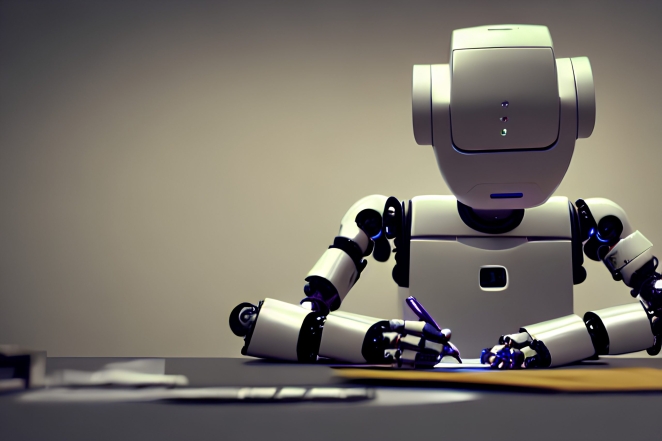
Likewise, he names “mid-level designers with nothing but software skills” as vulnerable: those who only know how to operate tools but don’t bring unique creative judgment may find their roles eaten by AI editions of Photoshop or Illustrator.
In practical terms, this could mean a team lead who currently signs off on repetitive design tasks might be replaced by an AI tool that autonomously generates layouts and checks them for brand consistency. Or a traffic manager juggling calendars and assets could be supplanted by an AI that auto-schedules bookings and flags conflicts. In each case, AI is extending beyond simple tasks into more complex planning.
Another example of this trend is in content creation pipelines. As AI tools become more integrated, some agencies report combining human and machine in new roles – such as “AI wrangler” or “prompt engineer.”
But these hybrids often replace parts of mid-level jobs rather than the entire position. If an account manager’s work largely involves sending creative briefs and reminders, an AI assistant might increasingly take on those notifications and edits. Indeed, our sources suggest that “mid-level designers with nothing but software skills” – those who edit by rote rather than innovate – should be asking how to upskill.
Key at-risk roles in 5 years include:
Production Managers & Traffic Coordinators: AI scheduling and project-management tools may automate campaign workflows, replacing manual planning roles.
Mid-Level Designers (Generalists): Designers who only handle standard software tasks (layout, asset building, resizing) will face automation; those without strong creative instincts are most exposed.
Mid-Level Copywriters/Editors: Writers who primarily copy-edit or produce variations may find AI drafting and revising content faster and cheaper.
Content Adaptation Specialists: Roles that adapt campaigns for new formats/channels (e.g. resizing ads for different platforms) could be largely automated by AI tools.
Media/Research Analysts (Generalists): Some analytics roles that involve routine data gathering may be automated by AI-driven analytics platforms (though strategic analysts should remain needed).
These longer-term projections are supported by employer surveys. For example, the World Economic Forum’s 2025 “Future of Jobs” report shows companies predicting design tasks will decline as AI improves. In particular, it notes AI is judged better at performing design and UX tasks than previously thought – meaning roles in those areas could shrink.
On the flipside, employers still value human “creative thinking” highly: over 4 in 5 say AI has “very low” capacity to replicate it. This suggests that higher-level creative and strategic jobs (brand strategy, art direction, planning) should remain in demand, but the intermediary “doing” jobs in between are most at risk of being automated or offshored.
Reflecting on this, agencies are already changing their hiring patterns. One report notes entry-level design hiring has collapsed 50% since 2019 as companies anticipate automation of junior tasks.
By 2025, agencies may similarly slim down middle-management ranks if their functions can be partly done by AI or external flexible talent. For those who do remain in mid-tier roles, success will depend on augmenting AI rather than being replaced by it. As Major emphasises, “creatives who stay valuable will be those who either guide AI or bring something uniquely human” – strategy, emotional insight or brand intuition that machines lack.
The Human Edge
Even as AI displaces many tasks, experts agree certain agency roles will be relatively safe. Over the next five years, most foresee continuing demand for senior and specialty talent. The most experienced strategists, creative directors, brand planners and data analysts will still be needed – though they will increasingly incorporate AI into their workflows.
Bodini points out that “the most experienced people in the business (the strategists, the creatives, the analysts) will always be needed.” Their core craft, he argues, remains “extremely valued by clients and the wider market”. In essence, jobs requiring high-level judgment, creative vision or deep context knowledge can’t easily be automated.
This perspective is echoed by several sources. The 2025 WEF report found that UI/UX design and user‐experience specialists are actually among the fastest-growing roles. (These are typically higher‐end design jobs that focus on deep digital strategy and user psychology – areas where human creativity and insight are key.)
More broadly, two‐thirds of surveyed employers believe creative thinking will become more important by 2030, and nearly 80% plan to upskill or hire workers to “work alongside AI” rather than be replaced. Design Council CEO Minnie Moll concurs that the data “reinforces the irreplaceable value of human creativity”.
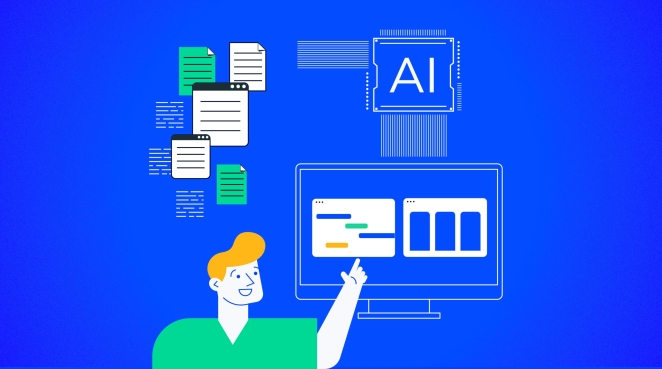
In practical terms, roles centering on big‐picture strategy and innovation are likely to weather the AI onslaught. For instance, brand strategists who craft overall campaign direction, creative directors who define vision, and data analysts who interpret complex consumer insights should retain their importance – provided they leverage AI tools.
These are the jobs where clients still see human teams as gatekeepers and visionaries, delivering ideas that a machine cannot originate on its own. (One industry CEO notes agencies are repositioning around this, emphasising “high-level strategy and storytelling that AI can’t replicate”.)
Similarly, any role requiring deep client understanding or nuanced judgment is hard for AI to replace. Longstanding account leads and client relationship managers remain vital. In creative execution, tasks requiring subtle emotional nuance (e.g. crafting a brand’s tone or tackling sensitive subject matter) will still call for human artistry.
In fact, some agencies see a countertrend: as routine work automates, “a return to handcrafted, human-centred design” emerges as a market differentiator. This craft renaissance suggests that highly specialised designers (e.g. illustrators or artisans) and “thinking” creatives might even become more prized.
To summarise, roles at lowest risk over the next half-decade include:
Senior Strategists and Planners: Setting high-level marketing and brand strategies (AI can crunch data, but holistic strategy is human-driven).
Creative Directors and Lead Art/Copy: Defining big ideas and creative vision (AI can help generate options but not originate vision).
Data and Media Analysts (Strategic): Interpreting data for insights (AI can process data, but humans contextualise it).
UX/UI Specialists: Designing user-centered experiences (employers predict growth here).
Roles Requiring Human Judgement: e.g. PR crisis managers, senior client partners, roles where empathy and nuance matter.
These roles will still evolve with AI. For example, a strategist might rely on an AI to model campaign scenarios, but they will lead how to use those findings. As Bodini emphasises, even safe roles will “need to use tools and know how to use tools to ‘keep up’” – the difference is they’re applying their craft on top of the AI baseline.
Industry Voices and Addiitonal Insights
Many seasoned agency leaders echo these assessments. As Simon Manchipp of SomeOne summarises, “it’s the mid-tier roles in both creative and production that will be most challenged”. Bodini’s spin is that while juniors and seniors persist, “It’s the middle I worry about”.
Indeed, Manchipp explicitly predicts that in five years, even roles like traffic coordinators and production managers (the backbone of agency project flow) “with nothing but software skills” will feel “a cold sweat” facing AI competition. Adrienn Major adds that those who remain valuable will be the ones who focus on guiding AI or delivering “strategy, emotional insight, or brand instinct” – essentially human specialties AI can’t match.
The structural shift is clear. As one agency CEO observed, “there’s no such thing as a job for life” – and creative agencies are rapidly rethinking which jobs those are. The coming two years are likely to see continuing churn in junior ranks, and by five years some mid-level jobs will either vanish or be transformed. Agencies that succeed will double down on human strengths (storytelling, brand strategy, empathy) and cultivate “AI-competent” talent, while streamlining or automating the rest.
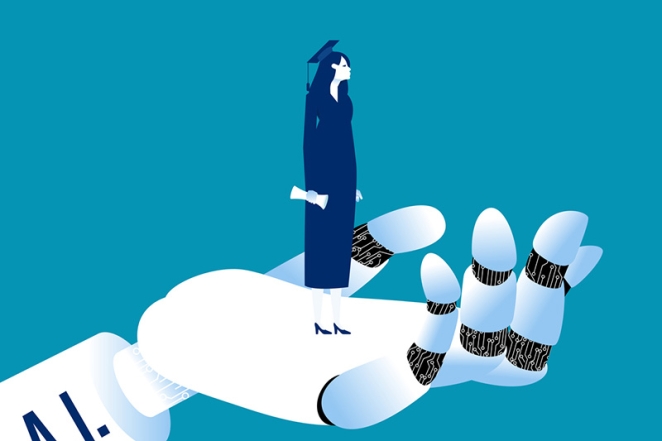
In conclusion, the most at-risk agency roles are the ones that involve routine creative production and middle-management of processes. Right now, that points to junior creatives (copywriters, designers, editors, storyboarders) and repetitive execution roles like adaptation specialists.
Looking further out, it extends into mid-level production roles (project and traffic managers, generalist designers) and any positions built on do‑the-work skills rather than craft and strategy.
By contrast, jobs that require high-level creativity, human insight and strategic thinking – the core “craft” of agencies – are likely to endure (and even grow) as AI becomes a ubiquitous partner. As industry voices agree, those who keep pace with AI while offering unique human value will remain in demand, but the ones in between must adapt quickly or risk obsolescence.