


How Oxfam’s “The Fair Pour” and other activist campaigns are turning art, humour, and design into powerful calls for social change.
When Donald Trump took office earlier this week, he did so in a small room that contained around a third of the wealth of the entire world. Sat directly behind him, were the three richest men in the world, one of whom arguably played a substantial part in getting him there in the first place. Even among those that voted enthusiastically for Trump, that must be a tough pill to swallow. If nothing else, however, it reflects a world in which the wealth divide has never been greater and a world poised for a cataclysmic pushback, particularly from us creative sorts.
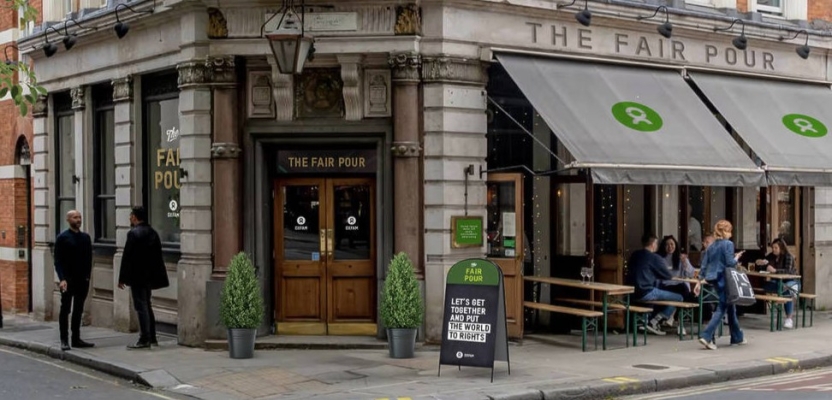
From political cartoons and satirical memes to immersive pop-up experiences, creatives have long served as catalysts for social and economic critique and 2025 looks set to be the year of the billionaire bitchfest. One striking example of this emergent “creative pushback” is Oxfam’s “The Fair Pour”, a novel concept pub in central London that charges self-declared billionaires £1 million for a pint—a symbolic statement that underscores how the super-rich’s surging fortunes are fuelling a deeply unjust global wealth gap. While the stunt garners headlines for its audacity, it also reveals how critical design thinking, storytelling, and cultural interventions can be in rallying public engagement around systemic issues like extreme wealth accumulation.
Below, I’ll delve a little deeper into Oxfam’s innovative concept, explore broader creative movements railing against billionaire power, and examine why these artistic and experiential campaigns are essential to sparking both dialogue and lasting policy changes.
The Billionaire Boom and the Rise of “Trillionaires”
Billionaire wealth surged three times faster in 2024 than the previous year, according to new data highlighted by Oxfam. The world is now on track to see at least five trillionaires within the next decade, a figure that once belonged squarely in the realm of science fiction. According to the World Bank, poverty could end three times faster if extreme inequality were reduced, shining a stark light on the moral implications of an economic system that disproportionately benefits a tiny percentage of the population.
This intensifying gap has invigorated a growing chorus of creatives who view their artistic endeavours, design capabilities, and storytelling skills as potent forms of protest. Online, creative campaigns actively railing against the billionaire class range from guerilla poster art shaming local oligarchs to short films that highlight worker exploitation in hyper-profitable industries and comedic sketches that lampoon the tax loopholes exploited by global elites.
It’s a far cry from traditional activism, but that’s precisely why it’s effective: the methods are imaginative, attention-grabbing, and shareable, pushing urgent topics from academic or policy circles into everyday conversation.
Enter “The Fair Pour”: When a Pint Becomes Protest
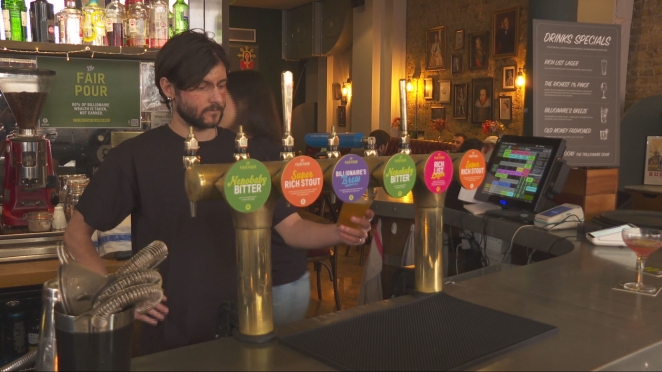
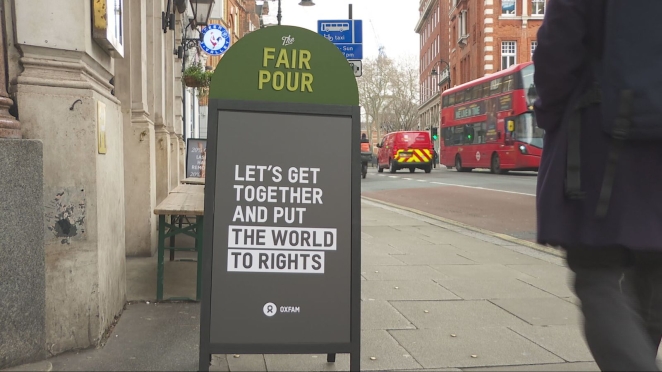
Set against the backdrop of the World Economic Forum in Davos—an annual gathering often criticized for catering to wealth and power—Oxfam’s The Fair Pour pub opened for one day only on January 21st, 2025, from noon to 9pm at 64 Theobalds Rd, London. With many participants at Davos toasting deals behind closed doors, Oxfam’s pop-up pub in London flips the script, charging:
- £1 million for a pint to self-declared billionaires.
- £3 (minimum) per drink for the average customer, with an option to pay more if they wish.
The campaign’s centrepiece is a “billionaire’s beer”—a provocative metaphor for how inconsequential a million pounds might be to an individual who witnessed their net worth balloon by hundreds of millions in a single year. According to Oxfam, British billionaires gained an average of £221 million each in 2024. By comparison, a £1 million pint equates to just 0.45% of that one-year windfall—“a drop in the ocean,” as the organization’s press release puts it.
The stunt works on multiple levels:
- Shock Value: The £1 million price tag grabs immediate attention from media and social platforms.
- Empathy: Contrasting a billionaire’s casual purchase with the global masses living in poverty bridges an abstract statistic into a tangible, everyday item—beer.
- Empowerment: The average punter can choose to pay the base minimum or donate more, reinforcing the idea that everyone, not just the wealthy, plays a role in creating a fairer system.
The pub’s non-alcoholic and low-alcohol offerings, aligned with “Dry January,” also illustrate how activism can intersect with health-conscious trends—garnering support from a broader demographic that might be initially drawn in by the “Sober Curious” movement, only to discover the urgent inequality message beneath.
“The Fair Pour” as a Creative Blueprint
While there’s no one-size-fits-all template for creative activism, The Fair Pour demonstrates several best practices:
- Hyper-Targeted Message: Rather than scattershot condemnation of capitalism or inequality, the campaign fixates on the stark difference between surging billionaire wealth and the rest of humanity. By narrowing the focus, Oxfam makes the issue personal and urgent.
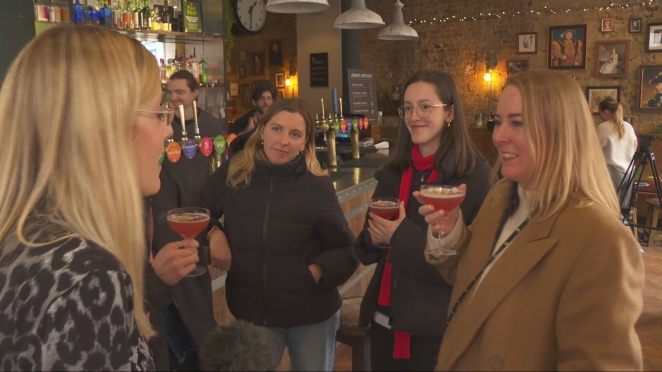
- Audience Participation: Patrons at The Fair Pour are invited to pay more for their pint if they can afford it, essentially practicing the wealth redistribution the campaign preaches—albeit in a small but symbolic way.
- Tangible Experience: By physically entering a pub, scanning a menu that lists a £1 million beer, and even participating in a quiz that reveals harsh statistics, customers embody the campaign’s message rather than simply absorbing it intellectually.
- Media-Friendly Hook: The contradiction of an alcohol-free “pub” that charges a million quid for a pint is a headline in itself, ensuring widespread coverage well beyond typical activist circles.
Coupled with live elements—like the 7pm pub quiz—Oxfam creates a dynamic environment that can be tweeted, Instagrammed, or TikTok’ed, providing shareable, conversation-starting content. Even people who cannot attend can engage digitally, thereby extending the campaign’s reach.
The Bigger Picture: Policy and Cultural Impact
If activism does not translate into concrete policy changes or long-term shifts in public consciousness, critics argue, it risks being an empty spectacle. However, multiple indicators suggest that creative activism can, and often does, drive real-world impact:
- Shifting Public Opinion: Repeated exposure to witty visuals, memes, and interactive experiences normalizes critical perspectives of billionaire power. Over time, these cultural narratives can influence voters, journalists, and policymakers.
- Legislative Proposals: Groups like “Patriotic Millionaires” in the U.S. actively lobby for higher taxes on the wealthy, sometimes recruiting creative campaigns to broadcast their message. Public pressure from these campaigns can move politicians to propose progressive tax policies or close existing loopholes.
- Funding Equality Initiatives: Proceeds from events like The Fair Pour go directly toward Oxfam’s anti-poverty initiatives, turning spectacle into tangible support for programs that empower marginalized communities worldwide.
Even so, forging a truly equitable system requires sustained effort. Creative stunts excel at generating awareness and sparking debate but must be paired with policy advocacy, broad coalition-building, and institutional accountability. The Fair Pour is not a one-time fix but rather a bold statement in an ongoing conversation.
Looking Ahead: The Future of Creative Protest
With projections of trillionaires emerging within the next decade, wealth inequality shows no signs of reversing on its own. That likely means more campaigns like The Fair Pour—where rebellious creativity meets economic critique—will continue to shape global discourse. Key developments to watch include:
- Virtual and Augmented Reality Activism: As AR/VR technology becomes more accessible, we may see immersive simulations that let participants “step inside” the daily realities of low-wage workers or experience the mammoth scale of a billionaire’s empire.
- Global Collaborations: Creatives from different countries might increasingly come together to produce cross-cultural installations. Imagine an integrated exhibit showcasing wealth disparity across continents, fuelled by local anecdotes and global data.
- Corporate Allies: Some forward-thinking companies could partner with activist groups, offering their marketing prowess to highlight wealth gaps—especially if these companies identify with employee rights, climate justice, or shared economic prosperity.
While there is risk of co-optation or superficial “woke-washing,” genuine collaborations could spark expansive dialogues about the moral responsibilities of profitable enterprises and the individuals who helm them.
A Pint of Possibility
Ultimately, Oxfam’s The Fair Pour exemplifies the power of creativity to transform statistics and moral imperatives into collective experiences that are visceral, humorous, and effective. By charging billionaires a million pounds for a pint, Oxfam invites us to contemplate the absurdity of a world in which a handful of individuals accumulate vast fortunes while billions remain trapped in poverty.
For creative professionals—from designers and filmmakers to copywriters and event producers—this campaign serves as an inspiring reminder of how imagination can pierce apathy. Rather than limit creativity to the commercial realm, it can be harnessed for activism that resonates widely, fosters empathy, and influences policy. When inventive tactics meet unassailable data about inequality, the result is a powerful pushback that can sway hearts, minds, and potentially even legislation.
As we pivot into a future marked by climate uncertainty, technological upheaval, and economic disparities, the creative community stands at a pivotal juncture. We can continue to craft escapist content—or we can join campaigns like The Fair Pour, using design and storytelling to ignite tangible social transformation. If the lines outside Oxfam’s new pub are any indication, public appetite for creative activism may be stronger than ever.
And who knows? By the time the world’s first trillionaires emerge, we might already be celebrating our biggest creative victories against wealth inequality—one pint at a time.