

My Trip to D&AD New Blood 2026 at Protein Studios, London
A New Blood Portfolio Winner's Account of the 2026 Programme
Touching Down in London
Some trips are about sightseeing. This one was about standing in a room and finally being able to say, out loud, that the work was good enough. I landed in London a day before the event, equal parts excited and terrified, with my portfolio packed carefully in my hand luggage as if it might lose its shine if it spent too long in a hold.
London in the run-up to D&AD New Blood has a particular buzz to it. Coffee shops near Shoreditch were full of students rehearsing thirty-second pitches under their breath, comparing print finishes, and trading nervous energy over flat whites. Everyone seemed to be heading to the same place, even before we'd introduced ourselves.
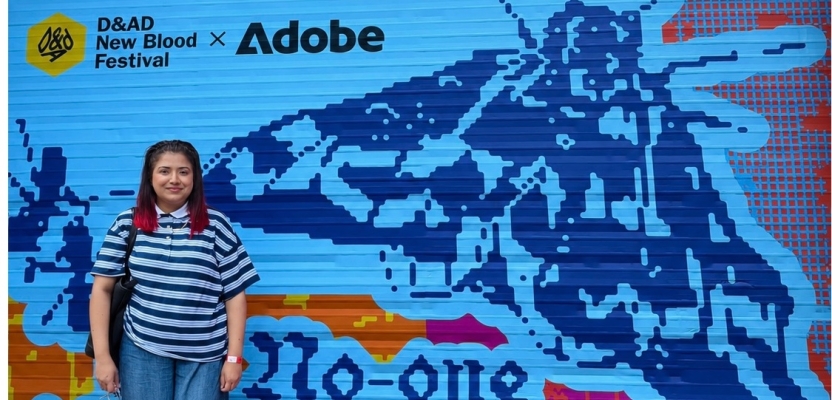
Arriving at Protein Studios
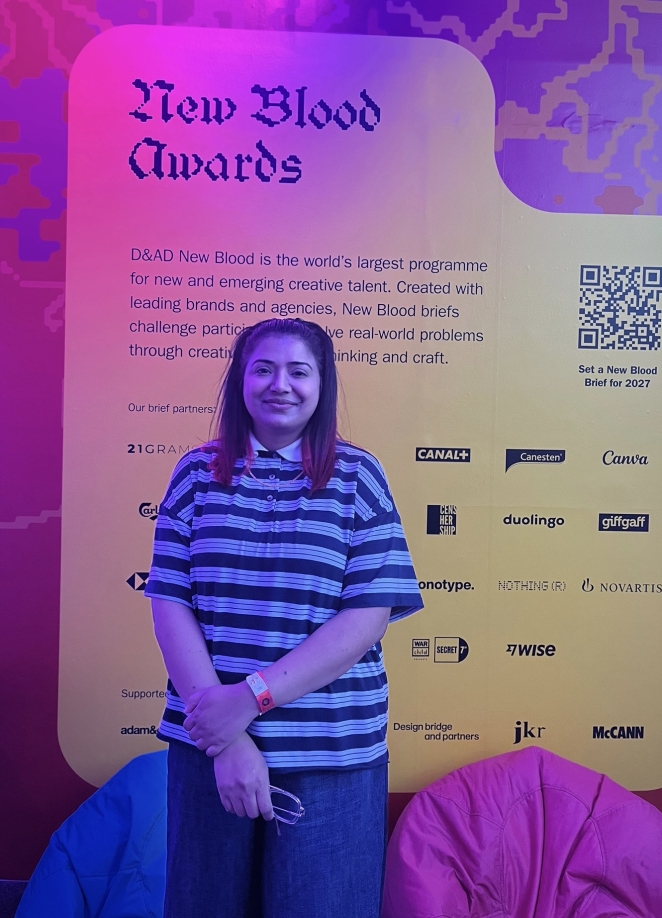
Protein Studios sits in the heart of Shoreditch, and it is exactly the kind of venue that suits an event built around raw creative ambition: exposed brick, soaring ceilings, industrial steel beams, and huge windows pouring light onto the floor below. Walking in, the building itself felt like a statement- unpolished on the outside, full of craft on the inside, which is more or less what every portfolio in the room was trying to prove about its owner.
The studio had been completely transformed for the day. Where there might usually be quiet creative studio space, there was now a sea of stalls, a stage for talks, clusters of recruiters in conversation, and a constant low hum of excited chatter that rose and fell as new groups arrived.
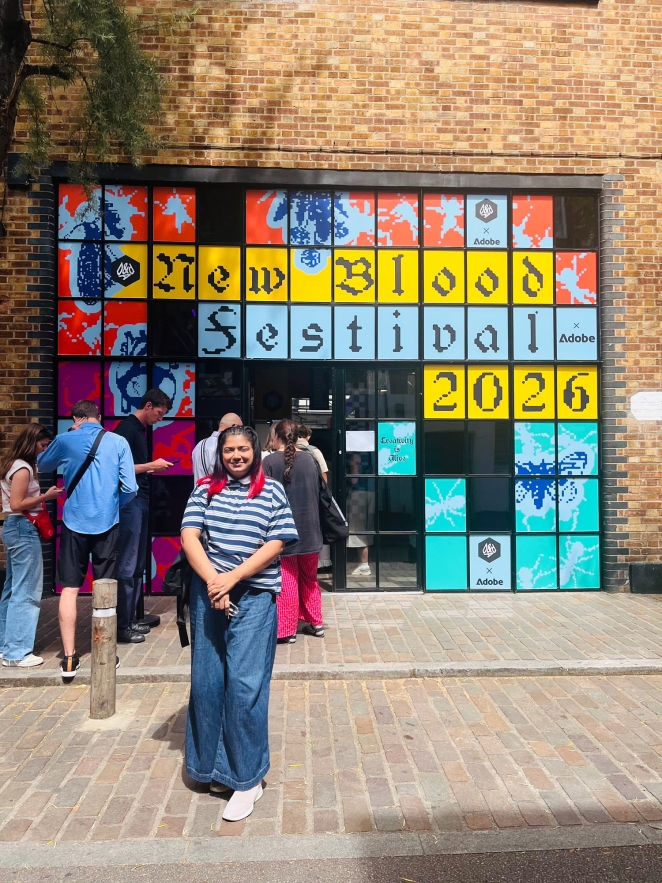
Forty-Five Universities, Forty-Five Stories
Scattered across the floor were stalls from 45 universities, each one a small, carefully designed embassy of a particular creative philosophy. Walking the floor felt less like browsing an exhibition and more like flipping through dozens of personal manifestos, each one fighting to be remembered in a room full of equally determined competition.
Some stalls leaned hard into bold, oversized typography and saturated colour, clearly built to be seen from across the hall. Others went the opposite way entirely - minimal tables, neutral tones, a single striking piece of work left to do all the talking. A few had interactive elements: flip-books, QR codes linking to motion reels, even small props tied to specific campaigns. It became obvious very quickly that no two universities, and no two students, had arrived at the same answer to the brief, even when they'd started from the same prompt.
Walking table to table, I found myself slowing down at the stalls that took real risks - the ones willing to leave white space, to under-explain rather than over-explain, trusting the work to carry the idea. It was a useful, slightly humbling reminder that confidence on a page reads instantly, and that restraint is its own kind of skill.
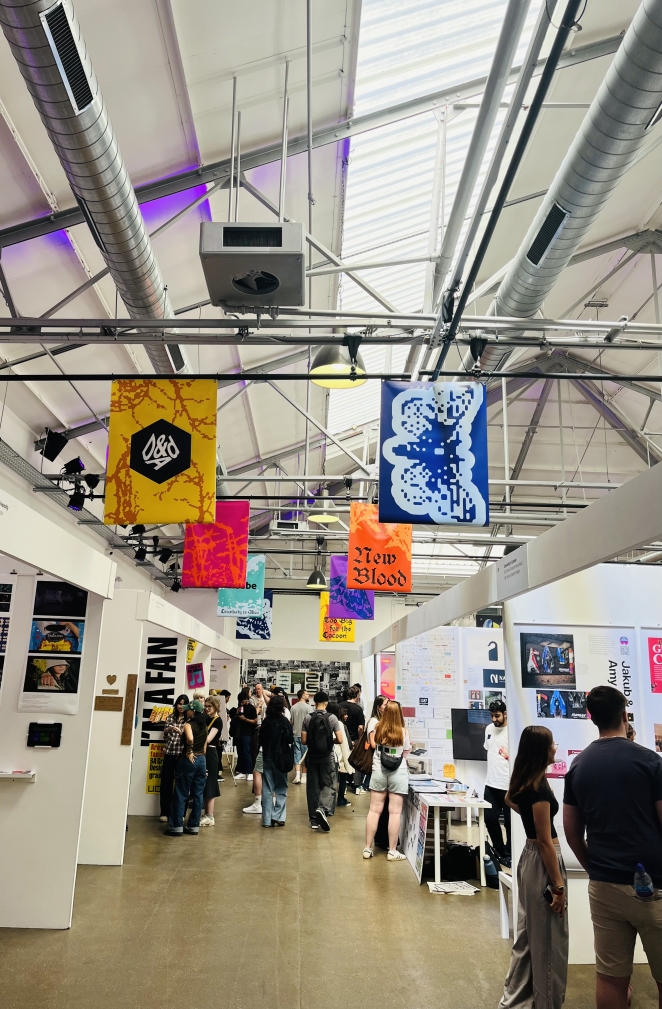
The Weight of Being a Portfolio Winner
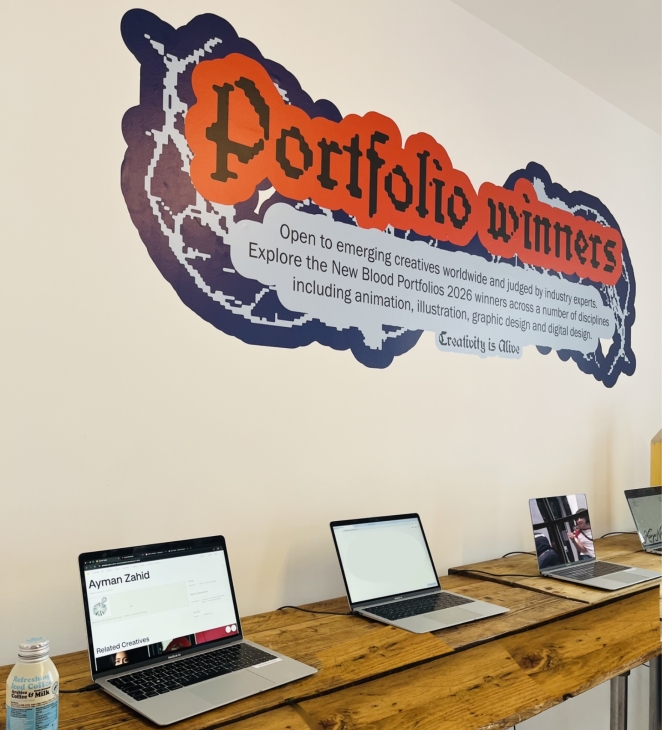
Being named a New Blood Portfolio Winner is not just a line for a CV. It's the moment a private, often doubt-filled process - months of revisions, scrapped concepts, and second-guessing - gets external validation from people who see thousands of portfolios a year. Standing in that room with the work in hand, surrounded by fellow winners, judges, and recruiters, it was hard not to feel part of something far bigger than a single body of work.
That feeling of scale wasn't just in my head. D&AD shared some of the broader numbers behind this year's New Blood programme, and they reframed the entire day for me:
128 countries engaged across the New Blood programme
3,500+ universities and colleges participating worldwide
260,000+ brief downloads annually
Those numbers turn the 45 stalls in that one room into something much smaller, and much bigger, at the same time. Smaller, because it's a fraction of a genuinely global movement. Bigger, because every single person in that hall had been through the same gauntlet - sifting through real industry briefs, building work from nothing, and submitting it to be judged on a worldwide stage, knowing most entries wouldn't make it this far.
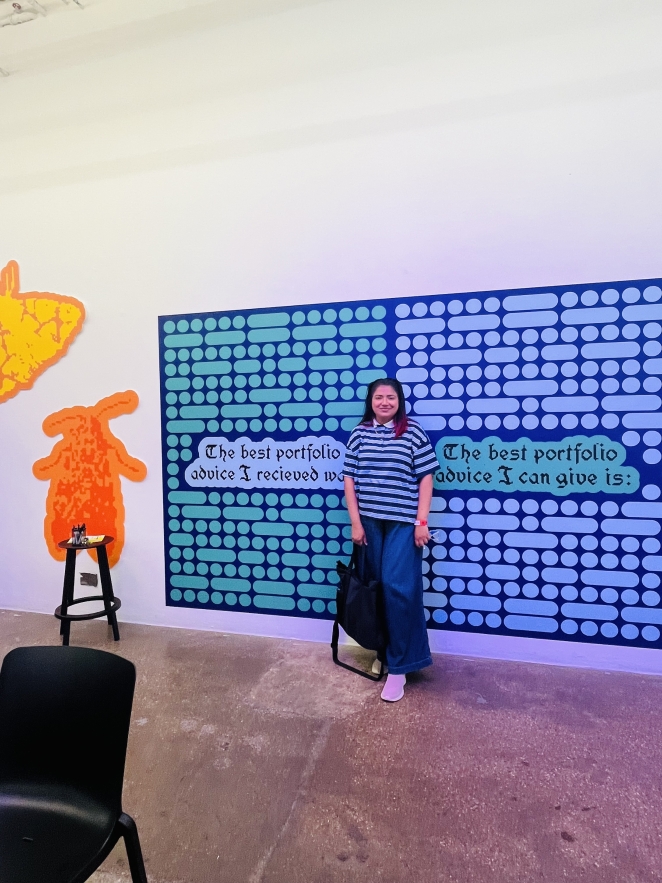
Conversations That Taught Me More Than the Portfolio Did
If the stalls were where the work lived, the conversations were where the real learning happened. Recruiters and creative directors weren't simply flipping through pages - they were asking why. Why this concept. Why this medium. Why now, in this market, for this audience. Those questions, fired off in quick succession, taught me more about my own thinking in ten minutes than weeks of quietly second-guessing myself ever did.
One creative director spent a long few minutes on a single spread in my book, not because it was the strongest piece, but because the idea behind it was under-explained on the page. Rather than moving on, she pushed me to articulate it out loud - and watching her nod as the logic finally landed was its own small reward, separate entirely from winning anything.
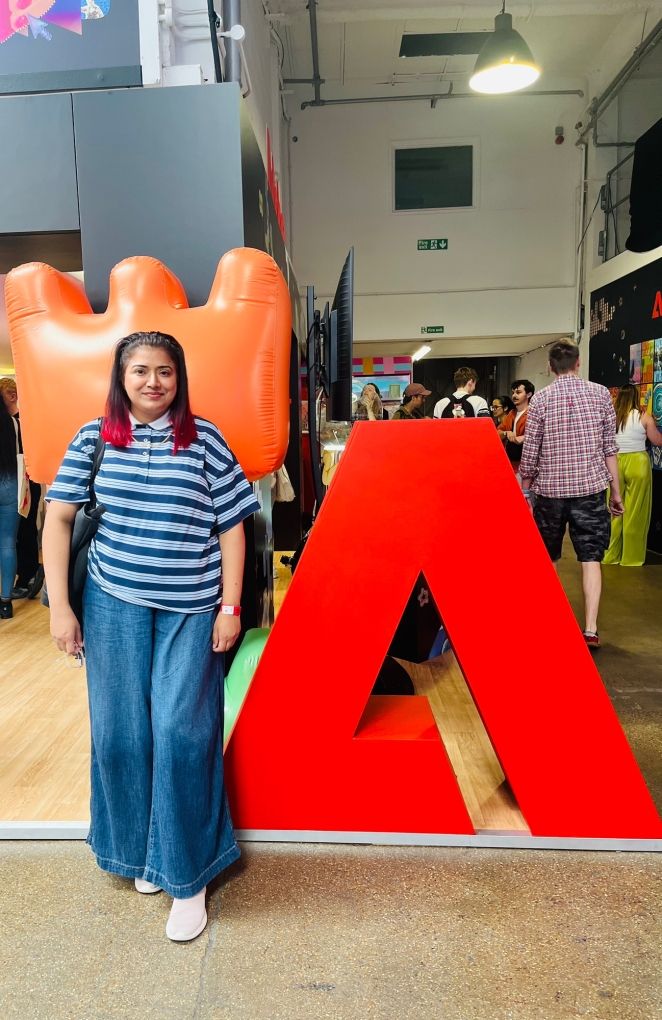
There was also a quieter kind of education happening on the sidelines: students comparing notes on which briefs had been hardest, which agencies were hiring, which universities had leaned into Al tools and which had deliberately avoided them. It felt less like a competition between strangers and more like a temporary, fast-moving community of people who all understood exactly what the last few months had cost each other.
Talks, Workshops, and the Pulse of the Industry Alongside the stalls, a steady programme of talks ran through the day, with working creatives speaking candidly about their own early careers - the rejections, the unglamorous first jobs, the lucky breaks that came from a single good conversation rather than a perfect portfolio. It was a useful counterweight to the polish on display elsewhere in the room: a reminder that almost everyone now mentoring or hiring New Blood winners once stood exactly where we were standing, unsure if the work was enough.
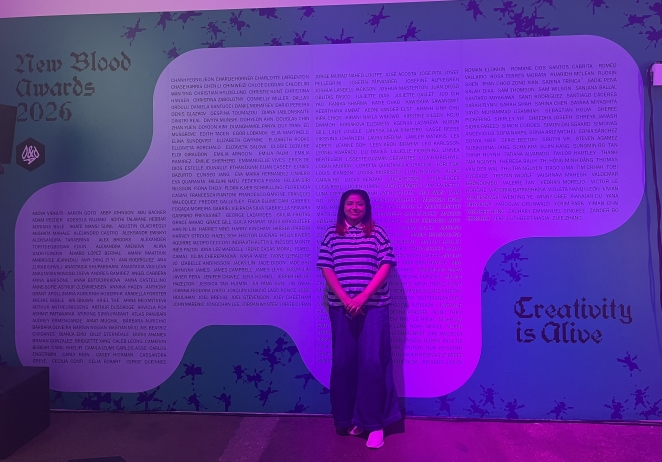
A few sessions focused directly on the realities of the industry right now - shifting client expectations, the growing role of Al in early-stage concepting, and what agencies are actually looking for beyond a strong book. The honesty of those talks was unexpected, and it gave the day a kind of grounding underneath all the adrenaline.
What Stuck With Me
A few things from the day are still sitting with me, days after the flight home:
- The sheer diversity of approaches - even shared briefs produced wildly different, equally valid answers.
How much of the day was about conversation, not just the work itself; explaining an idea well mattered as much as the idea.
The sense of community in a room built around competition - everyone there had taken the same leap, and that shared vulnerability turned rivals into something closer to colleagues. - How much craft and confidence showed up in the smallest details: paper stock, layout spacing, the order in which projects were sequenced.
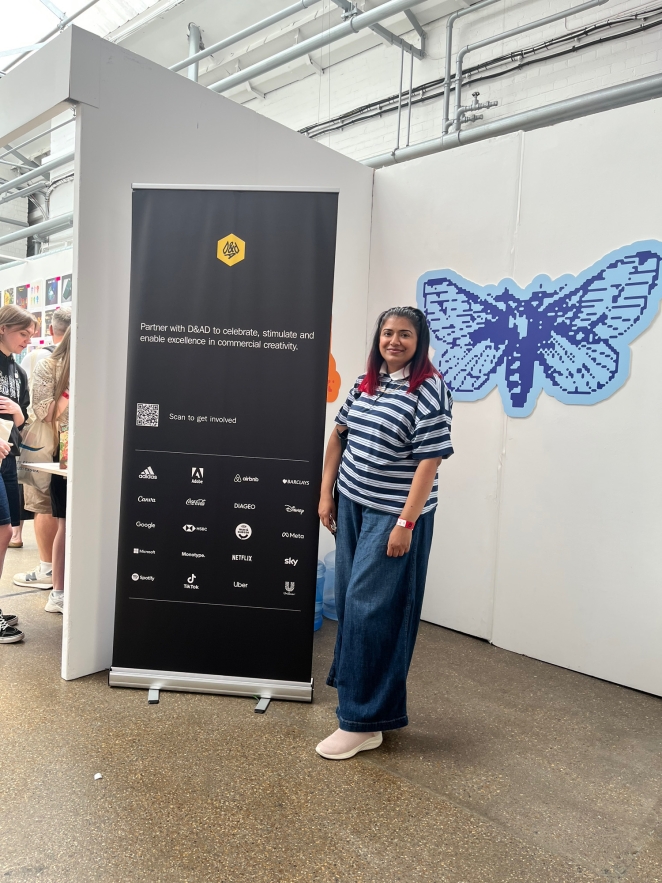
Coming Home With More Than a Portfolio
I left London with the obvious things: new contacts, a stack of business cards, a portfolio that's now been seen and discussed by people whose opinions genuinely carry weight. But I left with something harder to put on a CV, too - proof that the work holds up, and a much clearer sense of where I want to take it next.
D&AD New Blood has always been described as a launchpad, and it's easy to nod along to that phrase without quite feeling it. After a day inside Protein Studios, surrounded by 45 universities' worth of ambition and a programme spanning 128 countries and 3,500-plus institutions, I finally understand exactly why.