

I asked a 4-year-old to look at my illustrations. Here’s what she taught me.
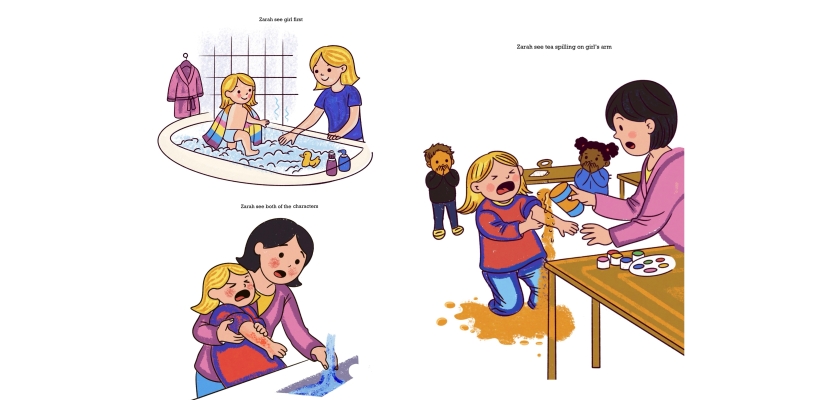
As part of my design development, I ran a small but genuinely eye-opening user test. I showed Zara — aged 4 — a series of my illustrations and asked her one simple question each time:
“What do you notice first?”
No leading prompts. No hints. Just her honest, unfiltered attention.
And honestly? Her answers were more useful than any feedback I’d received before.
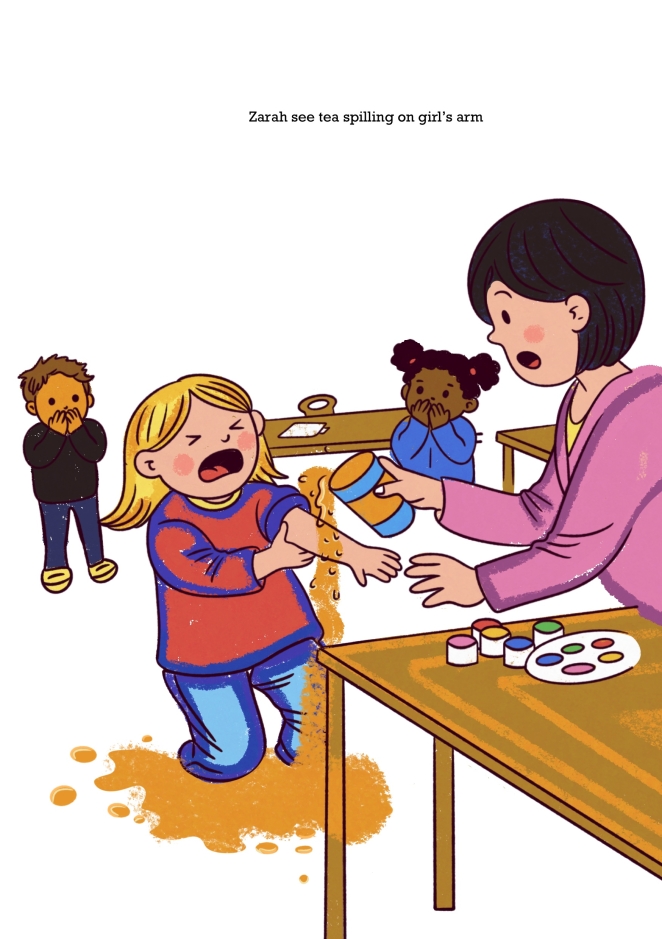
She wasn’t drawn to the details I’d spent the most time on. She went straight to faces. To expressions. To the moment a character looked hurt or surprised. Every single time, emotion pulled her gaze before anything else did.
When a character was spilling tea — something I’d designed as the focal point of that scene — she noticed the character’s face first. The action came second.
That told me something I hadn’t fully considered: for young audiences, the emotional truth of an illustration lands before the narrative detail does.
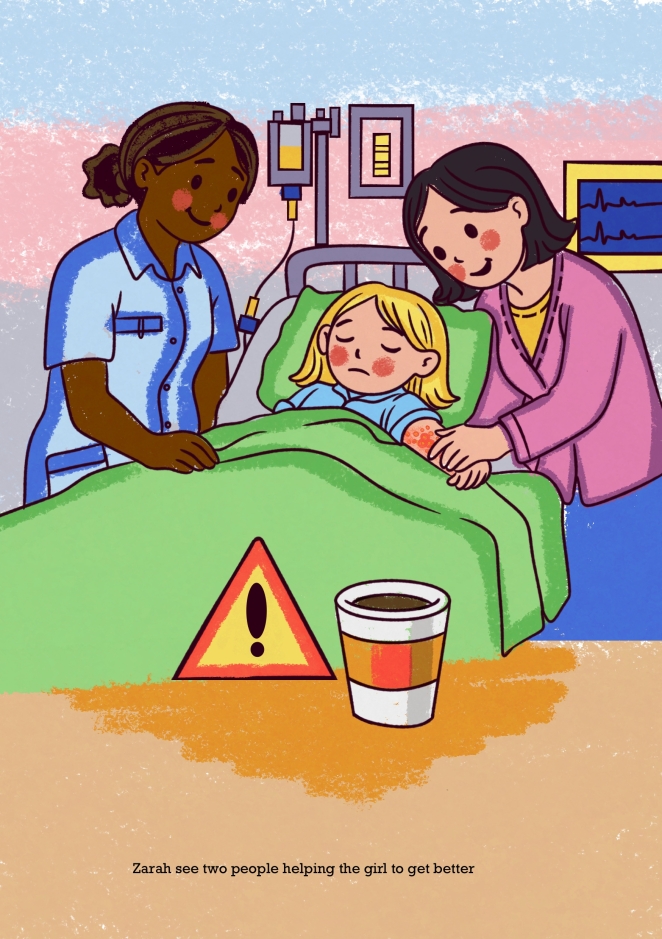
What I learnt:
→ Characters and faces are the natural anchor for children’s attention
→ Emotional cues (pain, surprise, distress) are powerful — sometimes too powerful, pulling focus away from the intended story beat
→ Background elements are largely invisible unless they’re bold and isolated
→ Visual hierarchy only works if the most important element is the most visually dominant one — not just compositionally, but emotionally
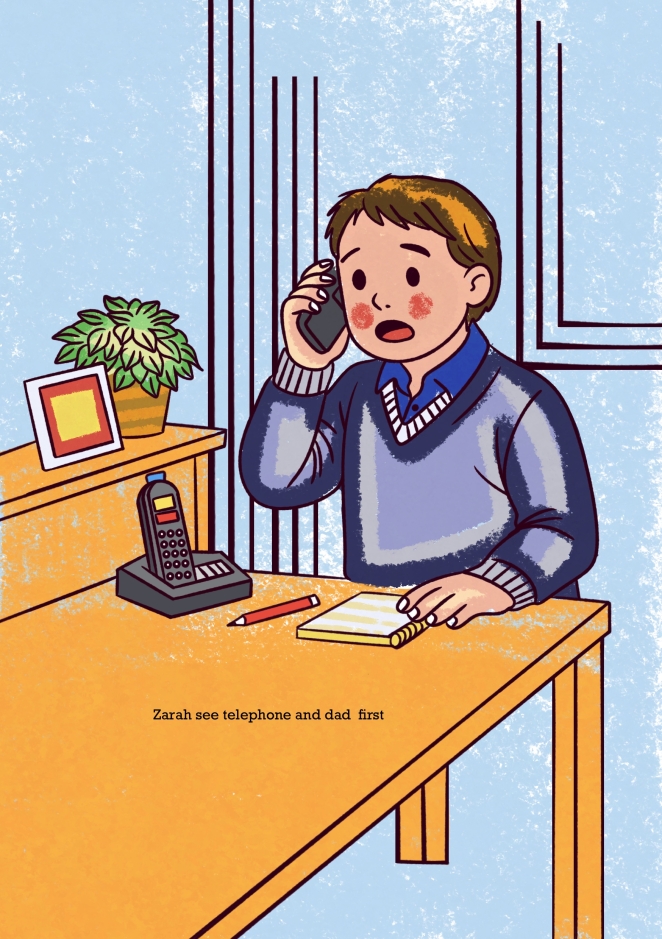
This test reshaped how I think about focal points. It’s not just about where something sits on the page — it’s about what carries the most emotional weight.
Moving forward, I’m being much more intentional about contrast, scale, and simplicity around key action moments. If I want a viewer to notice the cause of something, I need to give it the same emotional presence as the character experiencing it.
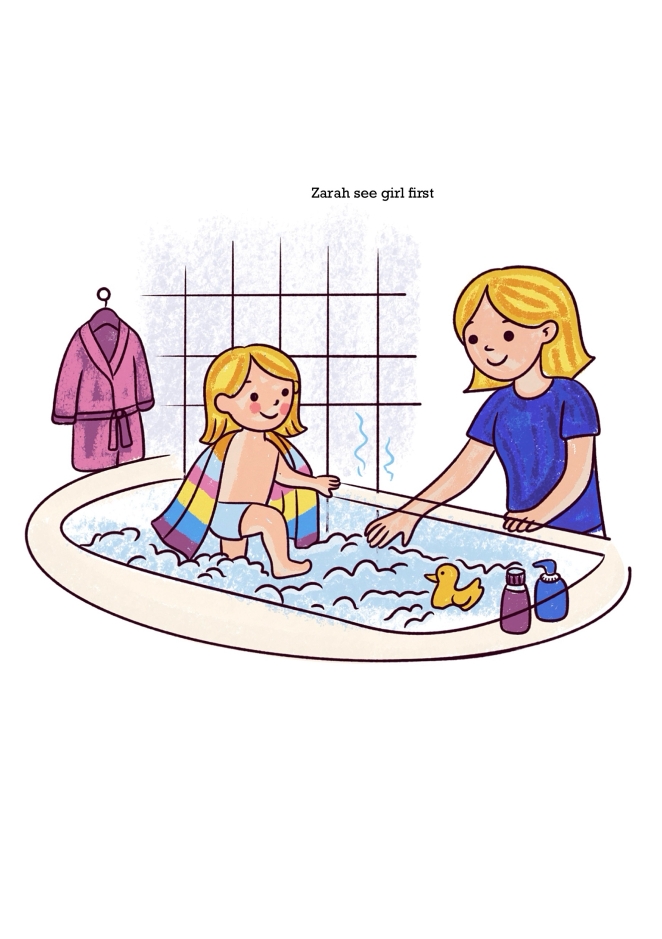
A 4-year-old reminded me that design isn’t just seen — it’s felt first.
If you work in illustration, children’s publishing, or visual storytelling, I’d love to know — how do you think about emotional hierarchy in your work?
#IllustrationDesign #UserTesting #ChildCentredDesign #DesignProcess #VisualStorytelling #LearningInPublic