Zoltan Toth
Costume Designer
ABOUT
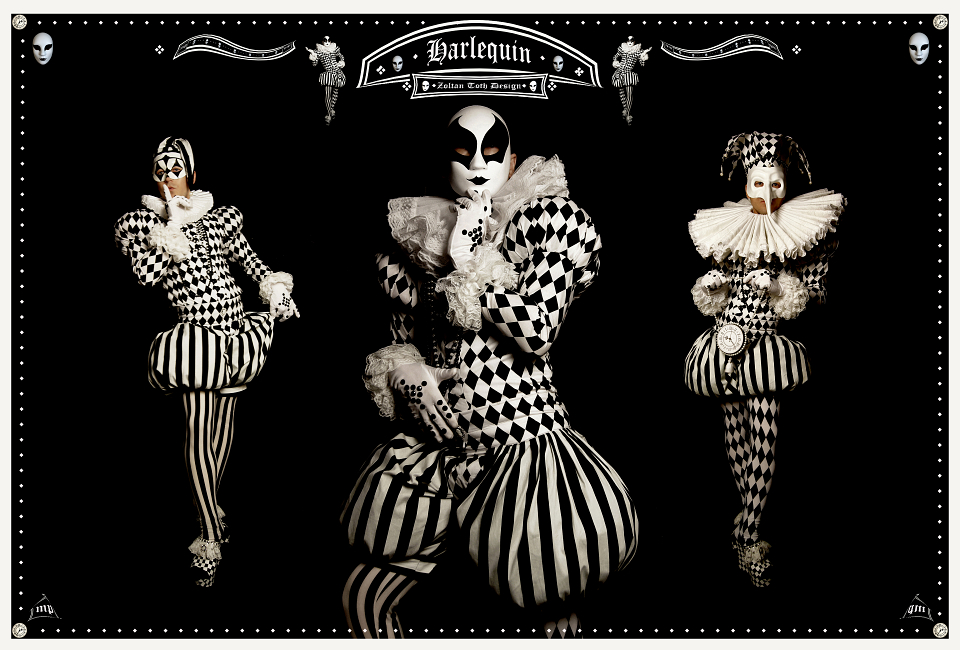
Harlequin was inspired by Venetian masks and the Carnival. Entirely black and white, this project plays with the humour as well as the origin of the mask itself and how this tradition evolved into a magical performance that is celebrated once a year.
Description:
“Harlequin”
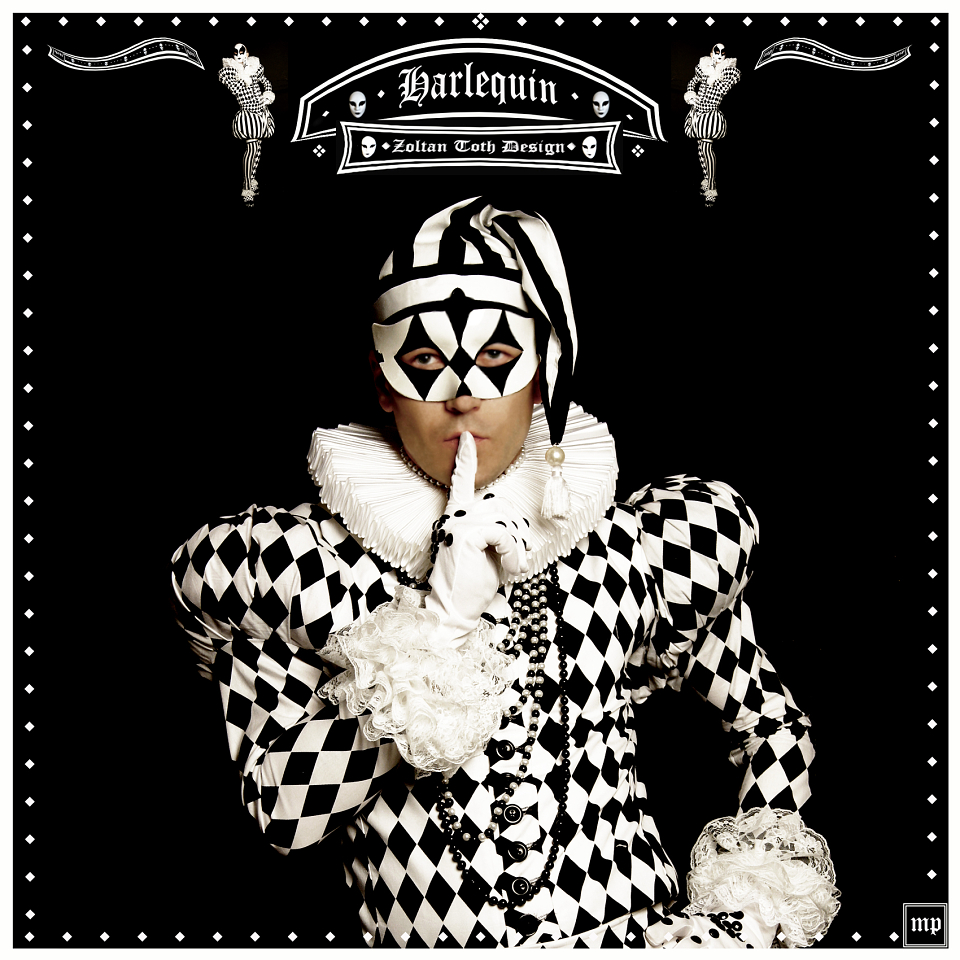
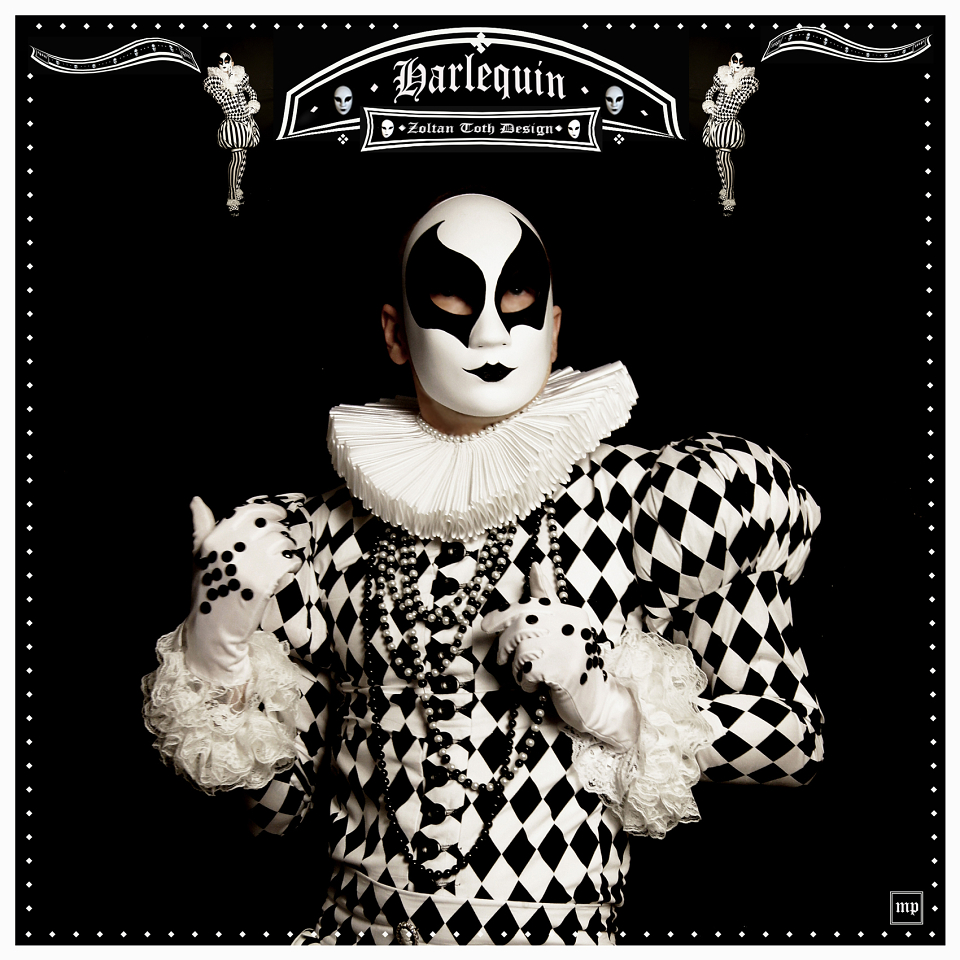
The look is inspired by “jester” or “fool”, his traditional costume, the “motley” and Venetian masks. The outfit consists of a doublet, pantaloons, 2 hats, 3 hand painted masks, 3 ruffs, gloves and platform shoes.
A jester was an entertainer during Renaissance or medieval times and a member of aristocratic households employed to amuse noblemen or guests with a wide variety of skills including singing, playing music, storytelling, acrobatics, juggling and magic in comic styles. Throughout history, they traditionally wore brightly colored clothes in motley pattern which translates to “varied mixture”, breeches with one leg different from the other and eccentric “fool’s hats” with jingle bells. The entire outfit was designed to reflect humor and amusement and kept the fool outside the social hierarchy. The distinguished checked costume has been attributed to jesters for centuries and since then the look has become an icon and symbol of the fool. Highly educated court jesters were also handsomely paid and had a privilege of free speech. Common jesters were mostly independent artists performing at street markets and fairs.
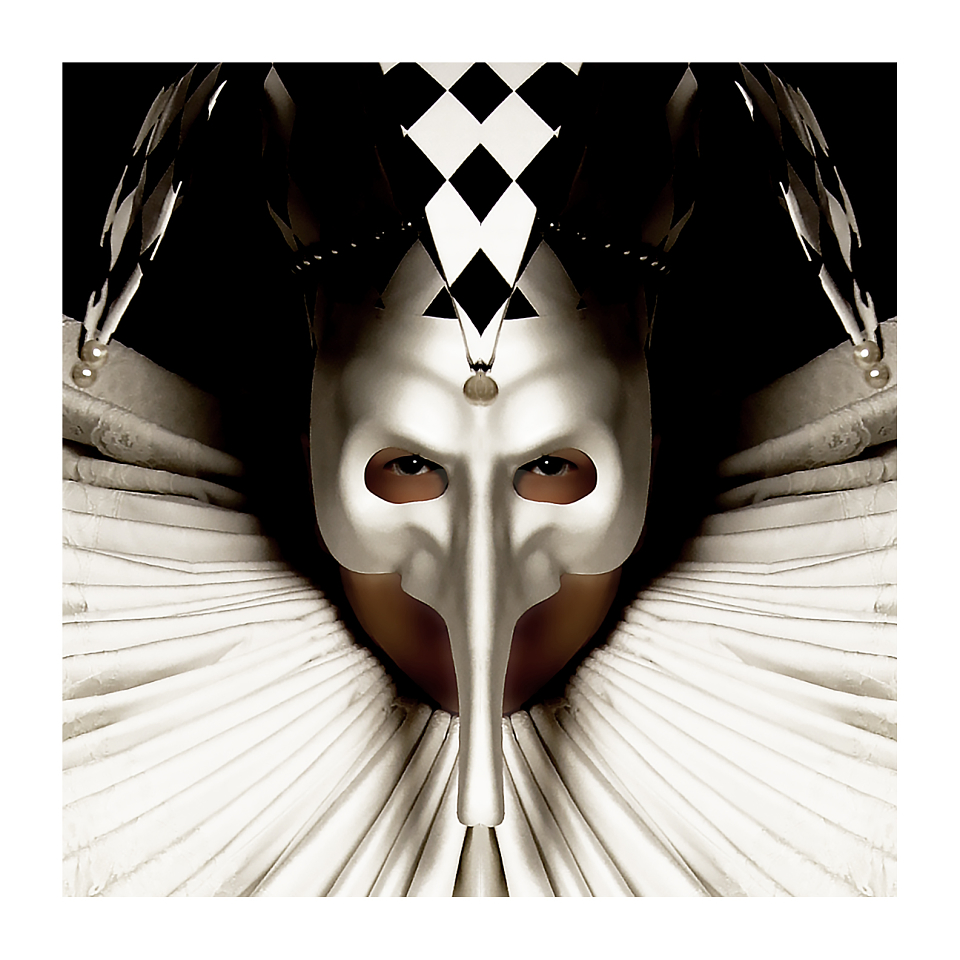
The “Ruff” evolved in 16th century Europe from small fabric ruffle at the neck of the shirt or chemise. The flamboyant accessory became wildly popular and grew much in size eventually becoming an independent garment. In extreme cases about 10 or more yards of fine linen was used for a single piece. Quality ruffs were decorated with lace, silver, gold and fine silk. Its creation was incredibly time consuming therefor expensive. Luxurious ruffs represented status and wealth and their placement affected the entire posture of the wearer. Some became a foot or wider requiring wire and hundreds of pins to hold them at fashionable angles. Ruffs caused great difficulty while eating, drinking or walking through doors and by the end of the 16th century they started to lose popularity and were replaced by more practical wing collars.
Venetian masks have a long history of protecting their wearer’s identity during decadent activities. Their story begins in Venice, where life bloomed and citizens enjoyed a quality life. With extended social wealth, the people of the city developed a unique culture in which concealing of one’s identity became a paramount daily activity. Servants would be mistaken for aristocracy, the rich for common folk. People therefor developed a desire to remain anonymous and eventually as a result, they naturally found themselves taking advantage of this unusual situation. The disguised society grew decadent and blatant.. Sexual promiscuity and gambling thrived, outrages fashions were worn and society fell into a state of indolence and moral decay. In the end, masks were banned and limited to “Carnivale”, which lasted for three months, the period between Christmas and Pre-Lent. The event first began in 1162 with people dancing and celebrating the Republic of Venice on San Marco Square and became a highly celebrated occasion for years to come encouraging pure hedonism. During the rule of Francis II, King of Austria, the festival was outlawed entirely in 1797 but reappeared again in the 19th century
An improvisational theatre emerged in Italy in the 16th century. Travelling artists and actors would set up a stage and perform plays. The theatre flourished throughout Europe with great success. It identified ensemble acting with masked characters. Harlequin, or Arlecchino, was a comic servant (“zanni”) in a play introduced by Zan Ganassa in 1670. Some of the Venetian masks are taken from these plays and carry the names of various characters.
“Medico della peste”or “Dottore Peste is a bizarre mask worn by the plague doctor that protected him from airborne diseases when visiting patients during the plague. The mask had a curved shaped beak and the respirator contained aromatic scents preventing the doctor to breathe in the miasma.
The “Volto” (face in Italian or ghost in Latin) provides complete anonymity and represents the iconic Venetian mask.
The “Colombina” (little dove in Italian) is a half mask named after a maidservant named Colombina in the “commedia dell’arte” , who was unconventional and insolent but also the sweetheart of Arlecchino
The modern celebration of Carnival has recreated the art, craft and culture of producing Venetian masks. The expertise continues to impress tourists, artists and participants during the traditional festival and throughout the year. The carnival today remains one of the most celebrated, anticipated and spectacular events in the world
For the creation of this look the following materials were used:
approximately 8 meters of checked cotton was used for the doublet, pantaloons and hats / about 100 black and 100 white pearls were used for the 4 necklaces and further 50 black pears to decorate / 200 white paper cut out squares to decorate the shoes / 20 meters of lace for the doublet and gloves / approximately 10 meters of white cotton, 15 meters of lace and 10 meters of satin ribbon for the 2 ruffs