


Food and drink are the one constant in a world full of change. No matter the economy, the politics, the climate, people still need to eat.
But getting food to consumers through restaurants, schools, hospitals, offices and delivery platforms has never been more complex or more expensive. Workforce shortages, unstable supply chains, rising operating costs, shifting dietary expectations… every operator can list the pressures faster than they can order lunch.
And despite it all, demand hasn’t collapsed. Global Food Service revenue is set to grow +7% by 2032. The opportunity is real, but only for the businesses built to handle this new level of volatility.
Here’s the uncomfortable truth: operations alone won’t save anyone. Brand will. Strong brands don’t just look good, they outperform, consistently. Kantar BrandZ Strong Brands portfolio have grown +83% faster than the S&P 500 since 2006. Brand isn’t a “nice-to-have”. It’s the engine. The multiplier. The advantage.
Let’s break down the four core pressures hitting Food Service & Supply, and how brand turns each one from a threat into a competitive edge.
1. The Workforce Crisis: The Biggest Cost Not Shown on the P&L
The labour cliff didn’t end with lockdowns. It’s still here. In the BDO Food and Drink Report 2025, 75% of food and drink businesses reported recruitment problems. Skills gaps exist across sales & marketing (35%) production (32%) and project management (25%). Wage pressure continues to rise, pushing turnover and training costs up with it. Operators are trapped in a pattern of “hire → train → lose → repeat” that drains resources and consistency.
Brand creates workforce loyalty
Employees stay longer, perform better, and refer more talent when they feel connected to a company’s purpose and values. A strong brand reduces voluntary turnover, increases employee advocacy, and builds a culture that withstands external shocks. If you want to cut labour costs, start with brand not the rota.
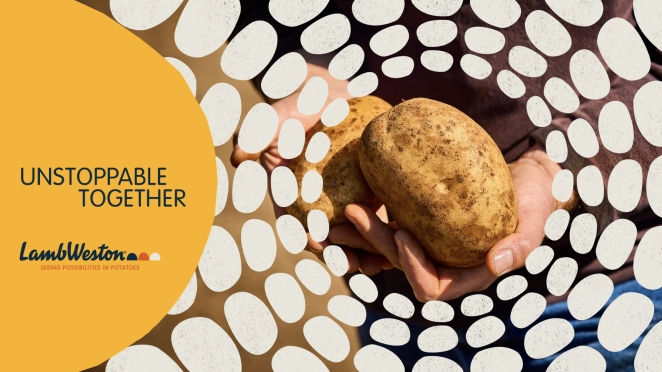
This is exactly what we saw with Lamb Weston, one of the world’s largest potato producers. Once we articulated a unifying brand idea, “Inventiveness”, employee alignment surged to 89%, and revenue followed. Brand didn’t decorate the culture; it built it.
2. Rising Costs: The Margin Squeeze Operators Can’t Ignore
Hard numbers tell the story. Ingredient prices have surged due to global disruptions, climate pressures, and inflation. According to the Food and Agricultural Organisation of the United Nations the global food price index rose from 94.9 in 2019 to 126.4 by October this year. Utility, packaging, and rent are climbing at similar or faster rates.
With consumers understandably more price-sensitive than ever, restaurants are finding it harder to raise menu prices. In early 2025, US restaurants experienced one of the weakest six-month sales growth periods in a decade according to a CNN analysis of Commerce Department data.
In the UK, a survey by UK Hospitality found 55% of operators didn’t raise prices despite cost increases and almost three quarters are now operating at or below 85% of required capacity. The result is that margins are being crushed, and operators are absorbing costs they simply cannot absorb.
Brand ensures price elasticity
Strong brands hold value, reduce price sensitivity, and maintain customer loyalty even during price adjustments. Brand strength is directly correlated to pricing elasticity the ability to raise prices without triggering customer defection. In a margin war, brand is the armour.
3. Supply Chain Instability: The New Normal
The supply chain is now a variable, not a constant. The BDO Food and Drink Report 2025 reported that nearly 50% of UK operators experienced production delays or stoppages due to shortages in the past 12 months.
In perishable food chains, logistics company DP World found 93% of companies reported climate-related disruption. An estimated ⅓ of all food produced globally is lost before reaching the consumer the equivalent of 1 billion meals per day.
Longer lead times, substitutions, and inconsistent deliveries have forced operators to build contingency plans and redesign menus on the fly. BDO Food and Drink Report 2025 found operators are responding by building inventory buffers (54%) and diversifying suppliers (53%).
Brand conveys stability through consistency
A consistent brand identity, voice, and experience reassure customers when products change, signals reliability to suppliers, and maintains trust even as operations flex.
In a world where “perma-crisis” is the baseline, consistency becomes a competitive advantage. This is why High Liner Foods asked WMH&I to modernise its brand: to signal leadership and dependability in a category shaken by sustainability scrutiny and sourcing volatility.

4. Fast-Changing Customer Expectations: The Ultimate Wildcard
Today’s consumer expects more from food service than ever. They want, healthier options, sustainable sourcing, transparency, digital convenience, personalisation, and speed.
Meanwhile, according to the Edelman Trust Barometer Global Report 2025, business remains the most trusted institution, ahead of NGOs, Government and Media and food and beverage and hotels and hospitality are among the most trusted business sectors at 73% trusted. However, consumers feel businesses are still not doing enough on affordability, climate change and misinformation.
Brands can lead visibly, credibly, and fast.
And that’s exactly what brand enables. Rapid communication, faster adaptation, clearer differentiation, and stronger emotional loyalty. Brand is the interface between customer expectation and operational reality.
The Brand Advantage: Turning Pressure into Performance
Food service is more competitive, more unpredictable, and more complex than ever. But the businesses that thrive aren’t the ones with the calmest trading conditions or the largest budgets. They’re the ones with the clearest promise, the strongest identity, the most consistent customer experience, the most motivated workforce, and the most trusted voice. In other words, the strongest brands.
If you want to see how we’ve helped leading global food-service businesses use brand to drive retention, pricing power, trust, and resilience, get in touch. We’d love to show you what’s possible.
Author: Ben Stewart Strategy Director WMH&I