

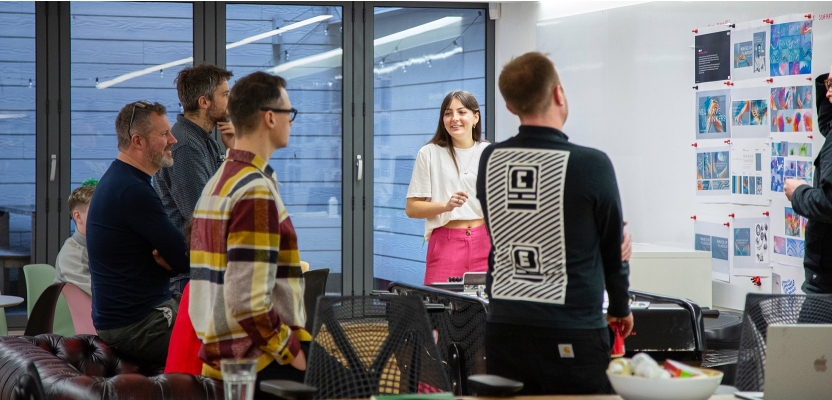

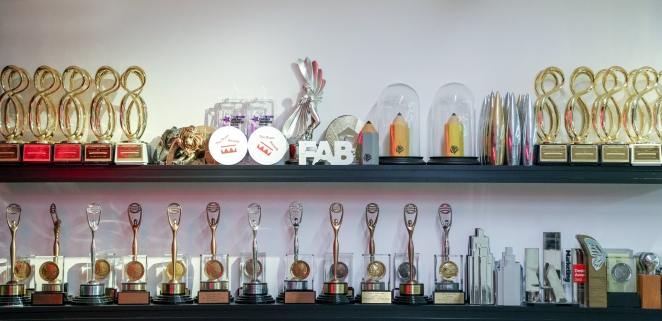
At this year’s Creativepool Annual Awards, WMH&I has been recognised not just for its creative output, but for building one of the most inspiring workplaces in the industry. Awarded Best Agency to Work For, the agency demonstrates how curiosity, transparency, and care for people can fuel both culture and creativity.
In this exclusive Q&A, Daisy Benn (Managing Director) and Becky Drew (People & Planning Lead) at WMH&I share how they embed curiosity into the workweek, balance operational excellence with creative freedom, and maintain equity, wellbeing, and inclusion through progressive policies. From flexible working models to mentorship programs, profit sharing, and B Corp values, the team reveals how culture drives innovation, engagement, and impactful work. They also offer insights on sustaining growth, nurturing talent, and blending purpose with performance in an evolving agency landscape.
How does it feel to have earned the Best Agency to Work For award?
It feels incredible. This one means the most because it’s about our people, the heartbeat of WMH&I.
Creativity flourishes when people feel seen, supported and inspired. To be recognised for the culture we’ve built together is deeply validating. We don’t see it as a finish line, but as fuel. A reminder to keep questioning, listening and evolving.
What made you decide to enter into The Annual?
Creativepool has always celebrated creativity in its truest sense. Not just the work, but the people and processes behind it. Entering The Annual felt like a natural extension of who we are. An agency that puts as much care into how we work as what we make. Building an equitable, inclusive and curious workplace isn’t a side project. It’s our strategy.
What role do you think awards play in motivating creativity and innovation within the industry?
Awards like The Annual create momentum. They raise the bar, encourage reflection, and remind us that creativity isn’t just about originality. It’s about impact and integrity. When recognition celebrates both craft and culture, it pushes agencies to innovate in how they lead, not just what they produce.
You offer 12 Curiosity Days annually and “Friday Flex” (20% self-directed). How do you guard against “unused perks” and what nudges or culture ensures people actually tap into them?
We design for use, not optics. We encourage everyone to block Curiosity Days into their calendars and share what they’ve learned back with the team, whether that’s a new skill, exhibition or side project. Friday Flex is protected time too: no client calls, no guilt. By embedding curiosity into our rituals, like Dine & Discover and Creative Connect, exploration isn’t optional. It’s celebrated.
Your pay model is transparent, includes profit sharing, and equitable. How often do you revisit bands / benchmarks, and how do you manage perceived equity among roles/tiers?
We benchmark salaries annually and discuss with people individually where they stand and what progression looks like. As a B Corp, we share the agency’s financial performance transparently with the team each quarter. Profit-sharing keeps success collective. When WMH&I grows, everyone feels it. Equity is about dialogue as much as data. We review both pay and perception through open conversations, surveys, and biannual check-ins.
You’ve embedded policies around menopause, neurodiversity, etc. How do you operationalise support (accommodations, training, feedback) beyond policy declarations?
Policy is the starting point. Practice is where it matters. We back words with systems, from manager training to confidential, open conversations with our People & Planning Lead to discuss personal circumstances and find practical solutions. We adapt ways of working to suit individual needs rather than expecting people to fit a single mould. For instance, for those with dyslexia, we offer verbal recorded briefings alongside written ones. Flexibility, empathy and ongoing dialogue ensure our support stays personal and responsive, not procedural.
With weekly review of workloads to prevent burnout, what signals or data do you look at (qualitative, hard metrics) to detect overwork or stress early?
We blend metrics with empathy. Weekly capacity reviews track utilisation and project load, but we also rely on human insight, with one-to-one check-ins, team sentiment, and the occasional “how are you really?” conversation. We don’t operate on timesheets. Removing that stress lets people focus on creativity, not clocking hours. Everyone also has access to free, confidential counselling for expert external support. If the numbers say green but the person feels red, we act on the person.
Many agencies have strong “creative cores” but weak function structures. How do you maintain operational excellence (resourcing, project management, systems) while preserving creative freedom?
We see structure as an enabler, not a constraint. Clear systems free people to create. Our Studio Planning and Client Services teams are embedded collaborators, not traffic controllers. They protect creative time and prevent the chaos that kills ideas. Operational excellence is our way of protecting creative freedom, not policing it.
Your “Curiosity Days” and internal showcases suggest a culture of exploration. How do you balance exploration with client delivery?
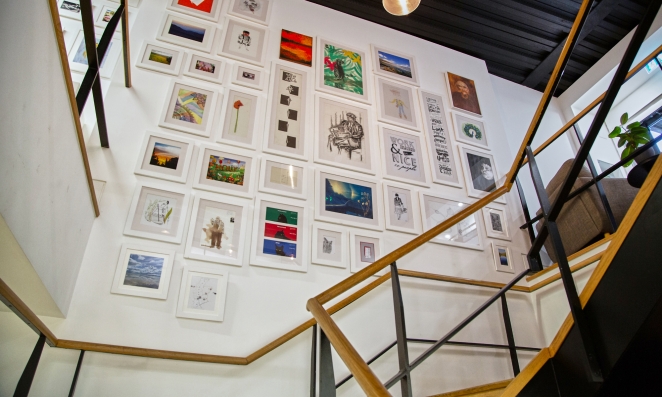
Exploration fuels delivery. The work is sharper when people have space to wander, experiment and reconnect with curiosity. We treat personal growth and client work as a virtuous cycle. One feeds the other. With careful planning, we make space for all 12 Curiosity Days each year without compromising delivery. Our clients have been incredibly supportive, seeing the positive effect of a team that continues to grow, recharge and look outward for inspiration. The result is work that’s both commercially sound and creatively surprising.
As people grow, how do you ensure internal mobility, career progression, cross-discipline exposure (not pigeonholing)?
We grow people, not roles. Every employee has a Career Development Plan shaped around their ambitions, not just the agency’s needs. We encourage cross-discipline learning, mentorship and stretch projects because growth isn’t always linear. Artworkers have become Senior Animators, Account Managers have joined the Strategy team as Creative Researchers, and our former Front of House is now a Business Director. We give people the freedom to explore, evolve and redefine their path. When people grow in unexpected ways, the agency grows too.
What is your approach to feedback and coaching? Do you have structured peer reviews, mentorship or development planning?
Feedback is continuous, not confined to annual reviews. Alongside appraisals and biannual check-ins, we run peer feedback sessions. Coaching is built into the rhythm of how we work, from presentation workshops to creative critiques. The aim is growth without ego.
You’re a certified B Corp and allocate 25% of profits to pro bono. How do you manage the tension between commercial goals and social/ethical aims?
For us, there’s no fixed tension. It’s an ongoing conversation. Doing the right thing has always been good business, but not every client perfectly fits the B Corp rulebook. What matters is intent and progress. We’ve said no when something clashed with our values, but we’ve also worked with clients open to evolving. B Corp keeps us accountable, and pro bono work keeps us grounded. It attracts the right clients, the right talent, and the right energy. Purpose isn’t a trade-off. It’s a balance. When managed well, it’s a multiplier.
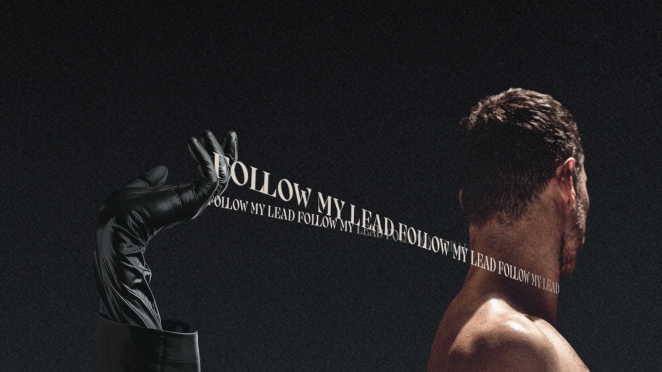
Looking ahead: as work models evolve (hybrid, remote, asynchronous), how will WMH&I adapt (in culture, rituals, onboarding, structure) to remain a top place to work?
We’ve found our balance. Most of the team now works three days a week in the studio, with some choosing four, as Friday Flex is often spent at home on self-directed projects. Collaboration works better face-to-face. Ideas flow faster, critiques are sharper, and connection feels more natural. Onboarding is always in person, supported by The Oracle, our living manual that helps people settle in and find their rhythm. Briefings are ideally done in the room, where energy and ideas spark in real time. The key is flexibility. Sometimes someone needs to be at home for personal reasons, while others thrive surrounded by their work on the crit wall. As long as we keep an eye on anyone starting to hide or withdraw, we can flex around both the agency’s and people’s needs. It’s about designing a culture that adapts to life, not the other way around.
Do you have any particularly exciting projects in the pipeline that might be contenders for the awards in 2026?
Yes. Our recent pro bono work for the Surrey Domestic Abuse Partnership is something we’re deeply proud of. It combines creativity with genuine social impact, exactly the kind of work we want to be known for. It’s bold, human and purpose-driven, and we can’t wait to share it with the world.
What advice would you give to agencies looking to take home their own accolade next year?
Start by building the agency you’d want to work for. Culture isn’t a line in a deck. It’s what happens between the slides. Be transparent. Be kind. Make policies that match your principles. Celebrate curiosity. And remember, creativity thrives where people do.