
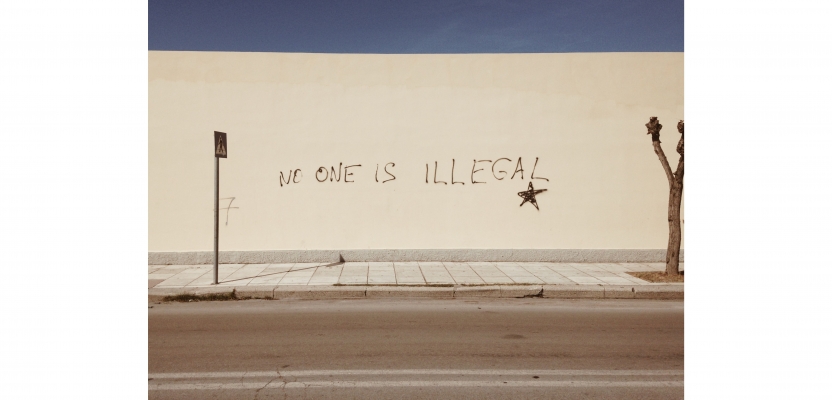

Last week was Transgender Awareness Week concluded by Transgender Day of Remembrance on November 20th.
It can often be difficult to effectively talk about modern human rights, and transgender rights fall under this prominently. We don’t want to say the wrong thing, come across as naïve, and we don’t want to cause needless upset through ignorance. However, in the world’s current climate, talking about real human issues, that can reflective of the lives of our own employees, has to be tackled.
Even though transgender issues have progressed in terms of visibility and traction in Western culture, they are still issues that are often ignored and shirked by some. The best way to tackle this, is to try and educate ourselves and others as much as possible. In striving always to have better knowledge of human understanding, we can only positively grow.
Therefore, we’ve looked at the biggest issues faced by transgender people around the world today, to try and give a topline overview of a topic that is often overlooked in the mainstream media, in the hopes that it may educate some who hadn’t really looked into transgender issues before.
North America
In North America, laws about LGBTQ+ communities vary. Canada and Greenland offer legal gender change without surgery or hormone therapy. Mexico allows gender and name changes in some cities and regions, but not all1. Bermuda, an overseas British territory in North America, has no legal recognition of transgender people, and thus by omission no protection from discrimination2.
Rita Hester, a popular and outgoing transgender woman, was killed in Boston in 1998. The trans community view her death as a hate crime, as she was brutally stabbed 20 times by an unknown assailant, who did steal her gold jewellery3. The Transgender Day Remembrance was founded that year to memorialise Rita Hester, and has been an important event in the trans community ever since.
(References from Parliament and Edge Media Network)
South America
According to the Trans Murder Monitoring Project, South America is one of the most dangerous places to be trans. Diana Sacayan, a leader of Argentina’s Antidiscrimination Liberation Movement, was murdered in 2015 due to her work for trans rights1. Over the past 12 years, there have been 2,485 murders of trans people in the region – 75% of trans murders worldwide2. The average life expectancy of a transgender person in Latin America is 35-41, compared to a regional average of 75 years3. While there has been development in the legal acceptance of transgender people across the continent, with eight countries implementing new laws around gender identity over the past eight years, in some regions, such as Brazil, powerful Evangelical churches are highly critical of LGBT+ rights, along with right-wing President Jair Bolsonaro.
(References from LA IZQUIERDA, Reuters and KSJ)
Asia
Across Asia, LGBT+ rights vary, with just over half of states having gender identity laws. The Philippines has the world’s first and only LGBT political party, Ladlad1. Bangladesh, Nepal, Pakistan and India legally offer a third gender option called Hijra2, who are eunuchs, intersex people and transgender people, with India, Pakistan and Nepal offering this as an option on passports. In India, this group refers to themselves as Kinnar, referring to the mythological beings who love to sing and dance. However, India and the rest of Asia remain a dangerous place for the trans community. In 2018, there were false rumours that transgender women were kidnapping children for sex trafficking, and a mob attacked four transgender women, killing one of them3. Following this, police appealed to the public to stop taking law into their own hands.
(References from LadLad blog, the Guardian and CNN)
Africa
Several people who identify as (or are suspected to be) lesbian, gay, bisexual or transgender, among other sexual and gender minorities have been subject to civil harassment, killing and mistreatment in Africa1.For example, transgender activist Nare Mphela was murdered in South Africa this year, with some believing her murder was a hate crime2. In many Commonwealth countries transgender and gender diverse people are often subject to laws that prohibit consensual same-sex sexual intimacy and are criminalised by ‘cross-dressing’ or ‘impersonisation’ laws which regulate their gender expression3. Africa is a difficult place for the LGBTQ+ community. Religious morality, colonial laws and the belief that the West has imported homosexuality are a few of the reasons why4.
(References from The Conversation, Democracy Now, Human Dignity Trust and DW)
Europe and the UK
Western Europe is more progressive in its transgender rights compared to other areas of the world that we have reported on here. As reported in WeForum “In 2015, Ireland passed its Gender Recognition Act, which allows people over the age of 18 to determine their own legal gender. Denmark also switched to a self-determination model. Many European nations are considering adopting similar models including Sweden, France, Belgium, Finland, Greece, Germany and Norway”1.
However, much like the rest of the world, transgender people in the UK still face an extortionate amount of societal prejudice than their cisgender counterparts. In the UK, it is reported that two in five trans people have had a hate crime committed against them in the past year. It is also reported that in the UK, two in five trans people have attempted suicide.2
(References from Stonewall and Weforum)
What is staggering, is the stats that one in trans eight people in the UK have been “physically attacked by colleagues or customers at work”1. When you put that into context that there are an estimate 600,000 transgender people in the UK2, that equates to a large amount of transgender people being discriminated against in the places that we work in.
Clearly, there is still a long was to go with normalising transgender into society. Hopefully, what we can all do, is better educate ourselves with these issues and learn where we can help and give support to our colleagues where we can.
(References from Stonewall and Stonewall)
If you or someone you know is struggling with issues around gender, there are resources available to help, such as from Support Line1, Mermaids2 and AllAboutTrans3. The more we talk about transgender issues, the more positive effect we can have in the long run.
This article was wreitten by Joe Crocker, Account Manager at TMW UNLIMITED and UNLIMITED’s D&I Committee.