Tony Clarkson
Brand Consultant
ABOUT
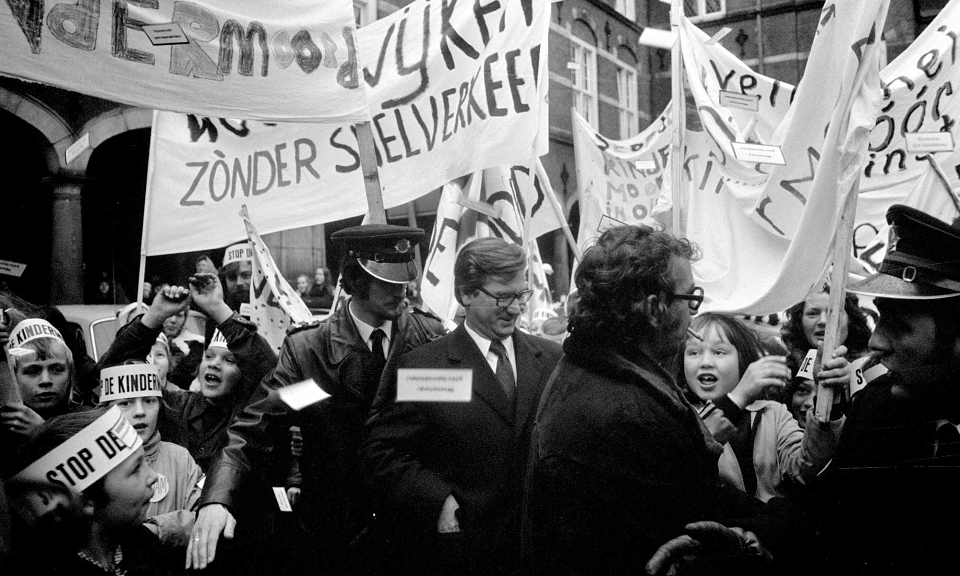
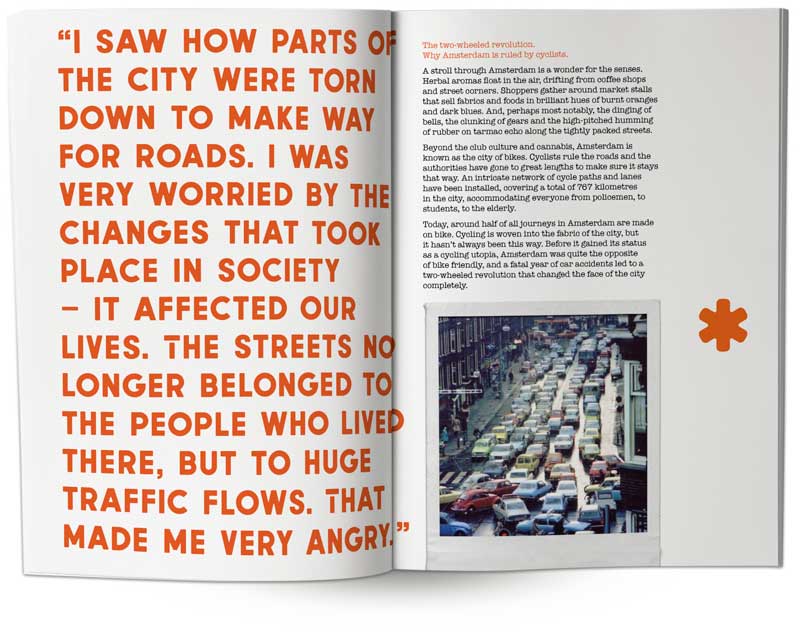
In The Netherlands, by 1971 deaths by motor vehicles were 3,300, of which 500 were children. A campaign in favour of pedestrians and bicycles started in different locations. It was called “stop children’s murders”.
‘Stop de Kindermoord’ took measures against car traffic - they occupied accidents blackspots, organising special days where streets were closed to allow children to play safely, they cycled with an organ in front of the house of the prime minister Joop den Uyl, to sing songs asking for safer streets. A characteristic is that the protests involved both the parents and children.
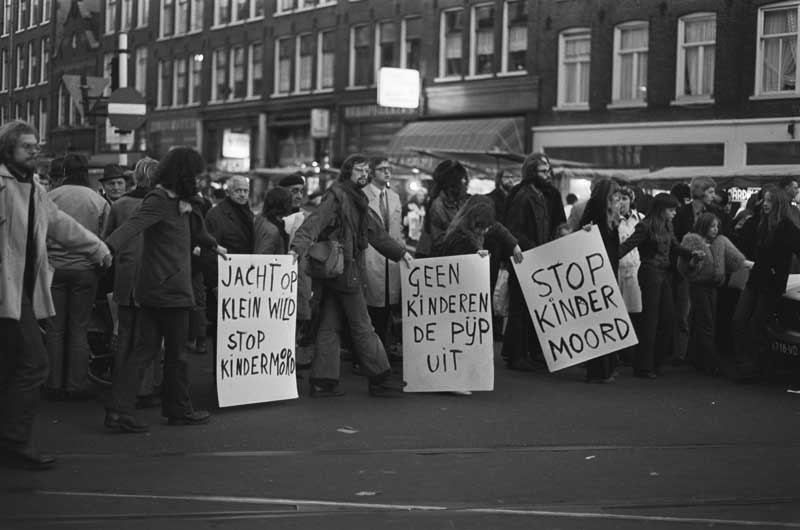
One of the most remarkable protests took place outside Amsterdam’s Rijksmuseum in the mid-1970s, where thousands of participants all laid down with their bicycles, pretending to be dead.
Room Concept
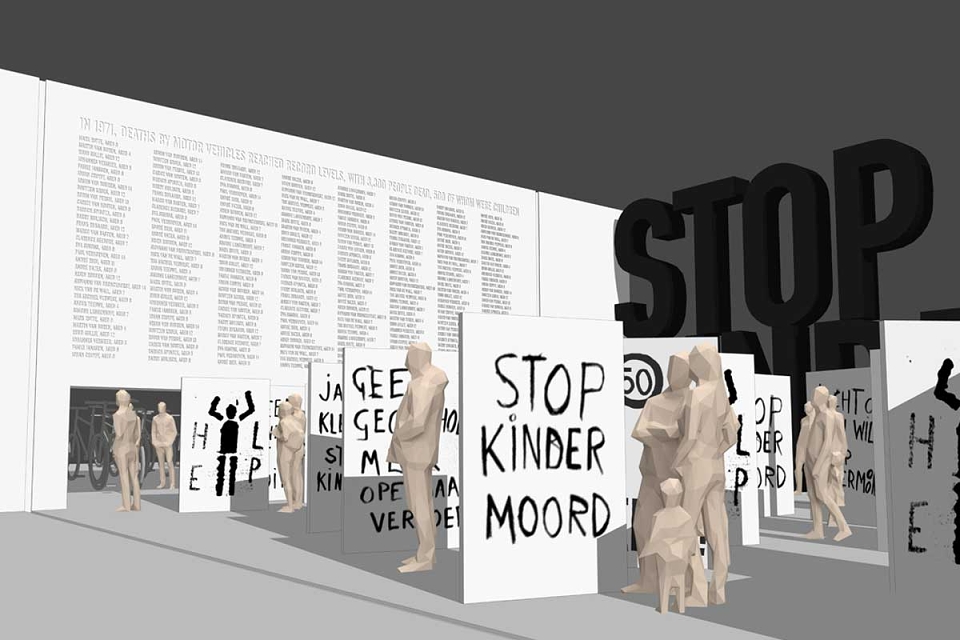
This is the only room with a beginning and an end. Seeing the names of the children killed gives it grounding and the realisation of mortality; no longer just a number, they are real people.
The scale of the name represents the power of the movement. Hear the voices and see what they achieved.
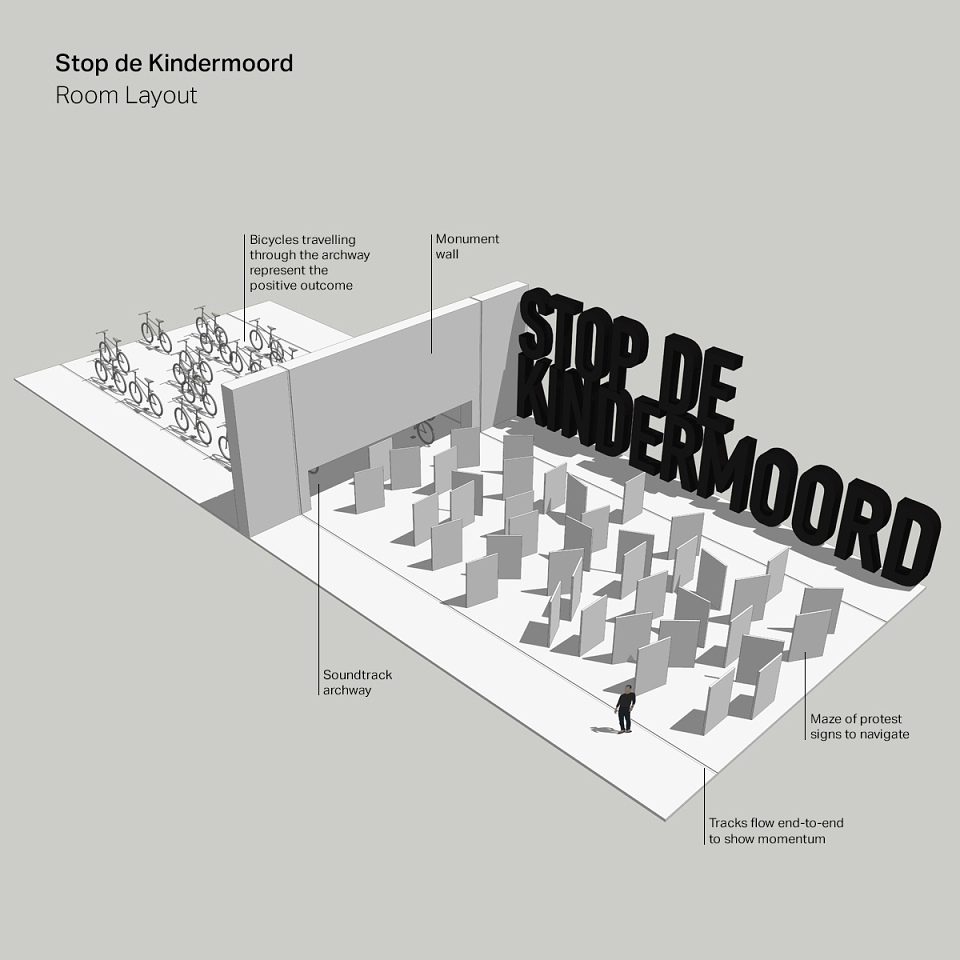
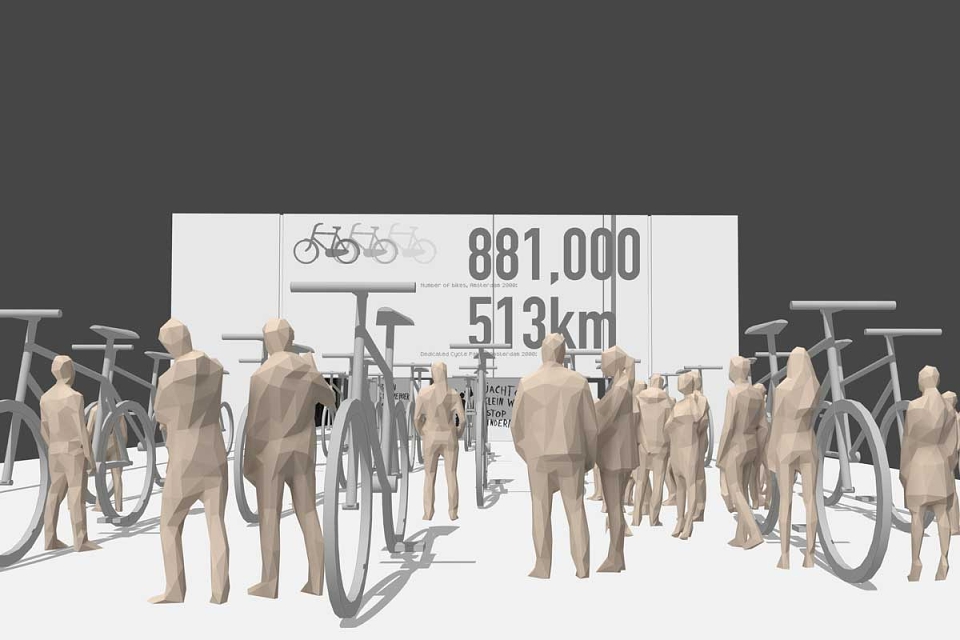
Visitors to the room find their route through the many standpoints in the central area. These standpoints display stories and information about de Kindermoord to introduce the visitors to the subject. In addition, their title screens start with replicas of the different signs carried during the protests in the 1970s.
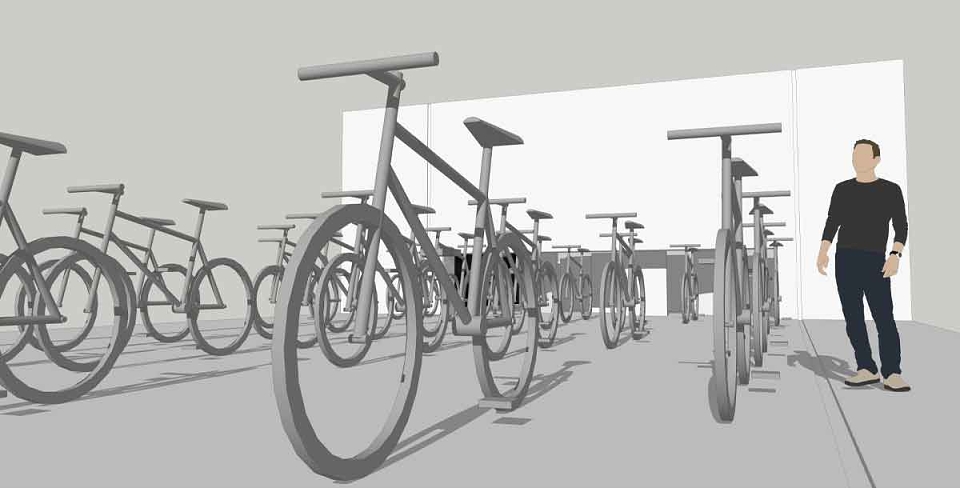
Moving through these standpoints represents moving through the crowds of demonstrators on the streets. A large wall divides the floor space; a soundtrack plays from the archway in this wall. As visitors head towards the wall, they begin to hear the sounds of protests, government speeches, traffic, etc.
On this protest side, the wall acts as a monument listing the names of the children killed by traffic, leading to the start of the campaign. The last name shown is six-year-old Simone Langenhoff, whose death was the start of Stop de Kindermoord.
As you pass through the arch, the protest is replaced by the bicycle sculptures; these represent the campaign’s success, changing demonstrations into cycle lanes. All 757km of them.
Animated data-vis; facts, figures and statistics are displayed on this side of the wall to validate the success.
MADEIT CREDITS
-

Tony ClarksonGraphic Designer -

&Something