TMW
London
ABOUT
CONCEPT:
Ten years after the London HIV Prevention Programme launched 'Do It London', it needed a refresh. Public data revealed rising HIV transmissions among heterosexuals, particularly ethnic minorities, not just among gay men. If HIV can affect anyone, why doesn't everyone feel responsible for preventing it?
For decades, HIV communications leaned on stereotypes and hypersexualised narratives, meaning organisations inadvertently fuelled stigma, shame and the need to be discreet about HIV prevention, relegating it to "other people's" lives. Evidence from focus groups, bespoke large-scale surveys, and sector research revealed that 50–75% of Londoners were ignoring HIV communications entirely, dismissing them as irrelevant due to misinformation, misperceptions, and assumptions.
Their assumption was that HIV only affects "them" (the gay community), not "me", and that conversations should remain discreet and confined to sex or queer culture. These beliefs, alongside inadequate HIV knowledge and a sector inadvertently reinforcing stereotypes for decades, were fuelling stigma and contributing to disparity of prevention across London.
The challenge wasn't awareness, but perception and behaviour change at city scale. We needed to engage people who didn't believe they had a role to play, whilst remaining targeted to more vulnerable communities too. The narrative needed to shift from a "them" thing to a "we" thing.
The conversation broadened from "sexual health" to "health" in order to invite more people to play their part without fear of judgement. Inspired by street art and locally resonant 'if you know, you know' messaging, the new identity transformed HIV comms to be what HIV itself needed to become: visible, vibrant and unmistakably relevant to everyone. We tackled stigma head-on, encouraging all Londoners to test, prevent and protect.
EXECUTION:
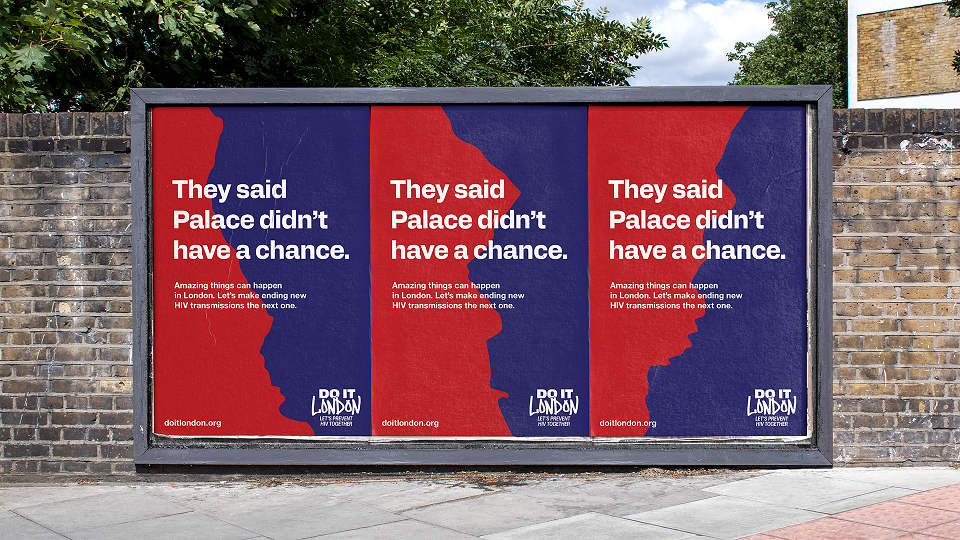
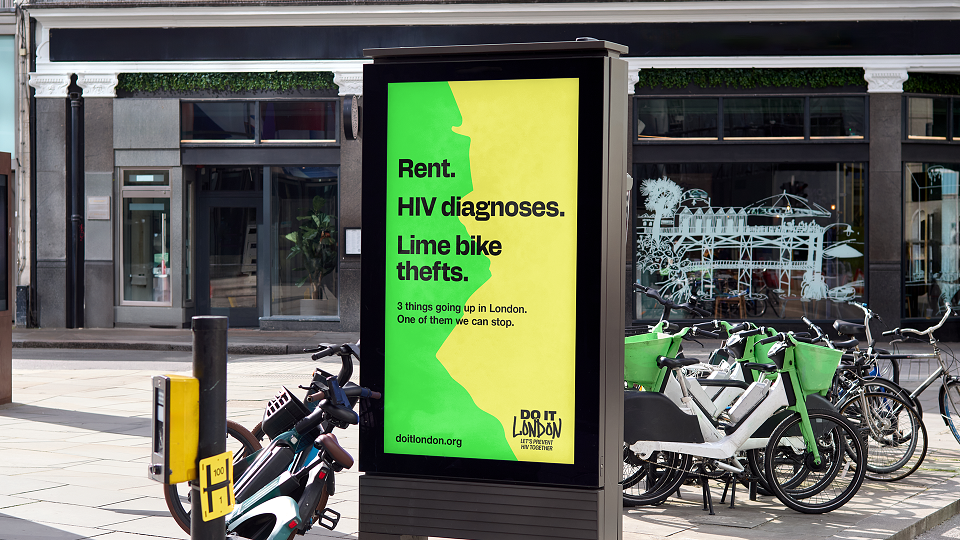
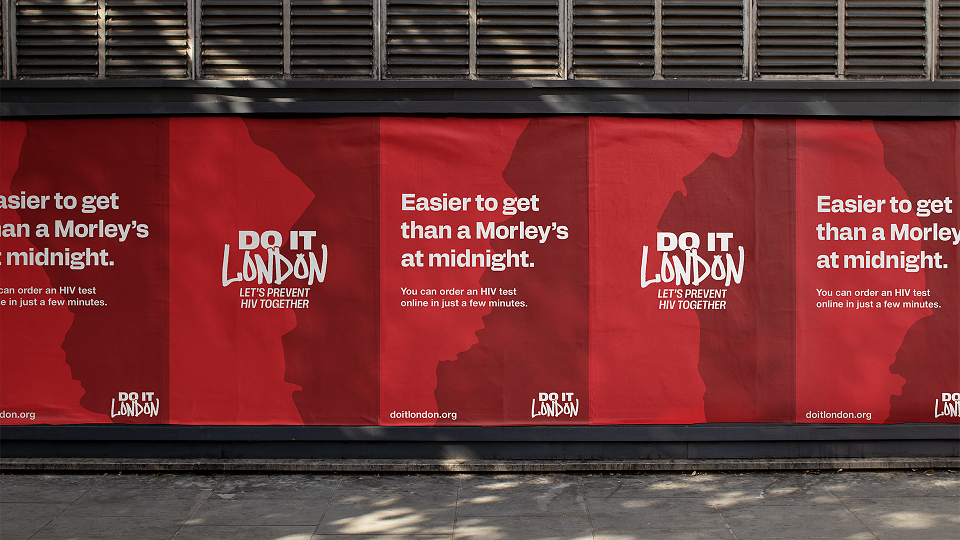
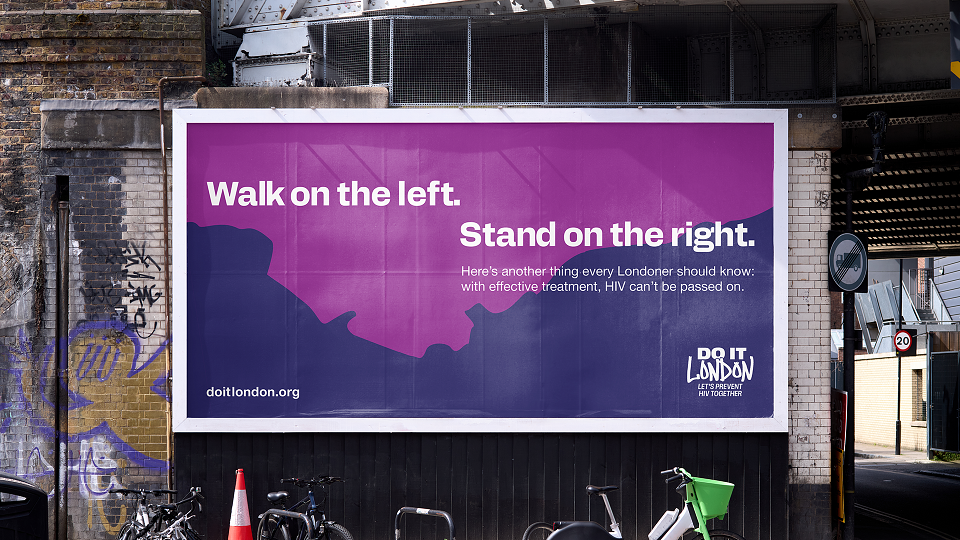
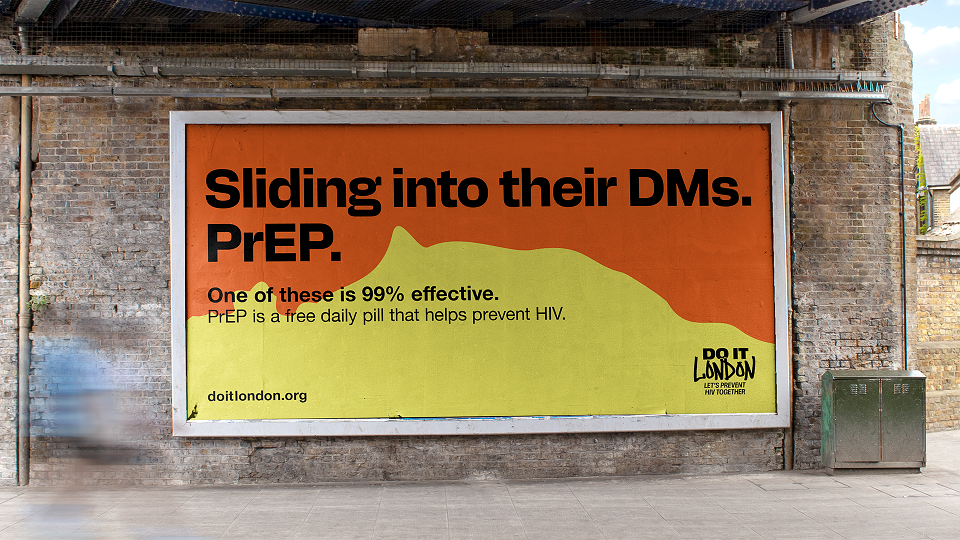
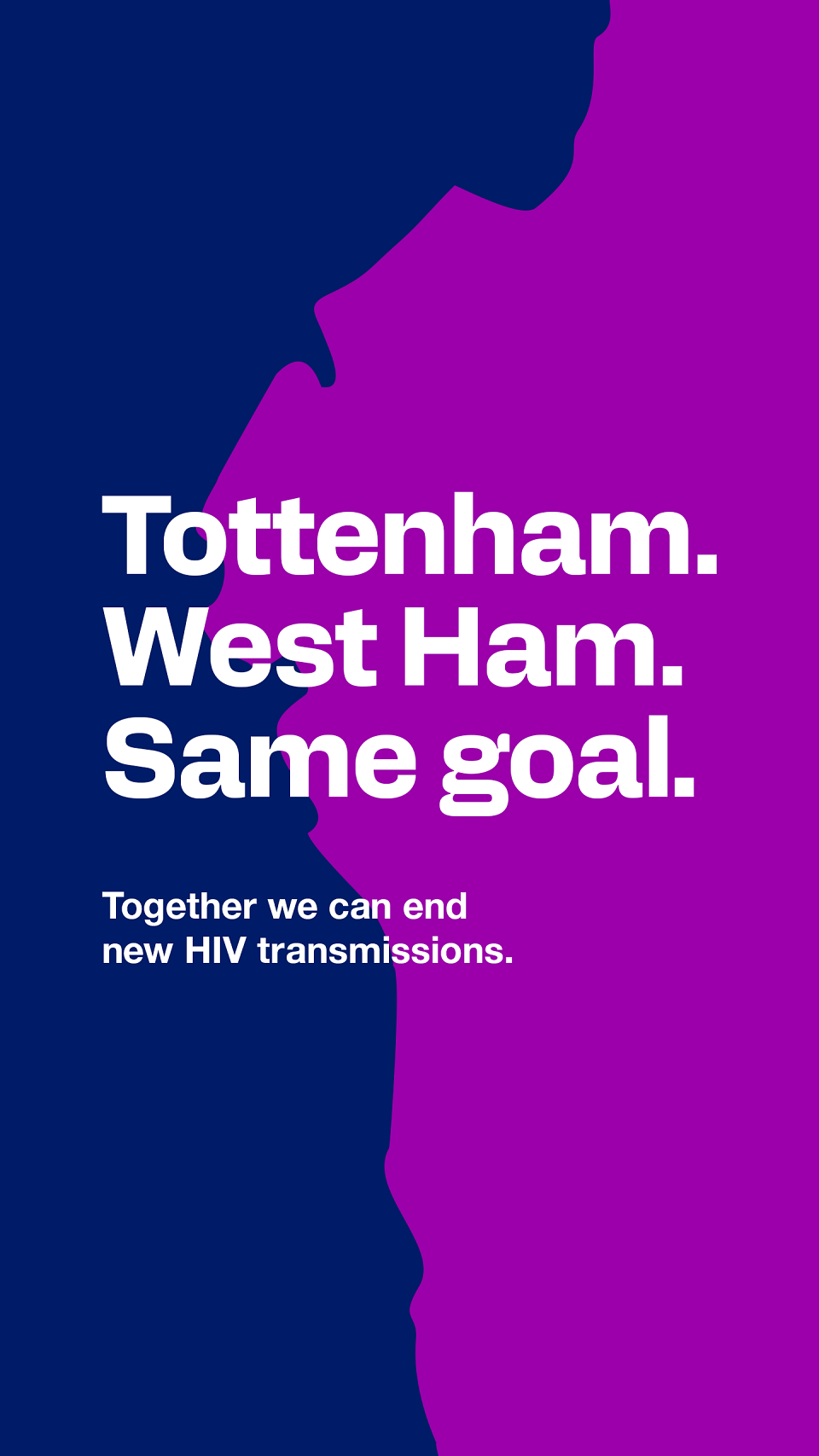
With a limited budget (this is a council-funded campaign), our identity and impact had to be dramatic. A rebrand and new campaign was deliberately crafted to make 'Do It London' feel different from standard public health communications. Instead of cold, clinical tones, we created a vibrant aesthetic taking inspiration from street art in the capital. Bold typography combined with a hand-sprayed 'London' motif humanised the brand. The work was designed to speak to the whole of London, so we used the outline of all 32 boroughs as a visual motif. Combining colours from the re-energised palette ensured the campaign stood out in a crowded media landscape and gained the attention of busy Londoners in a new way.
We came up with a list of topics that Londoners care most about, and framed our HIV prevention messages around them. Tube etiquette, football, Lime Bikes, chicken shops, nightclub bouncers, Jamaican patties – whatever Londoners were talking about, we were going to talk about too. A hyper-targeted media plan put posters and OOH right beside those conversations to maximise contextual impact. Not only was it relevant to Londoners in that area, but our playful tone of voice also made the message much more engaging too. It was clear to our audience what HIV prevention had in common with Oxford Street, Morley's chicken shops, or Palace winning the cup.
The campaign launched with a deliberately bold media mix that avoided overt audience labelling, instead resonating with Londoners through shared locations, contexts and media behaviours. From guerrilla flyposting to micro-targeted OOH, we crafted the right message for the right street and borough.
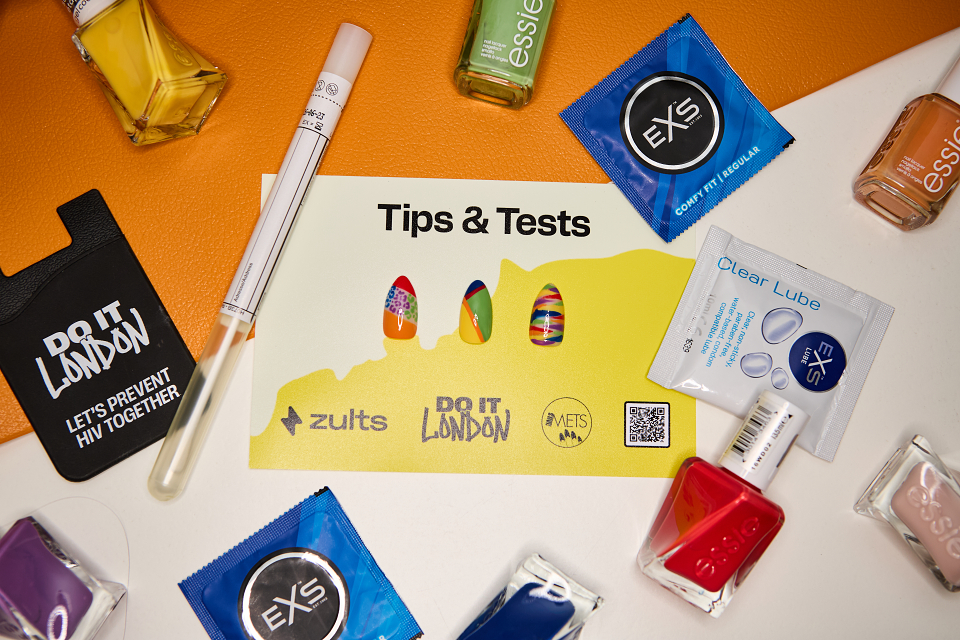
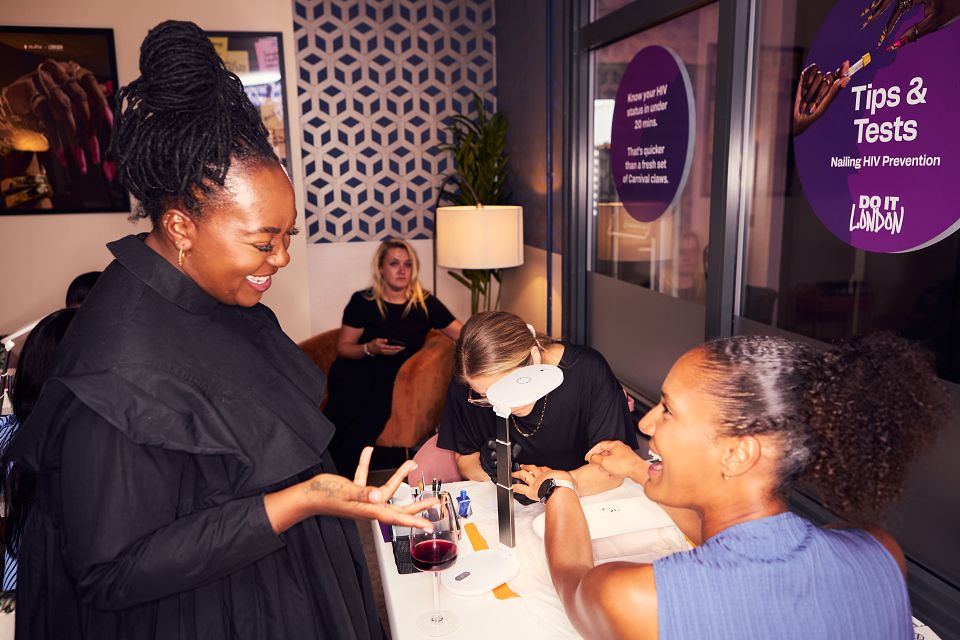
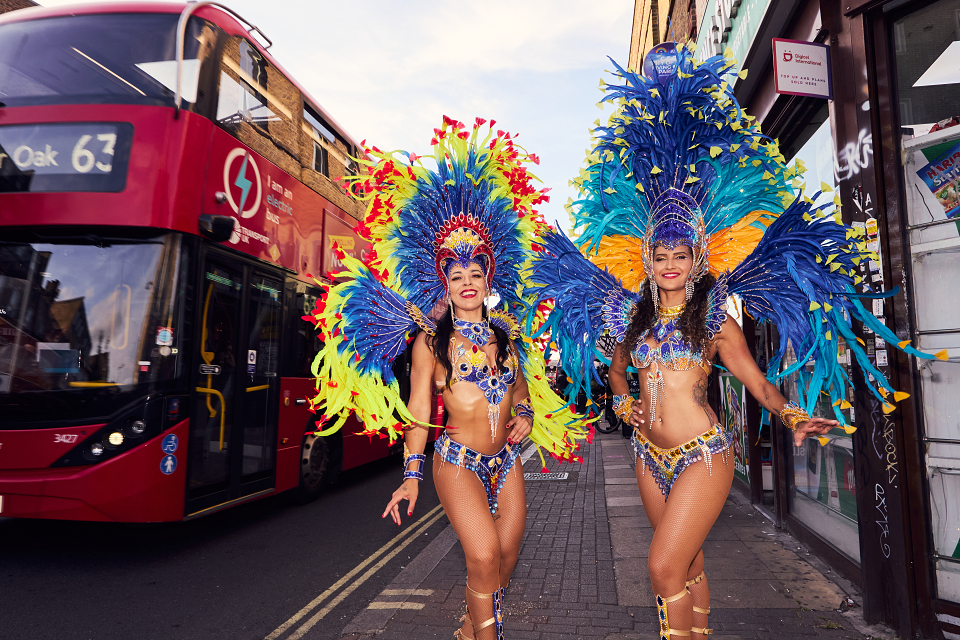
We also targeted harder-to-reach communities in clever ways. In the run-up to Notting Hill Carnival, we ran a free pop-up nail salon, 'Tips & Tests', transforming a black-owned nail salon in Southwark into a vibrant, culturally relevant pop-up. We partnered with renowned nail artist Shea Osei to create Carnival-inspired designs, collaborating with black beauty and wellness influencers to promote the event, and working with the African Advocacy Foundation to deliver HIV tests and PrEP information in a safe, unstigmatised space.
These 20–30-minute nail appointments became an opportunity for honest conversations about HIV testing, prevention, and stigma. 70% accepted HIV self-test kits, 94% felt more comfortable than in a clinic, and 'Tips & Tests' showed how councils and private partners can co-create bold, inclusive solutions that change behaviour.
RESULTS:
The campaign not only increased brand awareness by +80%, it drove a +36% increase in HIV preventative behaviours across London, making HIV prevention part of city-wide conversation. The campaign was even featured on prime-time news on BBC London and ITV News.
– HIV self-test kit orders increased +282% (83% from new visitors) vs. the whole of 2024 in just 3 months.
– Understanding of HIV prevention significantly increased: "PrEP" from 32% to 57%, knowledge of where to get a test from 56% to 70%, and U=U from 16% to 23%.
– We boosted engagement with HIV support: x10 unique web visitors, on-site actions up from 18,000 to 23,586, 40,919 click-throughs to HIV prevention pages.
– Social media engagement increased +1905% (with 91% from non-followers).
– Tips & Tests alone generated an estimated 129 million media reach, with 70% test kit uptake and 94% comfort levels.
– Londoners with black heritage scored higher than "all Londoners" on every measure, confirming resonance with a key audience.
There have already been signs of sustained impact into 2026 according to Sexual Health London kit order tracking. And given the significant financial pressures London councils are facing, the success of this campaign in driving HIV prevention behaviour (and its success with key communities) was cited by the client as a key reason that all councils have continued to fund this programme.
Not just another public health campaign, a city-wide call to end HIV transmissions, together.
MADEIT CREDITS


Annual 2026 ShortlistDo it London: Let's Prevent HIV TogetherSocial Good