


What businesses need to know
Over the last year, the search industry has introduced a growing list of new acronyms.
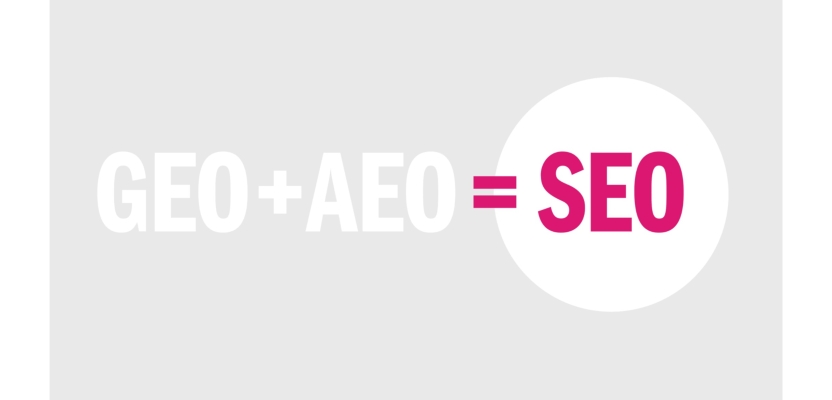
GEO (Generative Engine Optimisation). AEO (Answer Engine Optimisation). AI SEO.
As AI Overviews and other AI-powered search experiences have become more prominent, many businesses have been told they need to move away from traditional SEO and embrace an entirely new approach.
The reality is much simpler.
In July 2026, Google published guidance explaining how website owners should approach AI-driven search experiences, including AI Overviews and AI Mode. The key message was clear: SEO fundamentals continue to underpin visibility in generative search.
At Think, we've been closely tracking the evolution of AI search. While AI is undoubtedly changing how people discover information online, we're seeing increasing evidence that businesses are better served by strengthening SEO fundamentals than chasing the latest industry buzzwords.
In our recent article on AI search visibility, we explored why strong website foundations remain critical regardless of how search technology evolves.
Traditional SEO continues to deliver measurable results. The ranking improvements shown below were achieved through technical SEO, content optimisation, internal linking and ongoing website development, rather than any dedicated GEO or AI-focused programme.
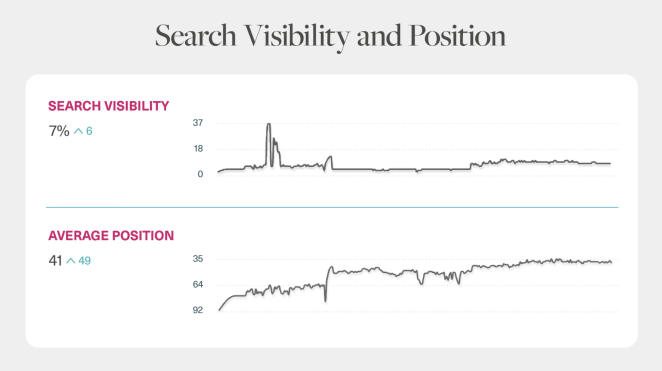 Over the past 12 months, one client campaign achieved significant improvements in keyword rankings and overall search visibility through a combination of technical enhancements, content improvements and long-term optimisation.
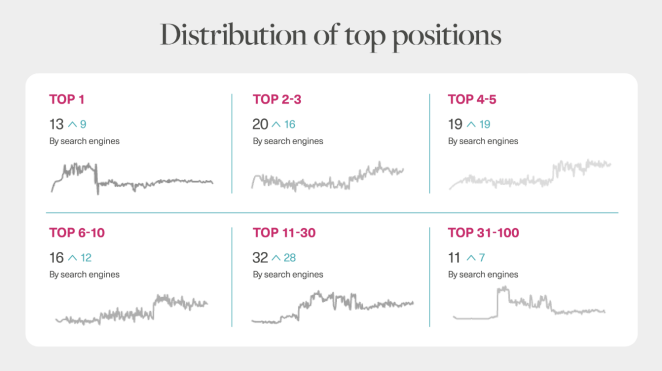
In this article, we'll look at Google's guidance, where GEO and AEO fit within the wider search landscape, and how businesses can improve visibility across both traditional and AI-powered search results.
What are GEO and AEO?
The rise of AI-powered search has brought a number of new marketing terms into the conversation.
GEO: Generative Engine Optimisation
GEO focuses on improving the likelihood of content appearing within AI-generated responses from platforms such as:
- Google AI Overviews
- Google AI Mode
- ChatGPT
- Perplexity
- Microsoft Copilot
AEO: Answer Engine Optimisation
AEO is centred on helping content become the direct answer to a user's query, whether through featured snippets, voice search or AI-generated results.
At first glance, both appear to be entirely new disciplines.
However, Google's own guidance presents a much more straightforward view.
Google states:
"From Google Search's perspective, optimising for generative AI search is optimising for the search experience and thus still SEO."
It's one of the clearest statements Google has made on the subject.
While search interfaces are evolving, the underlying principles remain largely unchanged.
Over recent months, we've seen an increasing number of clients asking whether they need a separate GEO or AEO strategy. In most cases, the greatest gains are still being achieved by organisations that have invested in strong technical foundations, clear site architecture and authoritative content.
Google's position on AI search optimisation
One of the most notable parts of Google's guidance addresses a question many businesses are asking: does SEO still matter in an AI-driven search landscape?
Google's response is direct:
"The best practices for SEO continue to be relevant because our generative AI features on Google Search are rooted in our core Search ranking and quality systems."
In practical terms, AI Overviews are not separate from Google's wider search ecosystem.
They are built on the same search index, ranking systems and quality signals that have powered search for years.
For businesses already investing in SEO, that should be reassuring.
At Think, we're seeing this reflected in client results. Over the last 12 months, we've helped businesses improve technical SEO, strengthen internal linking, optimise metadata and expand content coverage around core subject areas.
One recent campaign generated more than 512,000 Google Search impressions and over 5,200 clicks through a programme of ongoing SEO improvements.
Importantly, those results weren't driven by a dedicated GEO or AEO strategy. They came from applying proven SEO principles consistently:
- Technical SEO improvements
- Metadata optimisation
- Improved page targeting
- Stronger internal linking
- Increased topical authority
- Ongoing content development
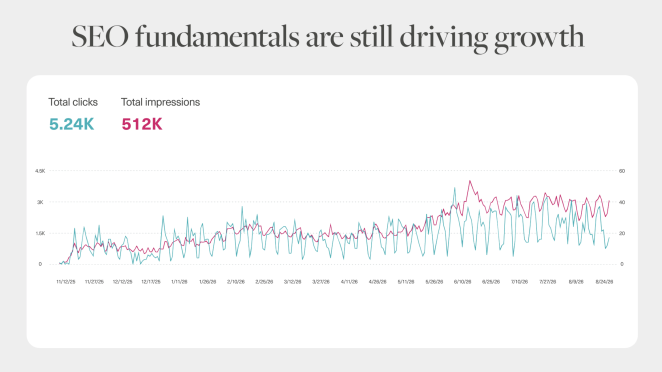
The evidence supports Google's view. Businesses don't need to abandon SEO because AI search exists. They need to continue investing in the foundations that help search engines understand, trust and surface their content.
Why technical SEO matters more than ever
A common misconception is that AI search makes technical SEO less important.
In our experience, the opposite is true.
Recent technical audits have revealed that the biggest barriers to AI visibility are often the same issues that have affected SEO for years:
- Poor internal linking
- Weak topical coverage
- Duplicate content
- Indexation issues
AI systems still need to:
- Crawl content efficiently
- Understand relationships between pages
- Interpret site structure
- Identify topics and entities
- Access accurate information
Without a solid technical foundation, both search engines and AI systems can struggle to interpret content correctly.
That's why our audits continue to prioritise:
- Indexation
- Crawl efficiency
- Internal linking
- Structured data
- Canonicalisation
- Page speed
- Core Web Vitals
These aren't outdated SEO practices.
They're the infrastructure that enables modern search engines and AI systems to understand your website.
The growing importance of topical authority
Another trend we're seeing is the growing value of topical depth.
Publishing a handful of isolated blog posts is rarely enough.
Search engines increasingly favour websites that demonstrate expertise across an entire subject area.
For example, a business selling industrial roofing products shouldn't rely on a single article about roof access hatches. It should support that topic with content covering regulations, specifications, safety requirements, installation guidance and maintenance best practice.
This creates a stronger signal of expertise and helps search engines better understand authority within a subject area.
Many of the websites performing well in AI-powered search experiences also have strong technical SEO, authoritative content and broad topical coverage.
At Think, we've seen how expanding content around related themes can significantly improve overall visibility.
Over the last 12 months, content covering SEO, AI search, technical SEO, agentic search and SEO copywriting generated more than 100,000 impressions in Google Search.
Rather than relying on a single page, each piece contributes to a wider topic cluster and reinforces authority across related search queries.
Why expertise still matters
Many organisations have responded to AI by dramatically increasing content production.
The problem is that more content doesn't automatically lead to better results.
Google continues to prioritise content that demonstrates genuine expertise, experience and value.
AI can undoubtedly help with:
- Research
- Content planning
- Draft creation
- Content repurposing
However, it can't replace industry knowledge, real-world experience or direct customer insight.
We've consistently found that the highest-performing content includes:
- First-hand observations
- Case studies
- Technical expertise
- Industry insight
- Practical recommendations
These are often the elements that differentiate useful content from generic content.
Our view at Think
The biggest mistake businesses can make right now is treating GEO, AEO and AI SEO as completely separate disciplines.
Google's position is clear:
"Optimising for generative AI search is optimising for the search experience and is still SEO."
The technology is changing.
Search interfaces are changing.
User behaviour is changing.
But the core principles remain remarkably consistent.
We see GEO and AEO as outcomes of strong SEO rather than replacements for it. Businesses with technically sound websites, valuable content and genuine expertise are often best placed to perform across traditional search, AI Overviews and future search experiences alike.
How we can help
At Think, we help businesses improve search visibility through:
- Technical SEO
- SEO Copywriting
- Content Marketing
- Website Design
- Digital Marketing Strategy
If you're unsure how AI search is affecting your online visibility, we'd be happy to review your website and identify opportunities for improvement.
Want to understand how prepared your website is for AI-driven search? Book a call with our team.