

What happens when you give creative people the freedom to explore beyond what they already know?
There is a danger in becoming too good at what you do.
You develop a process. You find your strengths. You become efficient. You learn which tools work, which techniques deliver and which routes get you to the finished result.
And before long, you can become very good at doing the same things exceptionally well.
But creativity doesn't stand still. Neither should the people behind it.
At The Mission, we introduced Curious Minds to give our creative team something that can be surprisingly difficult to find in a busy agency environment: the space to explore.
Not another training programme. Not a list of competencies to work through. And certainly not another exercise designed to make people better at the jobs they already do.
Something much more open-ended.
An opportunity to follow an idea, investigate an unfamiliar technique, get to grips with a different discipline or simply make something without knowing exactly where it might lead.
Because some of the most interesting creative discoveries happen when you stop working within the boundaries of what you already know.
Beyond the comfort zone
Curious Minds has taken us in some unexpected directions.
We've explored AI from its earliest days as a creative tool, getting to grips with its possibilities, understanding its limitations and questioning how it might influence the way we approach visual thinking.
We've looked at typography beyond its functional role. Not simply as a way to communicate words, but as a discipline in its own right. Something to manipulate, experiment with, challenge and rediscover.
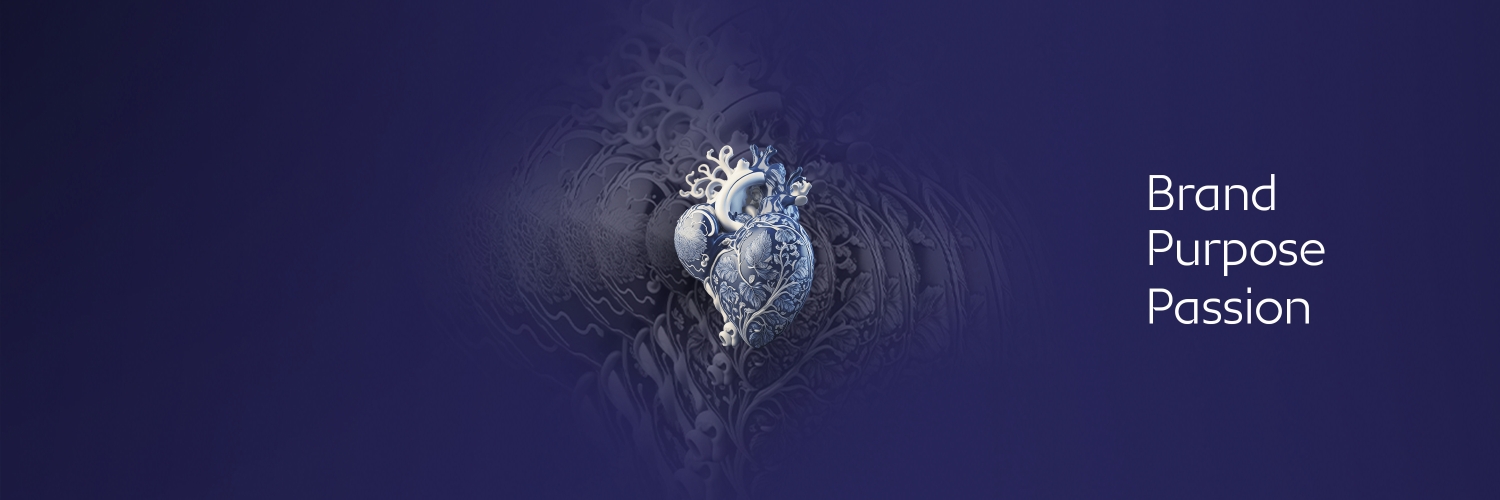
We've also gone in a completely different direction, taking imagery inspired by AI and exploring how it might be translated into ceramic craftwork.
That last one is particularly interesting.
An idea that begins in a digital environment is taken out of the screen and into the physical world. Suddenly, the process changes. Material has weight. Surfaces have texture. Imperfections become part of the character. The relationship between the person making something and the thing being made becomes much more immediate.
It is a different way of thinking. A different way of working. And a reminder that creativity doesn't have to begin and end on a desktop.
There is something valuable about making real things with your hands. About getting away from the familiar tools, slowing down and discovering what happens when an idea has to exist in the real world.
The value isn't always in the outcome
Not everything we explore needs to become a piece of client work.
That's rather the point.
If every experiment has to justify itself through a commercial outcome, it stops being an experiment. People gravitate towards what they already know will work. They become more cautious. The unfamiliar becomes harder to justify.
Curious Minds gives us permission to take a different approach.
Some explorations lead to techniques we can bring directly into our work. Others change the way we look at a brief, approach a problem or challenge an established convention. Some simply introduce us to something we wouldn't otherwise have encountered.
All of that has value.
The benefit isn't necessarily the thing you make. It's what you learn along the way, and what that learning makes possible next time.
A designer who understands the possibilities of physical craft brings a different perspective to digital work. Someone who has spent time exploring AI is better equipped to question where it adds value and where human judgement matters more. An appreciation of typography can change how you approach an entire visual identity.
Skills don't exist in isolation. They inform one another. And the more connections you make between different disciplines, the more possibilities you create.
Keep moving. Keep questioning.
The creative industry is changing at an extraordinary pace. New technologies arrive, established disciplines evolve and the tools we use today may look very different tomorrow.
We think it's important to be part of that conversation, not simply react to it.
But being curious about what's next doesn't mean abandoning what has always mattered.
Technology can open doors. It can accelerate thinking and introduce possibilities we might never have considered. But it doesn't replace judgement, taste, experience or the instinct to know when something is right.
And while we embrace the opportunity to explore new tools, we're equally interested in rediscovering the value of traditional skills and hands-on making.
The future of creativity doesn't have to be a choice between digital and physical, technology and craft, or innovation and experience.
It can be all of them.
That's what Curious Minds is really about.
Giving people the freedom to look beyond their immediate discipline. To experiment without a guaranteed outcome. To learn something unexpected. To make connections that might not have been obvious before.
Because we don't believe great creative work comes from knowing everything.
It comes from never assuming you've learned enough.