

Abdul Aleem Thahir Ali, Chief Engineer at The Hanging House, on how their latest innovative stunt not only revitalizes the art of experiential marketing but also bridges the gap between a digital-first youth and those who remember a more analogue past, ultimately setting a new benchmark for meaningful, memorable brand engagement.
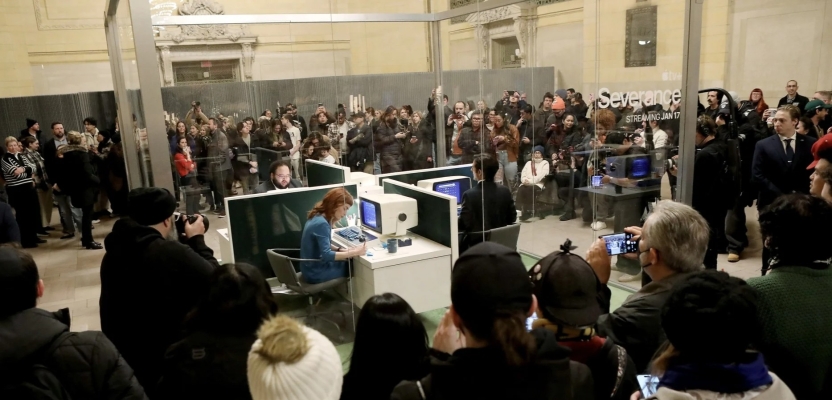
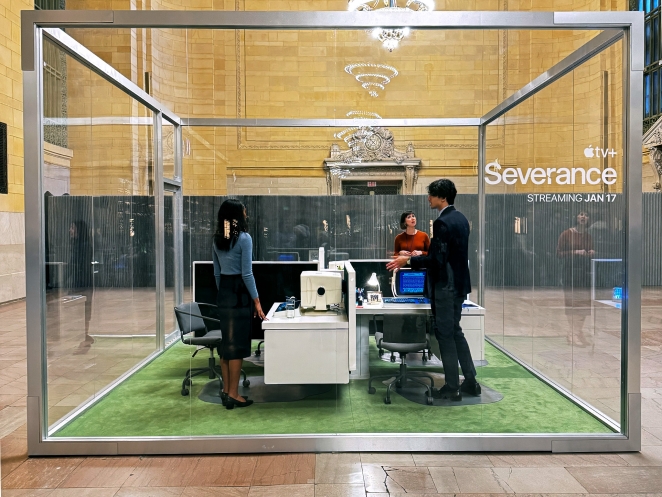
Unless you’ve been living under a rock, you’ll have seen the impressive Apple TV+ activation for the launch of the second series of Severance that got New York commuters stopping to stare in the middle of Grand Central Station recently.
It’s proof that the days of static designs and surface-level concepts to engage an audience are over. Today, audiences crave experiences that they can truly connect with - an umbilical cord that bridges the gap between themselves and the brand.
I grew up in the 90s and playing video games was my escapism. But for today’s younger generations raised in a digital-first world, it's real-world experiences that allow them to disconnect. In-person activations must still feel personalised even when targeting a mass audience of multiple generations.
So, how do you do this?
The Severance stunt proves it’s possible
It sounds simple but effective storytelling is still the crucial component. The Severance stunt last month captured the attention of everyone - dystopian, eerie and ‘deeply meta’, the glass cube placed in the middle of a bustling transport hub contained Severance actors going about their mundane, office duties at Lumon Industries.
The glass acted as a barrier between themselves and the memory of their own personal lives, providing the audience with a real-world recreation of the show’s corporate setting. They were even doing real macro data refinement, adding to its authenticity as a stunt.
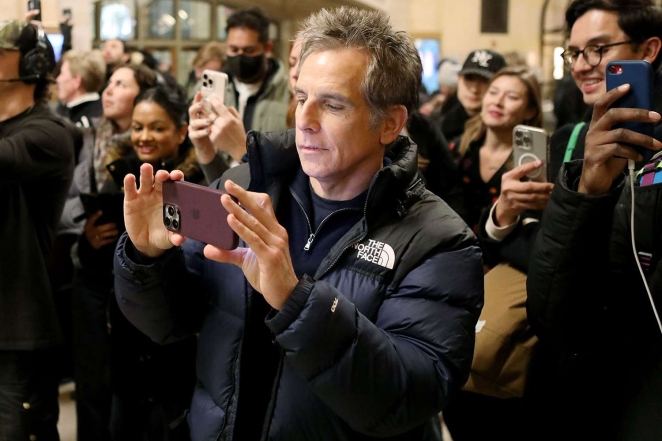
The execution was simple, yet powerful. It blurred the lines between fiction and reality, pulling in passers-by of all ages. Some whispered to each other curiously, others stood, phones raised, capturing moments ready to be shared with their online communities. Interestingly, Severance is an Apple TV+ series - a product of the digital age, yet the tangible, real-world stunt resonated with the crowd - both young and old. This is where many brands miss the mark.
There’s an assumption that digital-first campaigns are the only way forward, but as Severance proved, it’s not about digital vs. physical, it’s about blending both seamlessly to create something memorable and shareable.
Nostalgia as a tool
One of the stunt’s smartest moves was its use of nostalgia through the display of retro technology, such as chunky box PCs. This wasn’t just a design choice, it was a flashback to the fizzy static and beige boxes that characterised the 90s/early 2000s working culture. However, the Gen-Z generation - who grew up in a world of sleek, ever-evolving tech - see this as an intriguing relic which sparks their curiosity.
The idea that this would have unearthed some sentimentality is backed by a Deloitte study that suggests in-person collaboration with others is highly valued amongst this age group. Nostalgia, in many ways, serves in this case as the tool to capture the train station’s multigenerational audience.
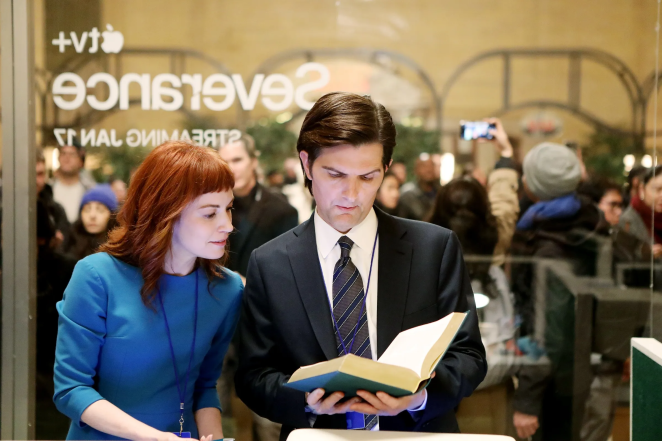
Blending physical experiences with innovative technology for maximum appeal is at the heart of what we do. In many ways, this is why the Severance stunt stood out to me; it's an example of how technology can be used subtly to make the experience more enjoyable. It’s proof that whilst the most technologically advanced campaigns might be the most impressive to audiences, it’s often the more discreet uses of technology that leave lasting impressions.
I saw this firsthand whilst working on an activation for Du Career Fair. The goal was simple - to create a fun and engaging pop-up that would attract new, young talent. The thought of manufacturing an elaborate, high-tech display was tempting but I knew that digital-native Gen Zs value simplicity above all else.
It’s why we came up with the idea of using retro, coin phone booths, instead. Programmed with AI, audiences could ask questions about job openings available, and receive personalised responses. Although targeted towards Gen Zs, its clever AI interface concealed by a nostalgic, retro design attracted crowds from a multitude of generations.
I have no doubt 2025 will see brands recognise further the power of experiential marketing events as a key to real engagement. Severance proved that activations don’t just need to be seen, they need to be felt. It’s crucial for brands to understand what audiences want from them. Gen Z no longer just buys brands - they buy into them.
If an activation doesn’t feel intentional, immersive, or personal, it simply won’t land. But this isn’t just a Gen Z mindset—it’s the new expectation across generations. Forget passive experiences, if it’s not personal or meaningful, it’s forgettable.