

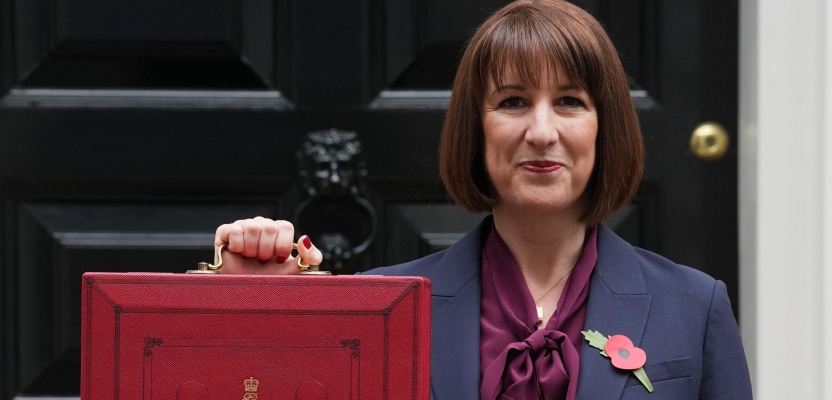

£40 billion in tax rises. That’s the headline that will be reverberating across the internet after the first labour budget in 14 years and the first to be delivered by a female Chancellor. I sat and watched the whole 90-minute spectacle and, while Rachel Reeves certainly tried to frame it as a triumphant budget, it came across as remarkably deflated.
They “had no choice” and “inherited a disaster”. This is not the language of triumph. It is, however, the language of compromise and, to be frank, that might be exactly what we need, in the long run, at least.
There were lots of mic drop moments, including significant rises in national insurance, tax thresholds and capital gains. On the other end of the spectrum, we saw major investment pledges in education and the NHS, as well as a 6.7% rise in the minimum wage. But that’s the wood covered, what about the trees?
To unpack exactly what the budget means for us in the creative sectors I sat down with a handful of industry leaders to pick their brains.
Political Coherence vs. Pro-Growth
The Budget has undeniably brought clarity after months of speculation, yet questions remain about its pro-growth impact on the creative and small business sectors. Richard Exon, Founder of Joint, acknowledges the political coherence of Reeves' budget, though he feels it falls short on fostering growth in the way many had anticipated.

He explains:
“Business finally has some clarity after months of unwelcome speculation and weeks of leaking and kite flying. Given 25% is effectively the highest UK Corporation Tax has ever been, it feels disingenuous to dress the freeze up as pro-business.”
While the Budget may provide some immediate stability, Exon cautions that the marginal increase in employer NI contributions, although lower than expected, may not be as pro-business as it appears:
“It’s hard not to feel a little ‘managed’ when the employers’ NI contributions increase by 1.2% versus the much trailed 2%. That said, Rachel Reeves’ first budget is undeniably politically coherent, overdue though it was. What’s less clear is how it has any additive ingredients that live up to the bold claim of being ‘pro-growth’.”
In a sector that relies on small businesses, many in the creative industry are likely to feel that the Budget lacks substantial support for scaling up, limiting their ability to invest in growth-driving projects and talent acquisition. For creative enterprises already grappling with high corporate tax rates, the anticipated growth benefits may not fully materialize.
A Balancing Act: Serving the “Many, Not the Few”
In an effort to address economic instability, the Budget seems to aim for a balance that supports both business and “working people.” However, this strategy has left some industry leaders questioning the practical implications. Fergus McCallum, CEO of TBWAMCR, notes that the Budget has emphasized a message of stability and inclusivity, but its execution appears overly ambitious.

He states:
“The signals have been there for all to see as the Government has briefed out the ‘it’s not us, it’s them’ message on black holes and chaos. But in reality, the Budget has amplified yet another election manifesto that at best seems to have been economical with the truth.”
McCallum’s remarks reflect the growing frustration among creative business owners who feel that the Budget’s messaging around supporting “the many” may be at odds with the realities of rising operational costs, particularly for small businesses. He questions the feasibility of a budget that attempts to address the needs of all stakeholders without a clear focus:
“Let’s face it, trying to be all things to all people never works – in life or in business. So, try as I might, I can’t help but be disappointed in the Budget and what it means for business and working people.”
The concern is that while the Budget seeks to stabilize the economy, the practical outcomes for the private sector—and especially for small businesses that form the backbone of the creative industries—may be negligible.
The Impact on Small Businesses and Job Creation
Small businesses, which account for 99% of private sector employers and employ 82% of the UK’s private workforce, are especially vulnerable to shifts in tax and employment costs. McCallum highlights that increasing the employer NIC by 1.2% while lowering the threshold from £9,100 to £5,000 could place significant strain on smaller employers:
“These are the very entrepreneurs and working people sustaining our communities. The people the Government has pledged to support to rebuild our economy. A 1.2% increase on Employer NIC, and lowering the threshold from £9,100 to £5,000, is quite simply a tax on jobs for these businesses and the people they employ, to suggest otherwise is just duplicitous.”
This tax on jobs may create a burden on creative entrepreneurs and small agencies, potentially deterring them from expanding their teams. With rising operational costs, small creative businesses may need to allocate more resources to maintain their workforce, limiting their ability to invest in projects, tools, and talent that drive growth and innovation.
A Strain on Hiring: National Insurance and International Talent Sourcing
The increase in national insurance contributions under the 2024 Budget raises a red flag for hiring, particularly for small businesses in creative sectors where cost-sensitive decisions can make or break a project. Asad Dhunna, founder and CEO of The Unmistakables, expressed concern over how these changes will disincentivize UK hiring:

“The increases in national insurance is putting UK businesses off hiring and may trigger more international hiring.”
Creative industries are known for their high percentage of freelance and small-business-driven activity, where budget constraints often dictate hiring decisions. Dhunna cautioned that while Labour’s agenda appears geared towards large corporations, small businesses, which comprise a substantial share of the creative workforce, may bear the brunt of these tax shifts:
“Much of Labour’s agenda goes towards big business, but UK is made up of a lot of small businesses.”
If these businesses lean toward international hiring due to local cost pressures, the UK could face a talent outflow, diminishing its creative industry’s competitive edge. Dhunna also noted the conflicting messages on productivity and hybrid work models:
“The growth agenda needs to be balanced with inclusion - Labour are giving out mixed messages about productivity and hybrid working.”
A lack of clarity around hybrid work policies, especially for creative freelancers and startups, may exacerbate these challenges, particularly when cost increases drive recruitment abroad.
Tax on Dividends: Financial Hit to Freelancers and Sole Traders
Freelancers are the backbone of the UK’s creative economy, and a tax increase on dividends could leave many in financial jeopardy. Yalin Solmaz, a GenAI expert with a background advising top influencers, highlights that the tax hikes on dividends will disproportionately affect freelancers, who make up nearly one-third of the creative sector:
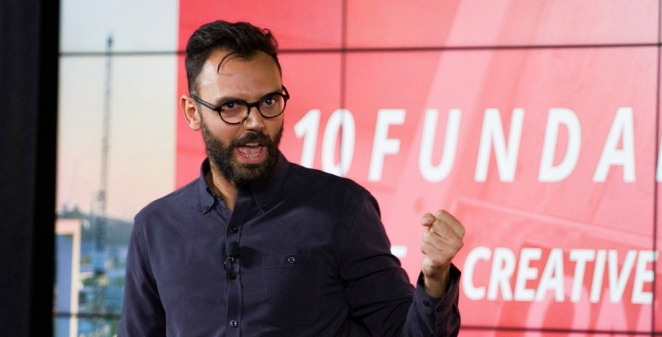
“From a purely financial standpoint, the increase in tax on dividends will be a blow to the creative industry where 32% are freelancers (compared to 16% of the overall UK workforce), who tend to pay themselves via dividends.”
For creative freelancers, who often operate on tight budgets, these changes may make it difficult to sustain a viable income, driving some to consider other employment or even geographical relocation.
AI Adoption: Necessity or Risk?
The burden of higher employer national insurance might inadvertently encourage businesses to invest in AI solutions, seeing technology as a way to offset higher payroll costs. However, this rapid shift could be premature for many creative organizations that lack AI expertise or training. Solmaz noted the potential consequences:
“Higher employer national insurance might also result in faster GenAI adoption by business (instead of hiring people) but I worry about this because most businesses are nowhere near ready to make the most of AI or know where to get proper AI training.”
AI offers remarkable possibilities, yet a swift pivot to automation could disrupt traditional creative roles and quality. Without adequate training or resources, the UK’s creative sector could face a precarious adjustment period, potentially dampening innovation.
The Missed Opportunity of AI Tax Credits and Tech Investment
Barry Whyte, founder of one of the UK’s leading AI training companies, suggests that the government’s reluctance to introduce AI tax credits is a missed opportunity for the UK to reinforce its position as a tech and innovation leader:
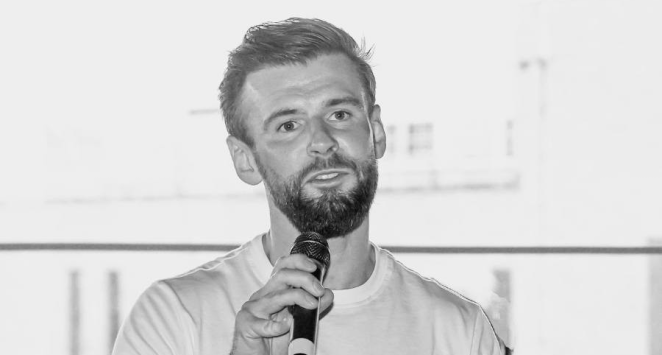
“AI is presenting all economies with a one-time, immediate opportunity to boost productivity and improve working people’s lives. Among the countless leaks for this week’s budget, not a single mention of investment in AI-fuelled growth has been made. Here’s my idea: tax credits for businesses to spend on AI services.”
Whyte pointed out that without such incentives, the UK risks stalling in tech and innovation, particularly in industries like creative media, where AI could enhance content creation, production, and distribution. He noted that regions like the Middle East are actively investing in AI to support growth sectors, warning that the UK’s competitiveness is at risk:
“Heaping more and more cost on to employers disproportionately impacts mid to high-salary jobs. It will drive the growth industries that the UK needs - such as AI - to other countries which are scrambling over each other to offer incentives for relocation.”
The omission of R&D tax credits, Whyte argues, could also send tech scale-ups overseas, a development that could further deplete the UK’s creative talent pool.
Pension Reform: Gender and Income Gaps in the Creative Workforce
The proposed pension tax reforms and their potential effects on the diverse creative workforce are another source of concern. Simone Carasco, founder of EvolvedMe Training & Consulting, explains that these reforms may not adequately address the unique financial needs of diverse employee groups, including part-time and freelance workers, who comprise a large portion of the creative sector:
“Pension Taxation Changes: Will not ensure equitable financial futures for all employees. The proposed pension tax reforms may affect retirement planning, particularly for diverse employee groups.”
Creative professionals often experience nonlinear career trajectories, with many women taking time off for family responsibilities or balancing multiple part-time roles. Carasco emphasizes that reforms must consider factors like gender, income, and employment type to support equitable financial planning:
“Lower-income employees might find it more challenging to contribute to pensions and could be disproportionately affected by changes in tax relief.”
Addressing these disparities is crucial for securing financial futures, especially for creatives, whose pension planning is often hindered by inconsistent income and employment patterns.
A Strain on Hospitality and Attraction of Young Talent
The hospitality sector, integral to the UK’s vibrant arts and culture scene, also faces challenges in the wake of Reeves’ Budget. Nicolas Budzynski, CEO of La Petite Maison restaurant group, notes that rising operational costs are impacting the industry’s ability to retain young talent:
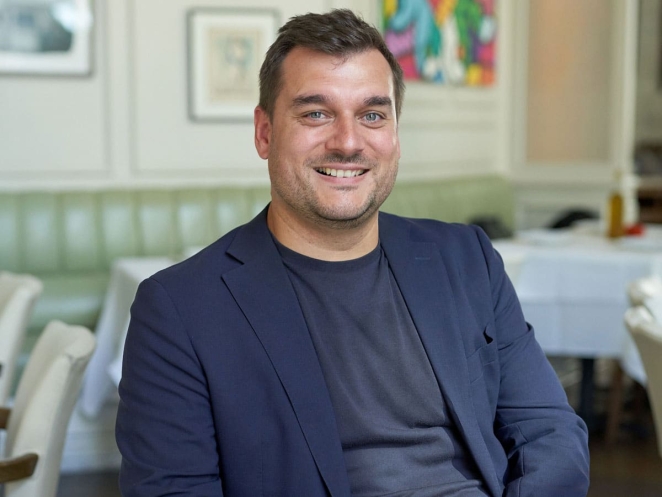
“In the UK hospitality industry, higher taxes are discouraging young workers, many of whom are relocating to places like Dubai, where employment conditions are more favourable.”
Budzynski warns that without addressing these competitive disadvantages, the UK’s appeal as a hub for creative talent will decline, with skilled professionals seeking better opportunities abroad. This trend may also affect the creative industries directly, as young talent in hospitality, a significant component of cultural events and productions, may shift their career prospects internationally.
Budget Constraints and Creative Longevity: Maximizing Value in the Creative Sector
The Budget also highlights the importance of balancing resources, particularly in sectors like creative industries where budgetary constraints are common. Simon Levitt, Global Creative Technology Director at Imagination, underscores that limitations—whether financial, time-related, or stemming from complex briefs—are not necessarily a hindrance to creative excellence but an opportunity to drive innovative, effective solutions:

“Creativity without budget boundaries is easy, but true creative excellence comes from thriving within constraints whether financial, time-bound, or responding to a complex brief (not all products start on equal footing). Every brand should ask not just for creativity, but for the business case behind it, how our ideas drive ROI today and build value over time.”
Levitt advocates for a strategic approach to creative investment, one that maximizes resources by designing assets with long-term usability and adaptability. In a budget-conscious environment, this forward-thinking approach helps brands and agencies optimize their returns on creative expenditures. Rather than producing one-off assets, Levitt’s team at Imagination has refined a reuse strategy that ensures creative materials remain relevant and versatile across various platforms, from above-the-line campaigns to interactive experiences and gaming:
“The smart play is designing assets with longevity. Our reuse strategy means that ideas and assets aren’t one-offs; they’re crafted with versatility to extend across different media… By ‘sweating the asset,’ we’re building a toolkit for brands that serves short-term returns and also scales with evolving needs, proving that creative investment can work doubly hard for the here and now and the long game.”
Levitt’s insights suggest that with strategic planning, the UK’s creative sector can not only navigate but thrive under the financial limitations posed by the 2024 Budget. By focusing on long-lasting, versatile creative assets, brands and agencies can foster both immediate ROI and sustained value, building a resilient foundation for the industry in the face of changing financial landscapes.
In this context, Reeves’ Budget could serve as an impetus for UK creatives to adopt Levitt’s philosophy: prioritizing adaptability and longevity in design to optimize outcomes and reinforce the sector’s economic resilience.
Conclusion: A Call for Balance in Supporting the Creative Sector
The creative sector, which relies heavily on innovation, diversity, and collaboration, ultimately requires balanced policy measures that protect its workforce and foster growth. Did today’s budget offer that? We can only speculate. The overall mood among professionals, however, is a little dour.
It was never going to be pretty and mid-sized agencies and freelancers are the ones who will probably bare the brunt of the pain. I, however, choose to remain cautiously optimistic, primarily because the government proved today that they were willing to make unpopular choices. And sometimes, it’s the unpopular decisions that lead to the most fruitful outcomes.