
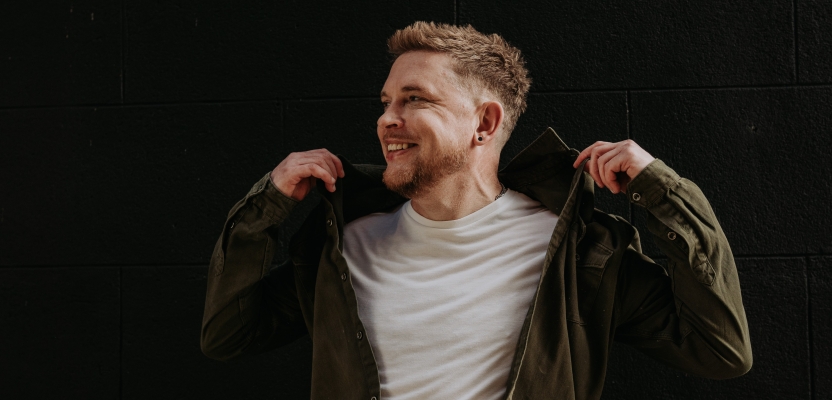

Syncsmith, the pathfinding music consultancy known for championing experimental and leftfield sound cultures, has announced the appointment of Rob Dunham as Music Supervisor.
A seasoned senior producer and audio branding strategist, Dunham joins with a remit to expand the consultancy’s immersive sound design offering - fusing artistic sensibility with technical rigour to redefine how brands and broadcasters engage with sound.
With a decade-long track record in crafting sonic signatures for major global campaigns and television identities, Dunham’s arrival signals a sharpened focus for Syncsmith at the intersection of avant-garde composition, audio branding, and immersive audio. His work is known for translating complex emotional briefs into multidimensional sound palettes, pushing beyond the constraints of genre and format.
“Rob brings an incredibly refined ear, but more than that, a forensic understanding of how sound operates in both commercial and cultural space” says Gavin Mee, founder of Syncsmith. “He’s a relationship-driven operator who’s comfortable residing in the nuance, balancing the artistic with the strategic, the conceptual with the technological.”
Previously, Dunham has served as a pivotal figure at A-Mnemonic, where he helmed music supervision and original composition across campaigns for top-tier clients. His sonic fingerprints can be found on award-winning ad work, identity systems, and widely recognisable broadcast themes, his process always rooted in the idea that sound can (and should) do more than underscore, it should resonate.
Before that, his formative work at Havas London gave him direct exposure to high-stakes creative production, sharpening his instincts within agency ecosystems while cultivating his deep commitment to creative fidelity.
“Joining Syncsmith feels less of a pivot and more like a natural alignment” Dunham explains. “I’ve always been drawn to the liminal space where art, design, and technology fuse, and that’s exactly where Syncsmith operates. Their curatorial lens, their approach to sound as a design material, their refusal to compromise on quality, it’s rare in this industry, and I’m excited to contribute to something that is packed with integrity and feels genuinely future-facing”
As brands continue to look for deeper, more sensorial connections with audiences, across platforms, mediums and spaces, the role of sonic identity has grown from an afterthought to a strategic imperative. With Dunham on board, Syncsmith is positioning itself not just as a music consultancy, but as a creative infrastructure for a new era of sonic storytelling.
To get his perspective, we asked Rob a few questions about his craft and the wider state of the industry:
Sound Design can mean a broad range of things, and its meaning is often misinterpreted outside of the post-production inner-sanctum. What’s your take?
“For me, sound design isn’t just a sprinkle of effects or a few pretty textures, it’s about raw storytelling, something that can be used as a weapon. Every noise, every swell, every crackle has to earn its place. It’s the heartbeat, the kidney punch, the thing that grabs you by the collar and won’t let go. Every hiss, thump, scrape, and surge has to mean something. The best sound design messes with your pulse, throws goosebumps up your arms. I love sounds with “teeth” - rasping sounds that rip through the mix and force people to listen. When it’s done right, you don’t just hear it, you feel it. It’s not just background decoration, but the very spinal cord of the narrative.”
What, in your view, makes for compelling and impactful Sound Design?
“Compelling sound design isn’t just about using the newest plugin or preset effect, it’s about using skill, instinct, and producing a unique sound that actually means something. A single breath, a microscopic sound, or silence even - can hit much harder than a wall of noise because there’s an innate understanding of timing, tension, and when to hold back. A lot of the stuff out there could be deemed as safe, using the same recycled stock sounds. What really excites me is designers who do the unexpected, forge new technologies, techniques and make listeners uncomfortable. Good sound design makes people feel something. They know when to let things explode and when to cut to silence, making the audience lean in and pay attention.
Audio Branding as a concept, was expected to take off with advances in voice-tech like Alexa, but growth has slowed. Why do you think that is?
“The potential is still there, but I feel a lot of brands underestimated how complex sonic branding really is and are quite latent in terms of latching onto this as a concept. It’s more than just a jingle, it's a critical part of a brand's language and therefore needs to have deeper rooted meaning and work consistently across different platforms and campaigns. It's not a task that should be underestimated by any stretch and the brands who have invested or are about to invest will undoubtedly see the real benefits.”
Any recent Sound Design or Audio Branding projects that stand out to you?
“The sound design in Dune: Part Two really blew me away. It didn’t win an Oscar for Best Sound Design for nothing! From the very first scene, you feel it working on you. The sound isn’t just background, it’s a character in its own right. They blended real desert sounds with Foley effects, sand crunching underfoot, winds that howl and feel alive, every tiny detail counts. The sound of the mechanical “thumper” device used to lure the sandworms is almost imperceptible, yet it created an enormous amount of tension. The Ornithopter blades chopping, the subtle mechanical creaks, every little sound is deliberate and purposeful. What really stood out to me was how the sound, music, and silence all worked together to build an entirely new world.”
I note you’ve also worked as a Producer, how does that work fuel your creativity within Music Supervision and Sound Design.
“Working as a producer taught me how to really understand a brief, what a client or director is trying to achieve, even if they can’t articulate it clearly, and to identify the emotion that the music or sound that needs to be conveyed. Once that's understood, it’s much easier to judge whether a piece of music or a sound design idea will work or not. Beyond that, producing trains you to think outside the box and explore other approaches. It fuels creativity to help find music that’s different, something that stands out and brings a fresh perspective. It also sharpens your ear so you can tell in seconds if a track hits the right mood, rhythm, and energy.
Finally, what advice would you give to aspiring sound designers?
“Listen widely, experiment constantly, and don’t be afraid to push against convention. The industry needs fresh voices, and often the best ideas come from unexpected places.”
With Rob on board, Syncsmith strengthens its reputation as a home for bold, avant-garde sound. Founded on principles of ethics, authenticity, and craft, the consultancy has collaborated with brands such as Louis Vuitton, Hublot, Gucci, Moncler, Dior, Nike, Mercedes, Apple and Meta, while representing pioneering artists including Aïsha Devi, Vessel, Laurel Halo, and KMRU. Syncsmith’s mission is evident: to simplify complex audio acquisition and connect ground-breaking creators with projects that demand compelling sonics.
www.syncsmith.com