Silver Lining Agency | B Corp
Collingwood
ABOUT
Insight
Australia is currently facing an unprecedented marine disaster: a toxic algal bloom stretching across 500 kilometres of South Australia’s coastline. The number of animals killed and habitats destroyed is on a scale equivalent to the black summer bushfires.
The algal bloom was not inevitable: scientists have said it was “foreseeable and even predicted.” And yet our politicians are too scared to name the cause: out-of-control pollution from fossil fuels is causing our oceans to warm, and it is getting worse every year.
The South Australian Government has called the bloom a ‘natural disaster.’ But the Government has so far refused to acknowledge the root cause of the deadly bloom – the impact of pollution on our climate. And yet scientists are clear that the bloom is an unnatural disaster, caused by fossil fuels heating the planet.
Obectives
To educate residents (and tourists) in South Australia that, one year on, the Algal Bloom crisis is not only a direct result of climate change but also an indirect result of fossil fuel companies like Santos, whose headquarters are based in Adelaide.
Execution
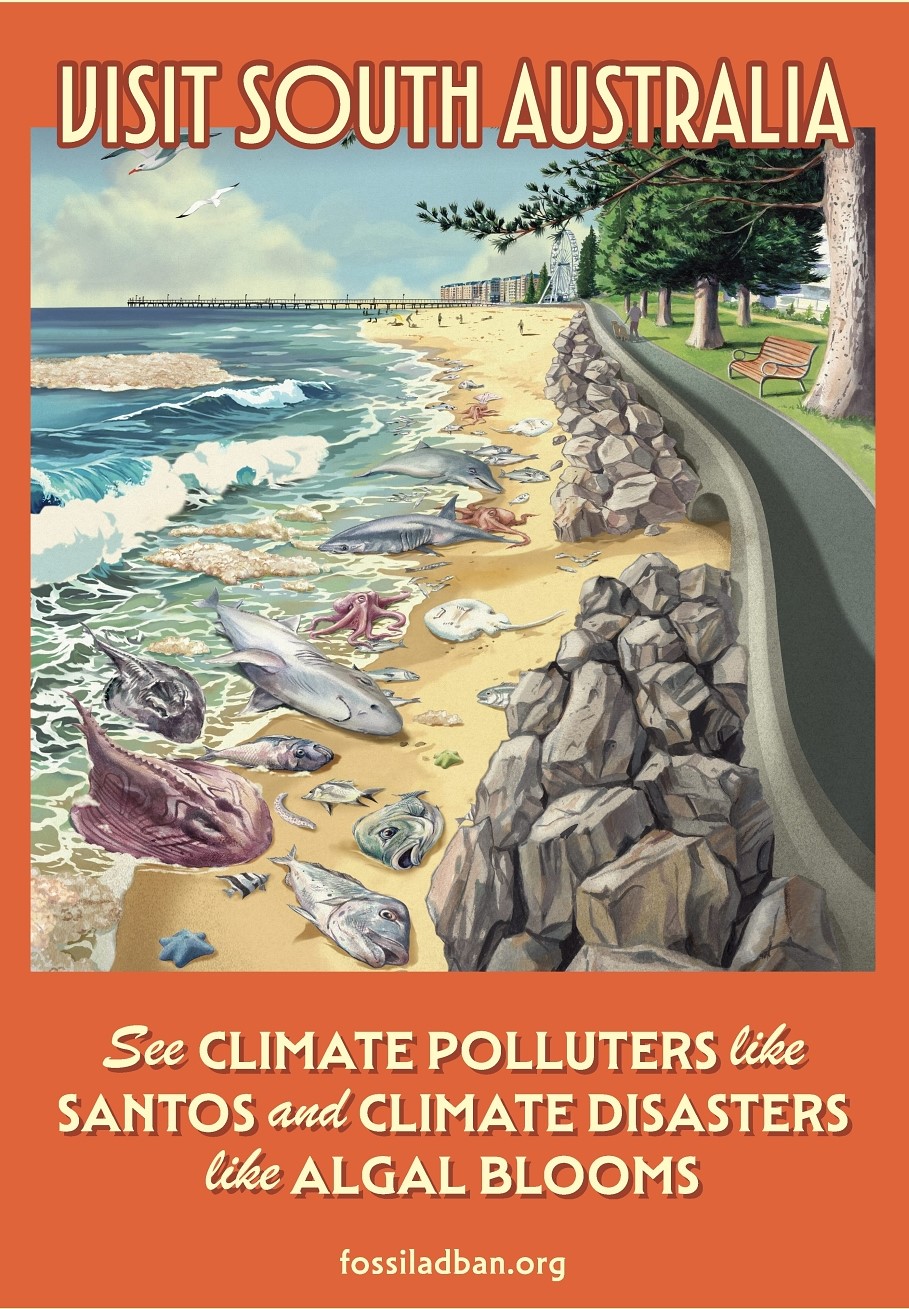
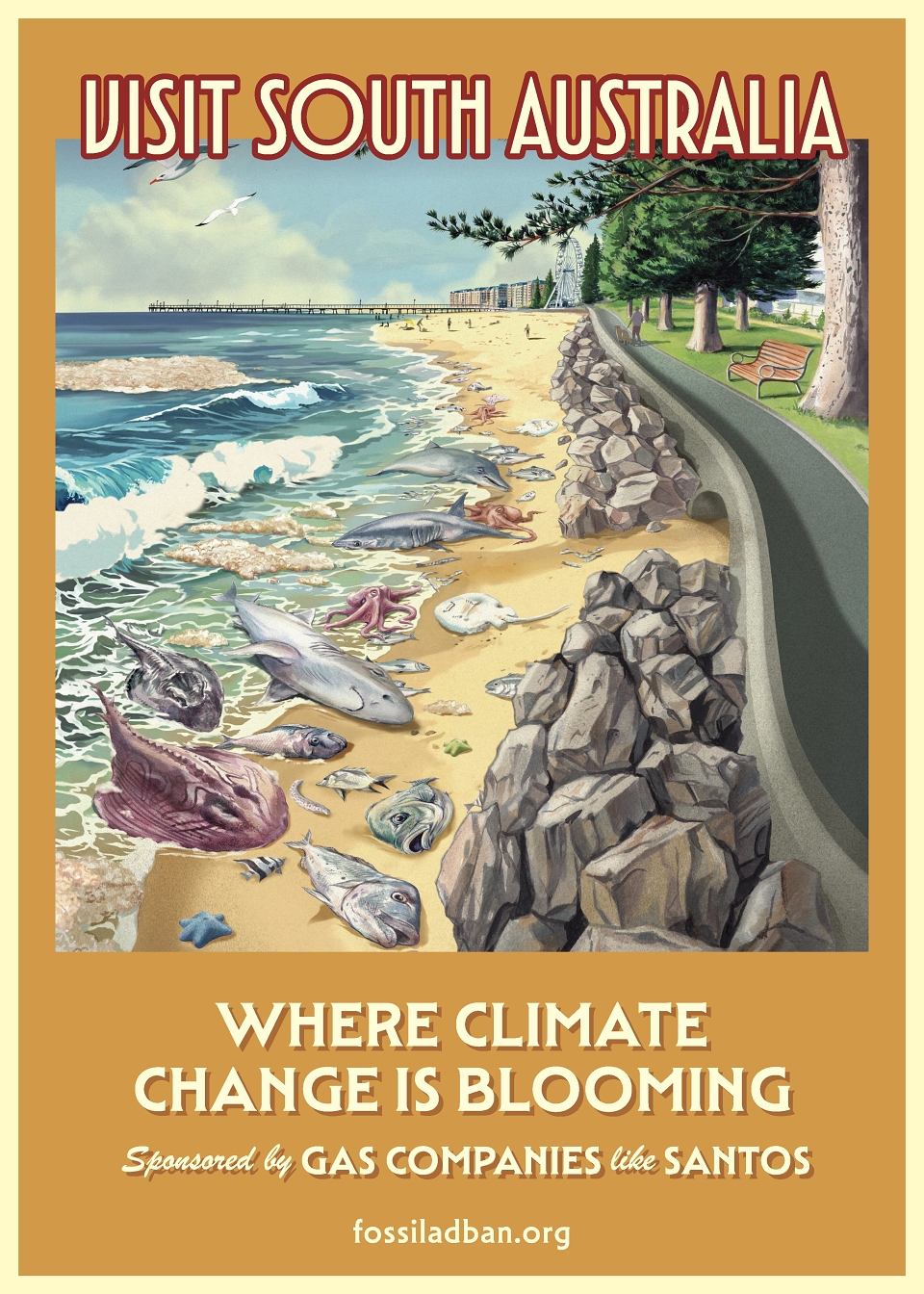
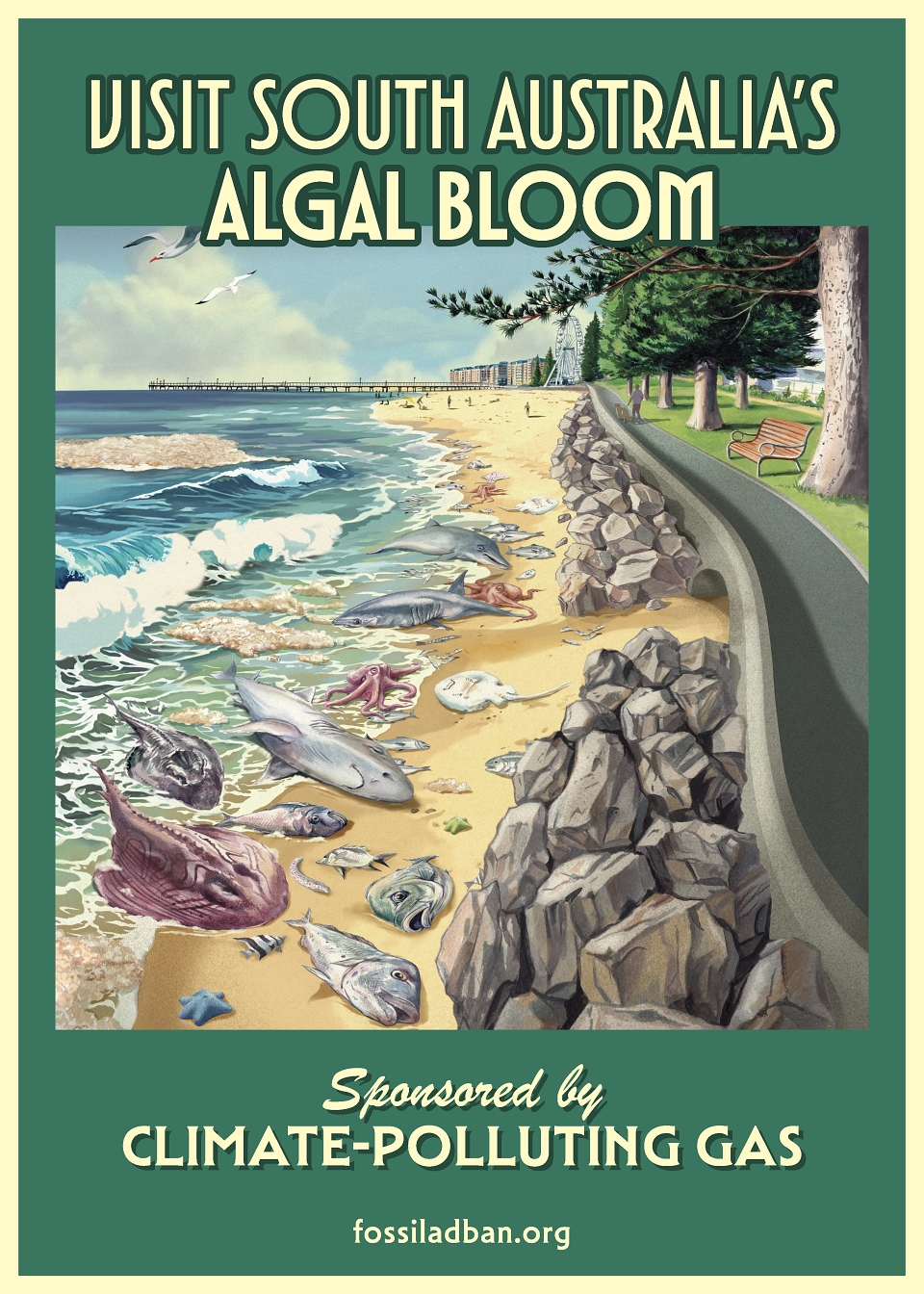
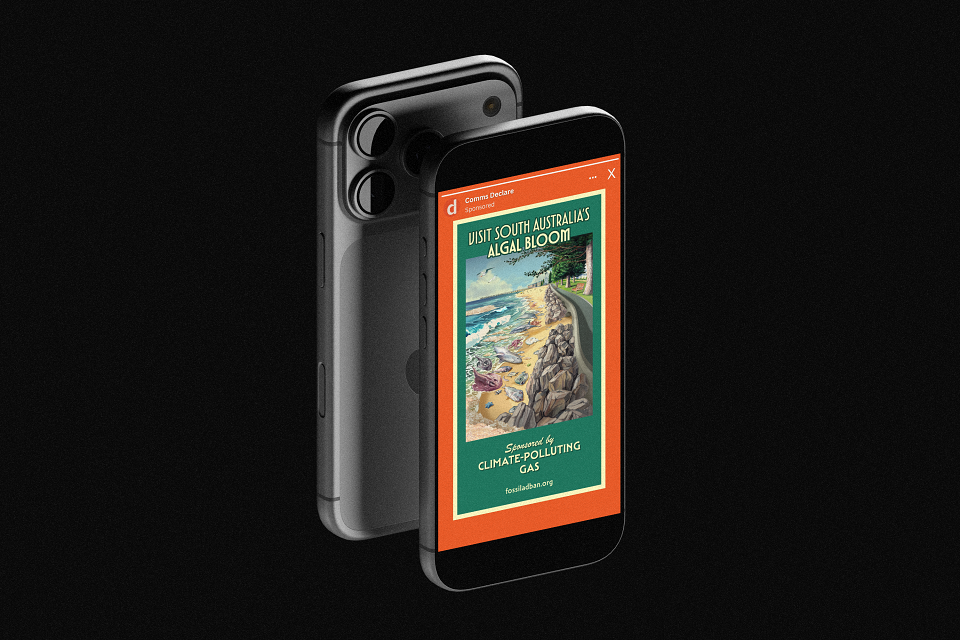
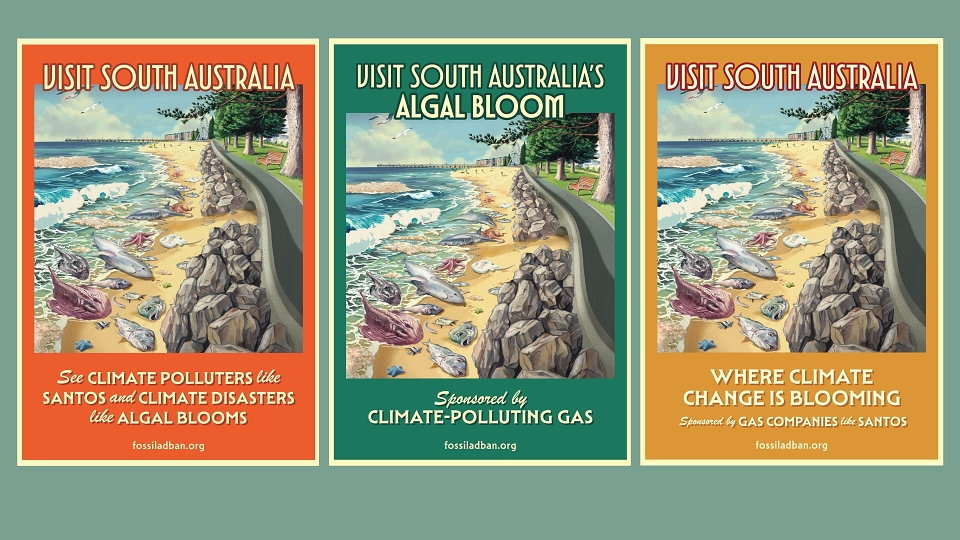
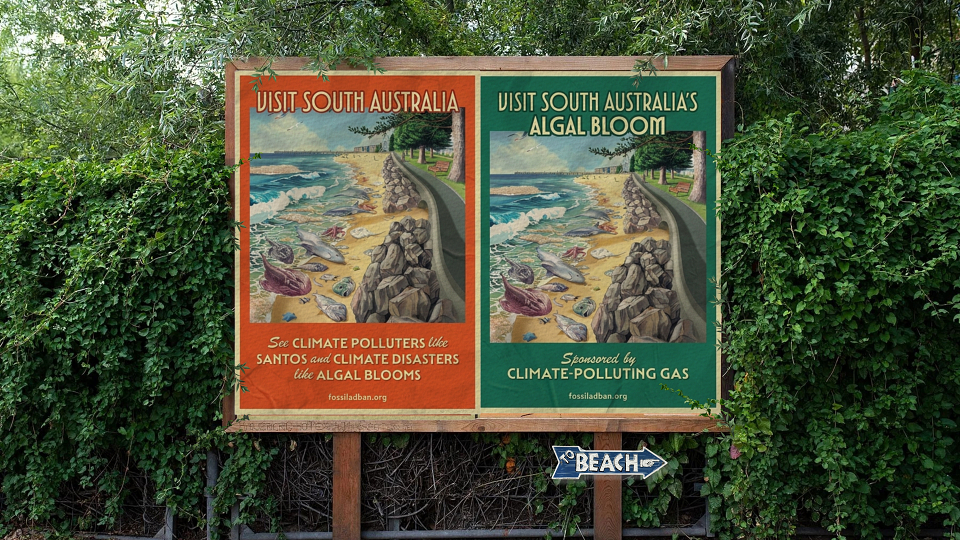
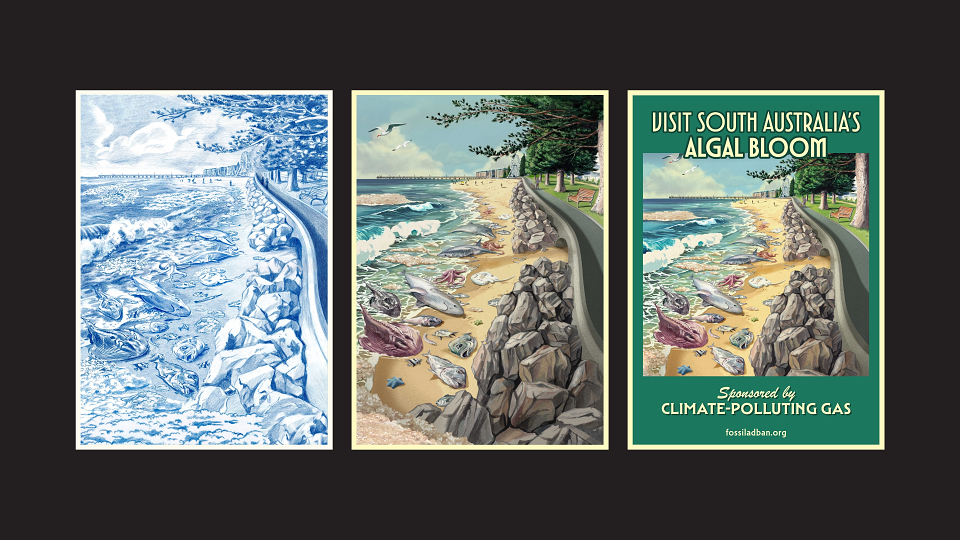
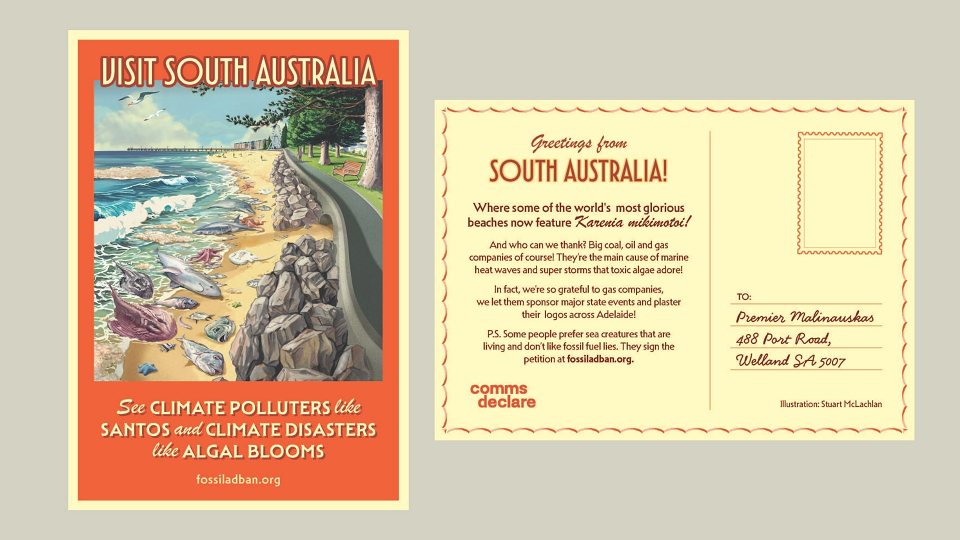
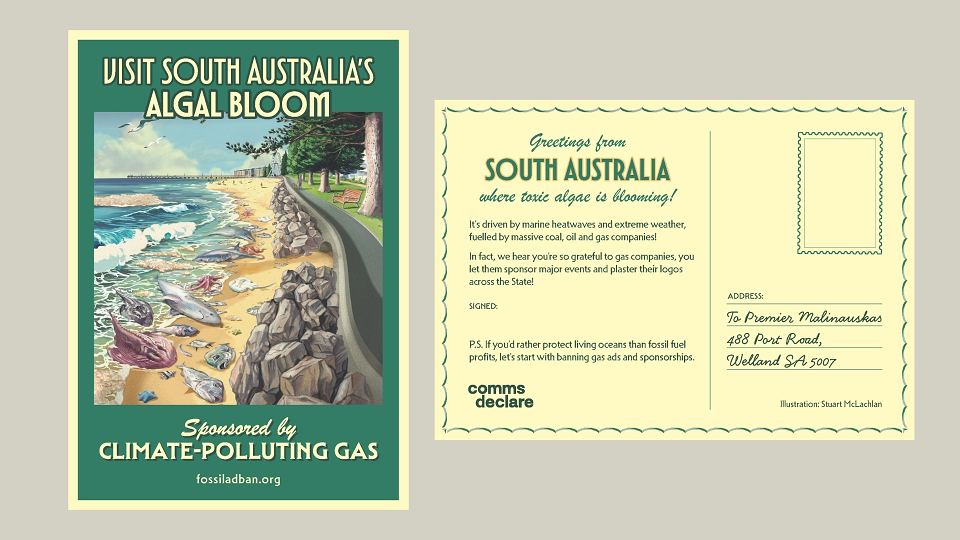
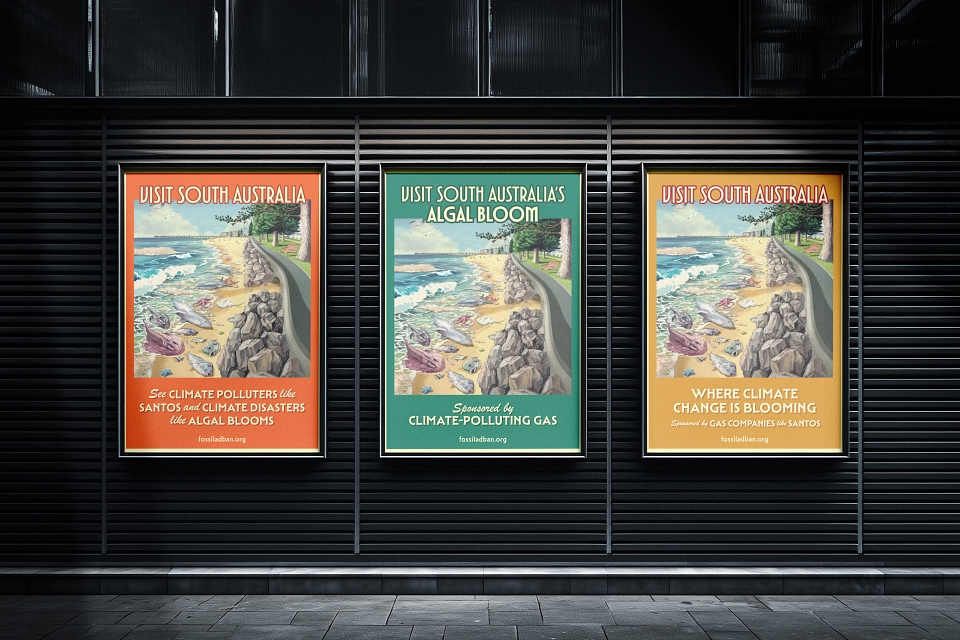
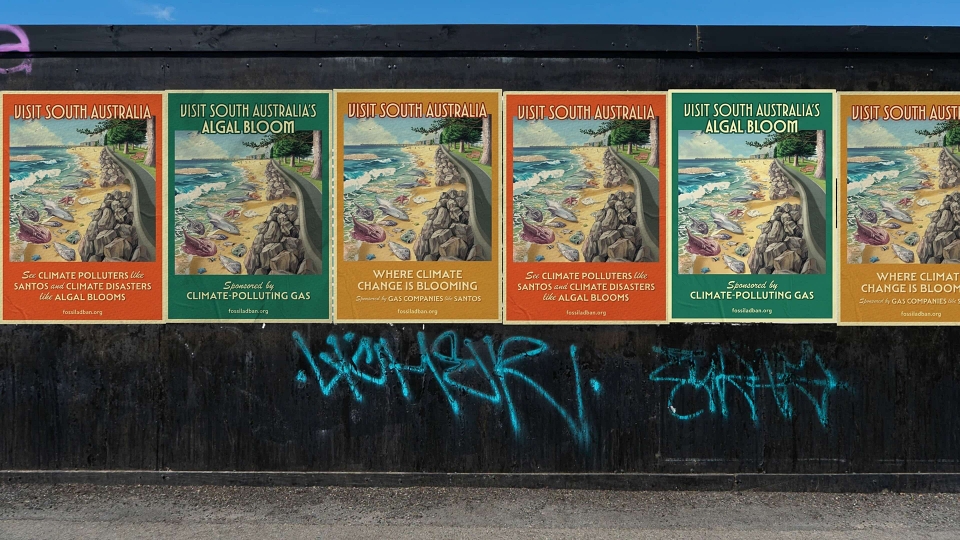
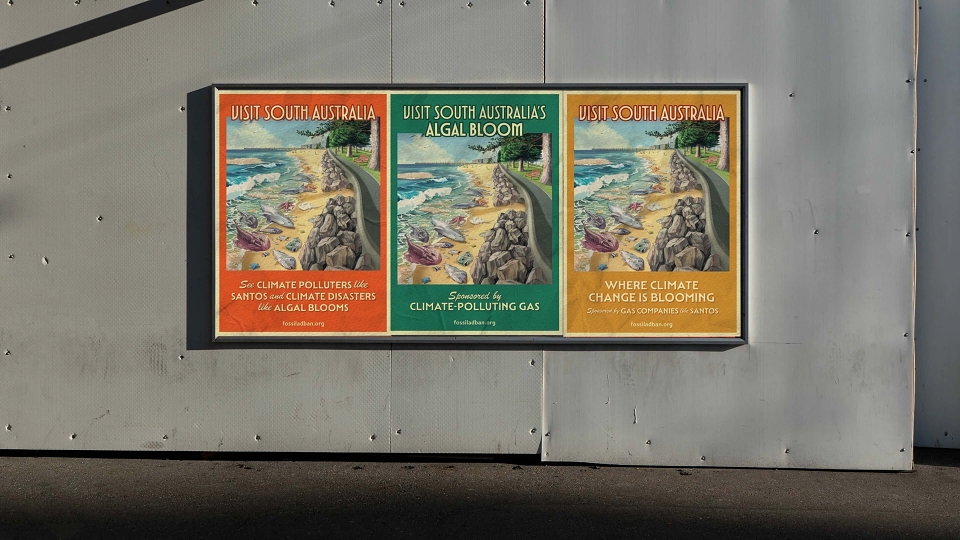
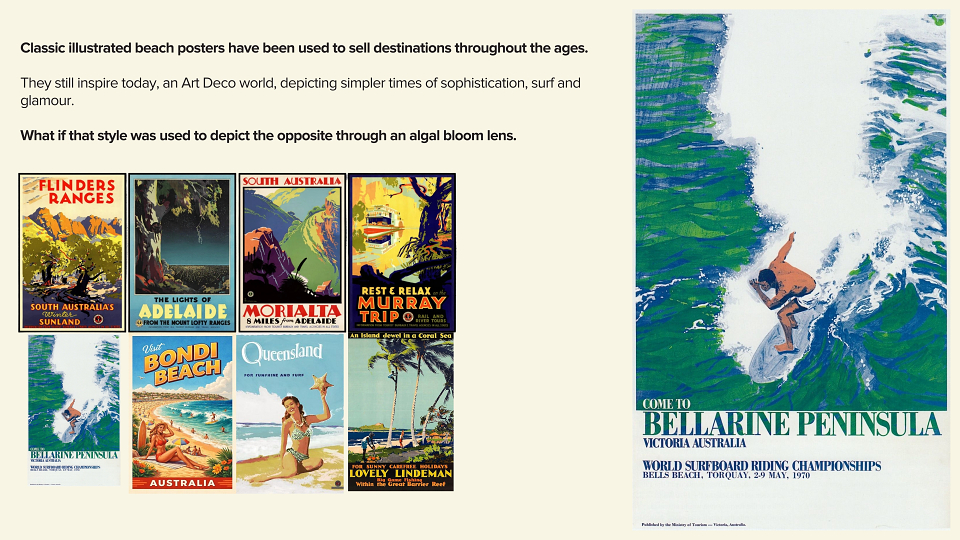
Art Deco tourism posters have been given a sinister twist in a campaign by climate communications charity, Comms Declare.
The campaign aims to show that the unprecedented ecological, health and economic disaster can be largely blamed on climate change, still being fueled by the burning of coal, oil and gas.
The campaign is directed at Santos, South Australia’s largest company and, according to the Clean Energy Regulator, the 26th-largest greenhouse gas polluter in Australia. Three climate consultants were contracted to select this final concept. The strategy devised was not to directly depict the reality of the sea-life graveyard through gritty photography. In focus groups, showing this type of imagery to local communities angers and renders them feeling hopeless about the situation. Therefore, the decision was taken to go with the Silver Lining concept - a travel poster that looks familiar and artistic, but gets people to look twice and take note.
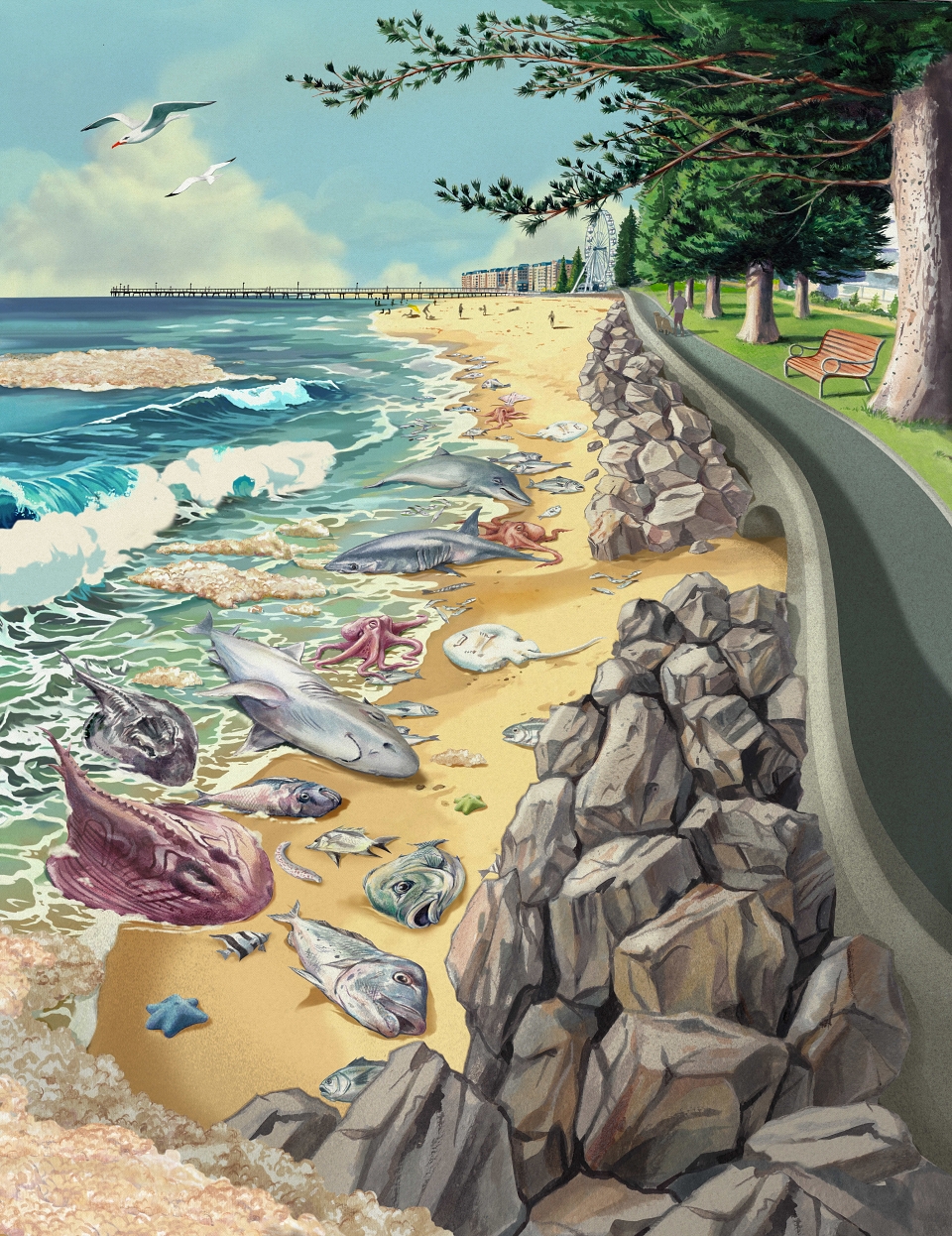
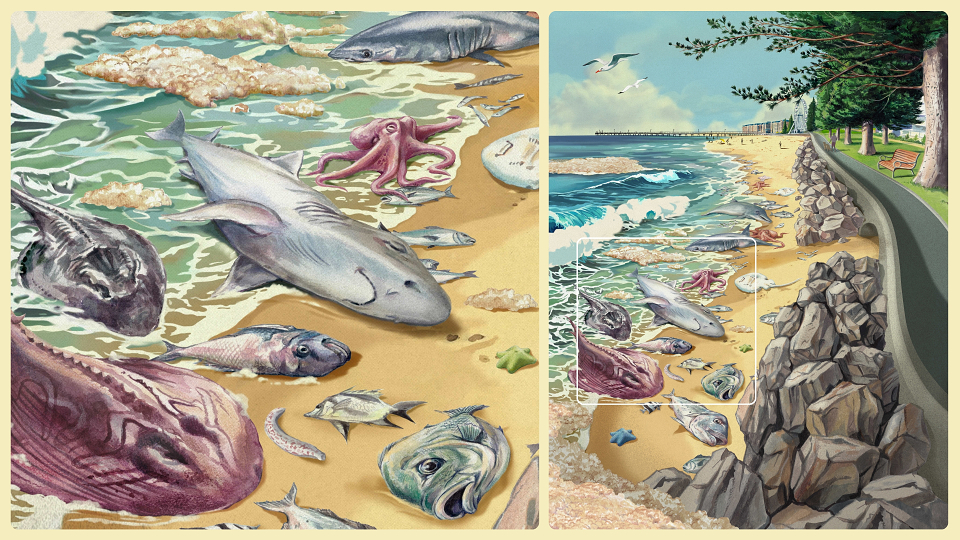
The illustration was painted by hand by artist, Stuart McLachlan in acrylic to replicate the Art Deco style of vintage travel posters. The beach vista is Glenelg, the nearest beach to Adelaide and where news report frequently report of dead sharks, dolphins and fish on the beach. The final illustration was scanned and desaturated with a dot screen over the entire poster so that everything blended together. This also created that vintage-style feel, traditionally achieved by stone lithography. The campaign was created using Ad Net Zero guidelines.
Results
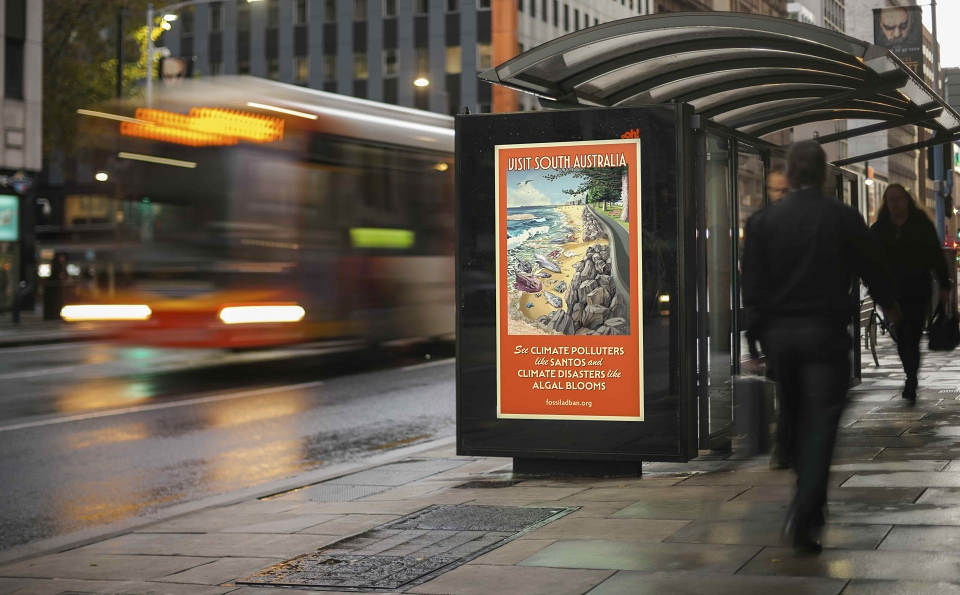
The targeted digital OOH reached 167,053 Adelaide residents, with 610,196 impressions.
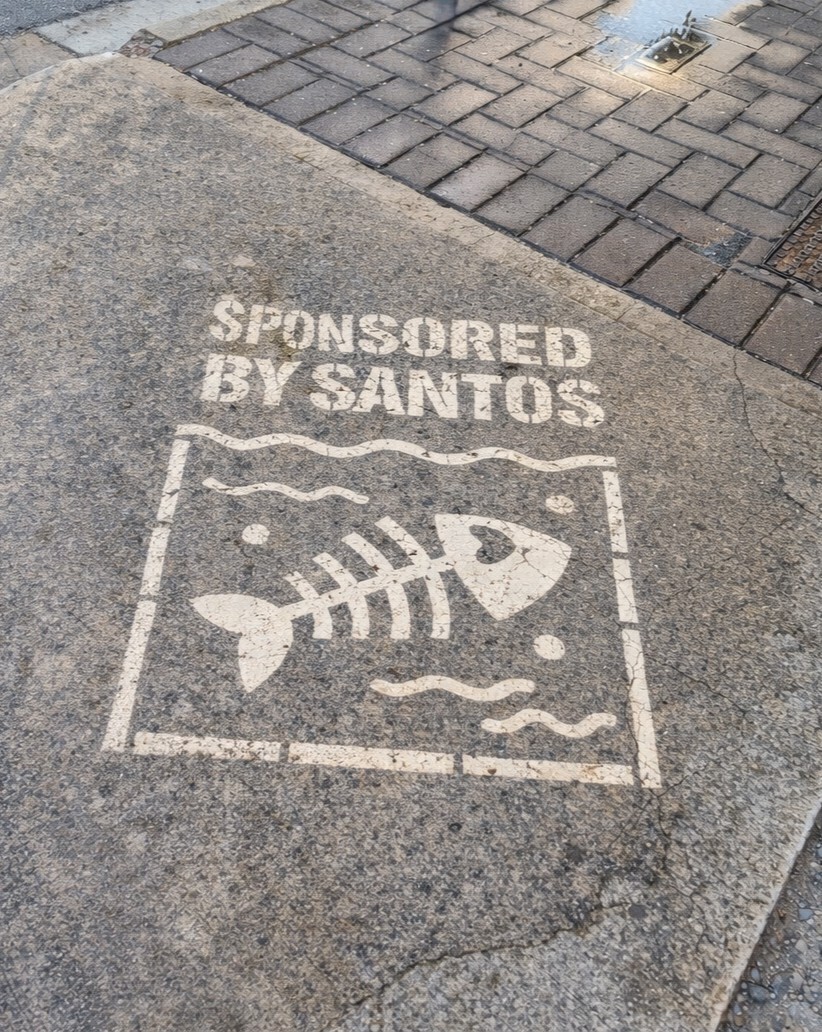
The 60 water-pressure stencils located around beach areas in South Australia reached 52,000 people.
The campaign clearly rattled Santos and has been featured in several news outlets.
The campaign was created in accordance with Ad Net Zero guidelines.
Media used:
Digital OOH uses energy-efficient LED technology, renewable power sources, and eliminates physical printing waste.
Rock Posters made with Australian-made Revive Laser 100% Recycled Carbon Neutral paper and pasted with biodegradable glue.
Water Pressure Stencils, no residue or colour is applied to the pavement. They only use water, environmentally friendly.
No AI was used in the commissioned art; it was hand-painted by Stuart McLachlan.
The illustration was painted by hand in acrylic to replicate the Art Deco style of vintage travel posters. The final illustration was scanned and desaturated with a dot screen over the entire poster so that everything blended together. This also created that vintage-style feel, traditionally achieved by stone lithography.
MADEIT CREDITS
-

Comms DeclareClient
-
Nakita BangerAccount Director -

Silver Lining Agency | B Corp -

Jonny ClowFounder -

Jenny LeslieAccount Director -

Aimee AltaSnr Designer
Annual 2026 BronzeVisit South Australia's Algal BloomIllustration
Annual 2026 ShortlistVisit South Australia's Algal BloomSocial Good
Annual 2026 ShortlistVisit South Australia's Algal BloomAdvertising: Digital
Project featured: on 4th July 2026