Broken Doodle
Automotive Concept Artist
ABOUT
Ferrari Front
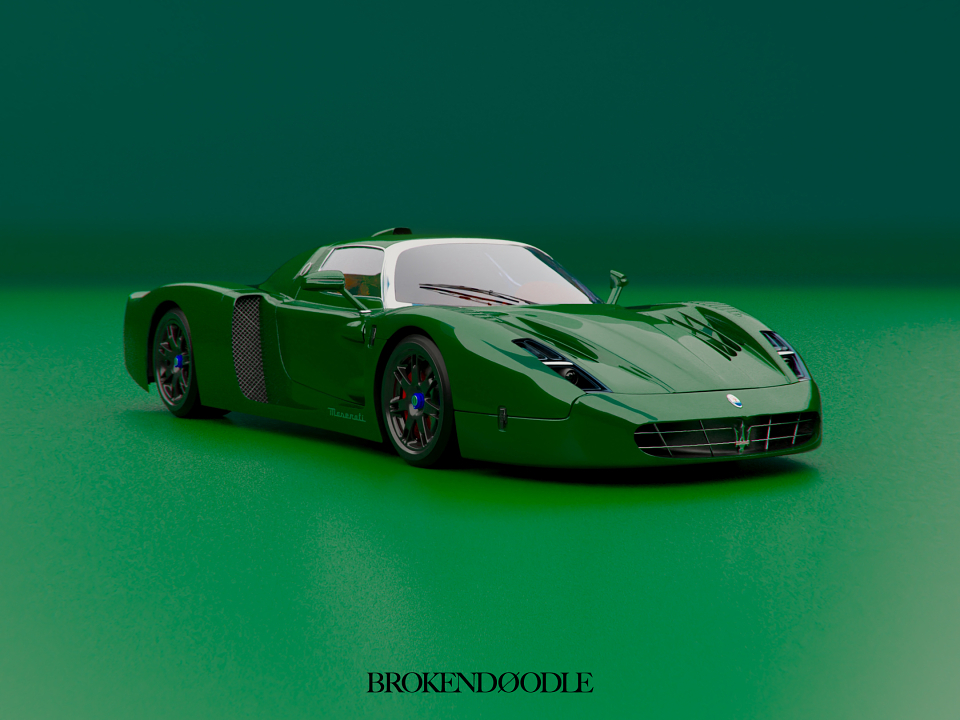
When the MC-12 was conceived Maserati was going through a few budgetary issues. Thus, the MC was designed to accept parts bin head and taillights. While the the great Frank Stephenson did an amazing work with bringing the brands design into the face of the car, one can't help but wonder what could've been.
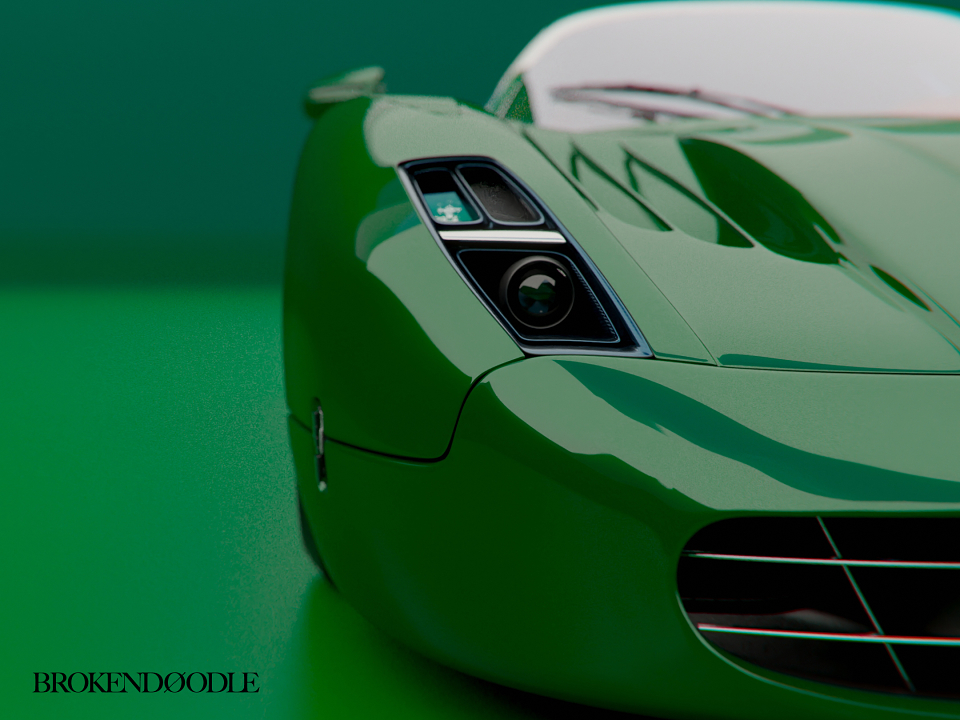
The new headlights bring a relaxed yet aggressive look to the car. Midway up the unit you can see a chrome strip which separates the main beam from the other elements. This gives the onlooker a point to focus on even when the headlights are turned off. Placed at a height at which it complements the front's top vents, it aims to retain the design's balance.
The two elements just above this chrome strip are the blinkers and a small air intake. In homage to the original's headlights open design, the units were left equally exposed in this reimagining. The intake serves as a way to cool the main beam without needing additional intakes or channel divisions elsewhere. The blinkers carry a miniature Maserati badge which is barely perceptible at a distance. These small touches are meant to reward the fortunate and careful observer.
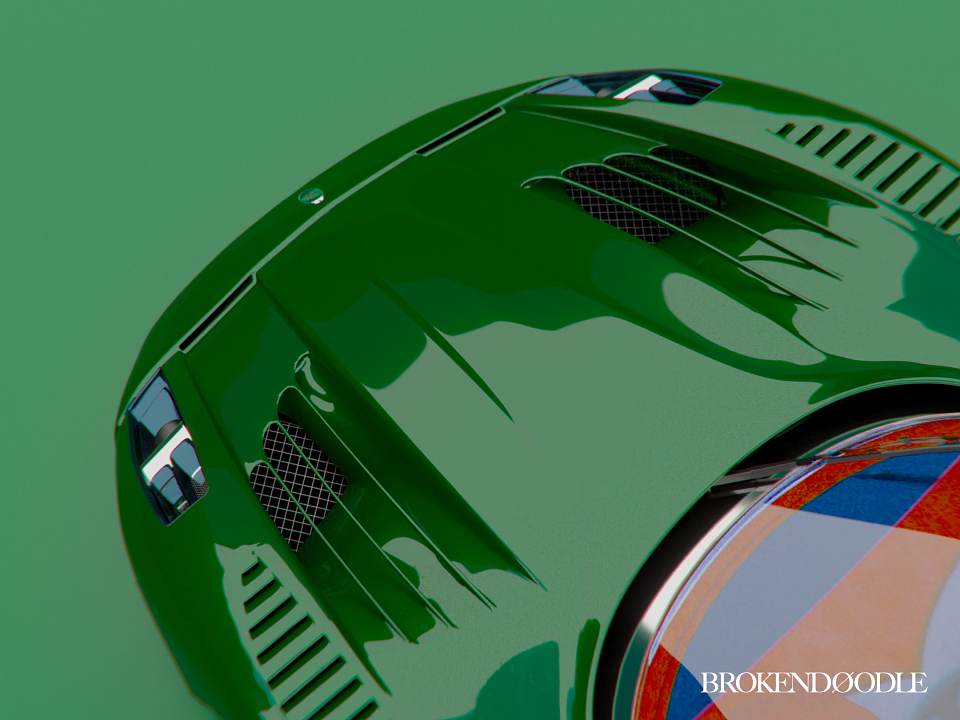
The iconic top vents were retained, with the only change being added protection in the form of a grill underneath. Anything else would've been a crime.
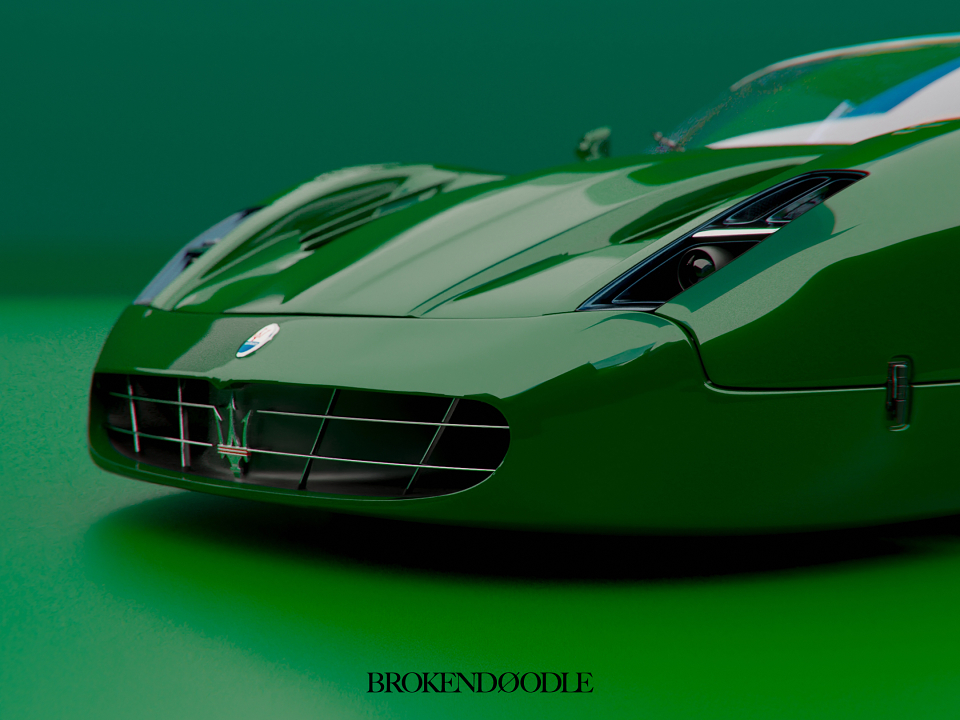
Another prominent change was the addition of a Ferrari-esque grill. My goal was to create a what-if variant of the MC-12 where it became a bit more civilized. Given it was designed as a race car first, the process added a bit of chrome where adequate to evoke a luxury image. Given the car's starting point, the legendary Enzo, it was only natural to look into the Maranello Stallion for inspiration. The result was a Ferrari staple, adapted to complement Maserati's trident.
Cockpit History
Almost every casual enthusiast will identify a car's brand and possibly model by looking at its front end. And to a smaller degree, the same goes for the rear. But what about the middle? Sure, over the years brands have tried to distinguish their car's design by adding characteristic lines to the doors, perhaps a side intake or even trim pieces. But almost none of these really work.
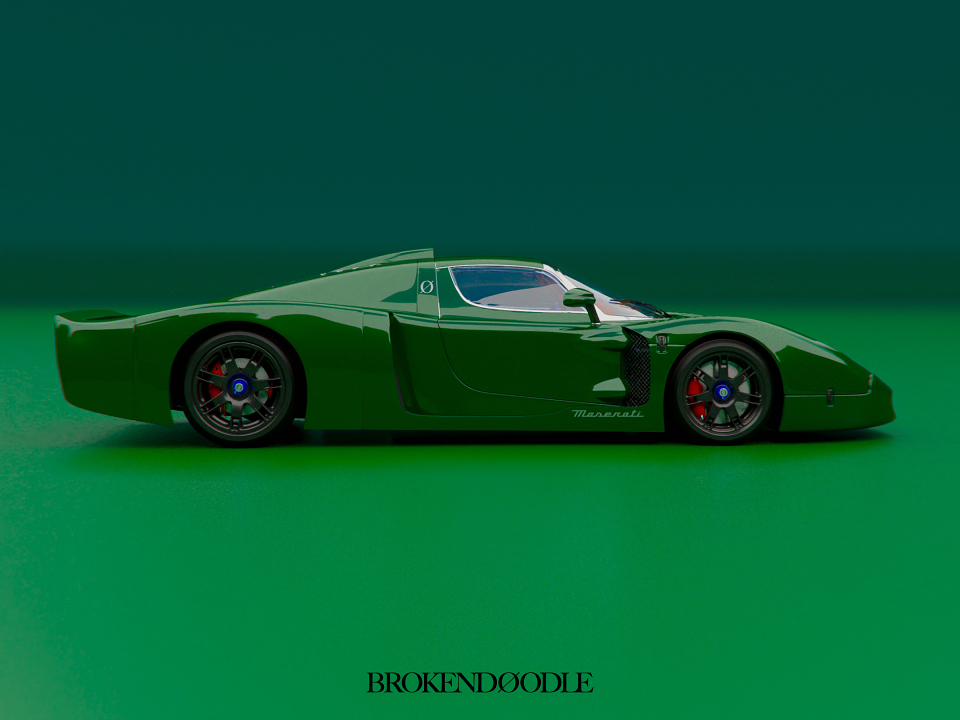
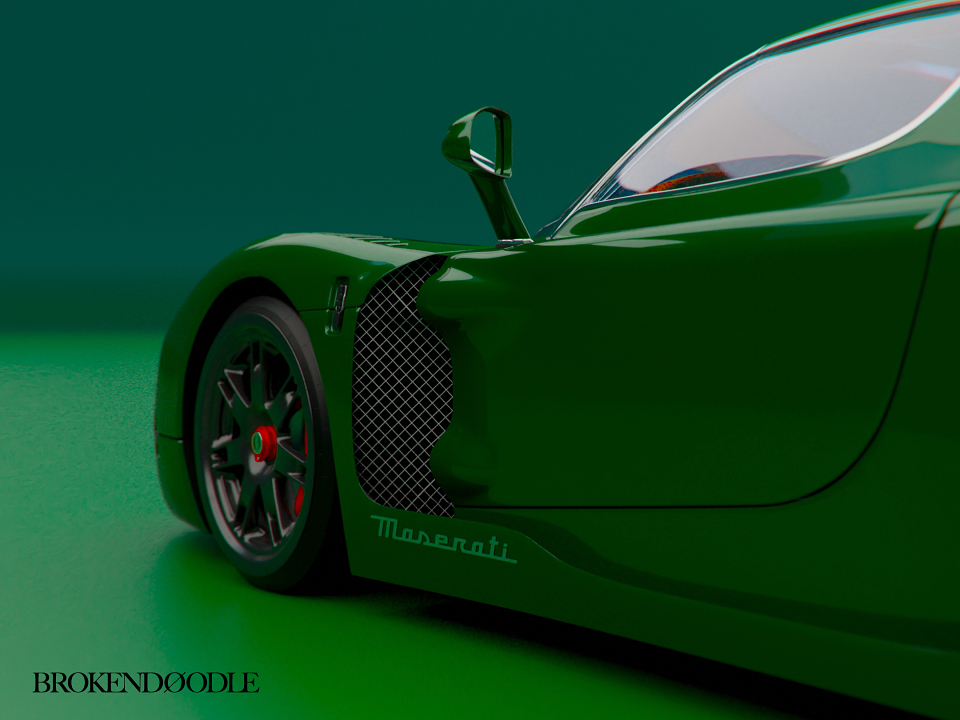
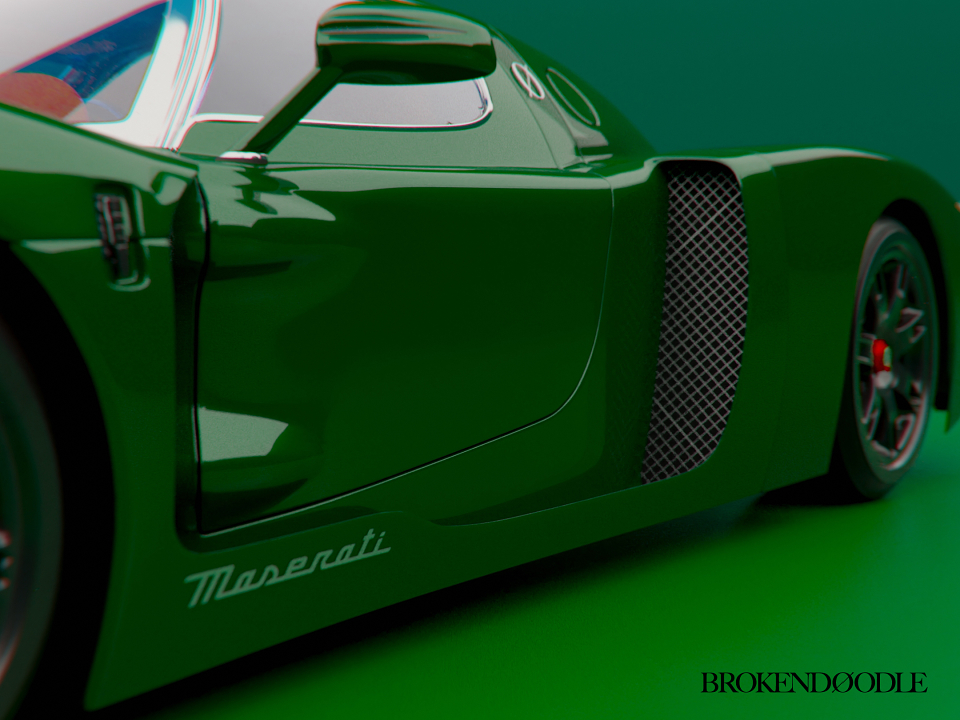
Take the MC-12 for example. Can you point out what was changed from the original in these renders? Did you know there was a kink in the bottom of the side openings? Did you notice how the door hinges bulk out of the body like muscles? Did you notice how the side window sweeps up instead of going straight into the A pillar?
The mid section is, regrettably, often forgotten. I aim to correct that. The first and perhaps more important change to it was to open up the door. By removing the top board the door seems lighter, the aforementioned door hinge muscles can actually be seen and the monstrously of the openings can be seen. This immediately gives the car a far more aggressive and less conventional look. I'd imagine this would have a big impact on aerodynamics but we're not really here for that.
A myriad of other changes were made to complement and enhance this change. Both output and intake got a grill. This was for both safety and style as it makes other elements stand out. The side window was also redesigned to avoid fighting the car's lines as much as the original did. it now comes up from the bottom of the A pillar instead of down from the top. This should give the cockpit a fair bit of extra visibility while still being distinct from the very similar Enzo design.
Maserati Rear
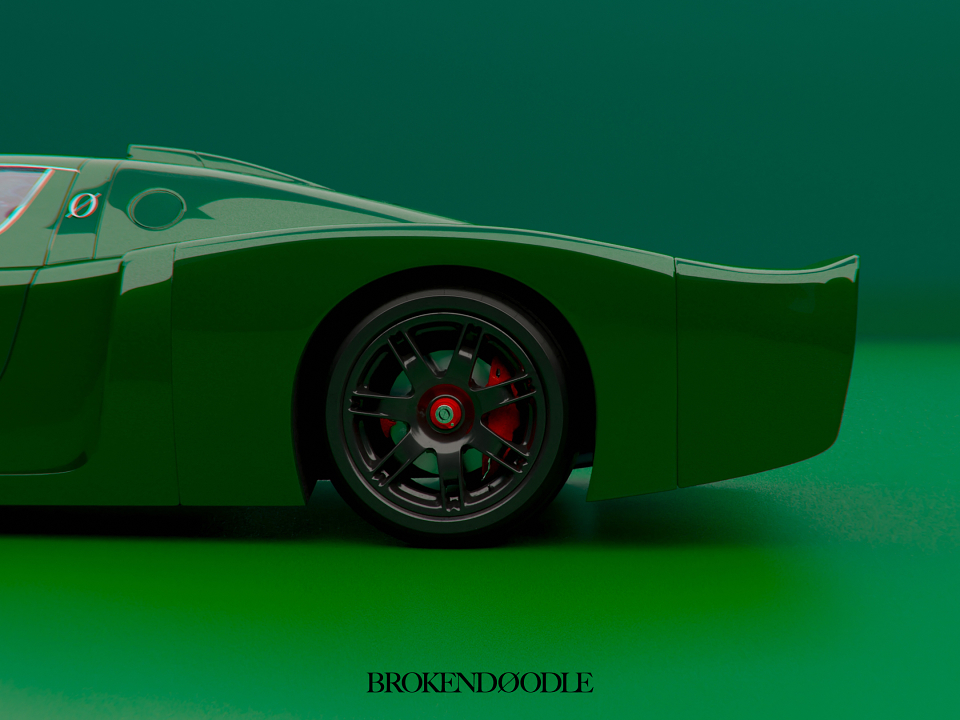
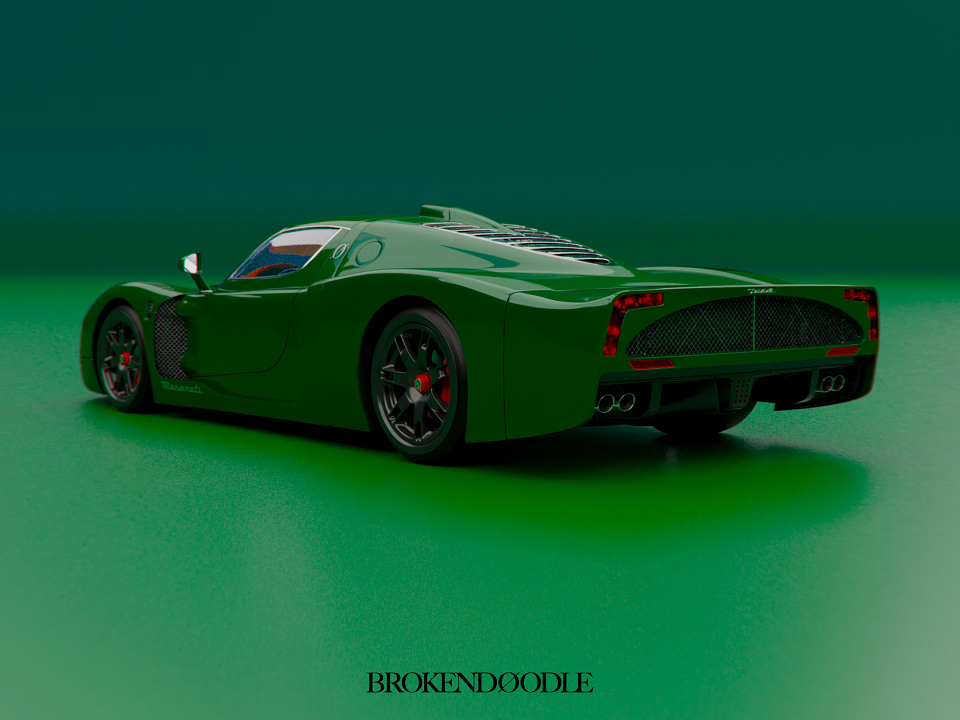
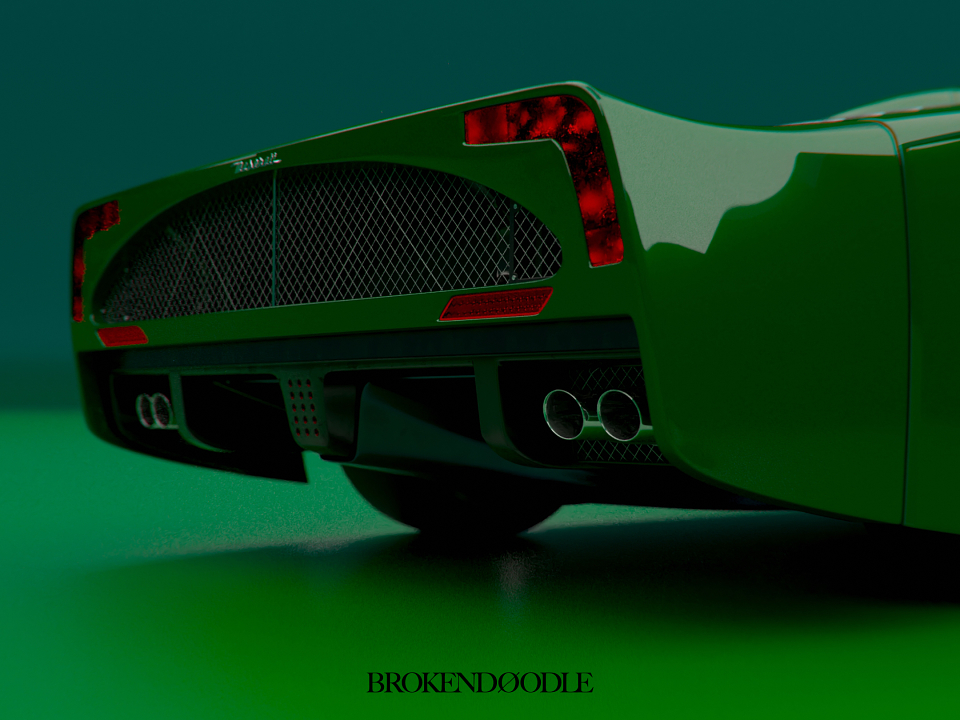
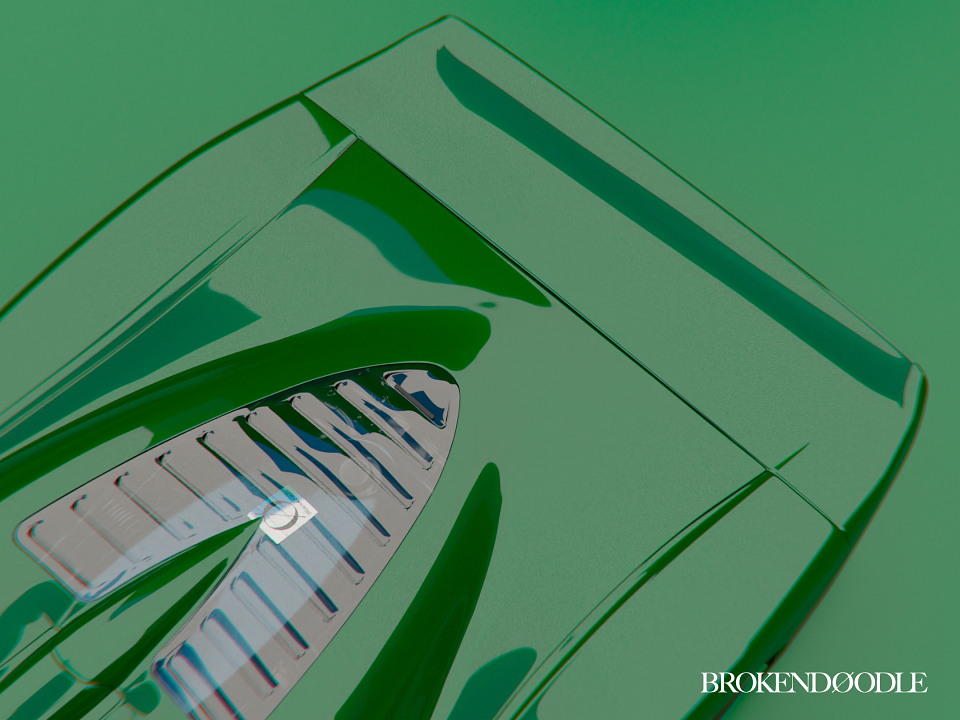
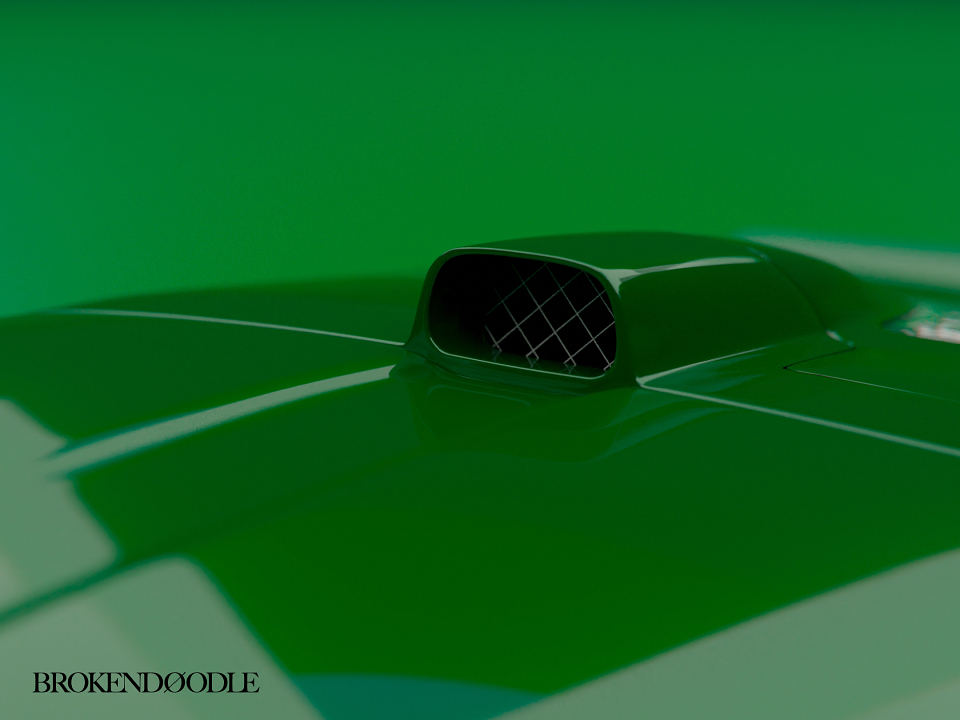
In the process of converting what is basically a road-legal race car into a more luxury-oriented road car, a few changes had to be made. One of them was to clean up the rear's iconic spoiler and instead relying on the car's natural lines to give us the desired look. This resulted in a far simpler flow which somehow gives even more visibility to just how long and wide the body really is.
The second change had to do with the taillight design. The original design's lights were a product of the goals and circumstances under which it was developed. Many other designs have come and gone since then, most notably from Pagani, which still use sealed pre-made units bought from a third party. For this what-if scenario I made it a point to give the car a proper light design.
The boomerang taillights from the 3200 GT were prime candidates. There is, however, a degree of irony in adding them to a design penned by the very same man who criticised them. As the story goes, it was a move to impose himself rather than the result of actual dislike for the boomerangs. This story has been told by the man himself, Frank Stephenson on his video series on automotive design. I'd love to know how he'd react to seeing this "irony" of sorts brought to life in these renders.
MADEIT CREDITS
-

Broken DoodleFreelance 3D Artist