Blair Barnette
Creative director
ABOUT
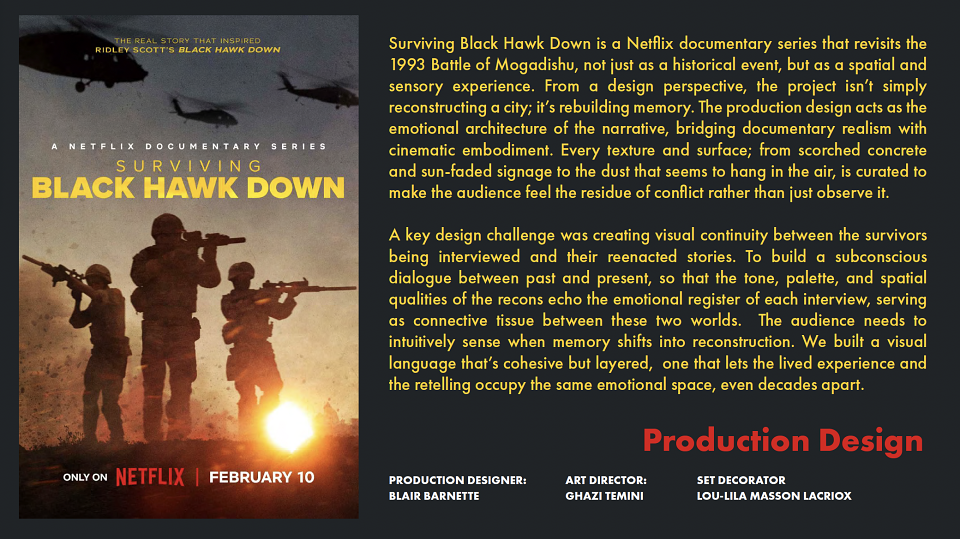
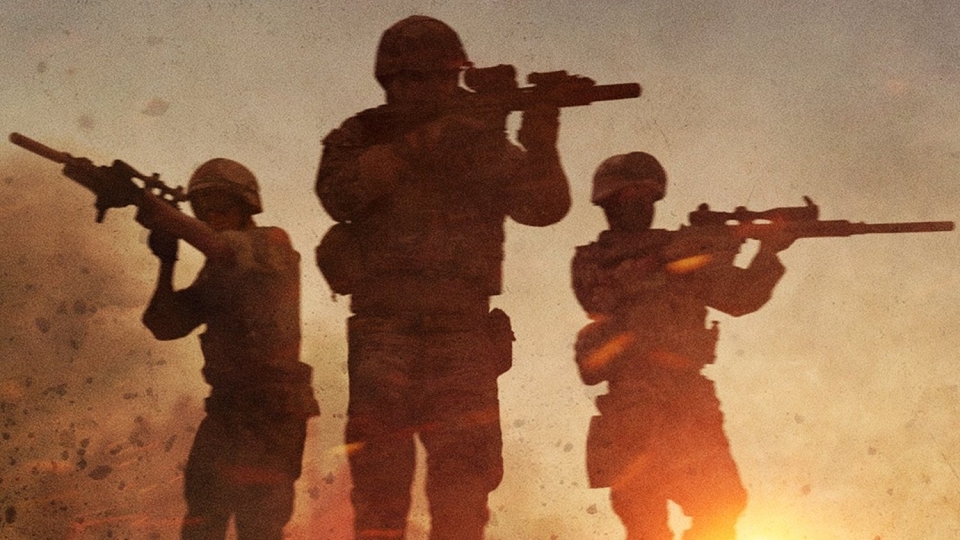
Surviving Black Hawk Down is a Netflix documentary series that revisits the
1993 Battle of Mogadishu, not just as a historical event, but as a spatial and
sensory experience.
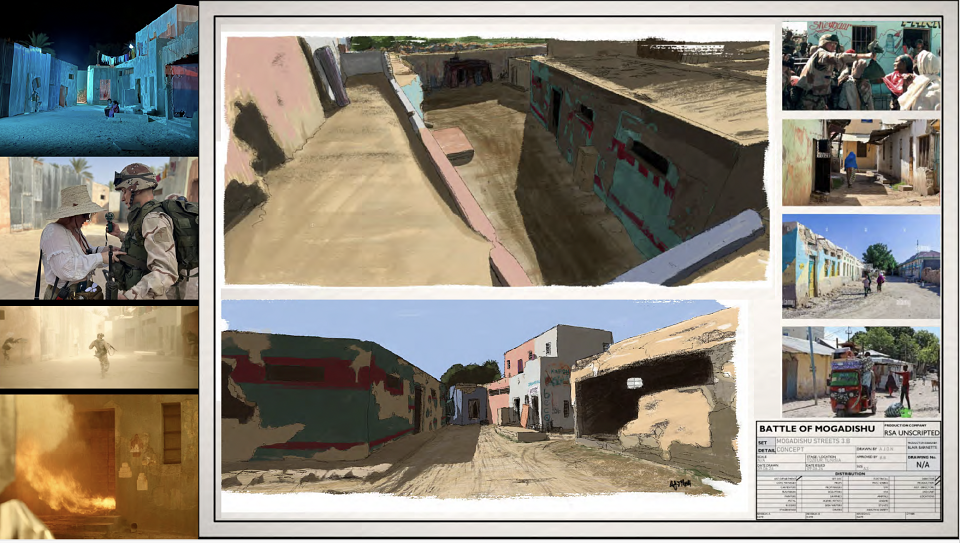
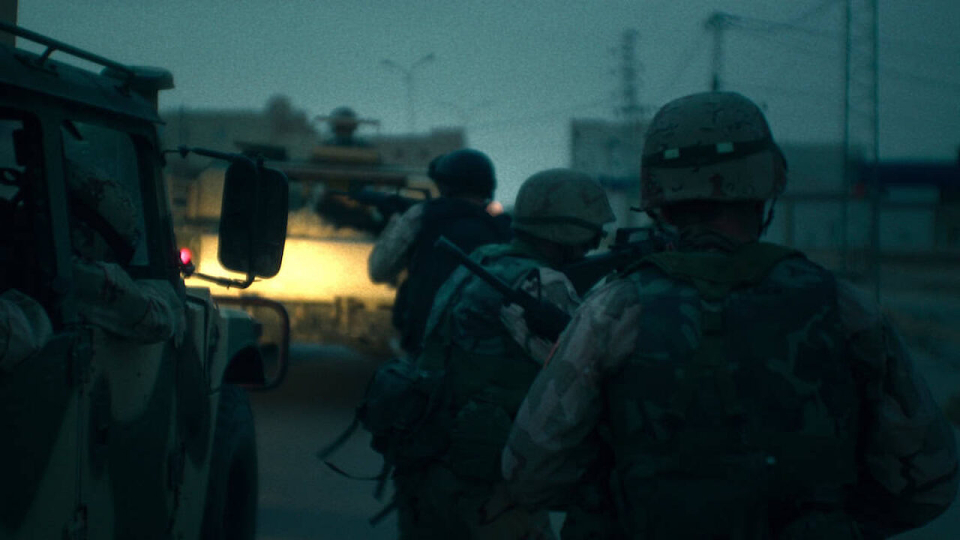
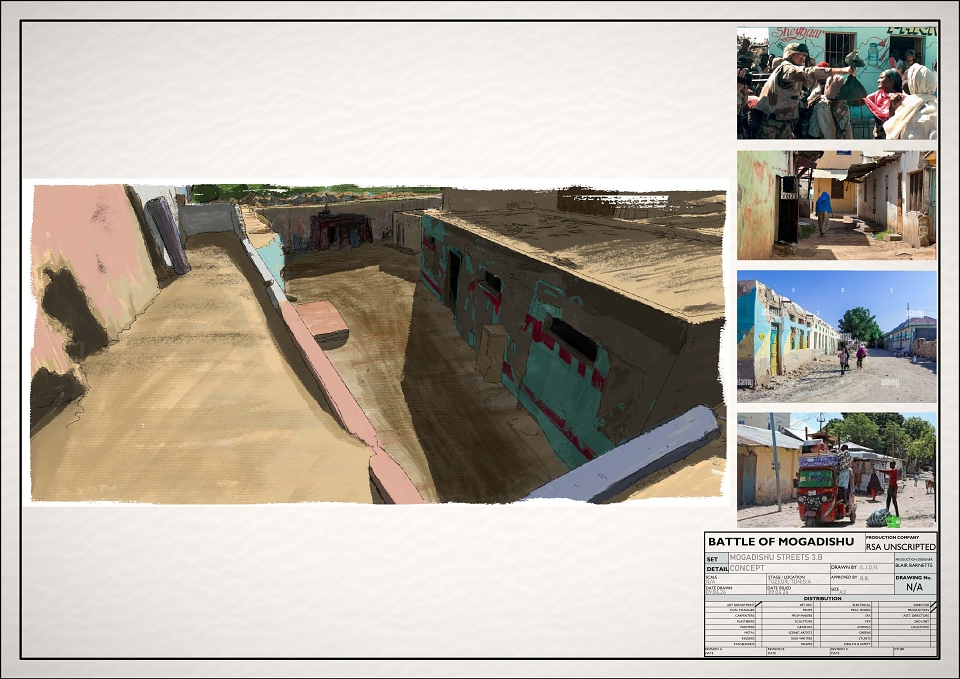
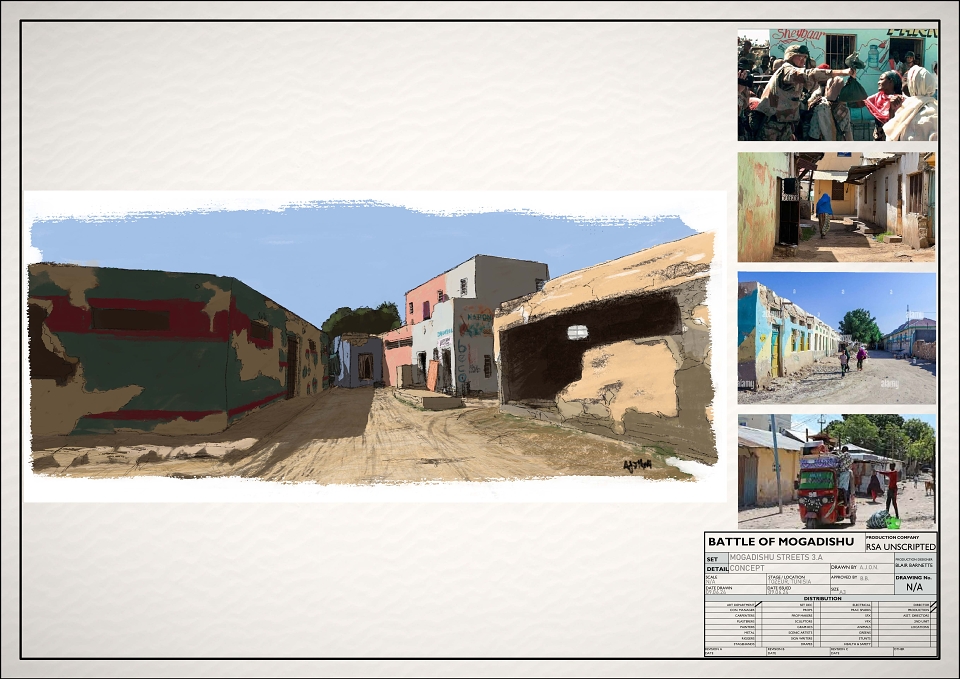
From a design perspective, the project isn’t simply reconstructing a city; it’s rebuilding memory. The production design acts as the emotional architecture of the narrative, bridging documentary realism with cinematic embodiment. Every texture and surface; from scorched concrete and sun-faded signage to the dust that seems to hang in the air, is curated to make the audience feel the residue of conflict rather than just observe it.
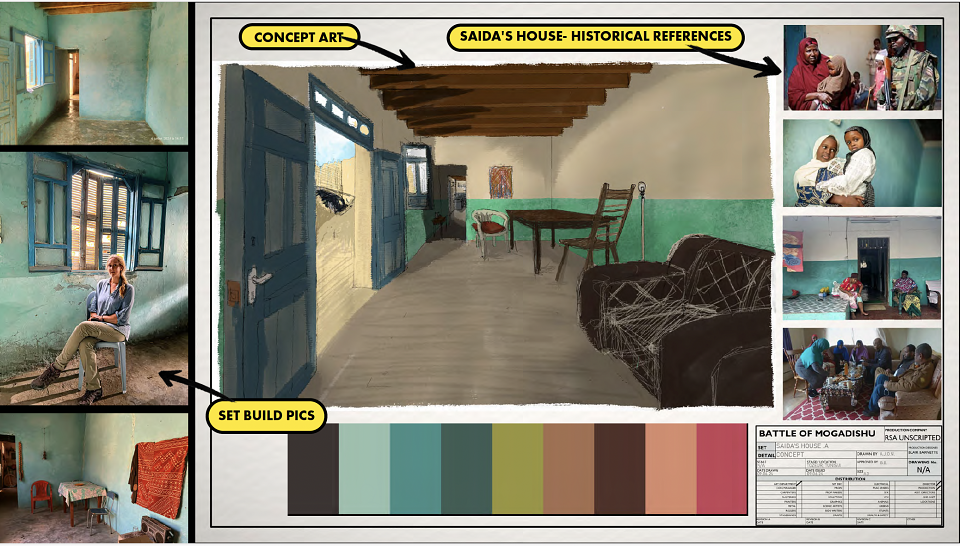
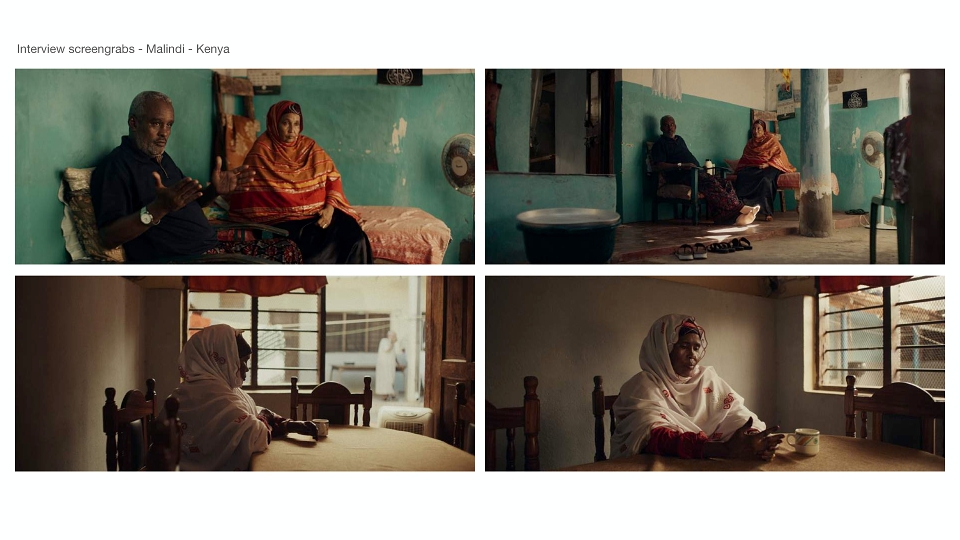
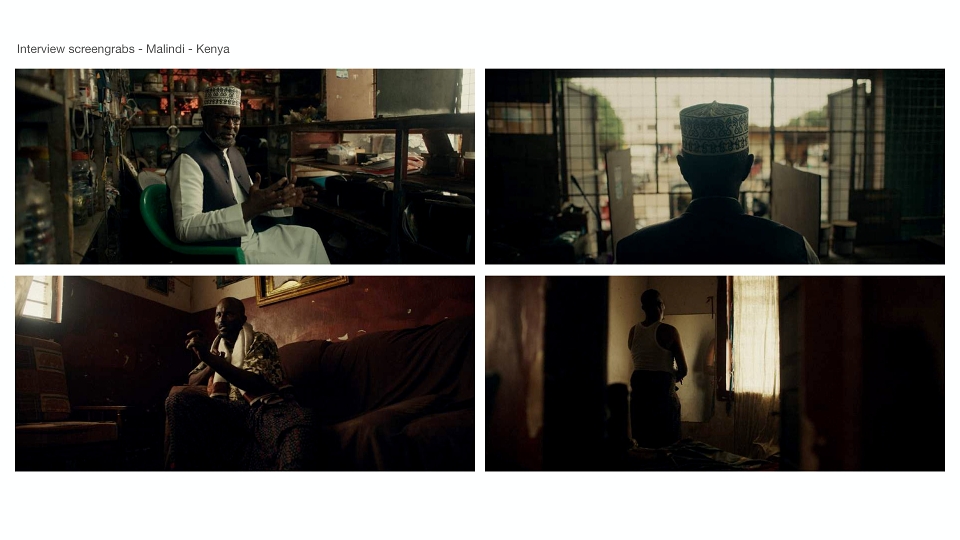
A key design challenge was creating visual continuity between the survivors being interviewed and their reenacted stories. To build a subconscious dialogue between past and present, so that the tone, palette, and spatial qualities of the recons echo the emotional register of each interview, serving as connective tissue between these two worlds. The audience needs to intuitively sense when memory shifts into reconstruction. We built a visual language that’s cohesive but layered, one that lets the lived experience and the retelling occupy the same emotional space, even decades apart.
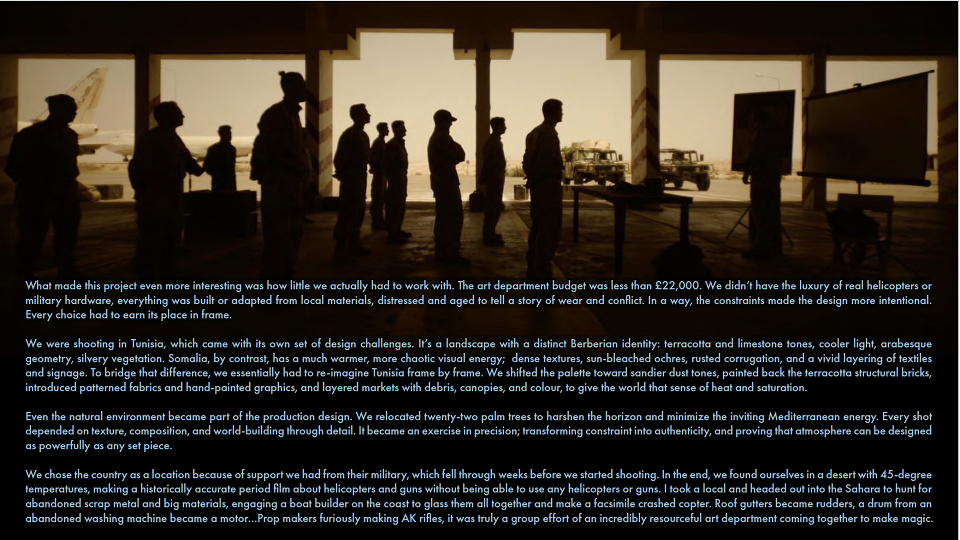
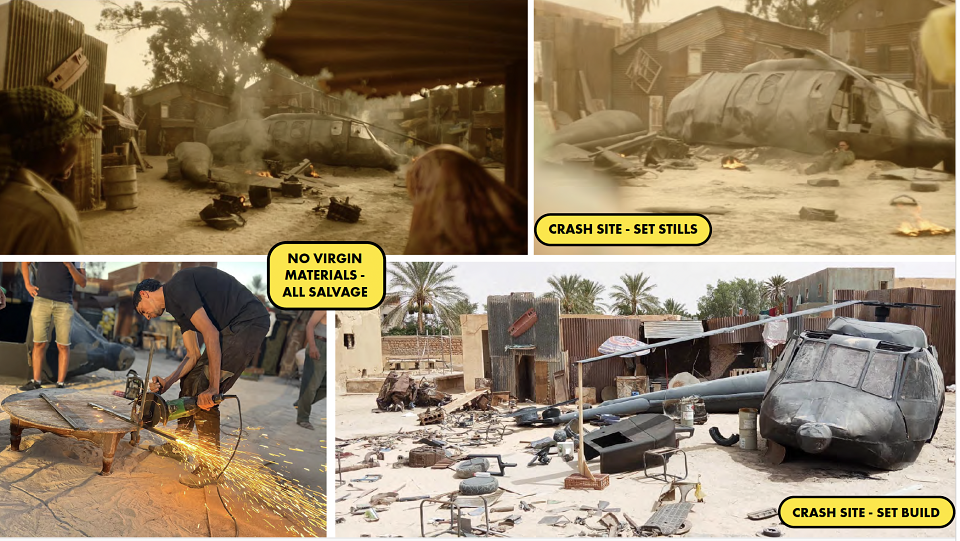
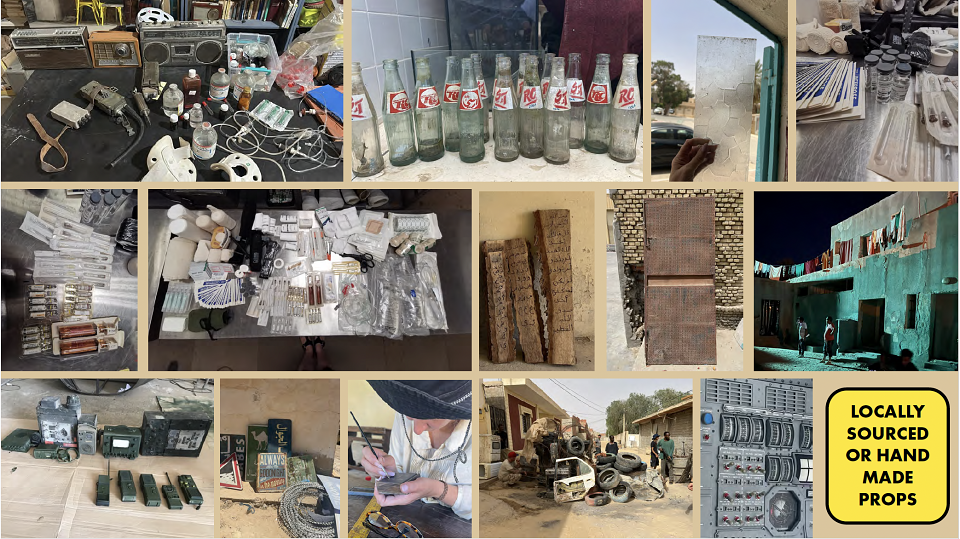
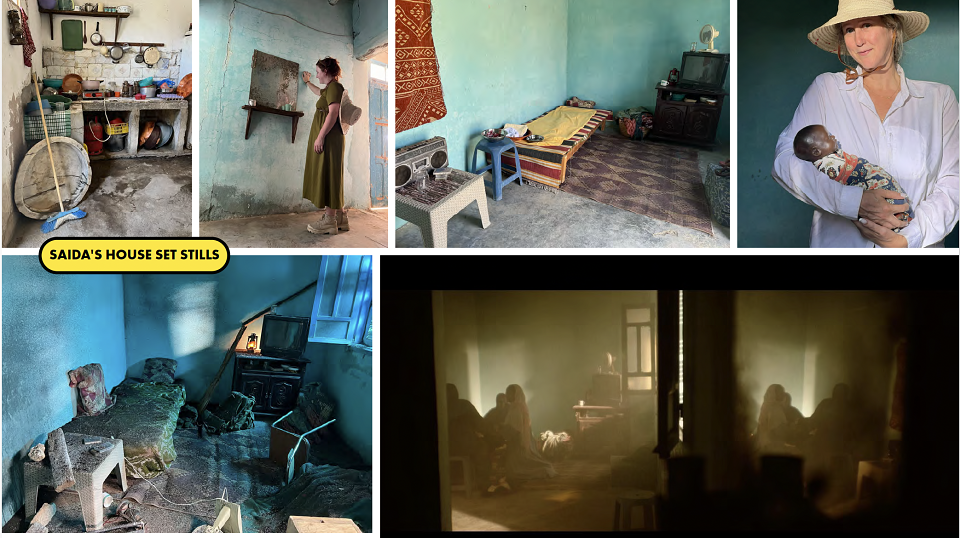
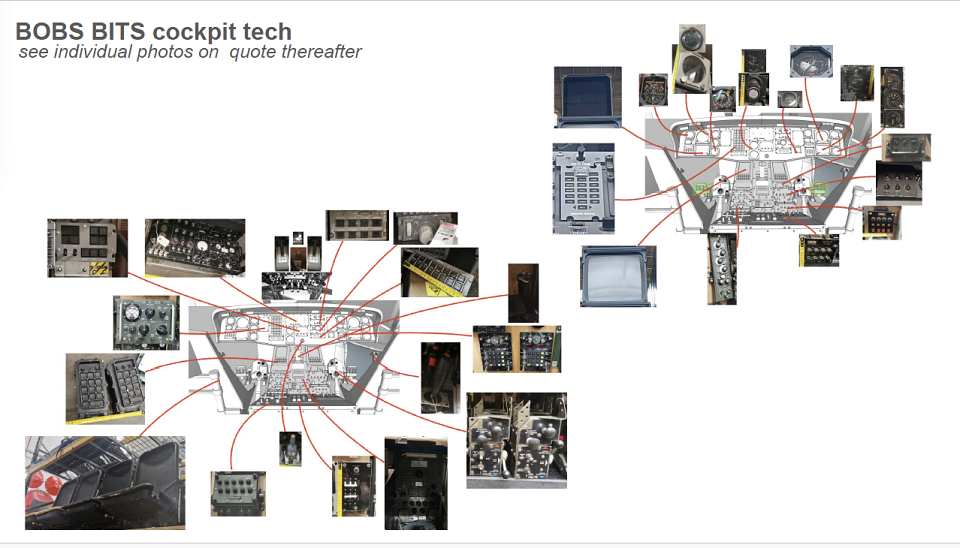
What made this project even more interesting was how little we actually had to work with. The art department budget was less than £22,000. We didn’t have the luxury of real helicopters or military hardware, everything was built or adapted from local materials, distressed and aged to tell a story of wear and conflict. In a way, the constraints made the design more intentional.
Every choice had to earn its place in frame.
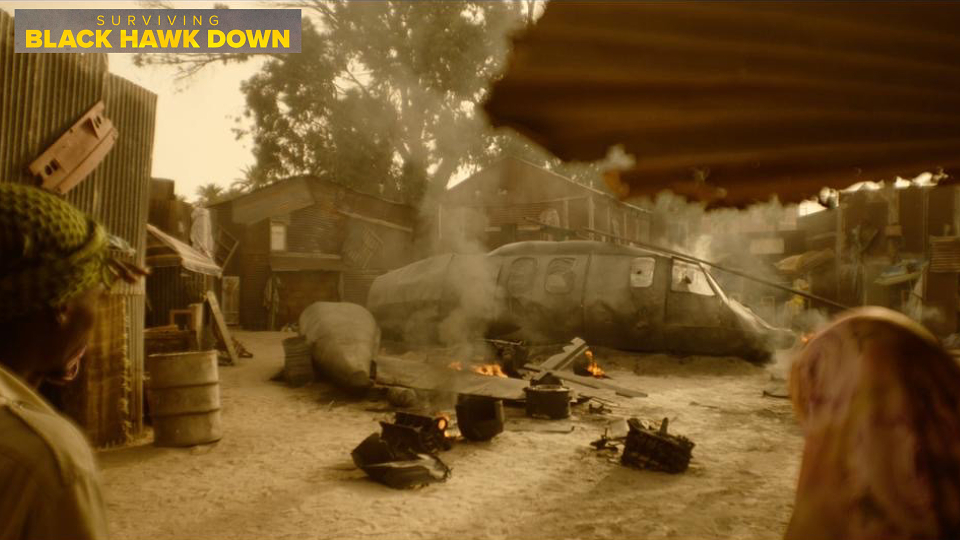
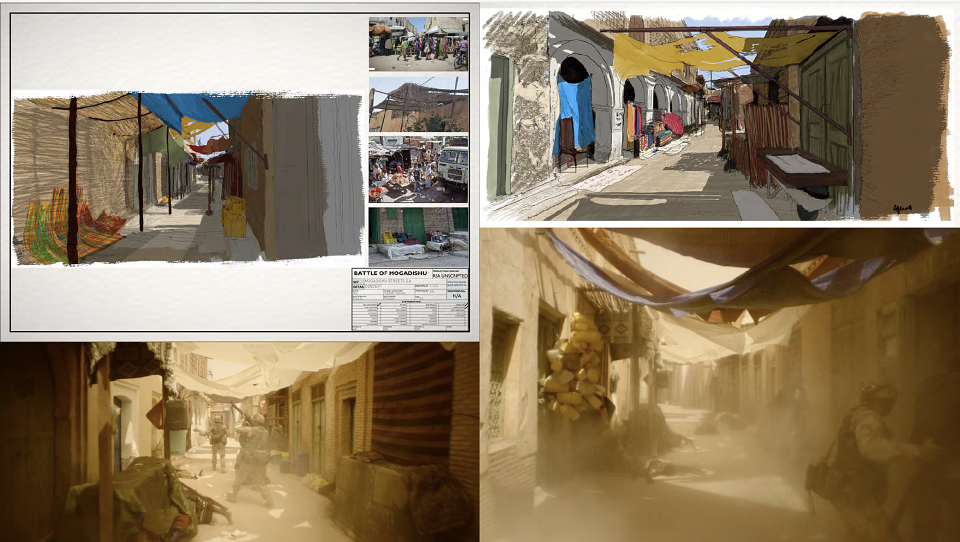
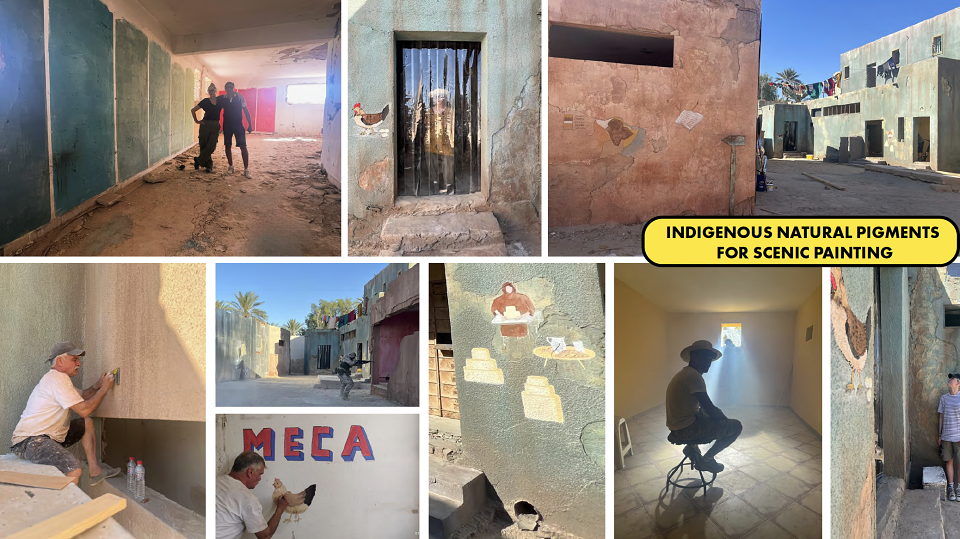
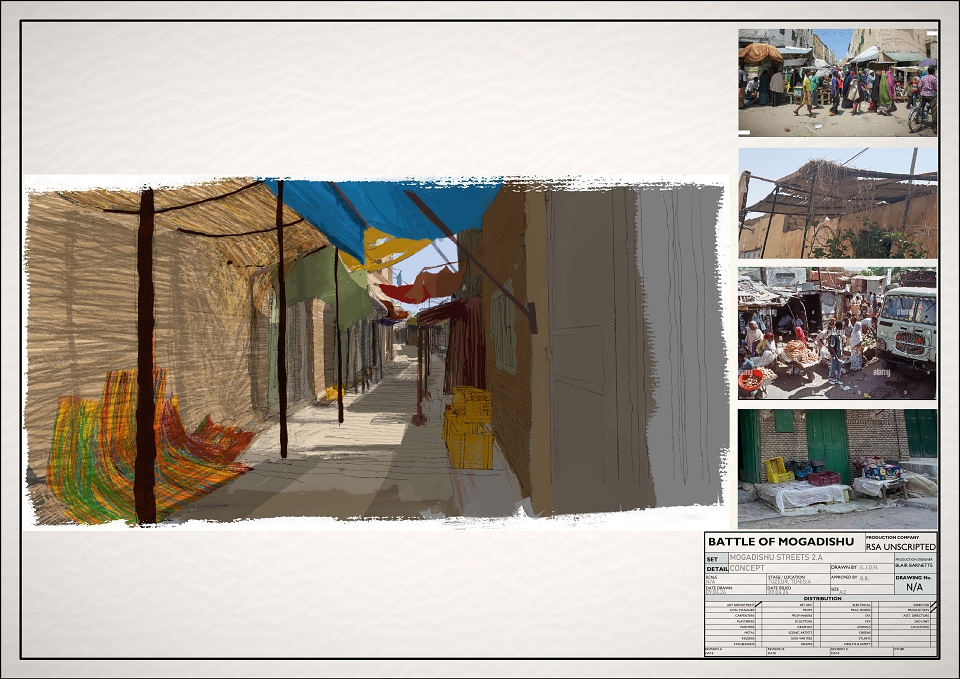
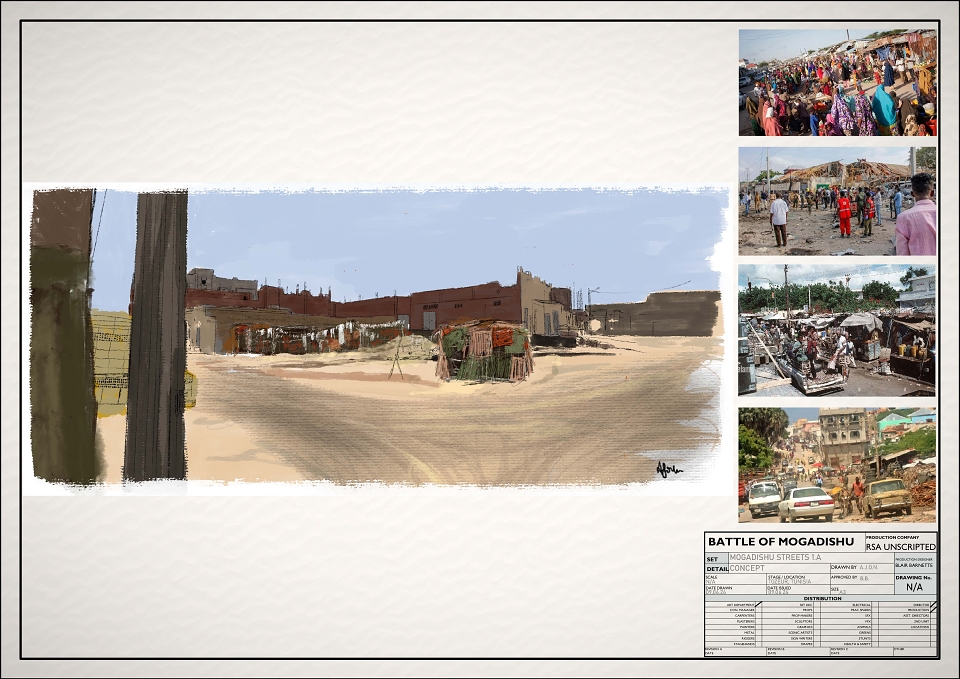
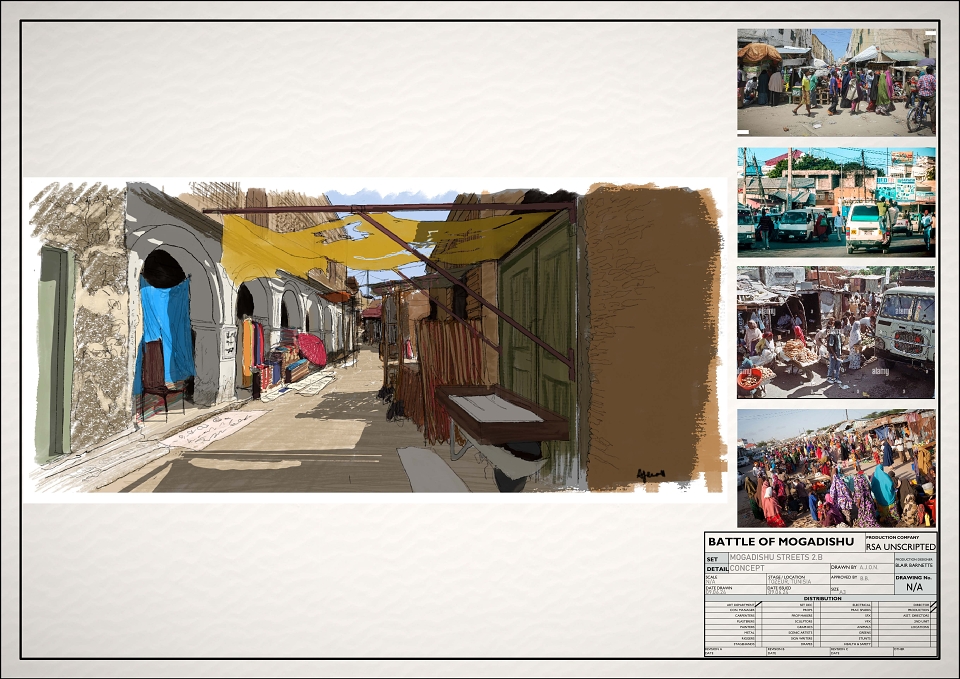
We were shooting in Tunisia, which came with its own set of design challenges. It’s a landscape with a distinct Berberian identity: terracotta and limestone tones, cooler light, arabesque geometry, silvery vegetation. Somalia, by contrast, has a much warmer, more chaotic visual energy; dense textures, sun-bleached ochres, rusted corrugation, and a vivid layering of textiles and signage. To bridge that difference, we essentially had to re-imagine Tunisia frame by frame. We shifted the palette toward sandier dust tones, painted back the terracotta structural bricks, introduced patterned fabrics and hand-painted graphics, and layered markets with debris, canopies, and colour, to give the world that sense of heat and saturation.
Even the natural environment became part of the production design. We relocated twenty-two palm trees to harshen the horizon and minimize the inviting Mediterranean energy. Every shot depended on texture, composition, and world-building through detail. It became an exercise in precision; transforming constraint into authenticity, and proving that atmosphere can be designed as powerfully as any set piece.
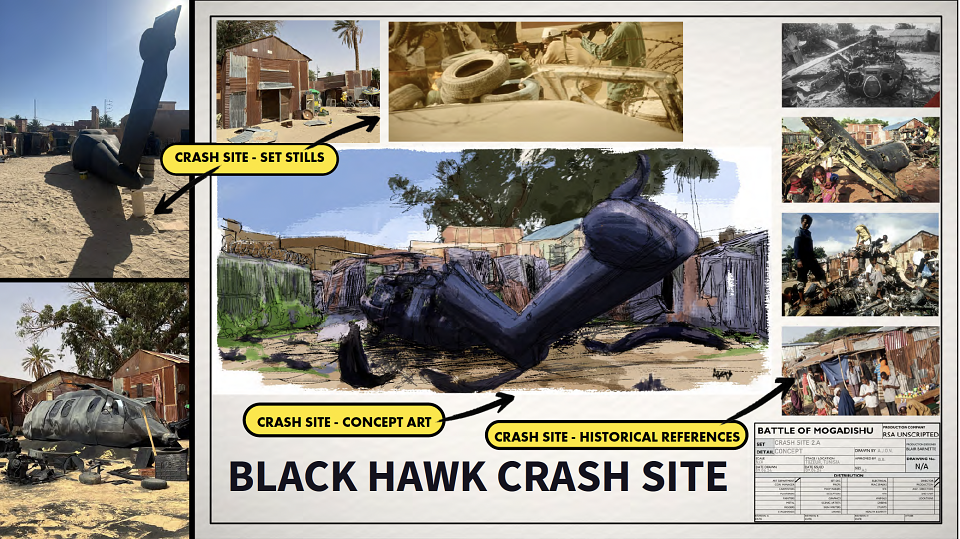
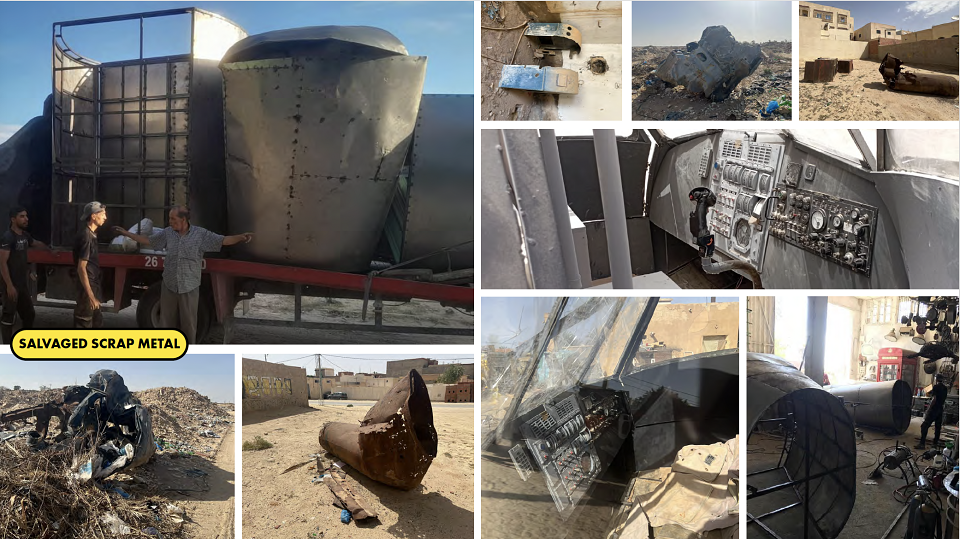
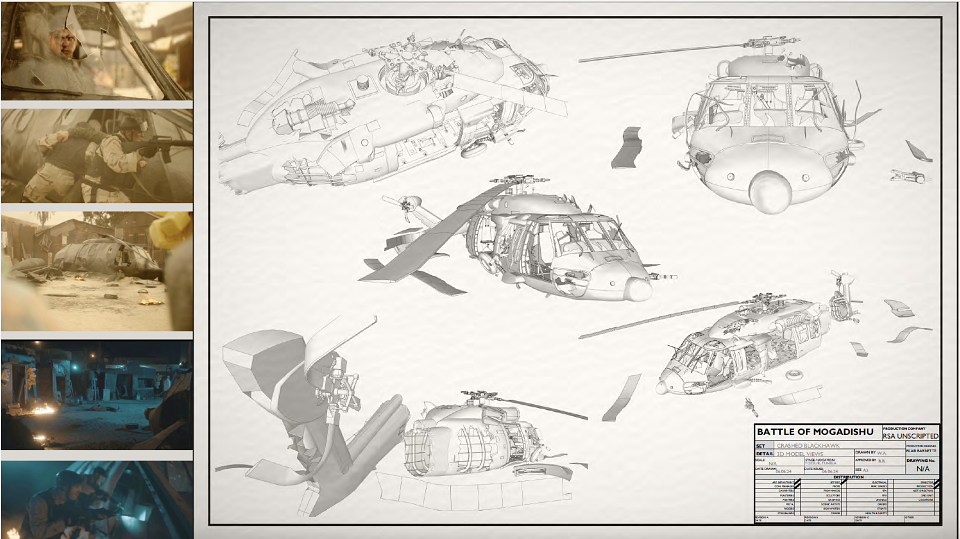
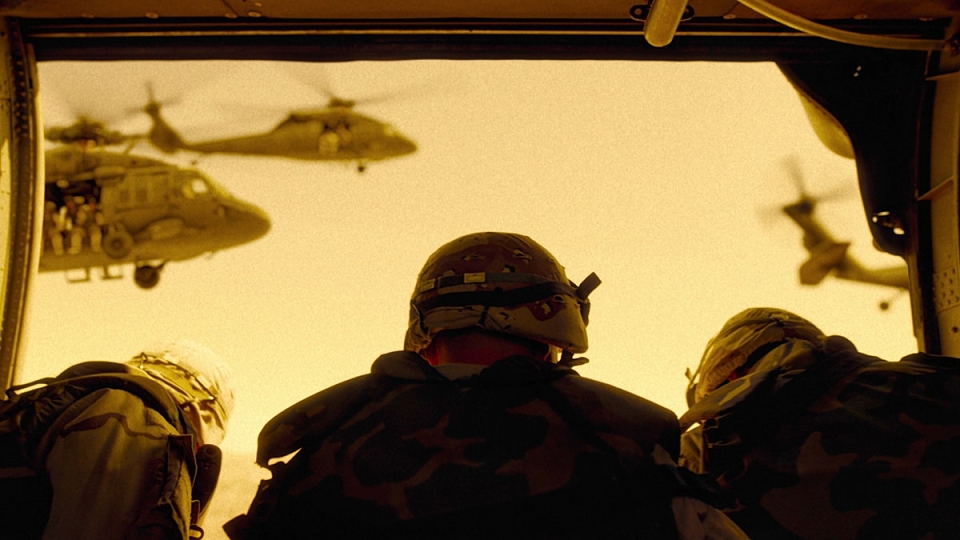
We chose the country as a location because of support we had from their military, which fell through weeks before we started shooting. In the end, we found ourselves in a desert with 45 degree temperatures, making a historically accurate period film about helicopters and guns without being able to use any helicopters or guns. I took a local and headed out into the Sahara to hunt for discarded scrap metal and big materials, engaging a boat builder on the coast to glass them all together and make a facsimile crashed copter. Roof gutters became rudders, a drum from an abandoned washing machine became a motor...Prop makers furiously making AK rifles, it was truly a group effort of an incredibly resourceful art department coming together to make magic.
AWARDS
BAFTA Nominated
BFDG Nominated
Golden Trailer Award Winner
Royal Television Society Nominated
MADEIT CREDITS



Annual 2026 SilverSurviving Black Hawk DownFilm
Annual 2026 BronzeSurviving Black Hawk DownFilm Craft
Project featured: on 3rd June 2026