
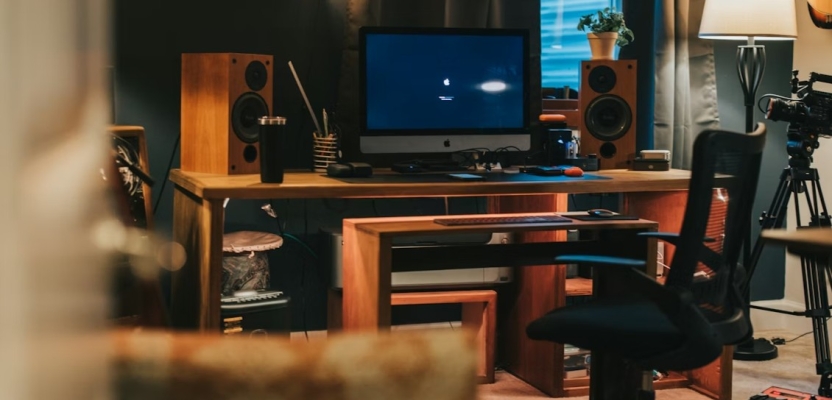

Ask a creative director what their working life looked like in 2019 and then ask them what it looks like today. The gap between those two descriptions tells you more about the pace of change in the creative industry than any trend report. The office as a fixed centre of gravity is gone for most. The rigid division between in-house and agency talent has blurred. The career ladder has been replaced, for many, by something more like a career lattice - sideways moves, portfolio pivots, hybrid roles that combine disciplines once kept strictly separate.
What we are seeing in 2026 is not a temporary adjustment. It is the creative industry reconfiguring itself around a more honest understanding of how good work actually gets made.
Flexibility Has Moved from Benefit to Baseline
There was a period not very long ago when remote working and flexible hours appeared in job postings as competitive differentials. For the majority of experienced creative professionals today, flexibility is no longer a perk being offered. It is an expectation being brought to the table. The Creativepool talent network reflects this clearly: the proportion of professionals listing themselves as available for freelance, contract, or hybrid engagements has grown consistently, and companies using the platform to hire have adjusted their briefs accordingly.
Increasingly, the question is not whether flexible working is on offer, but how distributed creative collaboration is actually managed day to day. The answer to that question is what separates studios attracting the best talent from those that are not.
Digital Tools Are Restructuring Creative Process
The tooling available to creative professionals in 2026 has reached a level of sophistication that would have seemed implausible a decade ago. Figma has replaced the entire category of static mockup handoff. Notion and Linear have changed how creative projects are managed and communicated. Generative AI tools now sit inside workflows most professionals already use rather than sitting alongside them as separate experiments.
What this means in practice is that the administrative friction that used to consume a significant portion of a creative professional's week has been compressed. Version control disputes, delayed approvals, lost reference files - these problems have not disappeared, but they are far more manageable. The result is not that creative work has become easier, but that more energy can go toward the parts of it that are genuinely difficult: conceptual development and the judgment calls that require experience and taste.
AI as Collaborator, Not Competitor
The conversation about artificial intelligence in the creative industry has matured considerably since the initial anxiety of 2023 and 2024. Most working creatives have arrived at a more nuanced position: AI is useful for specific things and limited for others. Research consolidation, initial ideation prompts, and repetitive production tasks are genuine time savings. What AI does not do is make creative judgments. It does not understand why one headline feels right and another falls flat, or carry the accumulated experience of a senior art director who knows instinctively which direction has already been done.
The Creativepool Annual consistently recognizes work where a human made a judgment call that a tool could not have made, and it turned out to be the right one. That remains an exclusively human contribution - and in a market where execution is increasingly commoditized, it is the contribution that matters most.
The Research Habit Shapes Every Decision
One behavioral shift that has become almost universal among experienced creative professionals is systematic research before making significant commitments - whether those involve tools, platforms, collaborators, or services. The number of options available in 2026 is genuinely overwhelming, and the cost of a poor choice in time, money, and opportunity is real. Evaluating a new platform means reading reviews, trialling the free tier, and asking peers what they have found. The underlying behavior is consistent: gather structured information, compare options, and act on evidence rather than marketing promises.
This research-before-committing instinct extends into leisure time too. Someone who spends their professional life evaluating platforms and comparing options does not switch that habit off outside work. Whether choosing a streaming service, a productivity tool, or browsing the newest slots online on Bookofslots.com, the pattern is the same: organized, comparable information before deciding. The digital habits that make someone effective professionally are the same ones they bring to everything else online.
Human Skills Are Appreciating
As more processes become automated, the skills that remain distinctly human have become more valuable, not less. Clear communication, cultural sensitivity, the ability to hold a client's perspective and a creative vision simultaneously and find the path between them - these have always separated good creative professionals from great ones. They are now also what most clearly justifies premium rates in a market where execution alone is increasingly available on demand.
Creative Careers Are Being Built Differently
The conventional creative career trajectory still exists, but it now sits alongside a much wider range of viable paths. Experienced practitioners leave agency structures to build independent studios. Senior art directors combine client work with teaching or their own IP. Copywriters develop products alongside brand briefs. What connects these different paths is intentionality: the creative professionals building sustainable careers in 2026 are not waiting for the right opportunity to arrive. They are making deliberate choices about visibility, positioning, and the kinds of work they want to be known for.
A strong Creativepool profile is part of this - not just a portfolio, but a considered representation of how someone thinks, what they value, and what they bring beyond execution. The craft is still the foundation. But the ability to articulate that craft clearly to the right audience has become as important as the craft itself.
Final Thoughts
The creative industry in 2026 is more complex, more distributed, and more demanding than it has ever been. It is also, for practitioners approaching it with intention and adaptability, more full of possibility. The barriers between disciplines have lowered, the tools are genuinely powerful, and the global talent network that platforms like Creativepool have built means the best collaborators are findable regardless of geography.
The creatives who will thrive are not simply those who have kept pace with the technology. They are the ones who understand that technology serves something more fundamental: the ability to make work that is original, resonant, and genuinely useful to the people it is made for. That has always been what the creative industry is for. In 2026, it remains exactly that.