
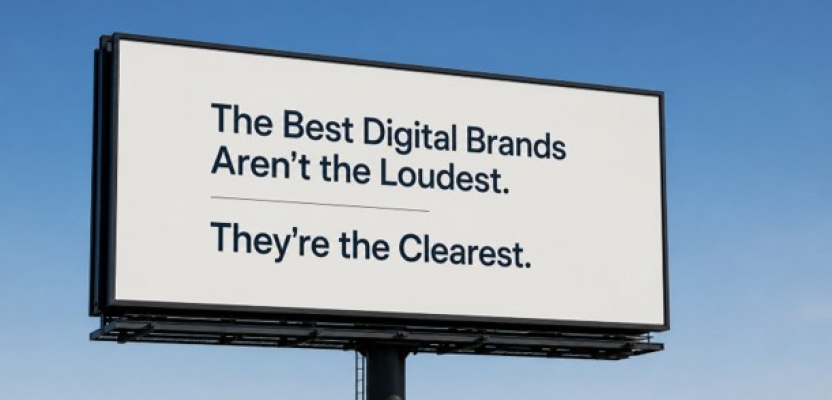

The brands winning right now aren't shouting. They're the ones you understand in about three seconds flat. Somewhere in the last couple of years, the volume knob just stopped doing anything. More ads, more posts, pop-ups on top of pop-ups, and everything is suddenly "revolutionary." So people did the sensible thing and stopped listening. What gets through the wall now is clarity.
A brand needs to instantly tell you what they do, be clear in their message and mean it, and not make people work to figure it out. The problem is though, most brands haven't noticed this change, so they keep the same out-dated methods they learned a decade ago and stick with it. In simple wording, they pay more to be heard less.
Loud Used to Work. Now it Just Costs Money.
There was a stretch where the biggest budget simply won. Buy the most billboards, run the most spots, repeat the line until it lodged in someone's head. That logic is falling apart, and fast. Every hour you're awake, you scroll past a wall of marketing. You mute, skip, swipe without even clocking what any of it said, same as clearing notifications you never actually read.
On top of that, we now have AI, which hasn't helped. It's dumped a flood of content into every feed that looks the part and means nothing. It’s pure slopp. When everyone's loud, loud is just the baseline. It's not a signal anymore, it's straight up annoying. A brand shouting "best in class" reads as noise now, because the rival right next to it is shouting the same three words at the same volume.
And here's the thing most brands miss: a specific, checkable claim reads as honest, while vague superlatives sound like marketing. People can tell the difference, and they lean toward whatever feels harder to fake.
So, loud isn't dead. It's just gone expensive, and the return keeps shrinking every quarter.
Clever Names Lose to Clear Ones
Founders adore a clever name. A pun, an invented word, a vowel dropped for reasons nobody can explain. Clever feels creative in the meeting room. The trouble is that cleverness usually makes people work, and working is precisely what a distracted audience refuses to do for you.
Clear names win because they do the explaining before you've spent a penny on a copy. Brand names such as Kasinoranking show how clarity often beats cleverness. Users instantly understand the value on offer, no decoder ring required. That head start compounds. Every ad, every search result, every recommendation carries the meaning baked into the name itself.
None of this means bland. It means legible. You can be distinctive and understood at the same time, and the brands that pull off both are the ones people actually remember.
Clarity isn't Just Clean Design, and People Keep Getting that Wrong
Here's a mix-up I see constantly: folks treat clarity and minimalism like they're the same thing. However, they're not. Strip a logo right back, drop it on some tasteful beige website, and you can still click away with zero clue what the business does or why you'd care. Clarity goes further. It's doing work on a few levels at the same time, and honestly, the brands that get this right make it look easy.
First of all, your message must be clear so someone can repeat it back after a single read. Not the tagline, the actual point. Your promise matters too. A clear promise states what to do and, just as usefully, what you won't. Clear brands take a stance, name a specific outcome, and hand you the right to hold them to it.
Additionally, clarity isn't only copy and colour palettes. It's how the product explains itself, how the pricing page reads without spiking your blood pressure, and how the message actually talks to you. It should be calm, explain experience, and be trustworthy. People feel the difference, and they value it long before they visit the checkout page or decide to try your product.
How to Make Your Brand Clearer this Quarter
You don't need a nine-month rebrand and eight agencies to get clearer. You only need the five steps below.
l Audit your homepage and flag every big, sweeping claim. Best, fastest, world-leading. Swap half of them for a concrete outcome or an honest constraint.
l Write down what you do in one plain sentence, then stop everyone on the team describing it differently. Mixed internal messaging leaks straight through to customers.
l Treat microcopy like design work. Button labels, empty states, the wording when something breaks. Those quiet moments shape trust more than your hero banner ever will.
l Cut one thing from every page. Then look again and cut one more.
l Say who you're not for. Naming the type of customers or companies you don't serve makes the promise sharper for the ones you do.
At Creativepool, there are people who'll happily pressure-test this for you. They are professionals and can give a fresh pair of eyes to catch the jargon you've gone blind to.
The takeaway
Clarity is the rare edge a competitor can't copy over a weekend, because it comes from genuinely knowing what you stand for. Loud is easy. Anyone can buy loud. Clear takes real thought, which is exactly why it keeps working when the shouting stops.
Say less, and mean more. Make yourself impossible to misunderstand.