Oana Maries
Brand | Graphic Designer
ABOUT
Brand Overview:
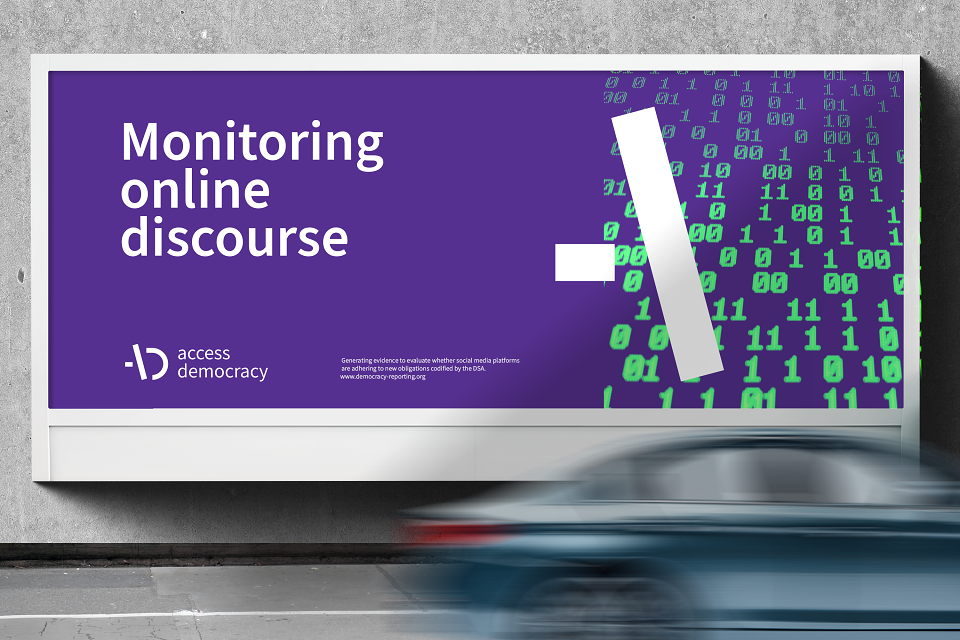
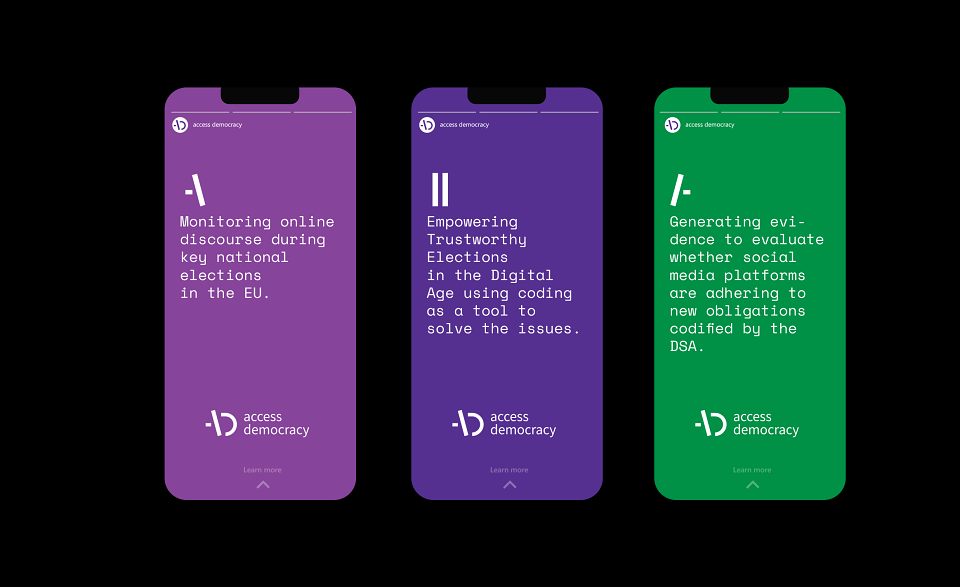
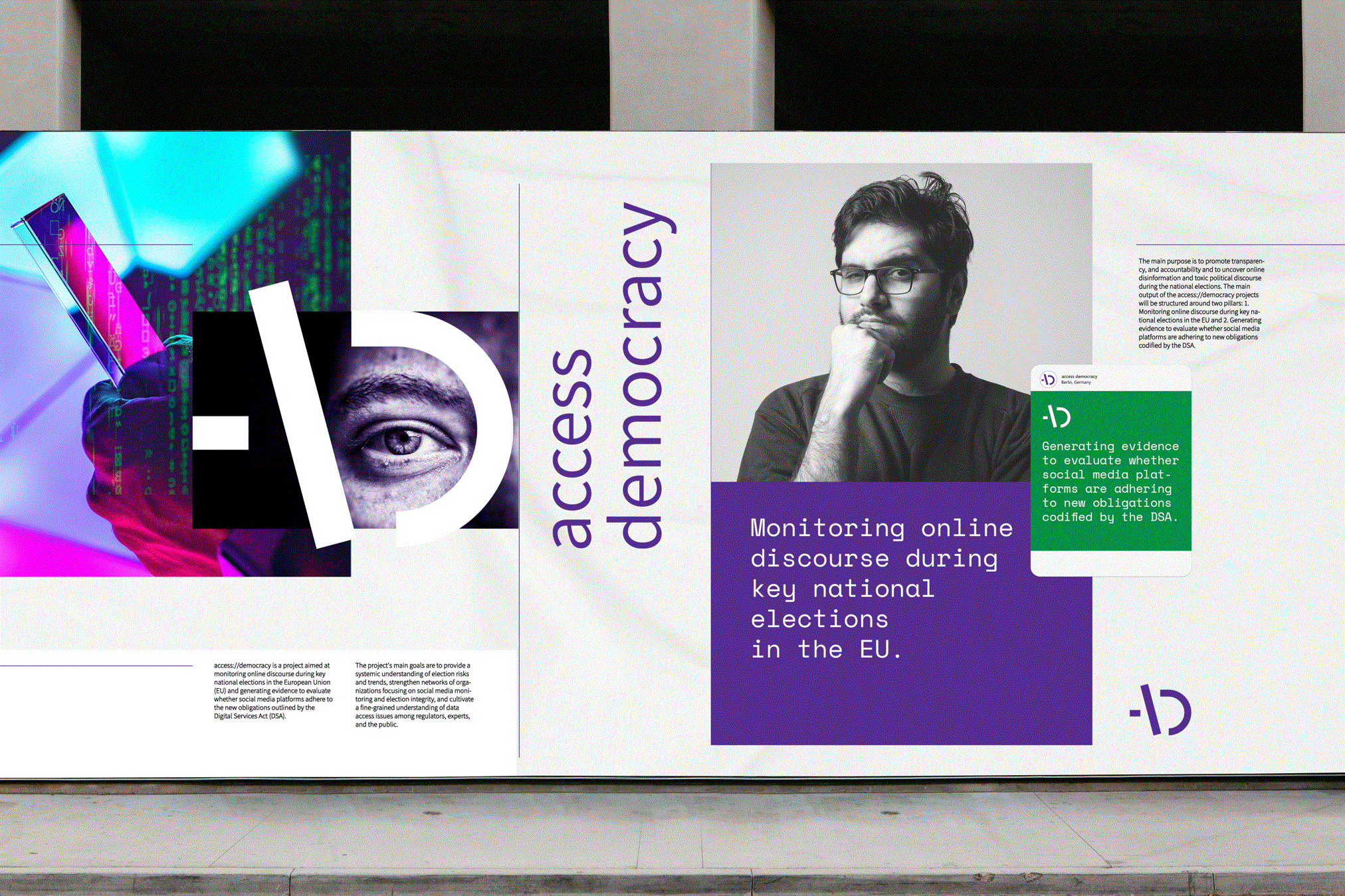
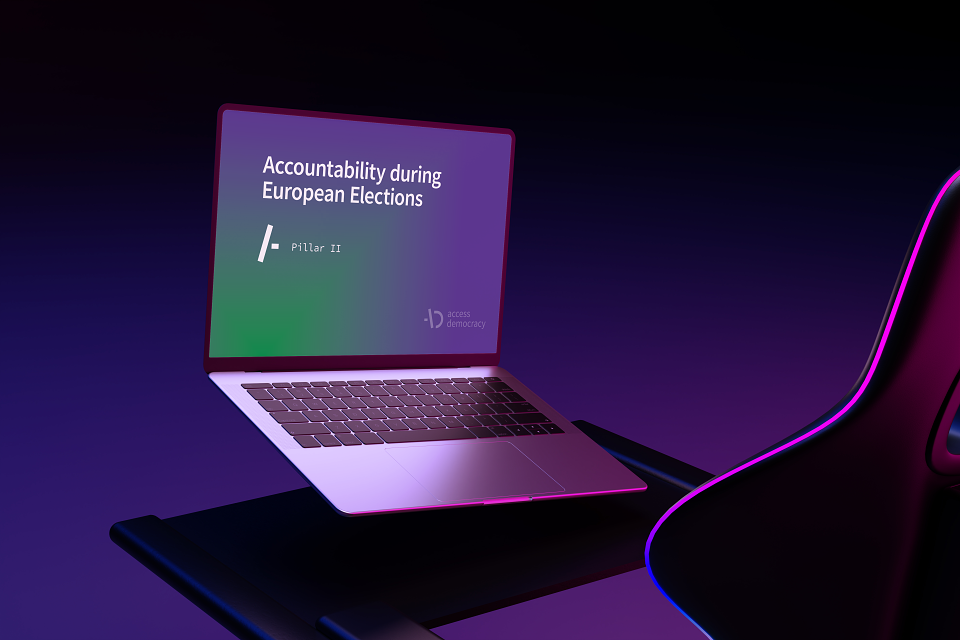
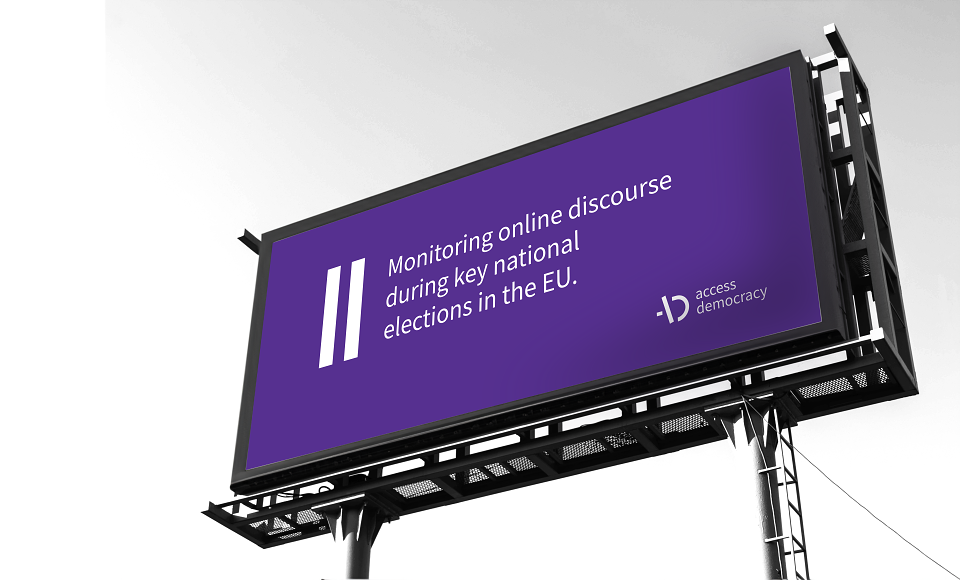
access://democracy is a project aimed at monitoring online discourse during key national elections in the European Union (EU) and generating evidence to evaluate whether social media platforms adhere to the new obligations outlined by the Digital Services Act (DSA). The project's main goals are to provide a systemic understanding of election risks and trends, strengthen networks of organizations focusing on social media monitoring and election integrity, and cultivate a fine-grained understanding of data access issues among regulators, experts, and the public. The main purpose is to promote transparency, and accountability and to uncover online disinformation and toxic political discourse during the national elections. The main output of the access://democracy projects will be structured around two pillars: 1. Monitoring online discourse during key national elections in the EU and 2. Generating evidence to evaluate whether social media platforms are adhering to new obligations codified by the DSA.
Target audience:
The target audiences for access://democracy include national/international electorates, civil society organizations, and technology/social media platforms in Pillar 1, while Pillar 2 focuses on EU/member-state government officials, technology/social media platforms, and civil society organizations.
Brand Essence:
Empowering Trustworthy Elections in the Digital Age using coding as a tool to solve the pillar’s objectives.
Brand Positioning:
access://democracy is the leading initiative driving evidence-based reporting and systemic monitoring of online political discourse during key national elections in the EU. It aims to promote transparency, accountability, and integrity in social media platforms to safeguard democratic processes. By fostering collaboration between stakeholders, access://democracy empowers regulators, civil society organizations, and the public to protect the integrity of elections.
Brand Tone and Messaging:
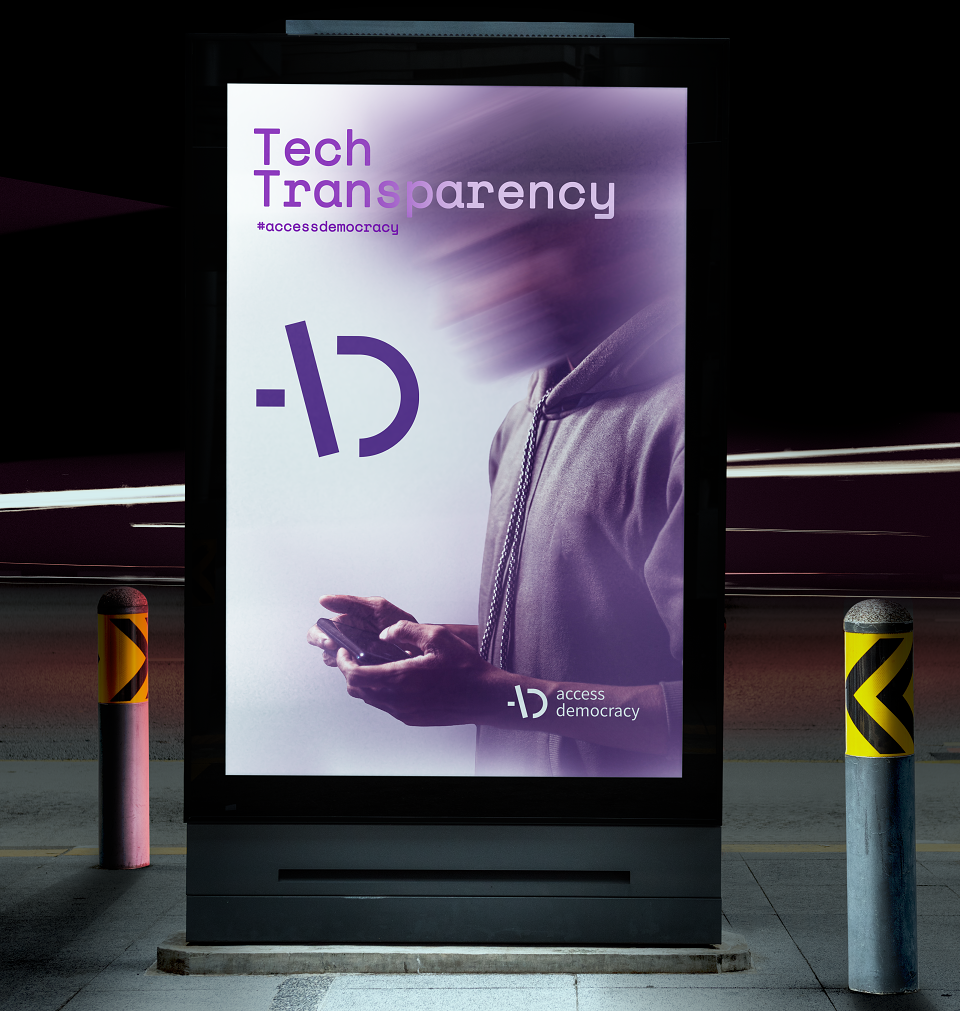
access://democracy is a brand that conveys trust, expertise, and collaboration. The tone of communication should be informative, authoritative, and transparent/ open. Enhancing Election Integrity through a transparent, non-negotiable, straightforward system, using technology – especially coding – keeps the events accountable in the right direction, is safer, and at the same time protects the democratic process.
Process Behind
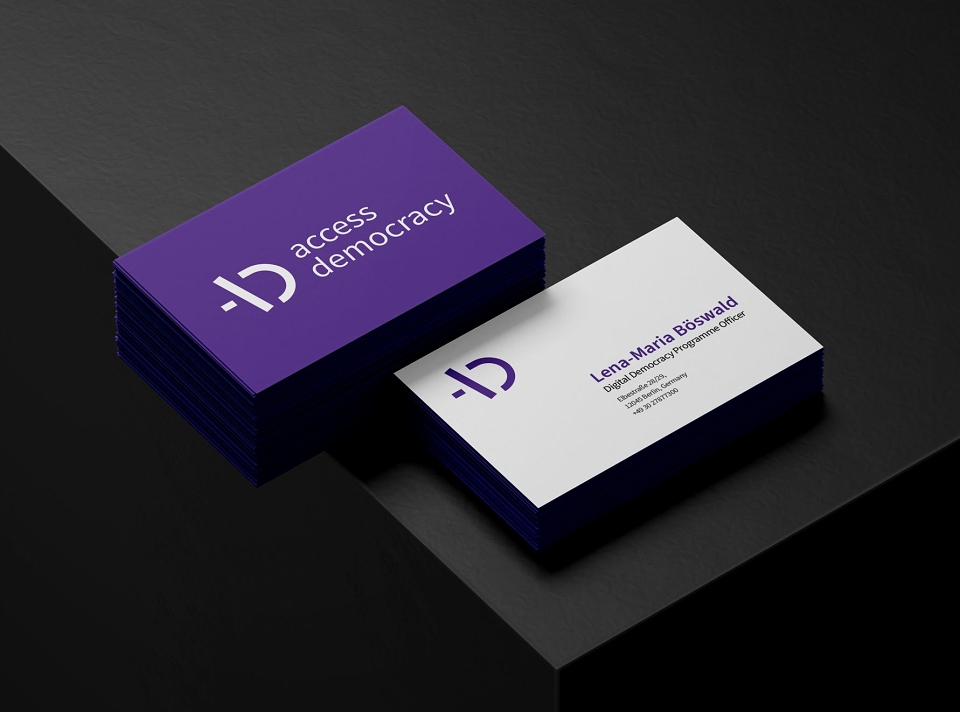
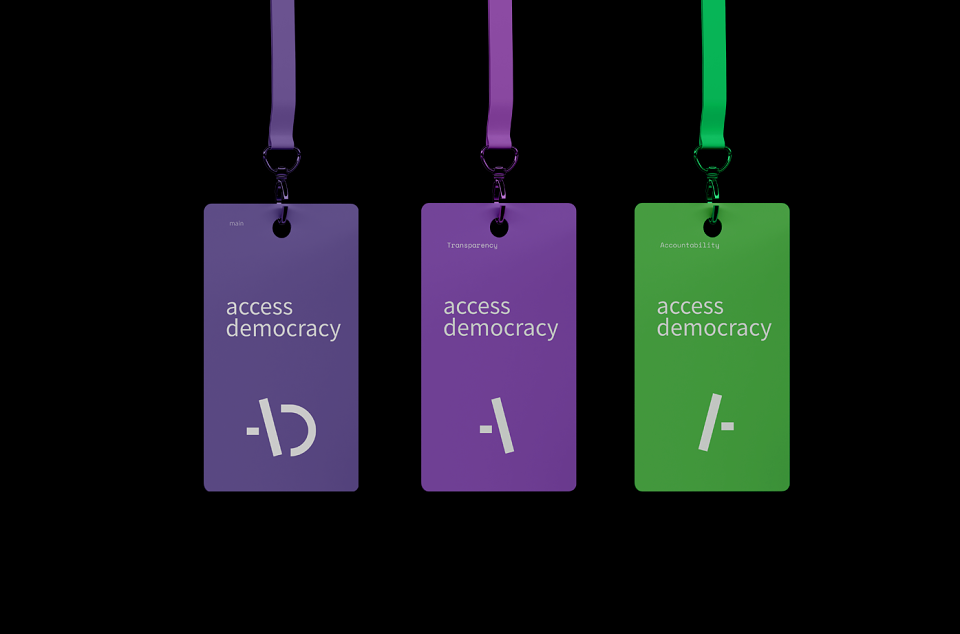
The key element for the visual identity is related to the code symbol as a main tool to operate with, at the same time having something graphic as a code system is associated with rigorously, structural monitoring, and a trustworthy feeling in a very safe zone. All this highlights the visual identity values.
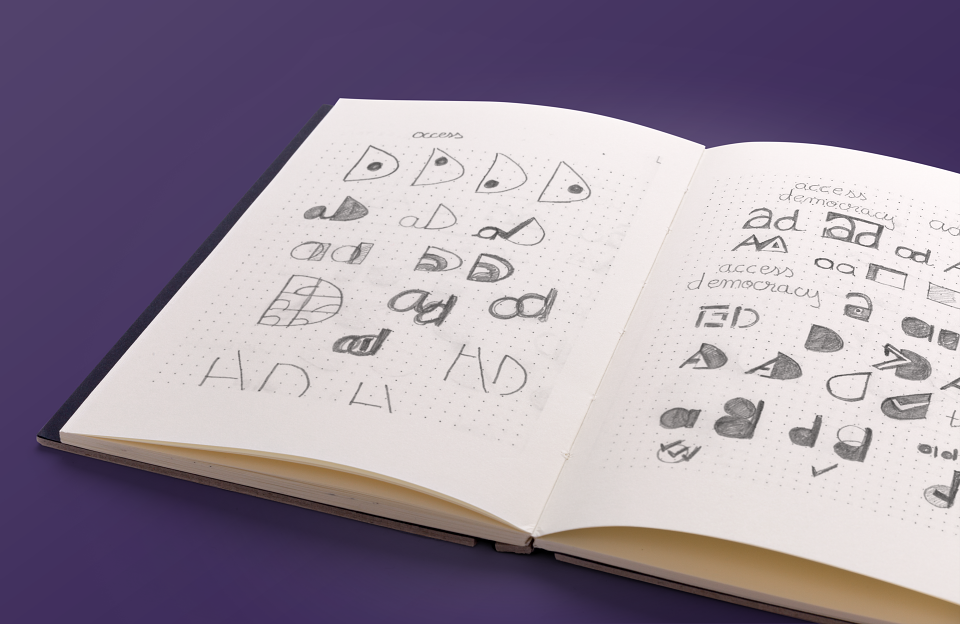
The concept started with the:// "http://" for Hypertext Transfer Protocol (HTTP) as a common association with a programming language, but going deeper with the research and the brainstorming this seems more an idea at first glance, it was the starting point for other directions.
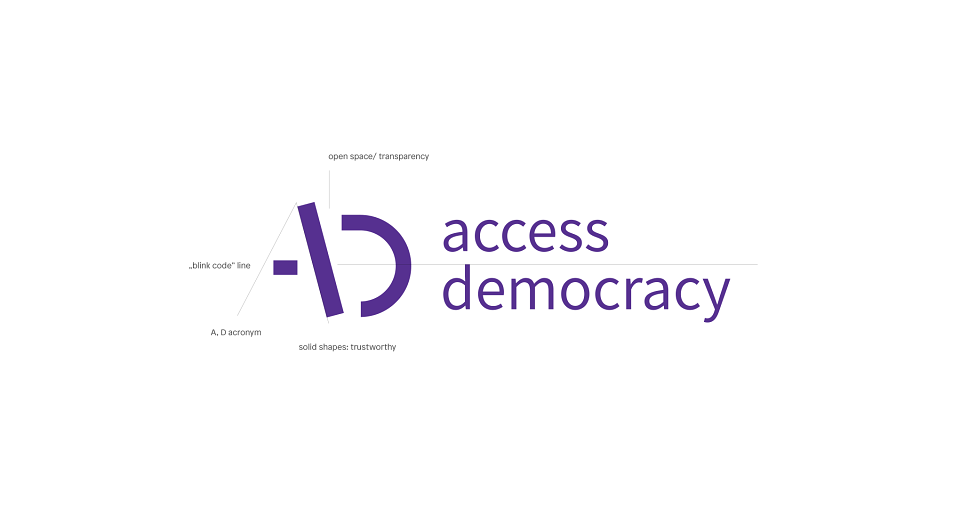
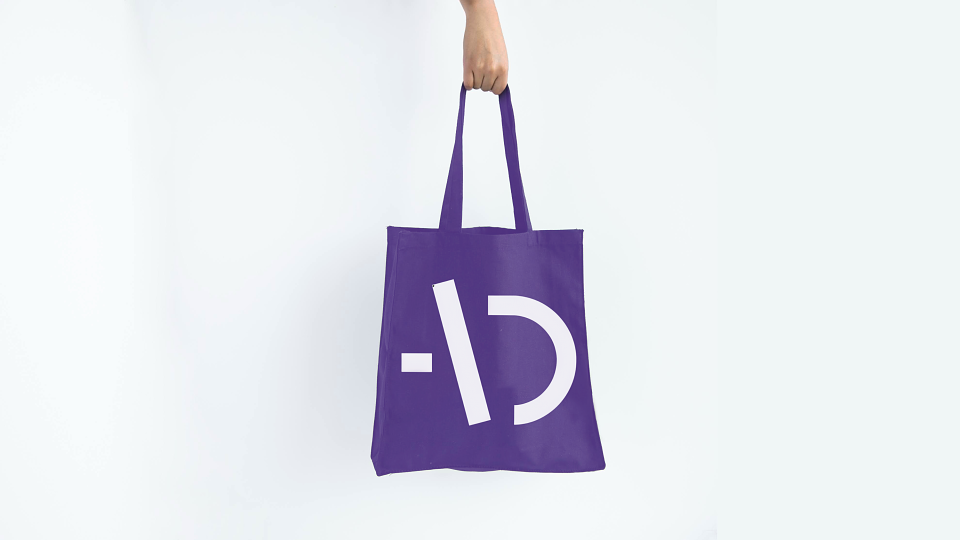
The current symbol is a very strong, clean, easily identifiable, and honest representation of the core idea behind Access Democracy. It uses subtle acronyms of the name, and a powerful symbol for the moment when you start to code in a programming language. The horizontal line leads to the coding like a flash, another called „blink code” changes its state rapidly and is a powerful tool that creates attention-grabbing. The visual impact is eye-catching and in a digital world, the target audience can make a quick link between the access democracy and the information technology, capable of leaving a lasting impression on the audience.
Strong purple is a choice for the visual identity that is associated with independent thinking, and innovative solutions to protect democracy in the digital age. Also, can it enhance professionalism, trustworthiness, authority in the field, strong voice, allowing it to stand out and differentiate itself.
MADEIT CREDITS
-

Democracy Reporting InternationalClient
-

Oana MariesBrand | Graphic Designer