


Tom Primrose, Strategy Director at Nonsense, on what the brands of today can learn from the world’s last true movie star: Tom Cruise.
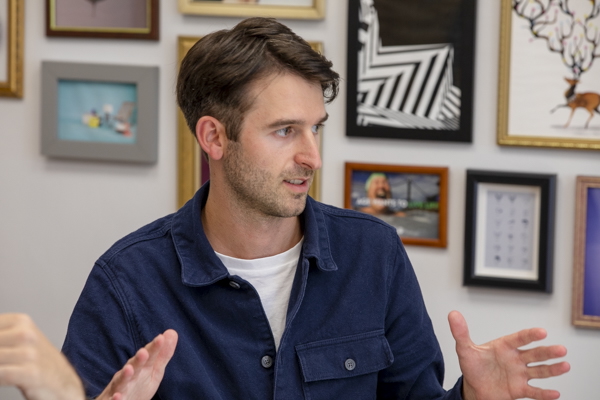
Tom Primrose
Tom Cruise. They just don’t make them like that anymore. A man who has continued to risk it all for the art of cinema. For 40 years, Cruise has been a relentless force in film, crafting unforgettable characters and performing unimaginable stunts. Last week saw the opening of Mission: Impossible - The Final Reckoning, the last instalment of the series that has spanned eight films.
So as the curtain falls on what many regard as the greatest action-thriller franchise, it felt like an appropriate moment to reflect on what the brands of today can learn from it.
Lesson 1 - Build a niche and own it
Tom Cruise wasn’t always seen as an action hero. His early era saw him play high-charisma roles in the likes of Risky Business, Jerry Maguire and A Few Good Men. It wasn’t until Mission Impossible that Cruise got a taste for thrills. As the box office boomed he realised that this was something to lean into rather than shy away from. In the years since we’ve seen Cruise jump out of planes, scale the Burj Khalifa and drive a motorcycle off a cliff, all whilst perfecting his signature running style. The niche of doing the stunts for real has compounded, making Cruise synonymous with authentic spectacle.
The most common pitfall brands fall into is trying to be all things to all people. They chase competitors and dilute communications to appeal to everyone. The most successful brands do the exact opposite - identifying a distinctive opinion, persona or product feature and doubling down on it for the long haul. Kantar’s BrandZ Research highlights this, further illustrating that consumers are willing to pay more for brands they see as unique. With this in mind brands would be wise to stop chasing the masses and to carve their own groove.
Lesson 2 - Turn your fans into collaborators
When it comes to finding talent and elevating those who possess true skill, Cruise always has his eyes open. Most recently he discovered Wilf Elliott, a 21-year-old charcoal artist who had drawn Cruise amongst a number of other famous faces. As well as inviting Elliott to meet him on the set of Mission: Impossible - The Final Reckoning, he also worked with Paramount Pictures to commission a new piece of work that would be used to officially promote the film and put Elliott centre stage.

Many brands see their relationship with their customers as black and white, but the reality offers far more opportunity. The brands that see their fans as a hotbed of inspiration, ideas and influence stand a far greater chance at staying relevant in market. One great example of this is Lego Ideas - a hub where LEGO fans can showcase their creations, enter challenges, propose new sets, and vote on the ideas dreamed up by fellow builders. Lego understands that inviting your customers to collaborate helps lay the foundations of a future made to last.
Lesson 3 - Don’t be careful, be confident
These were the words spoken by Cruise in a behind the scenes film documenting the actor preparing for his death-defying motorcycle cliff jump. The film shone a light on the hundreds of hours of practice that went into mastering the stunt - all so that when the cameras rolled, Cruise could perform with total conviction and deliver a scene that will be etched into cinema forever.
Too many brands lack the confidence to show up as they really want to. Messaging gets watered down, concepts become more cautious and as a result the brand fades into the background. The State of Creativity Study by LIONS Advisory shows just 13% of marketers describe their companies as risk-friendly, while nearly a third admit to being highly risk-averse. But playing it safe comes at a cost. Risk-taking brands generate four times higher profit margins (WARC) and are 33% more likely to achieve long-term revenue growth (Deloitte). In today's saturated world having the confidence to lead with a magnetic personality that sparks every brand communication is a powerful competitive advantage.
Lesson 4 - Do it for the people, not the awards
Three times Tom Cruise has been nominated for an Oscar, only to have (in many people’s opinion) lost out unfairly. But this was no bad thing. Rather than go on an obsessive quest to bag a golden statue, Cruise instead distanced himself from the Academy and focussed on what really matters - the theatre goers that the films are made for. A prime example of this was when Top Gun: Maverick’s release date was pushed back, to complete reshoots due to Cruise believing they could achieve even bigger and better visuals. The film went on to be an absolute phenomenon (grossing $1.48 billion worldwide), something Director Steven Spielberg famously said ‘Saved Hollywood's Ass'.
There’s nothing wrong with winning awards - but it shouldn’t be the main goal. Instead brands should be obsessed with delivering for the people they serve. Right now, that’s not happening. According to the UK Customer Satisfaction Index, satisfaction levels are now at their lowest since 2010 - a wake-up call for brands everywhere. CX is a sleeping giant, often overlooked but packed with potential. In increasingly competitive sectors, brands that deliver satisfying experiences will build credibility and win where it matters most - with their customers.
Lesson 5 - Never stop learning
Tom Cruise recently sat down with Edith Bowman for a BFI ‘In Conversation’ event themed around a lifetime of learning. Throughout the interview Cruise spoke about the importance and privilege of continual learning. Without any formal training, he created his own version of film school, which involved spending time with and interviewing directors, cinematographers and editors to fully understand the film making process.

Creating a culture of curiosity and the conditions for people to grow is fundamental to building a team that believes. LinkedIn’s 2024 Workplace Learning Report shows that 8 in 10 employees say learning gives them a sense of purpose, and 7 in 10 say it strengthens their connection to their company. Yet despite this, UK employers are now investing 20% less in employee training than they were a decade ago, according to the Office for National Statistics. It’s a disconnect that costs more than it saves - and for brands looking to attract top talent, this kind of investment could be a crucial edge.
As Tom Cruise skydives into the Mission: Impossible sunset, his next adventure will be in his sights, for the brands that keep watching there will be lots more to learn.