Mila Praschma
3D Environment Artist
ABOUT
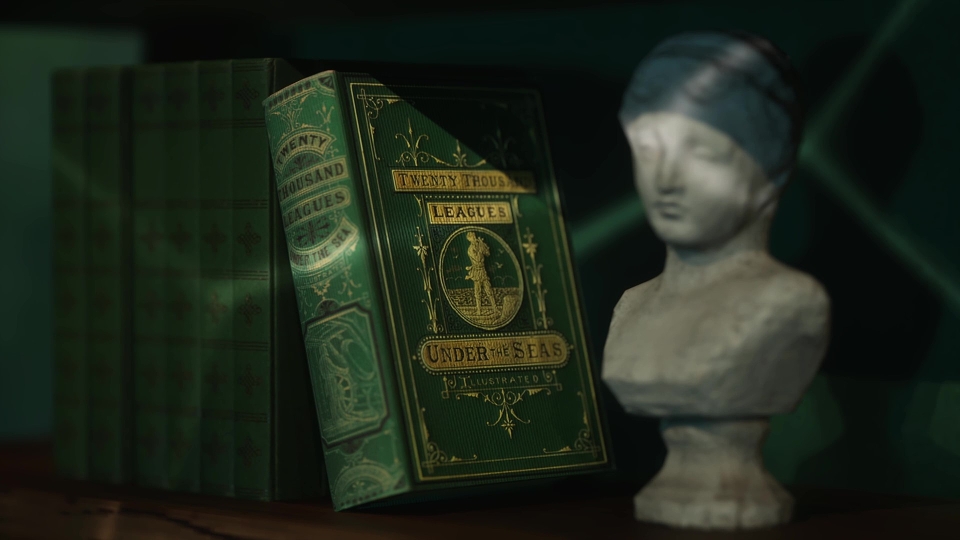
The Nautilus is the product of my Final Major Project. The chosen topic was "adaptation." Through this project I sought to explore the relationship between an original work - be it a book, film or game - and its' adaptation. Most importantly, understanding the balance between source fidelity and creative freedom. The end goal was to create a scene or environment for a video game adaptation which remained true to its source material yet allowed for creative liberties. I chose this adaptation from 20,000 Leagues Under the Sea by Jules Verne, specifically Captain Nemo's Salon room.
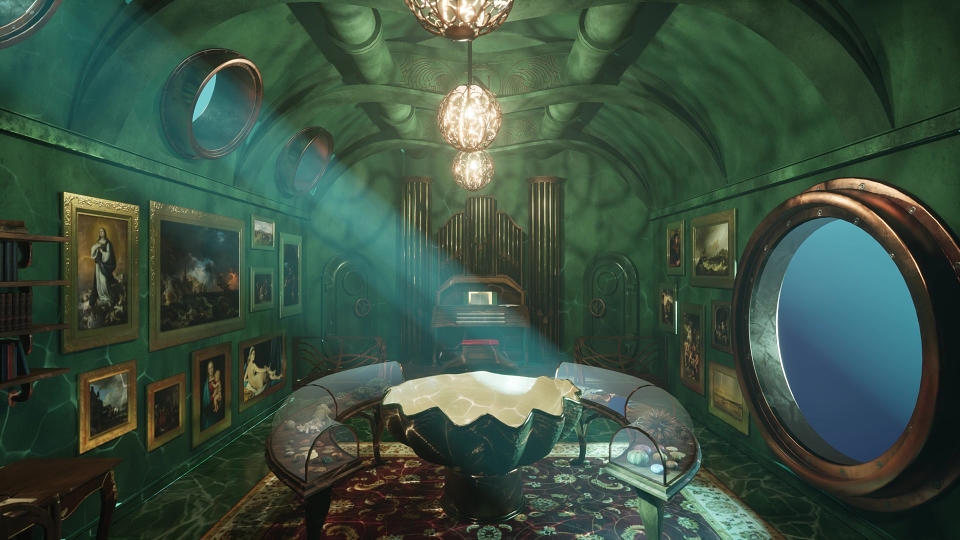
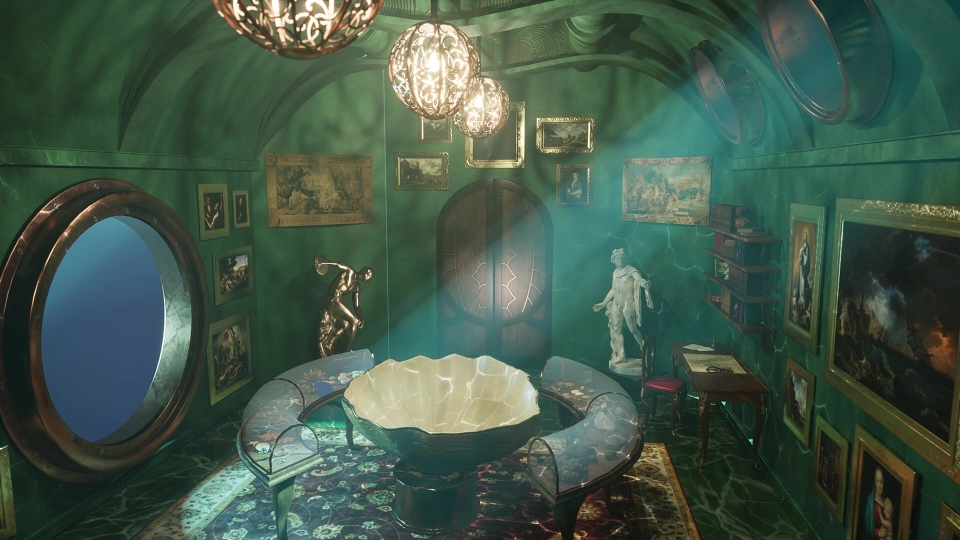
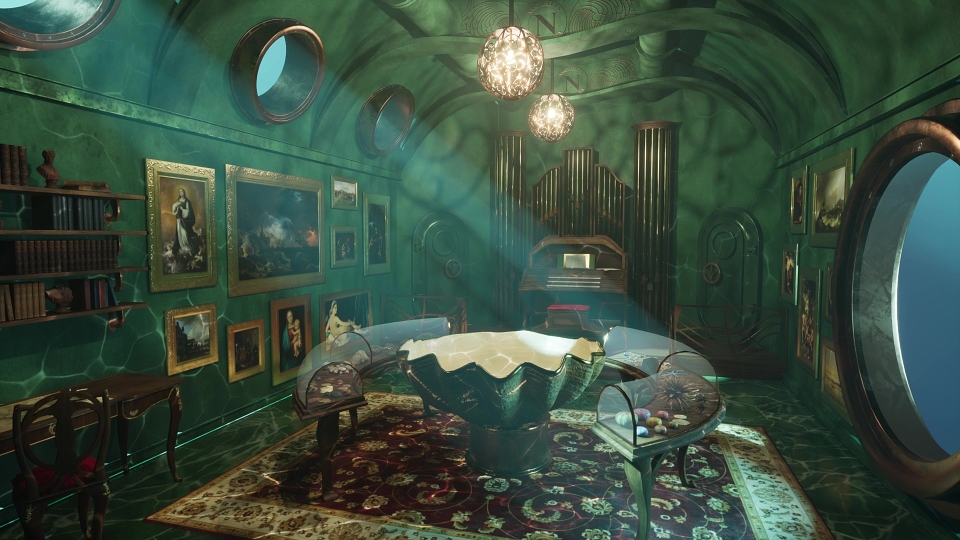
I then analysed popular adaptations such as The Lord of the Rings, The Witcher and so on, extracting the elements which made them successful or unsuccessful. I then compared multiple editions of 20,000 Leagues and deduced their key themes and assets critical to the Salon. Verne described a giant clam shell basin surrounded by glass cases full of marine specimens, 30 artworks adorning the walls, measuring instruments, sheet music scattered over an organ-piano, sculptures of antiquity, a giant porthole window and arabesque chandeliers. These were all created in as exact a fashion I could to the text, including following any measurements given (such as for the room dimensions and the diameter of the giant clam shell).
I took creative liberties by placing the 'N' sigil along the roof - as described in an earlier part of the book - as well as by setting a desk with an 1800s map (which would have been period accurate given the date of publication) where I imagine Nemo might have done charting and other equations. Given the detail of source fidelity, the project was deemed to be a successful adaptation.
The main challenge of this project was presenting it. To do so I created god rays using Lumen and created a caustic material which moved along the surface of the lights to portray an oceanic feeling.
Modelled in Autodesk Maya, textured in Substance Painter and visualised in Unreal Engine 5.
MADEIT CREDITS

Annual 2023 ShortlistThe Nautilus: Captain Nemo's Salon3D
Project featured: on 5th July 2023