Mary Lewens
BPSS-Cleared Content Designer
ABOUT
Extended producer responsibility for packaging: Designing and iterating user-centred content to help UK businesses manage their annual recycling obligations ahead of legislation coming into force.
I was among two sets of UCD teams in one scrum and we were also collaborating with another UCD team in an adjacent scrum team.
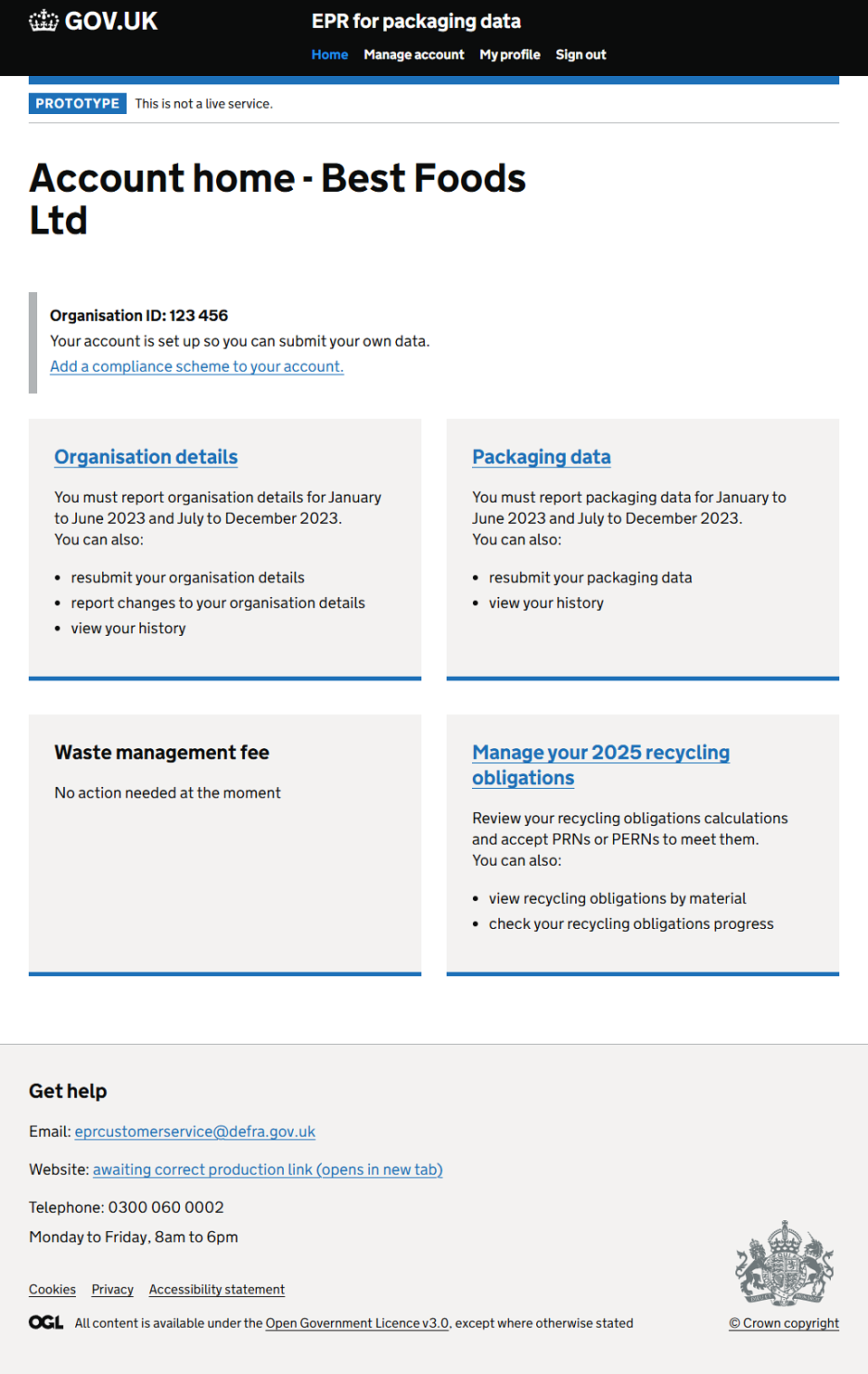
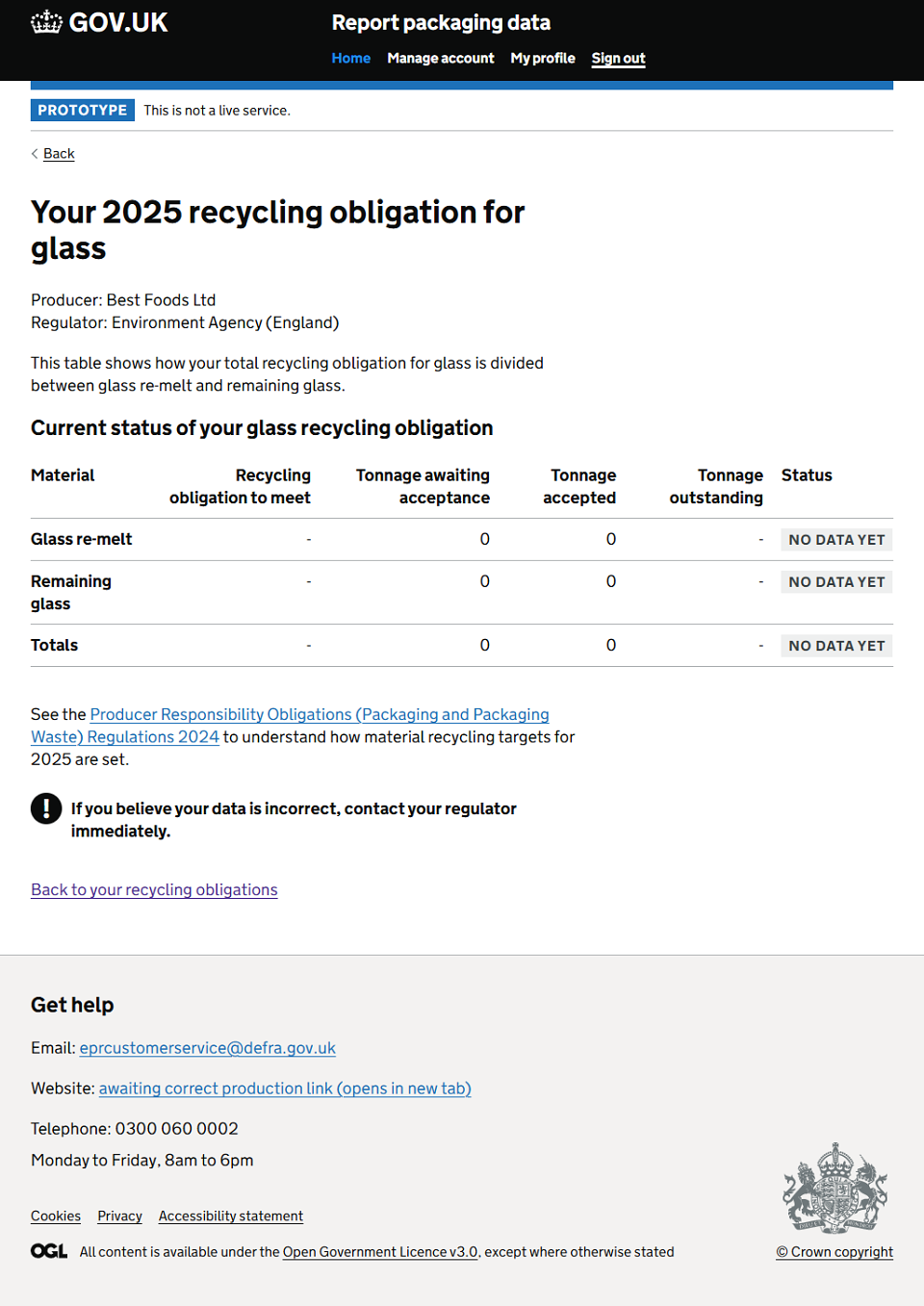
The initial page tile and the 3 versions of the table are my work, while the 2 material breakdown variations were created by my fellow content designer within my scrum team. I have included them for better context of what was needed and delivered.
We needed to create a way to help businesses manage their new recycling obligations to replace a legacy system. Users now have to submit packaging data for their recycling obligations to be calculated per material type as each has a different percentage for users to meet by buying 'Packaging recycling notes' (PRNs) from registered vendors in an offline process. Those percentages would change yearly to help the UK move towards improved recycling outcomes. Those recycling vendors would then issue those PRNs for the user to accept to progress towards meeting their obligation
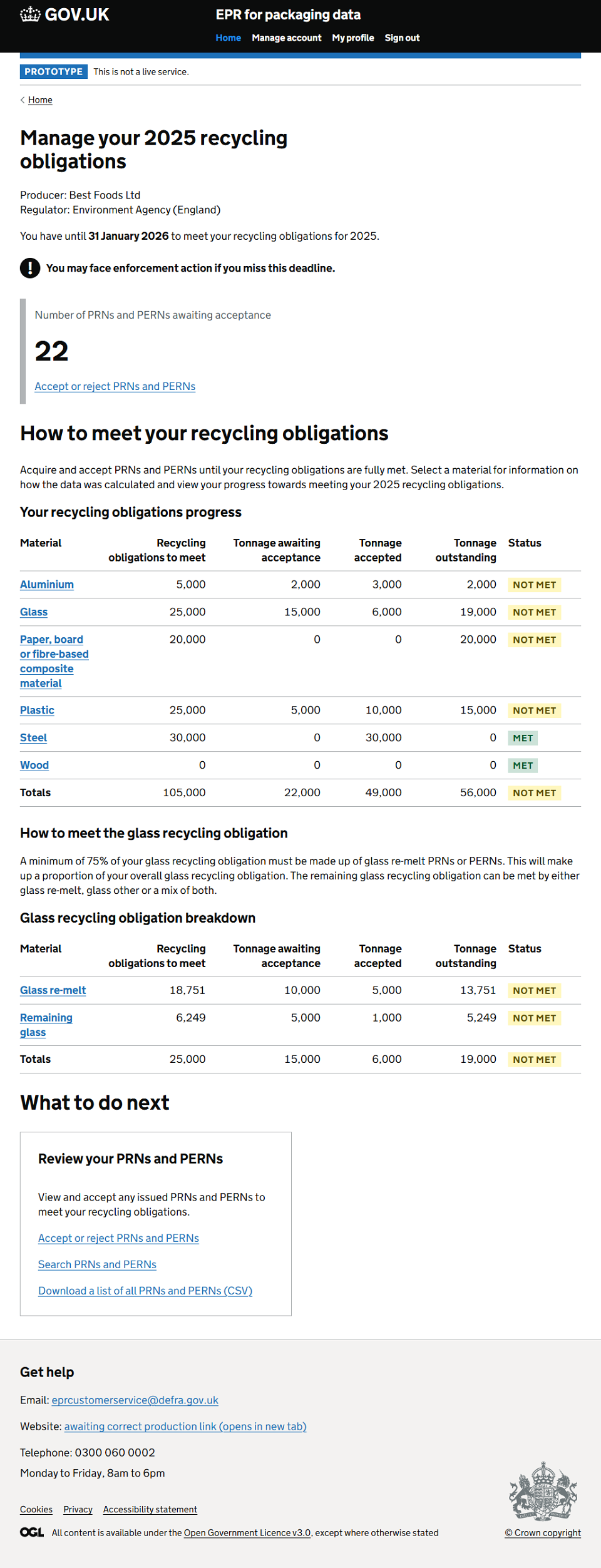
The start of the content needed to mention the year of the obligation as users are working in retrospect. They needed to know that the service had identified their user type as there were two groups - individual producers or compliance schemes that large and small producers would outsource this work to. We also needed to let them know the legal deadline and warn them of the potential consequences should that be missed.
Users also liked knowing a snapshot of how many PRNs are waiting for their acceptance and be able to quickly accept or reject them, which our adjacent UCD team were working on, but they need to see that in conjunction with the breakdown per material.
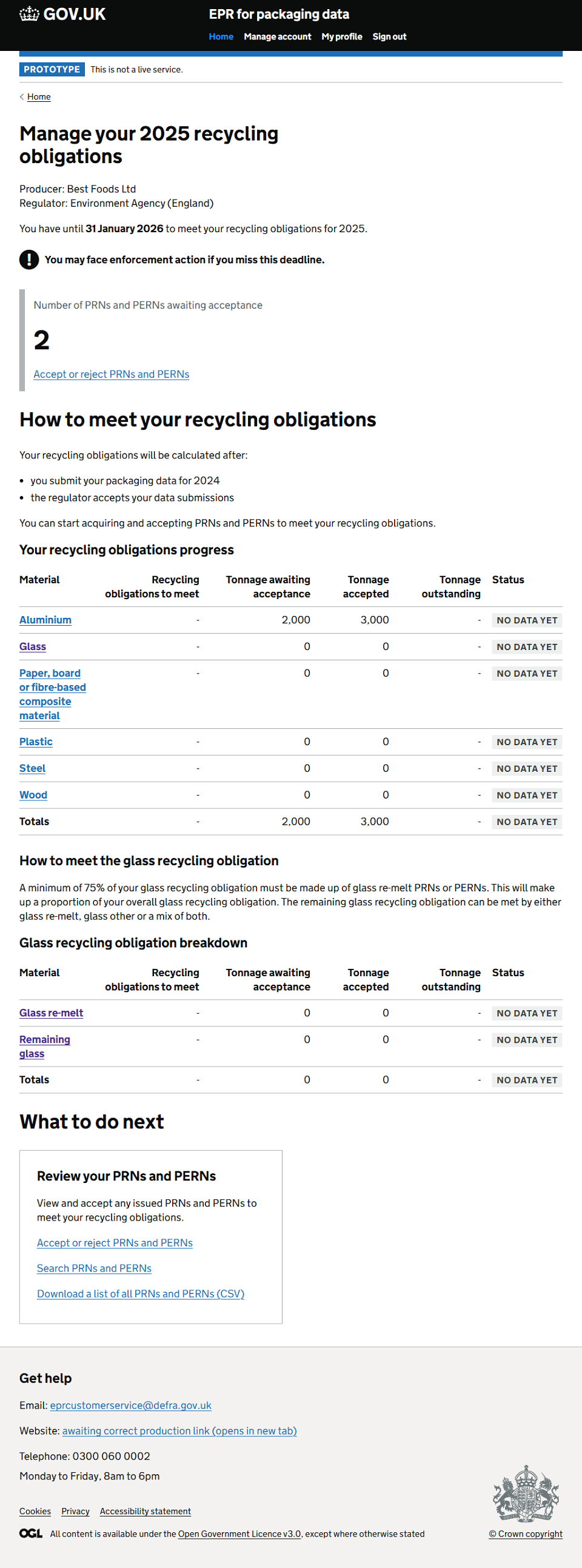
Initially we experimented with not showing a table until the user submitted data or showing a reduced version of the table, with the full table shown further into the journey which largely matched the one used on the legacy system that users were used to.
User insight showed us that they needed to see what materials they needed to submit data for and that they wanted to see the full table upfront and they were largely happy with the one used later in the journey.
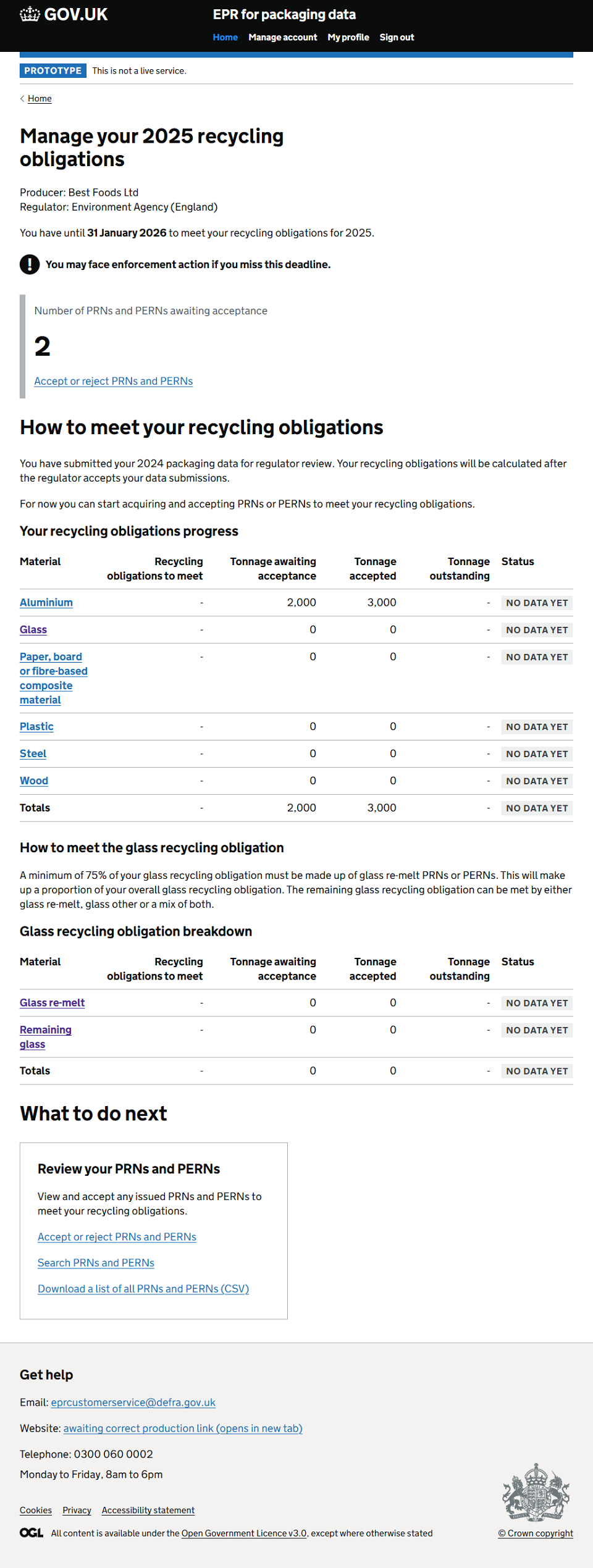
So we iterated into 3 variations of the table with slight amends, including a status column that users liked, for improved sense and different intro copy to guide users as to where they were in the journey.
I signposted that users needed to submit their data on the first table, then after submission, while their obligation was being calculated, they could at this point start meeting and tracking their progress against any materials they were obligated for, according to the predictions that users tended to make according to their own company strategy.
Both of these variations had the same status against each material to underline that data either needed submitting or the obligation had not yet been calculated.
On the third version of the table users would see that their obligations were now calculated so they had full visibility and could either continue or start to progress meeting them.
We included 2 types of status at this stage, with 'Met' in green and 'Unmet' in yellow to signpost accordingly. We decided against using red for 'Not met' as users have a whole year to meet them and it would be alarmist to leave it as red from the early months of the user tracking their progress. We decided that in a future iteration turning it red could be considered towards the deadline of those obligations.
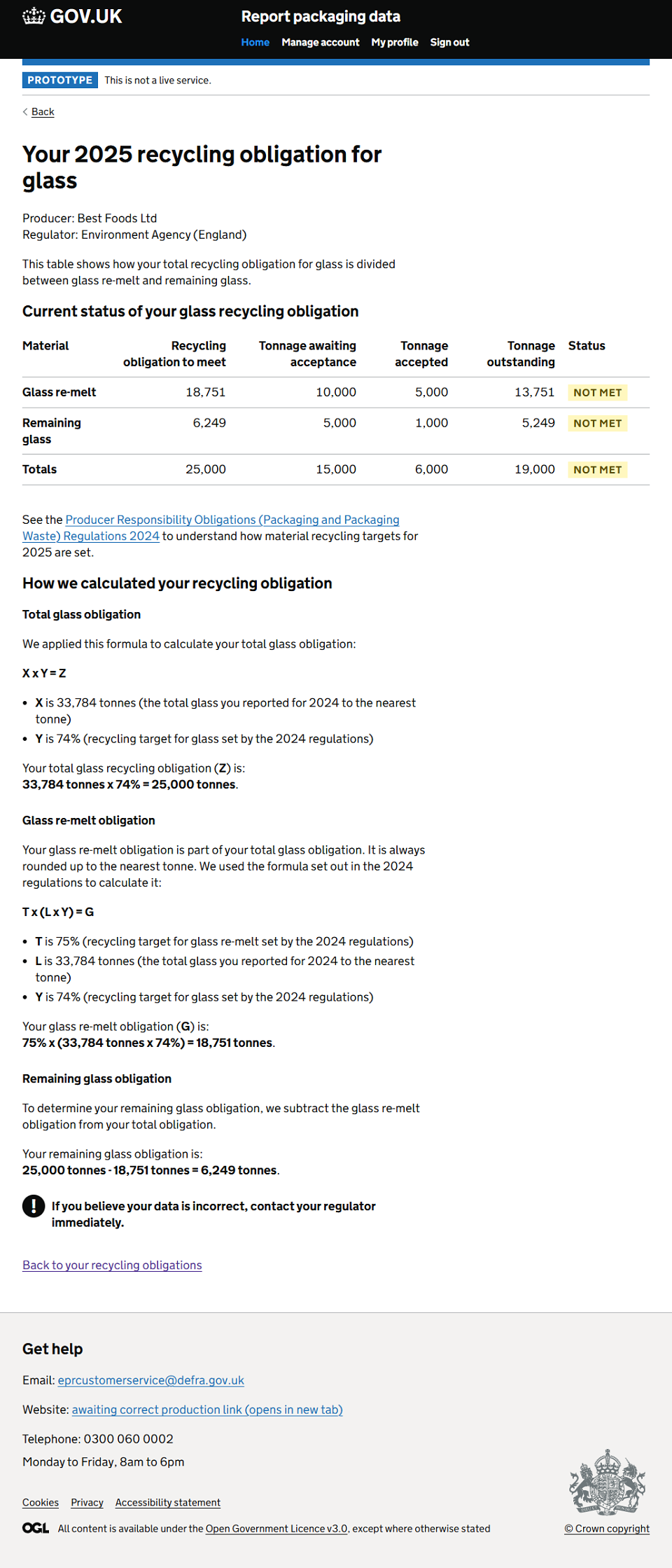
Each material is hyperlinked to a deeper page which replicates the same table, but just for that material. If either the user has not yet submitted their data or they have but the obligations are still being calculated, they see a basic version of the step. If the data is submitted and the obligations are calculated, users see the same table for the same material but with a full breakdown formula of how their obligation for that material has been calculated.
This was handed over to the development team in time to meet the legislative deadline.
A point to note is that:
These steps are fairly deep into an overall journey, which means that by this point it was agreed across the project that users already knew what 'PRN' means and are - but if they did not, it had already been explained earlier on in their journey.