

Generative AI might not be the bogeyman many have cast it as but in just a few short years it’s definitely changed agency life. Don’t call it a transformation though, call it a “redefinition.”
As automation increasingly infiltrates the creative workflow for all of us, job definitions are shifting fast. Indeed, platforms like Meta plan to fully automate ad creation by 2026, which raises some serious questions about the future of traditional advertising.
Creative directors admit AI is boosting their capabilities but also intensifying competition for roles once seen as safe. To keep pace, agencies are naming Chief AI Officers to oversee tech ethics and strategy and deploying AI agents that slash campaign launch times by 65%.
McKinsey reports that entire workflows are being reimagined, with new AI-specific roles like governance leads and prompt engineers coming to the fore. Yet, amid the acceleration, one truth remains: human discernment still matters. As Senior Strategist at The Clearing, Alice Auxenfans puts it, “Where human value lives [is] in discernment. In direction.”
The AI Inflection Point in Agencies
Automation at Scale
Generative models now handle copywriting, imagery, and video creation with staggering speed and minimal human input. That means many entry-level and executional roles are vanishing. Meta’s upcoming ad-creation platform is set to autonomously generate everything from copy to targeting by late next year, signalling a future where entire campaigns launch without human touch.
Efficiency vs. Originality
The trade-off? Consistency comes at the cost of creativity. As SomeOne Founding Partner Simon Manchipp warns: “Anything that starts with 'I think the idea could be...' is now done faster, stranger, and, worryingly, sometimes better by a silicon sponge in a server farm.” His advice: “What survives? The taste-makers. The ones who can say no with confidence. Curation is king."
Roles on the Brink of Obsolescence
Art Directors and Copywriters Under Siege
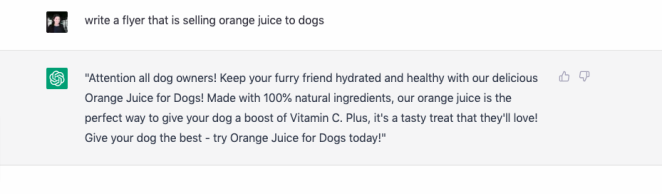
Traditional creative roles are under direct threat. Generative tools can churn out logos, layouts, and taglines in seconds. AI-driven text generators now produce campaign copy, social posts, and product descriptions en masse, forcing copywriters to prove their worth beyond sheer output. Quality over quantity has never meant more than it does right now.
Media Buyers Replaced by AI Agents
Media-buying desks are already shrinking. AI agents at firms like Jellyfish now manage campaign setup and optimization across Google and Meta, reducing launch timelines by 65%. Industry groups like the 4As predict agents will soon reallocate budgets and pause poor performers autonomously.
The Strategist: Human Value in Discernment
Beyond Pattern Matching
"Brand strategy is changing – fast," says Alice. While generative tools support research, writing, and ideation, she argues that strategy requires more than efficiency. "It's about understanding, digesting, uncovering hidden truths, and making the right leaps. It’s about helping clients make the right choices."
The Danger of Devaluation
Alice continues: "AI can replicate what’s been done. It can be optimised for what’s worked. But it can’t judge what matters most to a specific business, in a specific moment, with a specific goal." The real risk isn’t replacement—it’s devaluation. Strategy risks being flattened into data-fed templates that may look right but miss the mark.
Redefining the Strategist’s Domain
She concludes: "The evolution of the strategist role isn’t about resisting AI, it’s about redefining where human value lives. In discernment. In direction. AI can deliver insight but only humans can weigh it, challenge it, and turn it into a decision that’s right for the brand’s future."
Curation, Taste-Making, and New Leadership

From Job Titles to Inputs and Outcomes
Simon argues for a complete rethink of agency structure: "Agencies must stop thinking in job titles and start thinking in inputs and outcomes. The new career ladder? Less linear, more like an Escher sketch—looping between human instinct and machine intelligence."
Chief AI Officers and Governance
To stay ahead of the curve, major networks like Monks, Stagwell, and IPG are appointing Chief AI Officers to align technological advancement with brand integrity and creative direction.
Preparing for the Shake-Up
Upskilling and Hybrid Skill Sets
The age of specialization is giving way to hybrid talent. Roles that fuse creative intuition with technical fluency (prompt engineering, AI ethics, human-AI collaboration) are in high demand. To survive, professionals must adopt a mindset of continuous reinvention.
Shifting Business Models: From Hours to Outcomes
AI accelerates production, forcing agencies to rethink how they charge. Hourly billing is giving way to performance-based models. The Wall Street Journal notes holding companies are experimenting with compensation tied to measurable outcomes. Campaign magazine reports agencies are reorienting around AI-generated deliverables, emphasizing value over volume.
Final Thoughts

The most vulnerable roles are definitely those built on execution and repetition: art directors, copywriters, and media buyers. As a professional copywriter myself, I couldn't be more concerned. But not all is lost. The roles poised to thrive are those steeped in judgment, vision, and leadership. As Alice reminds us, true strategy is "discernment" and "direction." Simon says it plainly: “Curation is king.”
By embracing new skills, empowering AI-savvy leadership, and shifting to output-focused models, agencies can turn disruption into momentum. The creative agency of the future won't be powered by AI alone. It will be led by humans who know how to use it wisely.