
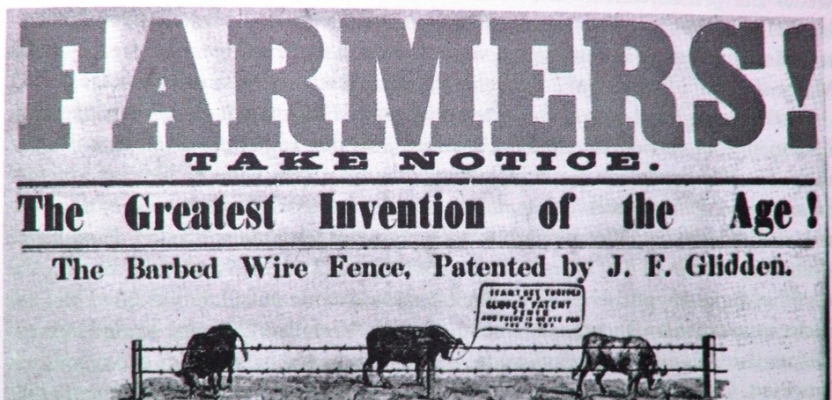

Earls Court Tube station in 1874 had a lot of ads. But they were all created via a single approach. A typographic arrangement was all that was available. And as you can see by the picture, after a few had gone up, no one paid any attention.
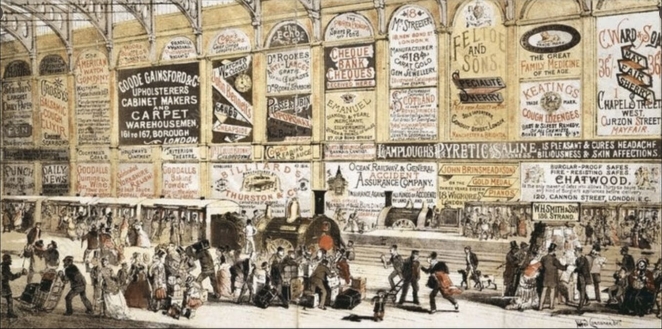
It was seen as good enough by the brands paying for them. But soon, good enough didn't work... The era of “good enough” design is pretty much here but now wrapped in a new shiny package.
Artificial intelligence can generate logos, layouts, illustrations, photography, headlines and body copy that pass the sniff test for much of the market. To the untrained eye, the results are often indistinguishable from human work. The technology is playing everywhere — giving strategic guidance that reads like it could have come from McKinsey, or offering financial insights that mimic the tone and structure of Goldman Sachs. I know people at both spots. They know it's happening.
For many businesses, this level of AI advice will be entirely sufficient. AI can deliver branding and communications that pretty much meets their needs at a fraction of the cost and time. “Good enough” will be widely available — quite possibly the norm, swamping the channels... all of them... so those brands that try to do something else will stand out, more than ever.
This shift repositions human-powered creative agencies. They will no longer be the default choice for most branding projects. Instead, they will become a deliberate choice for those who want to make a statement.
The companies that commission human designers, writers, photographers, and strategists will be saying something about themselves: that their brand matters more, that it deserves more care, and that it warrants more investment. Even if the output is flawed, slower, and lacking in AI twang.
Hiring a branding agency will become a visible act of intent. It will signal to customers, investors, and competitors that you value care over speed, people over automation, and nuance over template. It will say you are not willing to entrust your future identity to an algorithm trained on the past.
Over time, creative agencies may take on the cultural role of luxury brands. Just as a handcrafted watch or a bespoke suit speaks to discernment, a branding identity visibly (and quite possibly noisily) shaped by a leading agency will become a badge of status. The choice will operate much like selecting a Mercedes over a Dacia Sandero (currently the cheapest car to buy new in the UK). Both are cars. Both will get you from A to B. But both make a statement about how much you'd like to make a journey together appealing to others.
And this matters. Brands are not just identifiers — they are signals. Every decision you make about your brand is also a decision about how you want to be perceived. As AI floods the market with 'good enough', the few who step beyond it will naturally stand out all the more. And we all know branding is there not to blend in, to iterate on others, but to zig while they all zag and stand for something compelling and differentiated.
Commissioning a real, people-powered creative agency may be more akin to taking the scenic route instead of the motorway. It might cost more and take longer, but it will be memorable, distinctive, and built for the kind of audiences that notice — and care.
AI will cover the masses. The hairdresser from Harrow gets access to pretty top flight advice. For free. From his phone. Anytime he likes. But it is human creativity that covers the meaningful. In that gap, branding may find its new position as a mark of luxury. And those who recognise it early will set themselves apart before everyone else realises the journey has already changed — even if the majority are enjoying a Dacia Sandero.