Magnus
Creative scientist
ABOUT
Concept:
This was one of the works for my third year BSc Biology dissertation - Bioethics Project. As someone who loves animals and wants to champion their rights and welfare, but is also a biologist, I have always had mixed feelings about using them for research purposes. At the same time, I understood why it was done and how it pushed science forward, but had also heard of new animal-free techniques. I really wanted to explore this topic further, so I decided to use it for my project: a bioethics analysis of the ethical and scientific implications of using non-human animals versus animal-free techniques in biomedical research. My report describes legislation, outlines different ethical approaches, challenges the validity of animal studies, explains alternatives and proposes suggestions for change.
Execution:
I reviewed a wide range of literature ranging from scientific analyses of the efficacy of different research techniques, to philosophical papers covering various viewpoings on whether using animals can be morally justified, as well as the legislation governing animal testing in the UK.
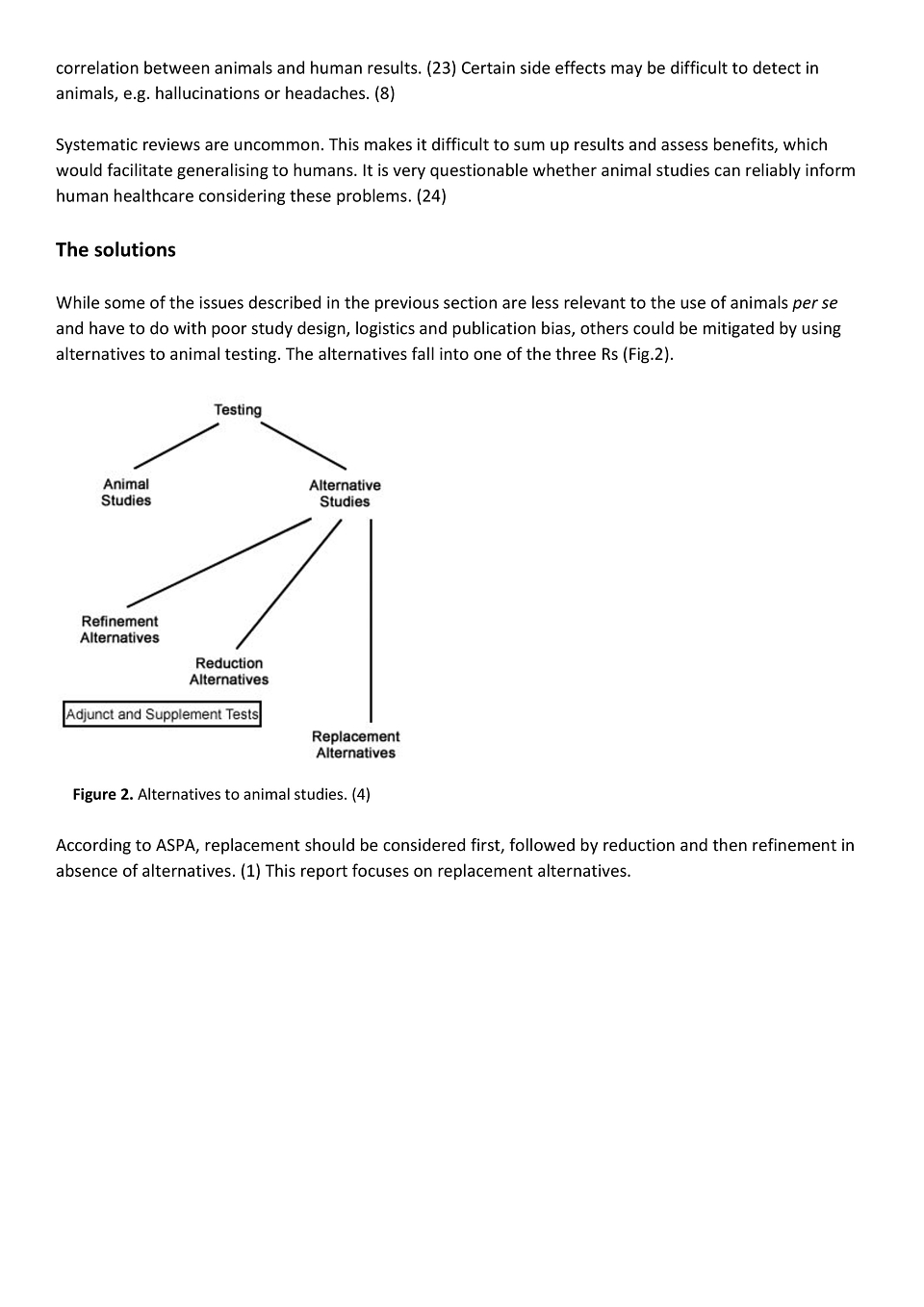
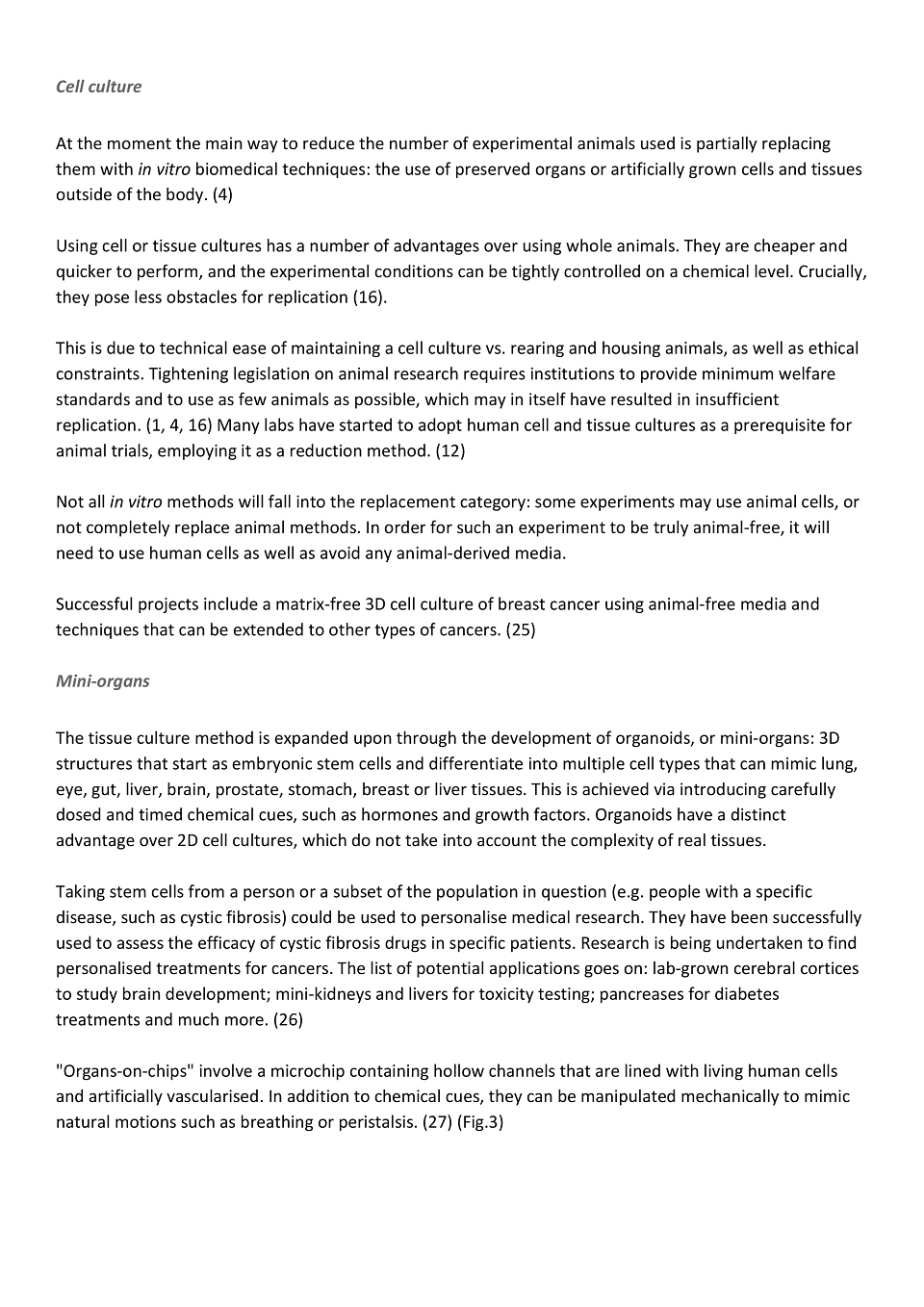
Firstly, I summarised the current legislation regarding the use of animals and the "Three R's". Secondly, I covered the two main clusters of problems with using animals: the ethical implications of using sentient animals to benefit humans and the problem of whether the research is even useful. I discovered a significant body of review articles which highlighted serious methodological problems in animal-based studies, as well as concerns about whether the results would translate to humans. Thirdly, I described some of the promising alternatives, such as cell culture, mini-organs and in silico modelling, and how they can pave the way for more relevant, rigorous and personalised medicine.
Results:
From the ethical standpoint, it was still very difficult for me to arrive at a firm conclusion. However, what interested me the most about the data I found was the scientific issues and how the lawful requirement of reducing suffering by using the smallest possible number of animals actually makes the research less powerful - many existing studies were poor quality with a small sample size.
By comparison, animal-free techniques are easily standartised, replicated and manipulated without any suffering involved. Some of those techniques were found to have been more accurate than analogous animal studies. The main challenge is studying whole-organism responses, which is still difficult to achieve with an isolated cell culture, mini-organ or computer modelling - but scientists continue to innovate by coming up with systems such as "human-on-a-chip". I believe that these new techniques are the future and will be the key to both reducing animal suffering and improving human health outcomes.
My conclusion was that in light of the serious ethical and methodological problems, ideally the validity of animal studies and translatability of results to humans should be evaluated before any new animal studies are considered, and where at all possible, alternatives should be used.
For references and more in-depth information, please refer to the full text.