



As creative companies embrace global talent pools, many are learning the hard way that international hiring and remote team management isn’t just a compliance challenge but a surprisingly cultural and intimately human one. Sure, navigating taxes, visas, and payroll across borders is daunting (we’ve all heard the global employment challenge horror stories), but those logistical puzzles are only half the battle. The real test of remote team management is more personal.
From negotiating different time zones to overcoming cultural and creative differences, preventing burnout, and making everyone feel included and valued, there is a lot to cover and it’s an increasingly important hurdle to be aware of given the fact that global virtual teams are quickly becoming the norm. Indeed, one study found that 89% of white-collar workers collaborate in global teams at least occasionally. However, too many companies still focus on legal checkboxes and ignore the human dimension when it comes to the global employment challenge.
So, today we’ll unpack the practical and emotional realities of remote-first hiring. From scheduling headaches and “Zoom fatigue” to cultural fluency and communication burnout, this guide explores how to build equitable, inclusive, and genuinely sustainable cross-border teams. Along the way, HR leads, remote creatives, and international managers share what’s working (and what’s not) when hiring across borders without breaking your people.
What are the Challenges of Hiring Globally?
Kirill Pavlov
Expanding your team internationally involves more than setting up foreign entities or complying with labor laws. Yes, you must tick the legal boxes, but thriving global teams demand empathy and cultural savvy, not just a stack of completed tax forms. The COVID-era remote revolution proved this: by 2024, 32% of employees worldwide were working remotely (with tech industries leading the way at 67%). Tools and services (like EOR platforms) now make hiring from Brazil to Bangladesh fairly compliant. Yet many companies still stumble because they underestimate the human challenges of a distributed workforce.
At a high level, the chqllenges of hiring globally tend to fall into a few intertwined categories:
Time Zones & Scheduling: Teams spread across continents struggle to find overlap, risking late-night or pre-dawn meetings and delayed responses.
Cultural Differences & Language: Misunderstandings arise when communication styles clash or when teammates work in a second language.
Isolation & Trust: Remote workers can feel “out of sight, out of mind,” leading to loneliness or fears of being overlooked.
Communication Overload: Being online 24/7 across time zones can blur work-life boundaries and fuel burnout.
Complexity & Fairness: From coordinating holidays to ensuring equal pay and growth opportunities, keeping things fair and cohesive is hard when everyone’s circumstances differ.
Even when the compliance piece is solved, these human factors can make or break a global team. A survey by a remote work platform noted that teams struggle most with cultural differences and time zones and it shows in morale. Around 22% of professionals reported feeling isolated working in distributed teams, and 40% found it hard to maintain work-life balance. In other words: the global employment challenge today isn’t lack of talent or technology; it’s ensuring your far-flung teammates can actually collaborate happily and effectively.
“When it comes to people, especially working with a multicultural team, it all starts with kindness and respect. We are about 10 nationalities in Lonsdale’s Singapore office and our clients are spread across continents, meaning a lot of cross-cultural collaboration – and often between people working in a second language.” – Muriel Schildknecht, Executive Creative Director at Lonsdale Asia
Muriel’s insight reminds us that empathy and respect are the bedrock of any successful cross-border team. You can hire the best creatives from five countries, but if you don’t actively foster a culture of understanding, things can go south fast.
What’s the Best Way to Communicate in Global Teams?
Sleek Events
Building a cohesive culture when your team is scattered around the world starts with clear, inclusive communication. This sounds obvious, but cultural differences in remote teams run deep. Imagine a simple brainstorming call: some cultures expect everyone to speak up frankly; others find it rude to openly disagree with a boss. Without cultural fluency, these differences can cause friction or silence important voices.
So, what’s the best way to communicate in global teams? It begins, as Muriel said, with kindness and adds a healthy dose of clarity. In practice, this means:
Use plain language and avoid idioms
Not everyone on your team grew up with the same slang or references. “Touch base offline,” “hit the ground running,” or sports metaphors might confuse non-native speakers. Instead, use clear, simple language and skip the jargon or local idioms. Many multicultural teams even adopt “Global English” (a neutral, simplified English) to ensure everyone’s on the same page.
Be mindful of tone (especially in text)
Without facial cues, a joke can be taken as criticism or a short reply as anger. If you’re unsure, spell it out or use that ???? emoji when appropriate to convey warmth. Misinterpretations are common online, so giving context or tone cues can save a lot of grief.
Learn about each other’s cultures
Encourage team members to share their holidays, customs, and working styles. This not only prevents faux pas (like booking a meeting during someone’s New Year festival) but builds camaraderie. Something as simple as remembering a colleague’s important holiday or asking about their traditions shows respect. Many creative agencies even invest in cultural competence training sessions or lunch-and-learn events where teammates present about their home country – turning differences into a source of learning rather than division.
Foster a “speak-up” atmosphere
In global teams, people may hesitate to voice ideas if they fear language mistakes or cultural backlash. Leaders should explicitly invite input from everyone and encourage clarification – making it clear that it’s not just OK but welcome to say “I didn’t understand, could you rephrase?” This helps non-native speakers feel safe and prevents small miscommunications from snowballing.
Embrace asynchronous communication
Not everything needs a meeting at 7 AM or 11 PM for someone. Use asynchronous channels (email, project management tools, shared docs) for routine updates so people can respond in their own working hours. Save live meetings for brainstorming or urgent issues where real-time dialogue is truly necessary. This balance reduces stress, as folks aren’t constantly forced to sacrifice personal time to be “always on” for the team.
Finally, remember that listening is as important as speaking. In cross-cultural contexts, listen actively for what’s not being said. If a usually vocal team member from one culture goes quiet in a call, check in privately – they might have reservations they’re uncomfortable airing publicly. Kindness and respect, as Muriel said, mean giving each other grace and space to communicate in different ways.
Time Zones: Turning a Headache into an Advantage
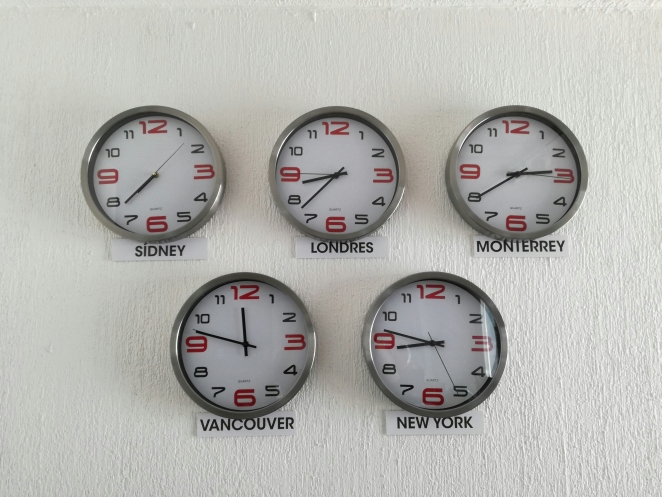
If you’ve ever Doodle-polled a meeting across New York, London, and Singapore, you know the pain of time zones. For global teams, scheduling can feel like a cruel Sudoku puzzle – someone’s always stuck with an after-hours call. Research from Harvard Business School even found that mismatched work schedules hurt communication; surprisingly, even a one-hour difference can introduce friction and complexity. Real-time chat decreases as the hour gap widens, and workers often feel pressure to stretch their day to accommodate colleagues. Left unchecked, this can breed resentment (and bleary eyes).
So, how can remote-first agencies manage time zones without breaking people (or workflows)? The key is to be intentional and fair – and even see the upside. Time differences don’t have to be a burden; done right, they can be a gift. Consider this reframing:
Follow the sun
Staggered time zones can create a virtuous cycle of productivity. One creative director in London briefs a task at day’s end, and by the time she wakes up, her colleagues in Los Angeles have progressed the idea. Hand-offs like this (sometimes called “follow the sun” scheduling) mean work literally continues around the clock – brief in the evening, wake up to progress in your inbox. Bliss. Instead of idle downtime, your project moves forward 24/7, thanks to global collaboration. Many distributed agencies leverage this by pairing teams in, say, Europe and Asia so that creative development happens near-continuously, each picking up where the other left off.
Ensure overlap where it counts
For complex discussions or team-bonding, real-time overlap is still important. Identify a window, even if it’s just 2-3 hours, where most of the team can be online together. This might mean early morning for one group and late evening for another – which leads to the next point…
Rotate the “awkward” time
If someone must take a late-night or early-morning call, don’t let the same person (or region) shoulder that burden every time. Shared pain is half the pain. Take turns being the one up at 6 AM or on Zoom at 11 PM. Your Asia-Pacific design lead shouldn’t always be the one sacrificing their sleep because the team defaults to New York hours. By rotating schedules of all-hands or key meetings, you demonstrate fairness and respect for everyone’s personal time. One month the Europeans stay late, next month the Americans do – everyone gives a little, so no one gives a lot.
Leverage async updates for the rest
Use recorded video messages or chat threads to loop in those who couldn’t attend a live discussion. For example, if a brainstorm happens with only half the time zones, record it for the others. That way, people can watch it next day and feel involved (and chime in with written ideas). Async doesn’t replace all live interaction, but it can fill the gaps. This reduces FOMO and ensures decisions aren’t happening in a vacuum of half the team.
Most importantly, talk openly about time zone challenges as a team. Acknowledge the effort people make when they adjust their schedules and thank them. Something as basic as, “Thanks for joining so late your time, I really appreciate it,” goes a long way. It’s all part of building that culture of kindness and respect. With a bit of strategy (and caffeine), time zones can shift from nightmare to new normal – even an advantage that lets your operation work round the clock.
Visibility in Distributed Teams: Out of Sight, Not Out of Mind

Zara Picken
One of the common issues in managing global teams is ensuring remote staff get equal visibility and recognition. In a co-located office, it’s easy to notice who speaks up in meetings or who stays late to finish a project. In a dispersed team, great work can too often happen unseen. If leaders aren’t careful, remote employees can start to feel like second-class citizens, overlooked for promotions or plum assignments simply because they’re not physically present.
In remote teams, managers have to be intentional about making work (and people) visible. If someone’s not in the same room (or the same time zone), you still need to ensure their contributions are seen, valued, and rewarded equally. That means giving everyone the same access to growth, promotions, and pay, regardless of location. Unfortunately, many companies are still catching up on this.
Recent research highlighted a worrying trend: managers were less inclined to promote or give raises to people who work from home, often viewing remote workers (unfairly) as less committed. In a University of Warsaw study, UK managers admitted they tended to perceive remote and hybrid employees as lower performers – despite “scant evidence” to support that bias. It was pure out-of-sight, out-of-mind prejudice. And indeed, those managers actually promoted remote staff less frequently in practice. This “promotion gap” has been echoed elsewhere: an analysis by Job Insight found fully remote workers were 31% less likely to be promoted than office peers, and other studies have noted similar patterns.
For creative agencies that prize talent, this is a wake-up call. To build an equitable cross-border team, you must dismantle the proximity bias. Some strategies to do so include:
Make achievements loud
Don’t let great work happen in a silo. In team meetings or company newsletters, deliberately highlight wins from all corners of the world. Did your designer in Nairobi nail the client brief? Share the mockups on the all-team call. Did your copywriter in Manchester receive glowing client feedback? Celebrate it in the group chat. Regular “show and tell” sessions where remote members present recent work can help keep everyone aware of each other’s contributions.
Set uniform performance criteria
Ensure evaluations focus on results and impact, not who logs the most facetime. If you use OKRs or KPIs, they should be role-specific and objective. When managers base reviews on visible busyness (long hours in the office) rather than actual output, remote folks lose out. Instead, measure what matters – creative quality, client satisfaction, meeting targets – and apply those standards equally. This helps counteract any subconscious inclination to favor the person you see at the coffee machine.
Use technology for transparency
The right tools can level the playing field. For example, a project management platform (like Trello, Asana, or Jira) makes everyone’s tasks and progress visible to the whole team. A shared design repository or codebase means you can see commits and contributions from everywhere. When work is tracked openly, it’s harder for anyone’s efforts to fly under the radar. Some teams also use dashboards to show metrics by team member (sales closed, campaigns delivered, etc.), making outcomes crystal clear.
Foster mentorship and face time for all
Don’t let office-based staff hog the professional development opportunities. Set up virtual mentoring pairings or coffee chats across regions. When executives visit other offices (or host virtual town halls), remote employees should get to ask questions and interact, not just the HQ folks. The goal is to create relationship parity – that is, remote team members should feel as connected to leadership and their peers as any in-person worker would. Intentional touches like random “coffee roulette” pairings or cross-office project teams can help remote colleagues build social capital in the company.
Above all, leaders must challenge their own assumptions. If you catch yourself thinking “Jean’s remote, I’m not sure she’s ready for that leadership role,” ask why – is it due to any real performance gap, or just a bias equating presence with commitment? Actively counter that by giving Jean stretch opportunities and seeing how she shines. Remember, done right, global, cross-cultural teams don’t just work – they thrive. But “done right” means dismantling old-school notions that an employee has to be at a desk under your nose to be valuable. In a sustainable remote team, every player is seen and developed, no matter where they log in from.
Preventing Burnout: Boundaries and Balance in Remote Work

Scott Balmer
Global teams often boast about being “always on.” There’s something exciting about having a Slack channel that never sleeps, pinging with ideas across time zones. But there’s a dark side to that 24/7 connectivity: burnout. Without careful boundaries, remote employees can end up working around the clock – late nights, early mornings, constant context-switching – just to keep up with colleagues elsewhere. Over time, that’s a recipe for exhausted, unhappy people (and frankly, subpar creativity).
One culprit is the communication overload that can plague remote teams. When your coworkers could technically message you at any hour, it creates pressure to be constantly available. The fear of missing out (FOMO) or delaying a response can lead people to compulsively check emails and chats well into their personal time. Asynchronous work is supposed to free us from time-zone shuffles, but in practice many absorb it as “I need to cover more hours.”
As a result, remote staff may actually put in longer days than they would in-office, since there’s no physical office closure to signal “work’s done.” A Harvard study by Prithwiraj Choudhury noted employees often shift work conversations to early mornings or late nights to connect across time zones – a stress particularly hitting those with family duties (often women, who then face a “second shift” at home). It’s crucial to acknowledge these hidden burdens and actively prevent a burnout culture.
How? Start by setting and modeling healthy boundaries. Company leaders and managers should make it clear that “offline means offline.” For example, establish norms like no expectation of instant replies after a certain hour.
Define what constitutes an urgent issue versus what can wait 8-12 hours. If your creative team is global, maybe agree that after 6pm their local time, they’re not required to answer non-critical messages until next day. And mean it – leaders should walk the talk by not firing off midnight emails or, if they do (because inspiration strikes), clearly marking them as “For tomorrow” and not expecting a reply.
Many remote-friendly companies have instituted policies to combat burnout, such as:
“No Meeting” days
For instance, no internal meetings on Fridays, or restricting meetings to specific hours that are reasonable for all. This gives everyone a block of focus time and relieves the fatigue of being on video calls all day.
Encouraging use of PTO and local holidays
When your team spans countries, some people will have public holidays while others don’t. Honor each region’s holidays equally – don’t expect someone in India to work through Diwali just because the US office isn’t off. Additionally, promote a culture where taking vacation is encouraged and disconnecting is respected. If someone is on leave, discourage the habit of pinging them “just for a quick question.” It can wait.
Mindful scheduling of communications
If you use tools like Slack or Teams, encourage use of the scheduling feature for messages (or draft and send in others’ daytime). This avoids the 2am ping on someone’s phone. Similarly, consider rotating meeting times as discussed, and record them for those who skip due to time zones, so they don’t feel they must attend at an unreasonable hour.
Regular check-ins on workload and well-being
Managers should routinely ask remote reports about their workload and stress levels, because they won’t see visual cues of burnout (like someone looking frazzled at their desk). Create a safe space for people to say “I’m feeling overloaded” if needed. Some companies do anonymous pulse surveys to gauge morale and burnout signals. 41% of people have quit a job because they felt disconnected or unheard by their company, according to a Gallup report so listening and responding to concerns is paramount.
Recreating Human Moments

Chromatic
Finally, find ways to recreate the human moments that remote work can lack. Ironically, burnout can be worsened by loneliness. A team member who feels isolated is more likely to overwork (to prove their worth or because they have nothing else providing engagement). To combat this, build in casual social time: virtual coffees, team games, or a dedicated Slack channel for non-work banter. 23% of remote workers feel lonely and combatting that through camaraderie is part of keeping your team mentally healthy. When people have genuine rapport and support, they’re more likely to speak up about stress and look out for each other (“Hey, I see you online at midnight your time, everything okay?”).
In sum, sustainable remote teams treat people like people, not just production units logging in from different time zones. They prioritize visibility, fairness, and balance as much as productivity and creativity. They recognize that a burned-out designer in Tokyo or an ignored developer in Lagos is as big a risk to the project as a legal compliance slip-up – arguably bigger. By investing effort in communication protocols, cultural respect, schedule fairness and employee well-being, you create a foundation where your global team can truly thrive.
And when that happens, something magical occurs: diversity becomes a strength, not a complication. Your team’s varied perspectives spark innovation rather than conflict. Projects hand off smoothly across time zones with mutual trust. People feel connected by a shared purpose, not divided by geography. In short, you unlock the full potential of hiring across borders. Done right, a cross-cultural remote team doesn’t just work – it thrives. Embrace the challenge with empathy, and you’ll find your global crew can reach heights a single-location team never could without anyone losing their sanity in the process.
Done right, remote team management can empower your employees in a profound way. So, here’s to hiring across borders without breaking people and building the kind of remote-first culture where creative talent anywhere in the world can do their best work together, for the long haul.