
The Cannes Lions International Festival of Creativity remains the OG when it comes to bringing together the global creative advertising industry. Yet this year's festival revealed a fascinating paradox: while creativity seemed to take a backseat to sales pitches and AI demonstrations, it was actually AI itself that offered some of the most compelling glimpses into creativity's future.
The Creative Opportunity Hidden in Plain Sight
As I walked La Croisette in 30-degree heat, the Festival's focus was unmistakably on business fundamentals - sales, growth, and emerging technologies. Of course it needs to cover business, but as somebody who lives and breathes creative expression, I was craving more visibility for brand, design and creativity per se.
The beachfront stands said it all. One after another built of blonde wood, white paint, maybe a patch of astroturf, a logo, then the obligatory bar and music. The industry is being told to adapt or die and yet there wasn’t a ‘wow’ moment in a mile stretch. Even the award-winning creative work, the Festival's crown jewels, felt relegated to modest displays rather than celebrated as the industry's north star.
But this shift in focus isn't necessarily a crisis - it's an opportunity. The industry is grappling with rapid technological change, and in many ways the Festival reflected this honest reckoning.
AI as Creative Collaborator: The Amazon Perfume Lab
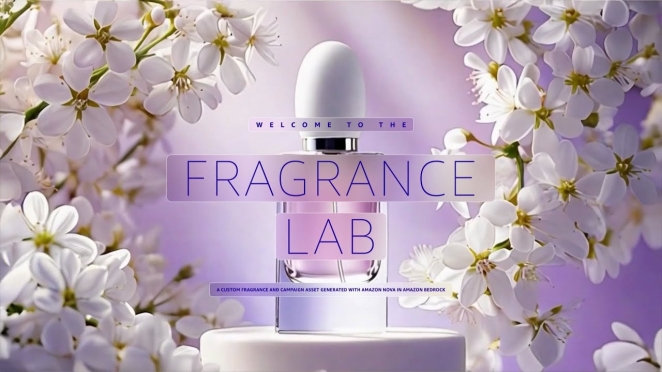
One experience crystallised this potential perfectly: Amazon's AI-powered personalised perfume lab. Just down the road from Grasse, the perfume capital of the world, visitors could create custom fragrances through an AI-driven process.
The experience was remarkable for what it demonstrated about speed and personalisation. When I tested the system (admittedly with some playful rebellion, requesting scents of "dirt" and "motorbikes"), the AI guided me toward more conventional choices while still creating something uniquely mine.
Within a few minutes it came back with my own unique fragrance recipe printed on a ticket, named (Velvet Vice, if you must know) and featured in an advert (complete with copy line and some grammatical inaccuracies). The whole shebang. The recipe was duly sent to mixologists who bottled it, packaged it and sent me on my way.
So, what did it smell like? A rather unsurprising, middle of the road aroma. A mixture of a sweet shop, Lush headquarters and the bottom of my Nana’s handbag – sickly sweet and not a hint of dirt to be found. I hated it. But I also loved it. Take the queues and the heat out of the equation and what you had was, from questionnaire to product plus advertising in 10 minutes flat. It was extraordinary. This was data collection to end-product in a remarkably short space of time.
And what this did that really impressed me – beyond the fun experience and the gimmick that gave me some SWAG to bring home – was demonstrate how tech can be used to power creativity. Yes, there’s clearly considerable room for improvement, its flaws demonstrate why human input is still so important throughout the creative process. But this was the problem and the promise of AI for all to see
The technology handled the mechanical aspects of production while leaving room for human preference, personality, and creative direction.
Technology in Service of Human Potential
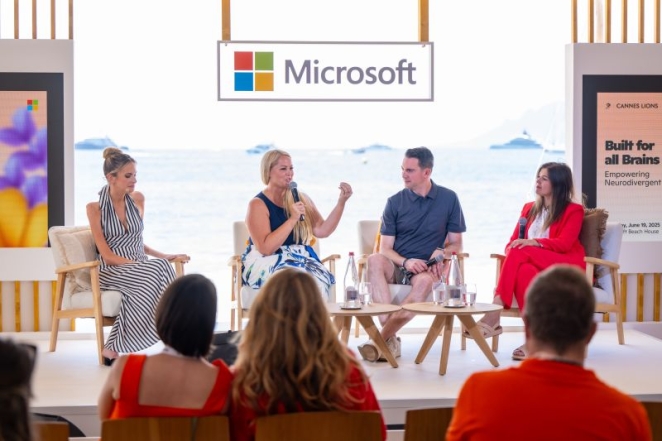
Perhaps the most inspiring moment came from Microsoft's presentation on "Built for All Brains: Empowering Neurodivergent Creativity." The discussion centred on how AI tools like Copilot can help neurodivergent employees enhance their productivity and creative output. As someone who taught at Central St Martins, where many students were neurodivergent, this resonated deeply.
The creative industry has always been home to diverse thinkers - people with dyslexia, ADHD, and other forms of neurodiversity often bring unique perspectives that drive innovation.
The presentation showed AI helping humankind. It was a surprisingly refreshing take. I was delighted to listen to this discussion about how AI can both improve and harness creativity, rather than how we can use AI as a tool to get more… more customers, more clicks, more money.
The Path Forward: Creativity-First Technology
The AI revolution, if we let it, will lead us into an era of sameness - strategy and design by consensus.
The lessons from Cannes point toward a critical choice for our industry. Emerging technologies can drive us towards homogenisation, or we can deliberately use technology to enhance human creativity and original thinking.
Both the Amazon Perfume Lab and the Microsoft presentations demonstrate the importance of incorporating a human touch – the continuing need for creative direction and originality.
And, indeed, the perfume lab revealed both the promise and the peril of AI. When I tried to subvert the system with unconventional choices, it steered me toward safer, more palatable options. This tendency toward the middle ground is AI's current limitation and our industry's greatest risk. But it also showed us the speed and scale at which creative concepts can now be realised.
A Creative Renaissance Through Technology
My call to action from Cannes is this: let's put creativity back at the centre of the creativity festival and at the centre of our industry's future. Use technology not as a shortcut to easier solutions, but as a catalyst for bolder, more original thinking. Leverage AI to handle the mechanical aspects of creative production so human minds can focus on the truly creative work: insight, strategy, and original expression.
The future of creativity isn't human versus machine - it's human creativity amplified by intelligent tools. But only if we choose to direct technology toward creative excellence rather than let it drive us toward creative mediocrity.
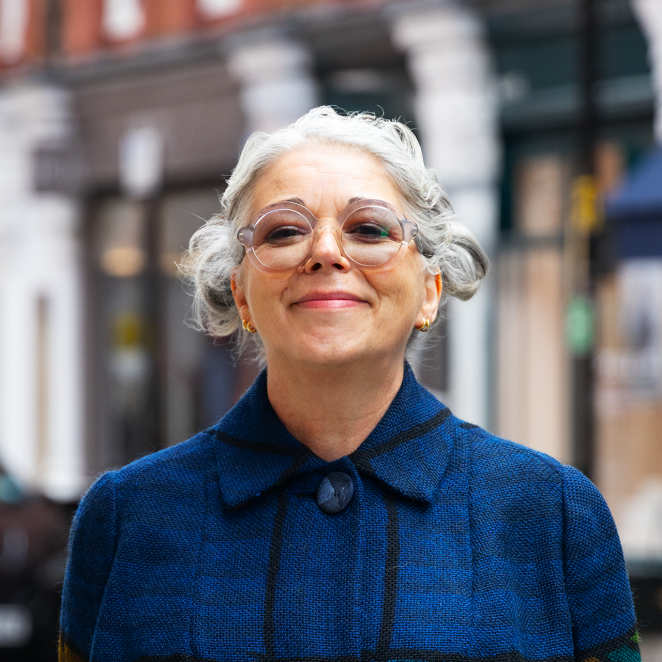
By Louise Cantrill, senior partner at Lippincott