

Cristian Alberto Fernández leads La Cuevita Publico with a vision rooted in craftsmanship, radical creativity, and an unshakeable belief that world-class work can come from anywhere. From early beginnings in Panama’s art scene to senior roles at major networks, his career has been defined by an instinct to merge artistic discipline with strategic thinking. The merger with Itza Ramos’ atelier, La Cuevita, marked a turning point that expanded the studio’s capabilities and earned them international recognition in less than a year.
Today, operating from Penonomé, Cristian and his team apply a deeply integrated creative process that unifies concept, craft, technology, and cultural authenticity. Their work spans global award-winning campaigns, sustainability initiatives, and breakthrough experiments that push the boundaries between traditional artistry and modern innovation.
How was your company born and where are you based?
 Our company was born from a simple yet powerful vision: to create a studio capable of delivering the creative quality of large agencies while remaining accessible to clients of all sizes. We noticed that many small and medium-sized businesses struggled to access high-level design services due to limited budgets; that reality became our mission: to be a kind of “Prometheus,” bringing the creative fire of premium design to everyone.
My journey began at a very young age, surrounded by art and design through festivals, professional exhibitions, and collaborations with diverse creators. Later in my career, I worked at agencies such as Lorena Moreno, Cerebro Young & Rubicam, Nexos Grey, P4 Ogilvy, and The Ad Company; eventually, I co-founded Publi Co. with a group of friends. Over time, my initial partners launched their own projects and followed different paths, while I continued developing the long-term vision for the studio.
The turning point came when I joined forces with the person who is now my wife and our Art Director, Itza Ramos. She led “La Cuevita,” an editorial atelier and print studio recognized for its quality in design and large-format production. After years of collaborating on shared projects, we made the strategic decision to merge our strengths eleven months ago; this union expanded our capabilities, elevated our value proposition, and has helped us gain greater recognition within the industry. We are based in Penonomé, in the geographic center of Panama, an ideal location to serve clients across the entire country and the region.
What was the biggest challenge to the growth of your company?
Challenges are a constant in every aspect of life, and our company is no exception. The greatest challenge to our growth has been navigating the global and local climate of economic and geopolitical uncertainty in recent years. Crises and the ongoing anticipation of what might happen next directly affected many clients’ investment budgets.
Instead of stepping back, we saw this moment as an opportunity to rethink our approach and expand our reach. We focused on seeking and serving international accounts that value high-quality creative work at competitive prices.
The lesson we learned is that perseverance and optimism are essential. We firmly believe that every adversity is not just an obstacle, but a catalyst, one that pushes us to innovate our business models and geographic presence, allowing us to maintain service quality regardless of external circumstances.
Which was the first huge success that you can remember?
 On a personal level, the first major success I remember was winning a national art festival at the age of 14; that recognition immediately placed me on the radar of the art and design community, awakening a fierce drive to compete, prove my talent, and relentlessly pursue excellence; that achievement became the starting point of a path later reinforced by other important milestones, such as being named "Young Creative."
As La Cuevita Publico, our first major success was receiving the Global Recognition Award within our first eleven months of operation; this recognition immediately validated the recent merger of our companies and provided a tremendous boost of confidence. Over time, we achieved additional milestones, including multiple appearances in the Best Six of the Week on Best Ads on TV, which secured our position in their 2025 ranking as number 81 globally, number 9 in the worldwide print category, and number 1 in Panama; more recently, we also reached the 47th position in the Creativepool ranking of creative agencies. Each of these achievements reaffirms that our team and our value proposition possess the required level of mastery to stand out on a global scale.
What’s the biggest opportunity for you and your company in the next year?
Our biggest opportunity in the coming year is to capitalize on the traction and recognition generated by our current project, Art Experience. This initiative positions us as the first agency in Latin America to execute a strategic campaign that literally goes beyond the Kármán Line, the recognized boundary of outer space, placing us among a very select group of agencies worldwide that have explored this type of initiative. The project, called From the Heart of the Universe, merges space technology with the artwork of Panamanian children and the vital mission of protecting the country’s watersheds; although the project launched in October 2024 and most of the works have already traveled beyond the Kármán Line, a few workshop dates are still pending for its full completion.
The true opportunity does not reside solely in the project itself, but in how it demonstrates our ability to combine radical technological and creative innovation with an ethical purpose. In the coming year, the opportunity is to leverage this milestone to attract new accounts seeking precisely this blend of avant-garde thinking and social responsibility, thereby expanding our portfolio of international clients.
Can you explain your team’s creative process? What makes it unique?
 Our creative process is disciplined and objective. We believe design must solve a problem, not just look good. It begins with immersion: fully understanding the client's brief and goals, exploring where the brand wants to go, what the competition is doing, and how we can generate a meaningful differential. Listening to the client is essential because no one knows their business and objectives better than they do.
We begin with the research phase, analyzing the market, competitors, and cultural context, as well as the brand platform and its tone; this helps us identify opportunities for differentiation and define a solid concept. Once we have these insights, we move to concept development, where we define the positioning, the message, and the experience we want to create; we focus on generating ideas that are unique, memorable, and relevant to the target audience. Finally, we translate the concept into a concrete execution, ensuring every detail aligns with the brand vision and the desired experience. Our approach is data-driven, conceptually solid, and rooted in understanding both the product and the consumer, which allows us to create strategies and designs that truly stand out in a competitive market.
The Unique Signature: 360 Integration and Materialization
This is where our singularity as a merged studio lies. In this phase, Itza Ramos's direction is fundamental; she is the Guardian of Execution: we think about the final materialization from the very first sketch. I usually step aside to let her refined and super-detailed filter guarantee excellence in the finishes and in large-format printing. Controlling the end-to-end process allows us to ensure that the concept and execution are indistinguishable in quality, elevating the work with an artisanal touch.
What makes us unique is this total integration of life, concept, and execution, all viewed through a lens of cultural and family authenticity.
How does your team remain inspired and motivated?
Motivation within our team is intrinsicand based on two pillars: human connection and creative freedom.
Firstly, our team is composed of individuals with immense talent and great human quality. We have Ricardo in design and production, Ahias in programming, Eileen, our design and arts prodigy junior, Raúl, with solutions in structures, and Joan, our Field Marketing engine operating from our base in the capital. More than colleagues, they are part of our extended family. We strive to create an environment of mutual support, where collaboration transcends the office by sharing activities outside of work, which fosters loyalty and real commitment.
Secondly, we maintain a relaxed environment within the studio where experimentation is the norm. We believe in the principle that if you don't fail, you aren't trying anything new. We understand error as a natural step in the process of seeking the disruptive. This eliminates fear and allows our team to explore bold creative solutions, knowing that value lies not only in success but in the process of seeking the extraordinary result.
How has COVID-19 affected your company?
The pandemic hit our two separate entities in very distinct ways, but both experiences proved to be the catalyst for our eventual formal union. ‘La Cuevita’ (Itza’s printing house) suffered a severe blow to physical production and had to temporarily close its doors; however, Itza used that time not to stop, but to enhance her skills and study new areas. For my part, Publico operated more in the shadows, with clients who were primarily other agencies, in addition to a few direct clients, which is why our design work never stopped.
It was in the post-pandemic phase that fate, with impeccable aiming, brought us together. My search for a high-quality collaborator for a project led me directly to Itza (whom a friend recommended for her excellent work), and I must confess that there was also a personal interest in meeting her; this first project, still under the 'La Cuevita' brand, was actually the first embryonic project of our studio, Publico, as a direct entity. In summary, COVID-19 forced a pause that transformed into a talent incubator and created the perfect circumstance for two entities, united by quality and vision, to formally merge.
Which agencies do you gain inspiration from? Do you have any heroes in the industry?
 While we pay necessary respect to the work of other agencies, our genuine inspiration comes first from life itself and the people who have shaped us, whose lessons we apply to our daily work. My foundational discipline in the visual arts, learned from exceptional teachers like José Ángel Arroyo and friends like Brian Vergara, dictates how I approach creativity every day; I have also been fortunate to learn from outstanding industry professionals such as Jorge Heilbron, Werner Lemke, Edmar Quirós, Helder Agrioyanis, and Maggie Porcel, whose work and values continue to inspire me.
A central, non-negotiable pillar is my partner and wife; in Itza, I find the support to push all my creative 'craziness,' and she is also the anchor who grounds me when I float beyond my orbit; without a doubt, she is one of my greatest examples of tireless balance and perseverance. Regarding the agencies we admire, in Panama I closely follow Star 5 (the Ogilvy network); we believe. The Joint executes cool, risky things that are out of the ordinary; among independent studios, we admire Independiente, which leaves a strong, creative mark on the region. Internationally, Adam & Eva DDB fascinates me with their brutal, high-level campaigns, Garabato MullenLowe has an interesting and unique approach, Human in Mexico impresses with its branding and narrative, Bang Buró left an indelible mark with its Molotov cover in 1997 Donde jugaran las niñas.
It provoked a visceral reaction by challenging social and media norms, leaving an indelible mark. That album came out in 1997, and I remember that at just 11 years old, I saw it as pure art, its disruptive nature marked me from a very young age. La Linterna in Colombia demonstrates mastery through traditional lithography led by Olmedo Franco, Héctor Otálvaro, and Jaime García “esos cuchos son unos duros”; and finally, Leche de Perro in Mexico excels at emotionally compelling storytelling.
What is one tip that you would give to other agencies looking to grow?
Our advice is simple but fundamental: don't limit yourselves; believe the hype.
"Tienen que creerse la película".
In this industry, we constantly hamstring ourselves with non-existent fears and self-imposed barriers; remember that rules were meant to be broken. Growth comes from unleashing your inner potential, regardless of where your studio is located or how big the client is. We maintain the belief that a truly great artist can emerge from anywhere. Creativity is the only universal language; stop competing to be the biggest agency, as that ambition often ends up diluting your essence. Believe in audacity; who knows, you might be the next David ready to defeat Goliath.
How do you go about finding new clients/business? (Pitching, work with retainers, etc.)
Our main source of new business is the organic connection generated solely by the consistent, uncompromising quality of our work. We believe that exceptional work is the best marketing tool, period. By focusing on impeccable execution and microscopic attention to detail, word travels; consequently, the majority of our clients arrive through direct referrals from satisfied partners or collaborative agencies. Additionally, we are aggressive in seeking strategic and challenging opportunities, participating in public or private tenders where our value proposition (disruptive creativity married to master 360 execution) is clearly the best choice. This ensures we maintain a necessary balance: organic acquisition, driven by trust; and competitive acquisition, driven by audacity.
What’s your one big hope for the future of the industry?
 My great hope for the future of the industry is that we become less obsessed with size and more obsessed with impact; I hope that creativity is recognized as the only universal language and the true metric of success. I dream of an industry where audacity and merit overcome bureaucracy and budget; an industry where the creative 'David,' working from anywhere, has the same voice and opportunity as the 'Goliath' of the large networks. The ambition to be the biggest agency tends to dilute the essence; the hope is that we return to the boldness of exceptional work and that talent, not geography, defines who is the best.
Can you share a defining moment in your company's journey that shaped its identity or direction?
The moment that truly forged our identity occurred at a personal and professional crossroads we shared, even before the merger of our companies and our marriage. After years chasing the high-stakes life of the capital, my professional life felt successful but hollow; the solution was simple; I returned to my hometown. Simultaneously, Itza Ramos came to Penonomé for a project, and when the firm departed the area, she stayed and founded ‘La Cuevita’, transforming a transient job into a permanent commitment.
Against all odds, many industry voices claimed I would bury my creative career. They were wrong. Here I am, more alive than ever, delivering world-class work without sacrificing my quality of life. This decision to prioritize authenticity and geographic well-being became the cornerstone that defined our philosophy; it shaped Publico as an entity that proves you can be globally competitive from the geographic center of Panama.
For those who doubted or questioned our calculated exit from the capital, our answer remains Bukowski’s ultimate manifesto: “Don’t Try.” We didn’t waste energy trying to fit their mold or validate ourselves to their expectations; we simply focused on doing honest, quality work where we damn well wanted to be, and that non-conformist focus has propelled us further than we ever imagined.
How do you foster a culture of innovation and experimentation within your team?
We don't wait for innovation; we force it. We drive innovation proactively through non-stop training and the ruthless, yet balanced, adoption of new tools. While the rest of the industry is debating whether Artificial Intelligence is a threat, we've already adopted it; we see AI not as a competitor, but as a powerful, necessary tool to streamline processesand deliberately free up the team's time for the only thing that truly matters: strategic, human creativity. Our approach is a conscious, unapologetic battle between the digital and the manual; we use every technological advantage available, including AI, without sacrificing the uncompromising value of the artistic and the artisanal.
It's common for our team to sketch things entirely by hand (like before Illustrator existed) and then integrate that raw vision with the latest technology. True innovation is not forgetting where we came from; it's proving mastery over the future. We remain aggressively open to new technology, but we maintain one non-negotiable principle: the human mind and artistic intent are the ultimate engine, and the tool is always secondary to the Master.
What measures do you take to ensure diversity and inclusion are prioritised within your company?
 Forget the standard HR checklists and corporate measuring sticks. Our measure for Diversity and Inclusion is Radical Humanism, and it's brutally simple: We prioritize the human being over the label. The most effective way to eliminate divisions in a high-performing creative environment is to stop obsessively defining them.
In our studio, the only title that matters is your name. If you are Ricardo, Ahias, Eileen, or Raúl, you are a talented colleague and a member of the family. We maintain a zero tolerance for defining people by their skin color, inclination, or origin.
Why? Because constantly segmenting the team by racial or gender differences only risks creating the very obstacles and divisions that hinder genuine unity. Our inclusion is therefore a courageous policy of zero visibility of categories.
This translates into one non-negotiable metric for hiring and internal growth: talent and merit. We are proud of a culture where true diversity of thought occurs organically, because we focus relentlessly on the individual, not the group. We refuse to participate in the cycle where the search for recognition accidentally replicates patterns of ostracism. We hire masters; we see humans.That is the only policy that guarantees real, uncompromised inclusion.
Can you describe a project that challenged your team creatively and how you overcame any obstacles?
One of our most significant creative challenges arose following the acquisition of the automotive distributor Ricardo Pérez S.A. (Toyota Panama) by Itochu Corporation. The owners, the Pérez Martinis family, asked us through Brian Vergara to create dedicated art pieces for their longest-serving managers.
The great challenge was to break the barrier between art and formal printing. Brian did not want the dedication to look like a simple printed card (poster). We needed the company's history to appear indelibly engraved, as if it were written with fire.
The Obstacle (The Crazy Idea):
Our 'crazy' idea was to use a laser engraving machine directly onto the watercolor paper where the artwork was already rendered. When we went to the engraving shop, the experts looked at us as if we were insane. They assured us that the machine, designed for rigid materials, would either burn the paper or lack the necessary pulse precision.
The Solution (The Creative Fusion):
Our insistence was based on the concept: we wanted the edges of the letters to look intentionally scorched, like wood after a fire, to reinforce the idea that the company's history was permanent. Luckily, we found a collaborator in the shop who was as willing to experiment as we were.
We dedicated several days to trial and error, applying our agency's philosophy that error is a natural step. Finally, we hit the exact formula for cutting the watercolor paper with the perfect laser pulse, achieving the desired effect.
The result was exceptional: the artwork did not lose its artistic value, the dedication met the client's emotional requirements, and the Pérez Martinis family were profoundly satisfied with the elegance and symbolism of the final execution.
How do you balance maintaining your company's unique creative voice while meeting the diverse needs of clients?
 Balance" is the wrong word; it implies compromise. We don't balance, we refuse to dilute our core creative DNA. Our unique voice, the one rooted in authenticity, in the belief that 'error is a natural step', and the boldness of the interior, is not a liability; it is the unshakeable filter that attracts the right clients.
We don't try to adopt a client's temporary aesthetic; instead, we deploy radical humanismand our Deep Divemethodology. We don't just study the brief; we study the client's authentic culture and context. This anthropological approach ensures that our disruptive creative voice resonates with the client's truth, not just their surface desire. We don't chase trends; we chase authenticity.
The result is simple: we don't fit into the client's mold. We design a new mold for them, proving that quality is the only universal language. When you focus on merit and impeccable execution over everything else, the client's diverse needs are met not through surrender, but through masterful, non-negotiable quality. Our voice is the reason they hire us; compromising it would be a disservice to their brief.
What strategies do you employ to adapt to changes and trends in the industry while staying true to your company's values?
Our adaptation strategy is based on a simple philosophy: don't lose our way. We understand that change is the only constant; therefore, we must be open to continuously learning and honing new skills. However, the secret to staying true to our values is conscious balance. This involves a constant struggle between learning and unlearning in order to make way for something new. Our values act as an unshakeable filter. We only adopt trends that improve the quality of our work and the well-being of the team.
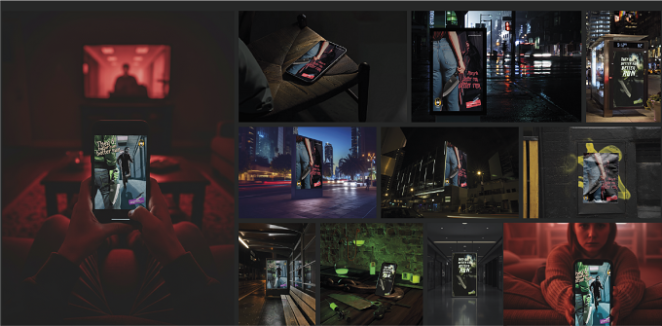
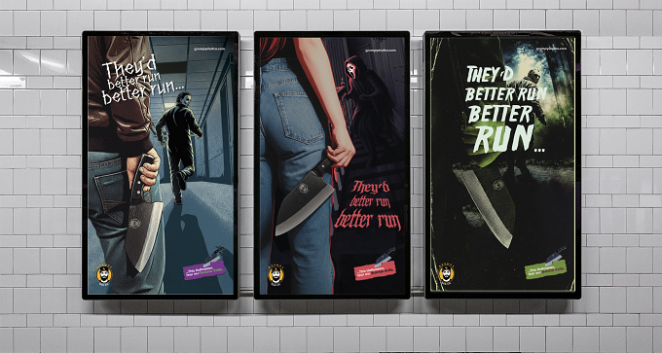
We also benefit from the 'new blood,'Lía and Liam, who constantly bring up current topics, especially social media trends. I usually pay close attention when they approach me to tell me about a new, trending topic that gives them 'cringe' (haha). In fact, the 'Better Run' concept emerged from a conversation with my daughter about the context of the Foster The People song 'Pumped Up Kicks'. And as I said before, this is not something we are forcing them to do, as we believe they will eventually find their own path, and we will support them even if it is outside of advertising, but for now, they seem very interested.
Can you share a memorable client success story that exemplifies your company's approach and impact?
The success of our recent 'Better Run' campaign for Butcher Knife perfectly illustrates our approach: that organic content must function as a validation machine. The results were immediate and impactful, with an organic impressions growth of over +2200 percent and the product immediately becoming the brand's 'Weekly Best Seller'.
As final proof of its global reach, the campaign has been recognized on diverse platforms despite its very low budget. Its accolades include features on best ads on tv, being highlighted by the Estonian agency Komu in their creative Halloween selection, inclusion in the Ads of the World Halloween collection, an appearance on the Clio Awards website, a highlight on Creativepool, and a feature in the Saudi Arabian publication Maher Ads Book. The incredible reach achieved with minimal investment truly speaks for itself.
In what ways do you invest in the professional development and growth of your team members?
Investing in our team means investing in their holistic development, because for us, “the sky is the limit.” Our approach is built on full trust and a genuine push for growth. We give them the freedom to explore side projects when opportunities arise, as long as their responsibilities within the studio are fully met. We also support their learning by paying for courses and encouraging them to explore different areas within the studio, since we handle a wide range of projects that allow them to expand their skills.
We maintain a zero professional jealousy policy: if someone finds a better opportunity elsewhere, they’re free to take it, and the doors of our studio will always remain open. Though sometimes they stay longer than they should, and we end up jokingly saying, “Hey, go home, your shift ended a while ago!” because they genuinely enjoy what they do.
And this approach pays off: our team members don’t leave. That’s the greatest testimony to the culture we’ve built.
How do you approach sustainability and ethical practices within your company's operations and projects?
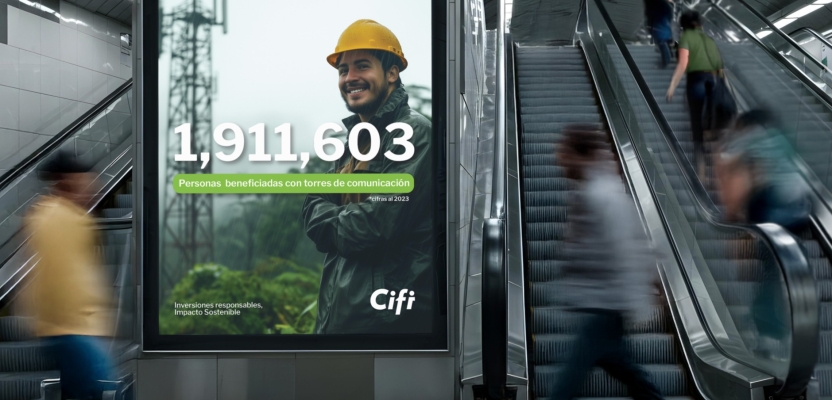
 Our approach to ethics and sustainability is integral and begins with respect for the truth. Ethics are based on radical transparency with our clients and their consumers, rejecting any practice that involves lying or exaggerating product promises. We are excited to work on high-impact projects, such as the multi-year collaboration with CIFI, Inter-American Corporation for Infrastructure Finance, developing their corporate image and their recent ESG Annual Reports, this project was executed alongside Chizmar & Cooper. We also executed ESG projects with CIMA Pedasí, a UN-funded NGO promoting plastic-free seas, and we collaborated with the client Art Experience on the project 'From the Heart of the Universe', which combines art and science to support the preservation of the Panama watershed, vital for the functioning of the Canal.
Recently, the Summer Gardening Club of Coclé won an award for work we developed for their participation at the Cultural Conference of the IX Expo Flora 2025, an educational initiative dedicated to environmental preservation and the botanical culture of the region.In daily operations, in the print atelier, we work exclusively with eco-solvent inks and promote digitalization (the CIFI ESG report is almost entirely digital). Other practices we apply include the selection of local suppliers and a masterful execution approach that guarantees the durability of each piece, limiting the need for reprints.
Can you discuss a time when your company had to pivot or innovate in response to unforeseen challenges, and what lessons did you learn from that experience?
At our company, we faced a significant challenge in early 2025 with a key client in the pet food industry. After a 2024 that surpassed all sales expectations, the global economic slowdown caused a sudden drop in sales and a consequent massive overstock with imminent expiration dates. The situation demanded an emergency plan that went beyond traditional digital advertising. We intensified campaigns on social media and at points of sale, but the decisive factor was the creation of an in-person brand promoters team. However, the key innovation here was the strategic pivot in the promoters' profile. Historically, promoters in Latin America relied on models with a very specific aesthetic that, while attention-grabbing, often focuses on visual appeal over product credibility. We opted for a completely different profile: we chose women who represented the average consumer, with sizes and appearances that resonated more with the common shoppers and families who visit the stores.
The rationale for this 'crazy idea,' as the client initially called it, was twofold: first, we wanted consumers, especially women, to feel more comfortable and open to receiving product guidance from a credible, relatable source; and second, we sought to proactively avoid the distraction or potential conflicts between couples that the presence of model-profile promoters often creates, which hinders the primary goal of driving product back into the pantry. Once we presented our strategic points, the client gave us the green light. The result was extraordinary: the team not only managed to halt the sales drop and alleviate the overstock, but the promoters’ effectiveness at the point of sale skyrocketed. Women were notably more receptive to our team’s guidance, and the final conversion rate exceeded 75% among the people approached, leading to a high index of repeat purchases.
This experience taught us that empathy and authentic representation are the most powerful forces for consultative selling. We proved that innovation lies not only in the product but in the human strategy, demonstrating that credibility and genuine connection are the most effective drivers for boosting sales and building lasting trust, successfully overcoming superficial appeal and resolving the business crisis.
Do you have any websites, books or resources that you would recommend?
My Recommendations: The Disconnection Manual
If you’re looking for a map to recover the creative perspective that this industry often withers, I’ll tell you it isn’t found in another design keynote. If I had to recommend a compass, it would be "The Little Prince" by Antoine de Saint-Exupéry. It’s not a children’s book; it’s an urgent manual for adults who have allowed banality to blind them.
Ditch the screens. Inspiration isn't found in the feed; it's in the damn real world. Go out, get your hands dirty, and look at perfection. Want fresh concepts? Then nourish your mind with subjects that have nothing to do with advertising or design. The secret to creating what has never been seen is to consume what is entirely unrelated. Remember that everything around us is design, and there is no guru, no AI, no designer more perfect than Nature. It's time to stop navel-gazing at the screen and start innovating for real.
y Recuerden: "Los buenos artistas copian, los grandes artistas roban"
Pablo Picasso