

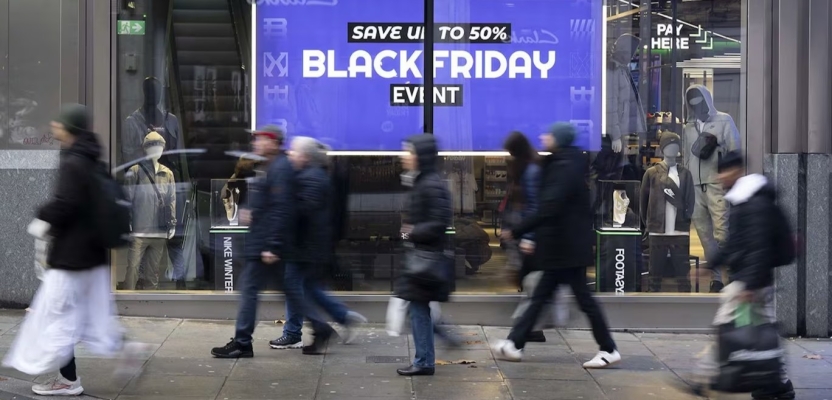

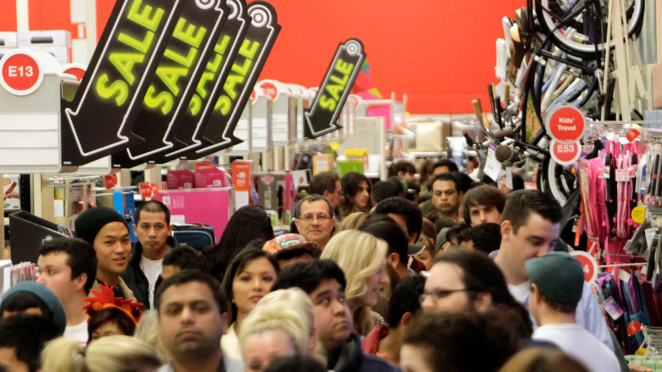
Black Friday has been something of a cultural touchstone in the western world for a while now; a day of frenzied shopping that marked the unofficial start of the Christmas season. Initially known for its insane midnight sales and people trampling over one another like confused cattle, it’s a phenomenon that has captivated consumers as something equal parts spectacle and horror show.
But in recent years, particularly in the wake of COVID, the shine seems to have worn off as the chaos has moved online and become a less tangible and more drawn-out affair. As Gabriella Molinari, Creator at SocialChain, reflects:
“Once synonymous with long lines, midnight sales, and stampedes through stores, Black Friday has long been a cultural phenomenon—in the States that is, anyway. For us Brits, it’s something of a newer tradition that has swept the nation and become almost the official day we start our Christmas shopping. We scour the internet in hopes of grabbing the best bargains and keeping the rising cost of Christmas as manageable as possible."
However, as Black Friday has evolved from a single-day event into a drawn-out sales season, the excitement has dimmed. Molinari adds:
“Has it lost its allure? In recent years, Black Friday has shifted from a one-day event to one week and, in some cases, the entire month of November. Add in the cost-of-living crisis and changing consumer priorities, and we have to wonder: does anyone really care about Black Friday anymore?”
Where Did Black Friday Come From?
The origins of Black Friday reveal a story of transformation, and it actually stretches much further back than you might think. It began in 1950s Philadelphia, where the term described the post-Thanksgiving traffic snarls that plagued the city. Over time, retailers co-opted the phrase, associating it with the shift from financial losses ("in the red") to profits ("in the black").
In the UK, however, Black Friday didn’t really gain traction until 2010, when Amazon introduced the concept with a bang. Today, major UK retailers like Argos, John Lewis, and Very embrace the Black Friday frenzy, contributing to the £9 billion expected to be spent during the period this year, as Statista estimates.
Yet, even with such large sums at stake, some wonder if brands are handling their campaigns effectively.
The Trust Gap: Are We Really Getting a Good Deal?
The rise of social media and the proliferation of consumer watchdogs have cast a harsh light on some of Black Friday’s practices. Shoppers are increasingly questioning whether the deals are as good as they seem. As Molinari points out:
“In recent years of cancel culture and online myth-busting, people are quick to spot a scam when they see one. And thanks to online social platforms like TikTok, they’re not afraid to call a brand out on surging original prices to make their sales look that bit more tempting.”
Amazon, in particular, has been a focal point of this scrutiny. Shoppers and influencers have highlighted cases where "original" prices appear inflated to create the illusion of steep discounts. Vicky Bullen, CEO of Coley Porter Bell, observes:
“Over the years, trust in Black Friday has slowly but steadily eroded. The Black Friday ‘brand’ has become tarnished as it fails to offer the bargains it once did in people’s minds. Cynicism has grown as people believe that product prices throughout the year are manipulated so that businesses can claim bargain deals in November.”

Despite these challenges, some brands manage to maintain consumer trust. Sephora, for example, has gained a reputation for offering real value during its Black Friday sales, particularly among beauty enthusiasts. On TikTok, influencers often highlight the brand's discounted products as standout deals worth pursuing.
Black Friday vs. Everything Else
Black Friday no longer holds the monopoly on holiday shopping. Molinari notes:
“It’s clear that Black Friday is still something consumers look forward to, but is it being overshadowed by alternative events? Cyber Monday was initially created to boost online sales, but now it’s often more anticipated than Black Friday itself, as many believe they can get the best deals here. Add to this, the rise of Prime Day, Singles’ Day, and other retailer-specific events throughout the year, and the focus has shifted further away from Black Friday as the primary shopping moment.”
Retailers like Curry’s and Holland & Barrett have responded to this shift by spreading their discounts across the entire month of November. This rolling-sale strategy dilutes the impact of Black Friday itself but caters to consumers who prefer flexibility over a single-day frenzy.
The Social Media Evolution of Black Friday
Even as its traditional appeal wanes, Black Friday has found a new life on social media platforms, particularly TikTok. According to Anna-Lee Bridgstock, Executive Director of Data and Product at Jungle Creations:
“On TikTok, searches for ‘Black Friday’ have shot up by a jaw-dropping 2304% in the last month alone, and this will only increase throughout November. It’s not just about grabbing a bargain anymore; Black Friday has become a social event spanning several weeks, with people sharing tips, unboxing hauls, and hyping up deals for their followers.”
Bridgstock highlights how this cultural shift has transformed Black Friday into a community-driven experience:
“It’s an occasion to get involved, chat about deals, and join in the online excitement. Black Friday has clearly evolved into a proper social media moment—one that people and brands can’t wait to jump into.”

To capitalize on this evolution, brands are rethinking their strategies. Influencer marketing has become a key component, as Bridgstock explains:
“With discount fatigue on the rise, brands need to take a more thoughtful, long-term approach to Black Friday. Rather than pouring all their efforts into a single, often transactional day, it’s time for brands to focus on building meaningful connections that last.”
Sustainability and Ethical Consumption
In a world increasingly concerned with sustainability, Black Friday’s emphasis on mass consumption is a growing point of contention. Molly Frampton, Associate Strategy Director at Interbrand London, points out the tension between the event’s goals and shifting consumer values:
“Our Best Global Brands analysis shows that the brands sustaining long-term brand value growth are those that act as leaders. Staying true, without hesitation, to core brand beliefs and purpose. No matter the financial risk. Black Friday goes against many of those principles. Encouraging mindless consumption and spend, in a world that is already overwhelmed with sustainability challenges and dwindling incomes.”
The rise of "underconsumption core" reflects a broader cultural shift. As Bullen explains:
“Add into the mix the recent trend of ‘underconsumption core,’ where people are reconsidering the way they want to shop, focusing on buying more sustainably and opting for second-hand purchases, and Black Friday is arguably less relevant.”
This doesn’t mean Black Friday is doomed. As Frampton notes, it still offers opportunities for brands to connect with their audiences in meaningful ways:
“Making people care about Black Friday requires positioning it as something much bigger than a quick sales driver. But as an opportunity to reinforce brand values and beliefs, bring your consumer communities together, all behind a definitive ‘so what.’”
What Does the Future Hold?
The future of Black Friday may depend on its ability to evolve. As Bullen argues:
“Black Friday could be more important than ever for consumers trying to buy Christmas presents during cost-of-living pressures. Looking for—and feeling like one has secured—a deal remains a powerful mechanic in shopper behaviour.”
Molinari adds a similarly nuanced perspective:
“Black Friday isn’t dead—it’s just different. For some, it will always be a nostalgic tradition, while for others, it’s simply one more day in a marathon of festive shopping. What’s clear is that the days of stampedes are likely behind us. And perhaps that’s not such a bad thing.”

Ultimately, in an era of rolling discounts, social media buzz, and shifting consumer priorities, Black Friday is no longer the singular shopping event it once was. Yet, its core essence—offering value and sparking excitement at the concept of saving a few quid—remains relevant. By embracing transparency, sustainability, and community engagement, maybe retailers can ensure Black Friday continues to resonate with consumers, even as it transforms into something almost unrecognisable.