

As far as AI is concerned, the horse left the stable three years ago and so many of us are still trying to shut the door. Of all the transformative technologies, however, this is the one you really don’t want to be left picking up scraps on. The internet, you see, while certainly a game-changer, was the definition of a slow burner.
First developed (as we know it today) in the 1980’s, it didn’t really start gaining traction until the late 90’s and it wasn’t until the first decade of the 20th century that it really started to fundamentally change society. AI has achieved in three years what it took the internet three decades to do and it appears us creatives are going to be the first ones to truly feel the ground move beneath our feet.
AI has already changed out industry and we’re still only teetering on the precipice, but it’s time to start asking more granular questions. We shouldn’t be asking whether AI is going to replace us but what parts of the craft it will genuinely own, and which parts will continue to beat to a decidedly human rhythm.
This is where the conversation starts to get interesting
We always used to frame AI as a helpful tool, a clever shortcut, a thing that sits on the side of our screen like a polite intern. But the story and the reality has shifted over the last few years. Today, text-generators like ChatGPT and image engines such as Midjourney are threaded into everyday creative workflows. They don’t just help anymore; they produce. And that raises an unavoidable question: When does AI stop being a partner and start being a colleague?
This piece aims to explore that very question. Based on observable adoption trends, current technology capabilities, labour forecasts, and the lived experiences of creative teams around the world, I’ll be asking what creative tasks could be fully automated by 2026 what will remain distinctly human work and how creatives can navigate the space between automation and imagination.
What “Fully AI” Actually Means
Stephen Ludford
Before we dive in, let’s clarify the definition, because sloppy language here leads to sloppy thinking:
Fully AI doesn’t mean AI replaces artists
It means workflows (from brief to output) could be executed by AI systems with minimal human intervention, and at a level of quality that organisations are comfortable deploying without human labour in the loop.
In other words:
- AI initiates
- AI executes
- AI delivers
And humans only supervise or refine exceptions rather than steering the ship.
This isn’t dystopic fiction though. Indeed, it’s literally task displacement rather than wholesale job robbing. According to a labour forecast from the World Economic Forum, around a quarter of tasks in arts, design, entertainment, and media could be automated in the next few years but that’s mainly routine, repetitive work that doesn’t require any serious depth of judgement or emotional intelligence.
Where We Are
1. Automated Content Production & Drafting (Very Likely AI-led)
By 2026, entire early stage writing workflows are on track to be produced end-to-end by AI. This isn’t a “next year” or even “next month” thing. It’s already happening and it’s happening at serious scale.
Modern language models already generate competent first drafts that match tone, style and even brand voice with breathtaking speed and reliability. For structured texts (press releases, simple briefs, formulaic content), companies are increasingly letting AI do most of, if not all of, the heavy lifting and deploying human editors only at the end of the chain only for calibration rather than creation.
This doesn’t mean human writers go extinct. Editorial judgement, nuance, context and brand strategy still matter hugely. But the sequence of draft-writing itself? That’s very likely to be something AI handles autonomously in most contexts because it just makes sense on a practical level. It might hurt (as a professional copywriter with almost 20 years under his belt, I’m still struggling to adjust) but it’s pointless trying to push against something so all-encompassing.
Automated journalsim is also arguably upon us. We’re not talking about true AI investigative reporting yet, but routine reporting is already here. Systems producing structured journalism for financial updates, sports results, and data-driven articles have been in action for years, churned out by algorithms rather than people. This trend will only widen by 2026, especially for high-volume, predictable news streams.
The upside? Publishers can scale coverage without proportional labour. The downside? Depth, context and cultural framing still lag when there’s no human storyteller guiding the content. AI doesn’t have an opinion or a personal connection. That might make it less biased, but it also makes it less interesting. My prediction is that AI will increasingly gobble up the repetitive bits but anything that requires interpretation, critical voice or insight remains a human domain.
2. Automated Visual Creative Templates & Variants (Mostly AI-led)
From this point onwards, AI will be the one churning out the first drafts, the versions, and the volumes that used to eat up entire teams of junior designers.
Today, tools like Canva’s Magic Design and Adobe’s Firefly already weave generative AI into design workflows, producing polished social cards, campaign sequences, and visual variants from a single prompt in literal minutes. Whether it’s resizing for every platform or conjuring dozens of visual iterations to test performance, this is where AI’s engines are roaring loudest. These aren’t clunky experiments; they’re core features used by marketing teams to crank out creative at scale.
Gone are the days when a graphic designer alone would sweat the margins and artboards for every social post. Soon, those mundane tasks (routine layouts, templated compositions, simple colour work, background cleanup) will be so automated that humans are left only to decide which version feels most human. AI will handle the grunt work: batch resizing, asset scaling, and multiplatform variants without breaking a sweat.
But here’s the kicker: full-on art direction (concept, cultural nuance, emotional tone) still resists the clarion call of automation. That’s the terrain where human creatives remain not just useful, but essential. Machines can assemble visuals; they cannot feel them. Human judgment still decides whether a visual resonates, surprises, or haunts. In other words, AI will be the grunt workforce of the visual factory, but the master artisan still sits at the helm.
3. Audio & Video Assembly (Partial to Fully AI-led)
Audio and video used to be the fortress where human sweat seemed irreplaceable. Not anymore. Already, generative AI systems can create convincing voiceover tracks, deliver multi-language narration, and even mimic real voices with startling fidelity. Combine that with AI tools that auto-edit footage, caption films, retarget aspect ratios, and balance sound levels, and you have a pipeline where the first cut of a video (the entire “rough draft” stage) can be produced with minimal human input.
Industry data shows this isn’t some fringe trend. According to IAB, half of all digital video ads are already being generated or heavily assisted by AI, and that figure climbs faster with smaller brands that need speed and scale more than bespoke production values. It’s expected to reach 90% by the end of this year.
Yet in all this automation there’s a boundary AI cannot cross: the narrative soul. Machines can edit sequences and optimise pacing based on algorithms, but they don’t feel tension, humour, heartbreak, or dramatic arc. A machine can suggest ten variations of a cut; a human chooses which one lands in the chest. That’s where directors, editors, and creative leaders stay indispensable.
AI will take over a huge chunk of video assembly and audio production this year (especially the repetitive, pattern-based work) but the craft of storytelling still belongs to people.
4. Web & UX (Hybrid, But Increasingly Automated)
Web design and user experience have always been a strange mix of engineering and artistry and AI is now tackling the boring half with ferocity.
Imagine generating wireframes, layouts, and prototype pages from nothing more than a text description and creating the framework of a website before anyone drops a pixel. These tools already exist, and they are speeding up discovery phases like nothing before. Within a few clicks, AI can produce multiple front-end ideas, ready for iteration or launch.
Simple sites can already be almost entirely autogenerated by AI systems. That’s not a sci-fi pipe dream; that’s inevitable when the software already stitches layouts, constructs UI components, and even suggests content placement from engagement data.
But UX is fundamentally about understanding humans rather than layouts. Machines still struggle with real user behaviours, emotional mapping, accessibility nuance, and cultural context. You can generate a wireframe automatically, but you cannot automate empathy or judgement. Human UX strategists, ethnographers, and researchers will still be the ones who decide why a design works because that requires real human insight.
So, expect AI to own the generation of prototypes and front-end boilerplates, while humans retain command of the journey, the meaning, the flow and the emotional intelligence that makes products truly delightful.
5. Marketing Personalisation & Media Optimisation (AI-led)
If any part of the creative industry is already being swallowed by AI, it’s this one.
Marketing used to be a manual sprint: handcrafted audience lists, endless A/B testing, gut-feel optimisation. Now, AI sits at the centre of the marketing stack continuously ingesting data, personalising messaging for every slice of audience, tuning spend, and iterating creatives on the fly. In today’s world, AI doesn’t just suggest variations, it deploys them (dynamic personalised pages, automated creative variants, real-time budget shifts) all happening with humans in oversight roles, not execution roles.
This shift matters because it takes marketing from batch creativity to real-time adaptation. With advanced analytics and generative tools working in tandem, personalised storytelling scales for thousands of individual journeys simultaneously, something no human team could conceivably deliver at speed. Every headline, visual variant, and call-to-action can now be tailored, tested, and optimised continuously.
Still, humans set the why: goals, brand voice, policy, and ethical boundaries. People decide what it means to be “on brand” or “worthy of a customer’s attention.” But the actual execution engine (data ingestion, personalisation logic, optimisation loops) increasingly runs autonomously.
Marketing led by AI will feel less like steering a ship and more like setting a destination and letting AI pilot the course with humans occasionally grabbing the wheel when nuance or judgment is critical.
What Won’t Be Fully Automated in 2026
Andreea Marcus
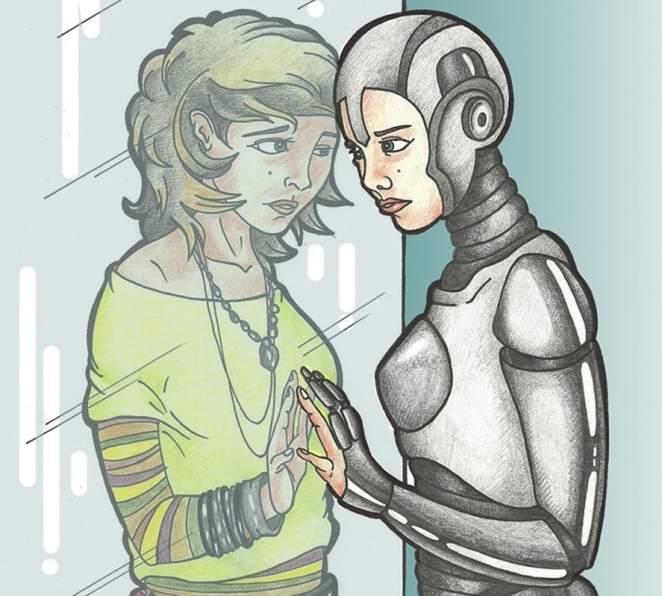
Now, on paper, this might all sound truly dystopian. But even in an automation-heavy landscape, some things stubbornly demand human intelligence:
Deep Creative Strategy & Brand Vision
Human-led thinking about why we tell certain stories, who we serve and why it matters requires context beyond data patterns. Machines generate outputs; creatives shape meaning.
Emotional & Cultural Nuance
AI doesn’t experience life. It mimics patterns. Emotional resonance, cultural sensitivity, and context-aware storytelling remain human territory, especially in long-form narratives and deeply cultural campaigns.
Ethical, Legal Judgment
Questions about copyright, responsible usage, scraping, and AI governance can’t be deferred to black boxes. These conversations happen around boardrooms, legal teams, and creative leadership by humans.
Industry In Action: AI Where It’s Already Leading
Automated Journalism: Data-first reporting systems produce structured text without human typing.
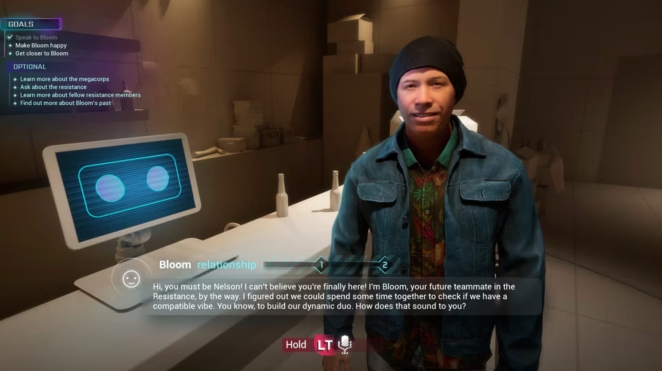
Game Dialogue & Iterations: In game development, studios now lean on AI for coding suggestions, localisation work, and story scaffolding. These aren’t full creative minds but they’re engines that speed workflows and blur lines between human and machine.
This isn’t creativity without humans. It’s creativity with fewer manual constraints
The big takeaway from labour forecasts and industry surveys is evergreen: Roles don’t disappear, but tasks do. AI will automate what it does best: predictable, pattern-based, repetitive work. Humans will own what AI never will: interpretation, cultural meaning, strategy, emotional intelligence, purpose.
According to Huge CTO Marc Maleh, it's not so much about what roles are going to be replaced, but how we learn to collaborate with our new AI "colleagues" and this, he believes, will lead to a large increase in the Collaborative Human-AI Creative and/or Creative Technologist.
He explains: "Rather than replacing creatives or engineers, AI is evolving into creative collaborators that enhance human ideation with data-driven insights like our own home grown LIVE platform, narrative suggestions, moodboards, and trends. This collaboration will also move further into live production ready assets, videos, code and UX and not only used for pitches and moodboards. Creatives and technologists need to be curious and not fearful of these platforms and tools or they risk being left behind. Agencies and brand teams need to not only provide a safe and compliant space for testing these workflows but also provide training to teams on how their processes will evolve."
So, what actually matters in an automated creative future? These skills:
- Creative judgement over generative outputs
- Cultural insight and emotional resonance
- Strategic narrative leadership
- Collaboration, mentorship and ethical oversight
These are the enduring currencies of creative work and the ones that will ensure humans remain indispensable.
Because AI may automate tasks, but it won’t automate imagination
And if there’s one thing this moment requires it’s not fear of displacement, but the mastery of these insanely tools and a greater level confidence in humanity’s creative heart. Confidence can be hard in this increasingly complication and conflicted world but it’s always worth the effort.